 Bellingham Roofing
 Siding Built for Sunnyland's Weather, Not Just Its Curb Appeal
Sunnyland is one of Bellingham's older, established residential neighborhoods, with a mix of mature trees, shaded lots, and homes spanning several decades of construction. That combination is exactly what makes siding choice and installation quality matter more here than in a newer, more exposed subdivision. Homes with heavy tree cover hold moisture longer after a storm, get less direct sun to dry out north-facing walls, and are far more prone to moss and algae growth than homes in open, sunny areas of Whatcom County.
Add in the realities of living near Bellingham Bay — periodic salt-laden air, wind-driven rain that gets pushed sideways into wall assemblies, and a wet season that can stretch from October well into spring — and you have a climate that is genuinely hard on exterior building materials. Siding that looks fine in a showroom can fail quietly behind the scenes if it wasn't designed for, or installed correctly for, this kind of exposure.
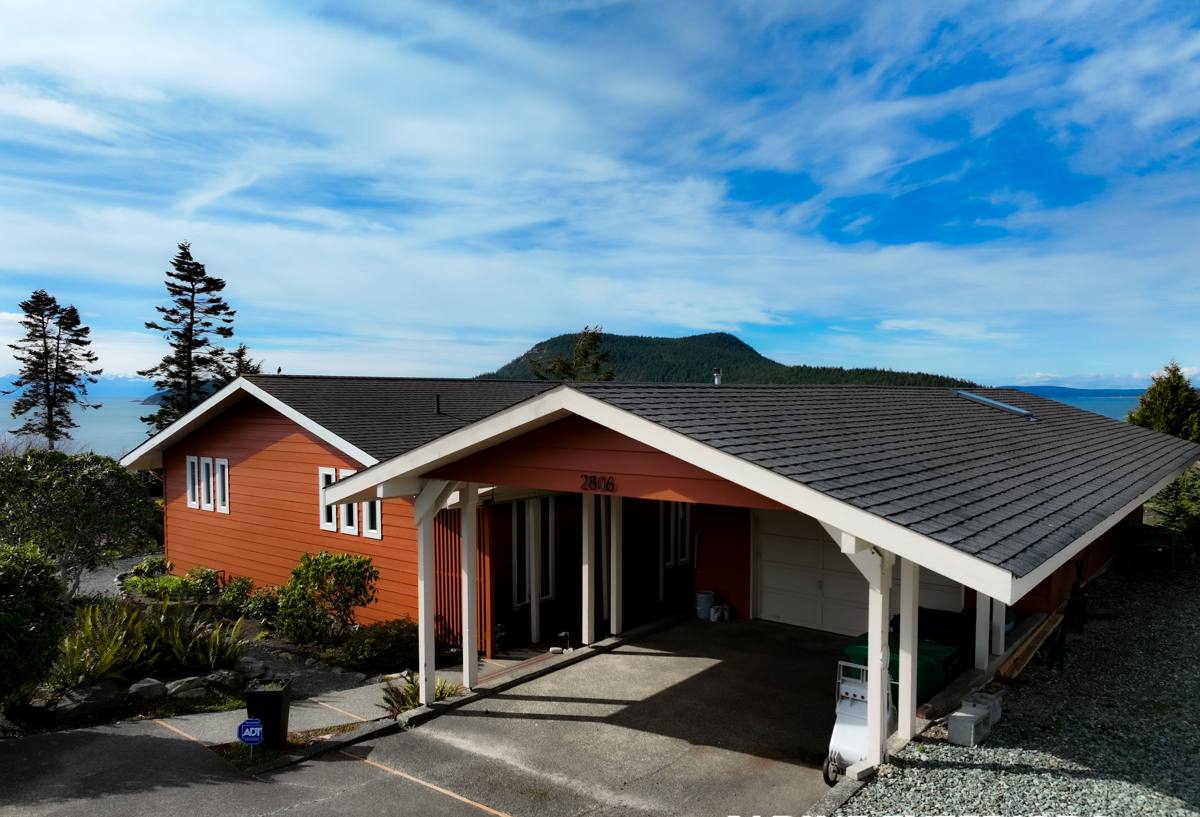
What Sunnyland Homes Actually Need From Their Siding
Moisture Management First
In Bellingham's climate, the single biggest threat to a home's exterior isn't the siding material itself failing outright — it's moisture getting behind it and staying there. A correct siding job manages water at every layer: the weather-resistive barrier underneath, the flashing at windows, doors, and rooflines, and the siding's own ability to shed water rather than absorb it.
Resistance to Moss and Organic Growth
Shaded, tree-lined properties like many in Sunnyland see moss, algae, and mildew develop faster than siding on a sunny, open lot. Some siding materials are more prone to holding onto that growth and to softening or degrading underneath it. Others simply don't feed the problem the same way.
Salt and Coastal Air Tolerance
Homes closer to Bellingham Bay deal with airborne salt that accelerates corrosion of metal fasteners and trim, and can affect how paints and coatings hold up over time. Siding and fastening systems need to be chosen with that in mind, not just for looks.
Why We Install Only James Hardie Fiber Cement Siding
We made a deliberate decision to install one siding system — James Hardie fiber cement — rather than offer a menu of products including vinyl, LP SmartSide, cedar, primed spruce, or other fiber cement brands. That's not a marketing gimmick; it's a standard we hold because of what we've seen play out on real homes in this climate over time.
Vinyl siding is inexpensive and low-maintenance in the sense that it doesn't need painting, but it's a plastic product that expands and contracts significantly with temperature swings, can crack in impacts, and isn't fire-resistant. Wood-based products like cedar or primed spruce look great initially but require diligent, ongoing maintenance to keep moisture out — a real burden in a climate as wet as ours. LP SmartSide and other engineered wood products have improved over the years, but they're still wood-based composites that depend heavily on perfect installation and maintenance discipline to avoid moisture-related problems at cut edges and seams.
James Hardie fiber cement is cement, sand, and cellulose fiber — it doesn't rot, it's non-combustible, and it holds paint and factory finish far more consistently than wood-based alternatives. It's not the cheapest option on the shelf, and it's heavier and less forgiving to install than vinyl, which is exactly why installation quality matters so much. We'd rather install one product correctly, every time, than offer five products and hope each one gets installed to the standard it needs.
HZ5 Engineering for the Pacific Northwest
James Hardie engineers its siding in different formulations for different climate zones, and the HZ5 line is built for regions with significant moisture exposure and freeze-thaw cycling — which describes Whatcom County's weather well. HZ5 boards are formulated to perform in sustained wet conditions, which is the entire point for a neighborhood like Sunnyland where shaded, damp wall sections don't dry out quickly.
ColorPlus Factory Finish
Rather than relying entirely on field-applied paint, James Hardie's ColorPlus finish is baked on at the factory in a controlled environment, giving it better fade and moisture resistance than most site-applied paint jobs — and it comes with its own finish warranty separate from the product warranty on the substrate itself.
What Correct Siding Installation Actually Involves
The material is only half the equation. Fiber cement siding installed poorly will fail regardless of brand, and installed correctly it will outperform almost anything else on the market. Here's what a proper installation includes:
- Removal of old siding and inspection of the sheathing underneath for hidden rot or moisture damage before anything new goes up
- A correctly installed weather-resistive barrier, lapped and taped per manufacturer specification
- Proper flashing at every penetration — windows, doors, hose bibs, light fixtures, and roof-to-wall transitions
- Correct fastener type, spacing, and depth per James Hardie's installation instructions, not generic nailing patterns
- Proper clearance between the bottom of the siding and grade, decks, patios, and roof lines to prevent wicking
- Caulking and sealing only where the manufacturer specifies it — over-caulking can trap moisture just as easily as under-caulking
- Correct cutting and painting of factory-cut edges to maintain the product's moisture resistance at every seam
Every one of these steps is a place where corners get cut on a rushed job, and every one of them is where the "climate" and "installation" parts of siding failure actually intersect.
Signs a Sunnyland Home's Siding Needs Attention
Because of the tree cover and moisture patterns common in this neighborhood, siding problems here often show up as organic growth and soft spots before they show up as obvious visible damage. Homeowners should watch for:
- Persistent moss, algae, or dark staining that returns quickly after cleaning, especially on shaded or north-facing walls
- Peeling, bubbling, or chalky paint that keeps recurring in the same spots
- Soft or spongy sections when pressed, particularly near the bottom courses or around window trim
- Visible gaps, warping, or buckling boards
- Rising heating bills that suggest air and moisture infiltration behind the wall assembly
- Discoloration or staining at seams, corners, or fastener locations
Any of these are worth a professional look before they become a sheathing or framing problem, which costs far more to fix than the siding itself.
Our Process for Sunnyland Siding Projects
We approach every siding installation the same disciplined way, whether it's a full re-side or a partial replacement after storm or moisture damage:
- On-site assessment — we look at the home's exposure, shade patterns, existing moisture issues, and the condition of the sheathing before quoting anything.
- Product and color selection — we walk through James Hardie's plank profiles, panel options, and ColorPlus color range suited to the home's style and the neighborhood's character.
- Removal and inspection — old siding comes off, and any hidden rot or water damage to the sheathing is addressed before new material goes up, not covered over.
- Weather barrier and flashing — the moisture management layer goes in first and correctly, since it matters more than the siding itself over the life of the home.
- Installation to manufacturer spec — proper fastening, clearances, and seam treatment throughout.
- Final walkthrough — we go over the finished work with the homeowner and explain basic care going forward.
Cost Factors to Understand Before You Budget
Every home is different, and we don't believe in quoting a number before seeing the house, but these are the factors that most affect the scope and cost of a siding project in a neighborhood like Sunnyland:
| Factor | Why It Matters | Typical Cost Impact |
|---|---|---|
| Existing sheathing condition | Hidden rot from prior moisture intrusion may need repair before new siding goes on | Low to High |
| Home size and stories | More wall area and taller walls increase material, labor, and access requirements | Medium to High |
| Trim and architectural detail | Dormers, gables, and multiple roof lines add flashing and cutting labor | Medium |
| Full re-side vs. partial replacement | Full removal and replacement costs more upfront but avoids patchwork transitions | Medium to High |
| Siding profile and color selection | Different plank widths and factory finish options carry different material costs | Low to Medium |
| Site access and tree cover | Mature landscaping common in Sunnyland can require extra care and staging time | Low |
Why It Matters That We Already Work in Sunnyland and Bellingham
A crew that already knows this neighborhood isn't guessing about how much shade a wall gets in February, how fast moss comes back on a north side, or how driving rain off the bay behaves against a wall assembly. That familiarity shows up in small decisions — flashing details, fastener choices, where extra attention to sealing actually pays off — that a crew unfamiliar with Whatcom County's specific climate might not think to prioritize.
It also means we're accountable locally. We're not a traveling crew passing through; we're working in Bellingham neighborhoods repeatedly, which is exactly the kind of accountability that should matter to you when choosing who touches your home's exterior.
Living With James Hardie Siding After Installation
One of the practical advantages of fiber cement over wood-based siding is how little ongoing maintenance it demands. It doesn't need repainting on the same schedule wood does, it won't rot, and it resists the pest issues that come with wood siding. That said, no siding is entirely maintenance-free in a climate like ours — periodic gentle washing to keep moss and organic growth from taking hold, and prompt attention to any caulking or trim issues, go a long way toward getting the full lifespan out of the installation.
If you're weighing a siding replacement for a Sunnyland home, we're glad to walk the property with you, look at what's actually going on with your current siding, and talk through what correct installation looks like for your specific home. There's no pressure and no obligation — just a straightforward conversation and a written estimate. Fill out the form below to get started.