 Bellingham Roofing
 Building a Deck That Can Handle Fairhaven's Waterfront Climate
Fairhaven sits close enough to Bellingham Bay that salt-laden air, wind-driven rain, and long stretches of damp, shaded weather are just part of owning property here. A deck built to a generic spec sheet might look fine for a season or two, but the combination of moisture and airborne salt common to this part of Whatcom County will find every weak point in a build — an unsealed cut end, an undersized fastener, a ledger board that was never properly flashed. Building decks for Fairhaven homes means starting with that reality instead of discovering it later.
This page covers what actually goes into a deck that holds up here: the materials that make sense for this climate, the framing and hardware details that matter more on the coast than they do further inland, and how our process is built around getting those details right the first time.
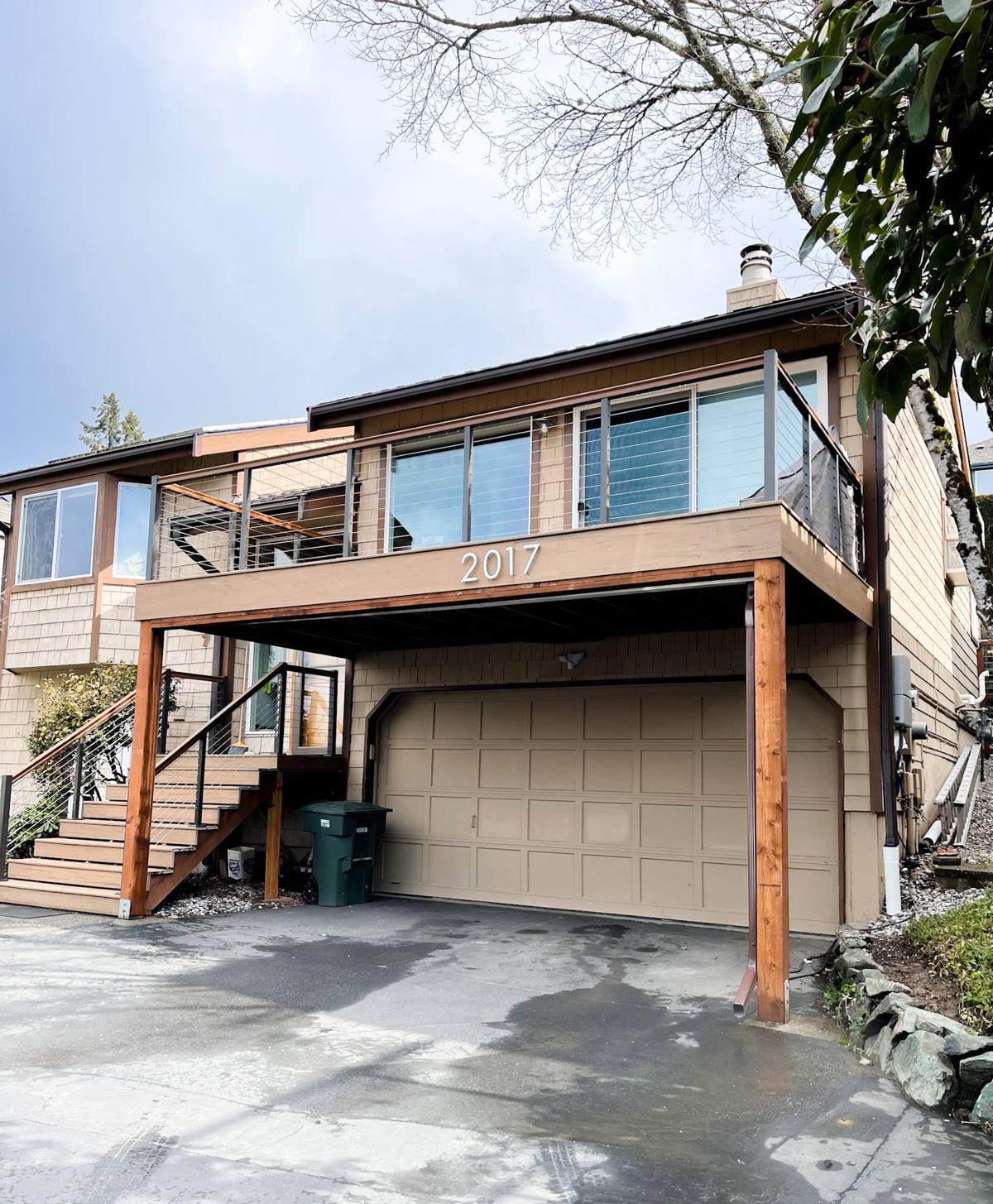
What Salt Air and Rain Do to a Deck Over Time
Coastal exposure doesn't destroy a deck overnight — it works slowly, and the damage is often hidden until it's expensive to fix. Understanding the mechanisms helps explain why certain materials and details matter so much for a Fairhaven build.
Wood Decay and Moisture Cycling
Bellingham's wet season keeps deck framing damp for extended stretches, and wood that can't dry out between rain events is wood that's setting up for rot — especially at joints, end grain, and anywhere two boards sit in contact. Fairhaven's marine layer and shaded lots (common where mature trees line the property) slow drying even further compared to a sunnier, more exposed site.
Fastener and Hardware Corrosion
Airborne salt accelerates corrosion on any metal that isn't rated for it. Standard electro-galvanized screws and joist hangers can start showing rust streaks within a couple of seasons this close to the water, and a corroded fastener doesn't just look bad — it loses holding strength exactly where a deck needs it most.
Moss, Algae, and Surface Buildup
Bellingham's long moss season isn't just a roof problem. Shaded, north-facing decks and any horizontal wood surface that stays damp will grow moss and algae, which hold moisture against the decking and turn the surface slick and slippery underfoot. Left unaddressed, that surface film accelerates wear on both wood and composite decking.
Choosing the Right Decking Material for Fairhaven's Climate
There's no single "best" decking material — the right call depends on budget, maintenance appetite, and how exposed the site is. Here's how the common options actually perform in this climate.
| Material | Coastal/Moisture Performance | Maintenance | Typical Lifespan Here |
|---|---|---|---|
| Pressure-treated fir/hem-fir | Good if sealed and re-sealed on schedule; end cuts need field treatment | Annual cleaning, re-seal every 1-2 years | 15-20 years with upkeep |
| Western red cedar | Naturally decay-resistant, handles damp well, ages to a silver-gray if left unfinished | Cleaning plus optional stain/sealer every 2-3 years | 20-25 years |
| Capped composite boards | Excellent — resists moisture absorption and won't rot; still needs cleaning to prevent surface algae | Periodic washing, no staining or sealing | 25-30+ years, manufacturer-warrantied |
| Uncapped/first-generation composite | More prone to moisture wicking at cut edges and surface staining than capped composite | Cleaning plus more careful edge sealing | Shorter than capped composite in wet climates |
For most Fairhaven projects, we steer homeowners toward cedar or a quality capped composite. Cedar gives a natural look and genuinely holds up in wet conditions when it's detailed correctly. Capped composite costs more up front but takes the moisture-and-moss cycle largely out of the maintenance equation, which matters on shaded or waterfront-adjacent lots where drying time is limited. We're honest that uncapped composite and bargain-tier boards tend to show their age faster in this specific climate — not because the material is inherently bad, but because it wasn't engineered with this much sustained moisture exposure in mind.
Framing and Foundation Work That Actually Holds Up
The decking itself is the part everyone sees, but the framing underneath is what determines whether the deck is still safe and level in fifteen years. This is where a lot of corners get cut on lower-bid jobs, and it's the part a homeowner can't easily inspect once the boards are down.
Footings Sized for Local Soil
Whatcom County's soil varies block to block, and some Fairhaven lots have clay-heavy or poorly draining ground that needs deeper or wider footings than a standard spec assumes. We size footings to the actual site conditions and local frost depth requirements rather than defaulting to the minimum.
Ledger Board Flashing
Where a deck attaches to the house, the ledger board and its flashing are the single most common source of hidden water damage in this region. Done correctly, flashing sheds water away from the house band joist entirely; done poorly, it channels water directly into the wall framing where it can rot unseen for years. We treat this connection as the most critical detail on the entire build.
Joist Protection
Joist tape or an equivalent moisture barrier over the top of each joist keeps screw penetrations from becoming entry points for water. It's a small material cost that pays for itself many times over in a climate that stays wet as long as this one does.
Railings, Fasteners, and Hardware Built for Coastal Exposure
Structural hardware is where corrosion resistance matters most, because a failing fastener or hanger isn't just cosmetic — it's a safety issue. For Fairhaven builds we use stainless steel or heavy-duty coated fasteners and connectors rated for coastal and treated-lumber exposure, not the standard-grade hardware that's fine for a drier, inland lot but rusts prematurely here. Railing posts get the same attention: proper post-to-frame connections and hardware that won't corrode and loosen over time, since a wobbly railing is one of the most common deck complaints we see on older builds in this area.
Our Deck Building Process From Start to Finish
Every deck we build in Fairhaven follows the same sequence, adjusted for the specifics of the site:
1. On-Site Consultation
We walk the property, look at sun exposure, drainage, tree cover, and proximity to the water, and talk through how the space will actually be used before any design work starts.
2. Design and Material Selection
Based on that walkthrough, we recommend decking, framing, and hardware suited to the site's specific exposure — a shaded, moss-prone lot and a sunnier, more open one don't need identical specs.
3. Permitting
We handle the permit application and inspection scheduling required for the project, coordinating with the City of Bellingham or Whatcom County depending on the property's exact location.
4. Framing and Construction
Footings, framing, ledger flashing, and joist protection go in first, with each stage built to pass inspection rather than just to look finished from above.
5. Decking, Railings, and Finish Work
Decking is installed with proper spacing for drainage and seasonal movement, railings are secured, and any staining or sealing is completed before we walk the finished deck with the homeowner.
6. Final Walkthrough
We go over the finished deck together, explain what maintenance the specific materials will need, and answer any questions before we consider the job done.
Permits and Code Considerations Near the Water
Most raised decks in and around Fairhaven require a building permit, and projects close to the shoreline can also fall under additional review depending on setback and critical-areas rules that apply near Bellingham Bay. We don't guess on this — we confirm what applies to the specific parcel before design work is finalized, so the project isn't held up or reworked mid-build over a permitting issue that could have been caught early.
Maintenance Checklist to Protect Your Investment
Whatever material a Fairhaven deck is built from, a little seasonal attention goes a long way in this climate:
- Sweep and rinse the deck surface regularly through fall and winter to keep moss and algae from taking hold
- Check for standing water or slow drainage between boards after heavy rain
- Inspect railings and stair connections annually for any looseness
- Look for rust staining around fasteners, which can signal it's time to replace hardware
- Re-seal or re-stain wood decking on the schedule appropriate to the product used
- Trim back overhanging branches to improve airflow and sun exposure on shaded decks
- Clear debris from under the deck where drainage and ventilation can otherwise get blocked
Why Hire a Crew That Already Works Fairhaven
A deck built to a generic national spec will often survive a drier inland climate just fine and still struggle here. Crews who regularly work Fairhaven and the surrounding Bellingham waterfront know which fastener grades hold up, which ledger flashing details actually keep water out, and which decking materials are worth the extra cost given how long the moss season runs. That local pattern recognition is hard to replicate from a spec sheet, and it's the difference between a deck that needs major repair in eight years and one that's still solid in twenty-five.
If you're planning a new deck or replacing one that's showing its age, we're happy to take a look and put together a straightforward estimate — no pressure, no obligation. Use the form below to get started.