 Bellingham Roofing
 Fairhaven Decks Face a Different Kind of Wear
Fairhaven sits close to Bellingham Bay, and that proximity to saltwater changes how a deck ages compared to one further inland in Whatcom County. Salt-laden air accelerates corrosion on fasteners, hinges, and any exposed metal hardware, while the same marine air keeps humidity levels higher for more of the year. Add in Bellingham's driving winter rains, which come in sideways off the water more often in this neighborhood than in sheltered parts of town, and you get moisture finding its way into joints, ledger connections, and end grain that a drier climate would never expose.
Then there's moss. Western Washington's long, wet shoulder seasons give moss and algae months to establish themselves on any horizontal wood surface that doesn't get regular sun or airflow. On a shaded Fairhaven deck tucked under mature trees or against a hillside, moss isn't cosmetic — it holds moisture against the wood surface year-round and quietly accelerates rot underneath a surface that still looks intact from a few feet away.
None of this means a deck in this neighborhood is doomed to fail early. It means the maintenance and repair schedule needs to match the actual conditions the deck lives in, not a generic timeline pulled from a drier climate.
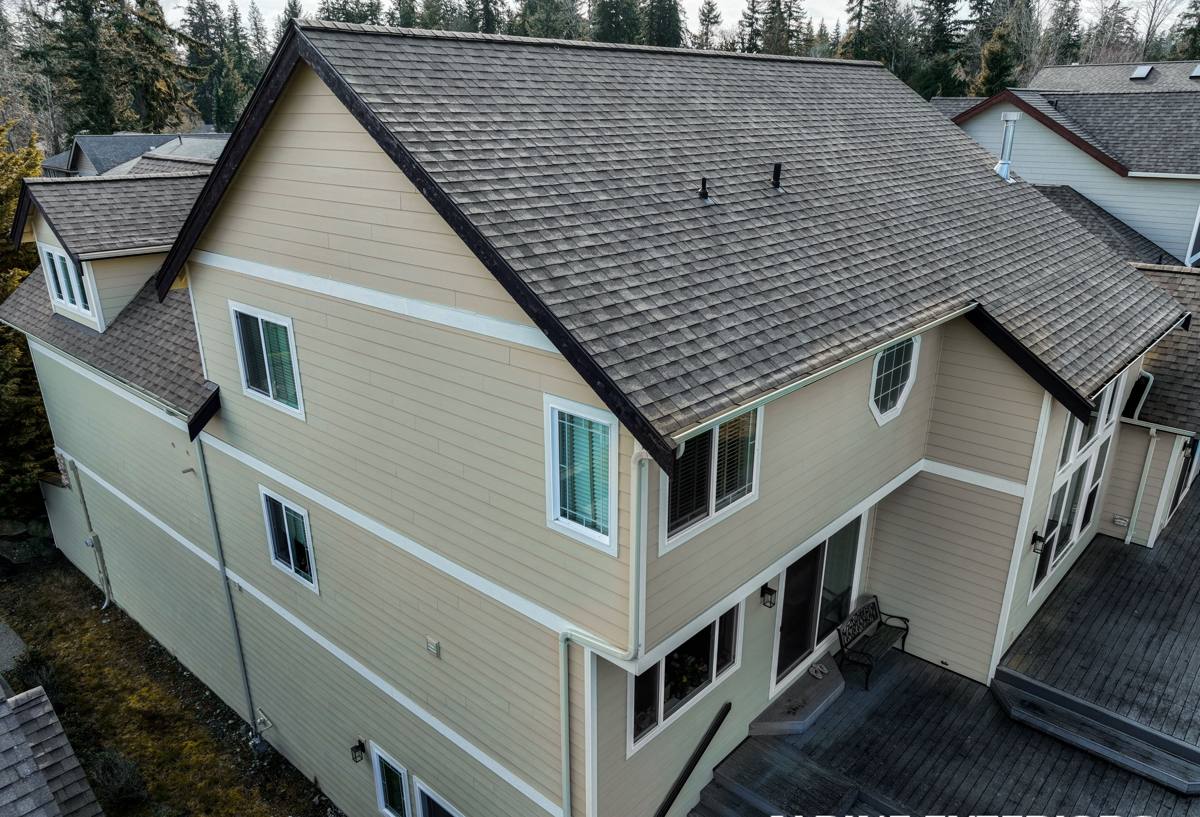
Signs Your Fairhaven Deck Needs Repair
Most deck problems don't show up as one dramatic failure — they show up as small signals that get ignored until they aren't small anymore. Walk your deck and check for these:
- Soft or spongy spots underfoot, especially near the house, stair landings, or planter boxes
- Rust streaking below screw heads, joist hangers, or bolt connections
- Gaps opening up between boards, or boards that have visibly cupped or crowned
- Green or black staining that keeps returning within weeks of cleaning
- A railing or guardrail post that flexes or wiggles when you lean on it
- Visible daylight or a dark gap where the deck meets the house at the ledger board
- Stair stringers that feel bouncy or uneven step to step
- Fastener heads that have popped up proud of the board surface
Any one of these on its own might be a minor fix. Several at once, especially combined with age, usually means it's worth a full structural look before booking anything.
What a Correct Deck Repair Actually Involves
Ledger Board and Flashing
The ledger board — where the deck attaches to the house — is the single most common source of serious deck failure, and it's rarely visible without pulling back siding or decking near the connection. Flashing that's missing, cracked, or improperly lapped lets water track behind the ledger and into the house rim joist. On a repair, we check this connection first, because a deck that looks fine everywhere else can still be structurally unsound at the point where it attaches.
Joists and Structural Framing
Joists take the real load. Rot at joist ends, undersized or corroded joist hangers, and inadequate blocking are all things that don't show up in a surface walkthrough but matter enormously for safety. Repair here means replacing compromised framing members, not just sistering a new board next to a rotten one and calling it done.
Decking Boards and Fasteners
Individual board replacement is the most visible part of a repair, but it's only correct if the fasteners going back in match the wood treatment being used. Mismatched metals in a coastal-influenced climate like Fairhaven's lead to galvanic corrosion — the fastener eats itself from the inside even though the board around it looks fine.
Railings and Guardrails
Railing repairs get treated as cosmetic more often than they should. A post that's loose at its base is almost always a sign of rot or an undersized connection below the surface, not just a hardware issue. Since railings are a life-safety element, we don't tighten a wobbly post and move on — we find out why it's loose.
Repair or Replace: How We Help You Decide
Not every deck problem calls for a full rebuild, and not every deck is worth patching. The honest answer depends on how much of the structure is still sound versus how much has been compromised by years of moisture and moss exposure.
| Factor | Leans Toward Repair | Leans Toward Replacement |
|---|---|---|
| Framing condition | Joists and ledger are solid, damage is localized | Rot has spread through multiple structural members |
| Age of deck | Under 15 years, built to current code | Older than 20 years or built before current attachment standards |
| Extent of damage | A few boards, one railing section, isolated fasteners | Widespread soft spots, multiple failed connections |
| Moss and moisture history | Recently discovered, addressed early | Long-term staining suggesting years of trapped moisture |
| Budget goals | Extend usable life at lower cost | Reset the clock and avoid repeat repair bills |
Most Fairhaven decks we look at fall somewhere in between — sound framing but a handful of failed components. That's the ideal case for a targeted repair rather than a full rebuild.
Materials: What We Use and Why
Given the salt air and moisture exposure common in this part of Bellingham, material choice matters more here than it would in a drier inland location. We generally steer clients toward pressure-treated lumber rated for ground contact on structural framing regardless of what the decking surface ends up being, since framing is the part you don't want to think about again for a long time.
For the visible decking surface, both quality wood and composite have a place, and the right call depends on how much upkeep the homeowner wants to take on:
| Wood Decking | Composite Decking | |
|---|---|---|
| Upfront cost | Generally lower | Generally higher |
| Maintenance | Needs regular cleaning and periodic sealing, especially with moss pressure | Lower maintenance, but still needs cleaning to prevent surface algae |
| Moisture behavior | Can trap water if not sealed or gapped correctly | More resistant to moisture absorption, but installation sensitivity around fastening still matters |
| Repair approach | Individual boards are easy to source and replace | Matching older composite colors and profiles can be harder over time |
We'll walk through the trade-offs honestly for your specific deck rather than pushing one material across the board — the right answer depends on your budget, how shaded the deck is, and how much maintenance you're willing to do.
Our Repair Process
- On-site assessment. We inspect the ledger connection, framing, decking, and railings, including probing suspect areas rather than just looking at the surface.
- Honest scope and estimate. You get a clear breakdown of what's structural, what's cosmetic, and what your real options are — repair, partial rebuild, or full replacement.
- Structural work first. Any compromised framing, ledger flashing, or joist hangers get addressed before any surface work begins.
- Surface and railing repair. Damaged boards and railing components are replaced with correctly matched, corrosion-appropriate fasteners.
- Final walkthrough. We check the deck is solid underfoot, railings are secure, and drainage and flashing are set up to shed water correctly going forward.
Why a Crew That Already Works Fairhaven Matters
A deck repair crew that regularly works in this neighborhood has a working sense of which conditions show up here more than elsewhere in Bellingham — the shaded lots that hold moss longer, the wind-driven rain patterns closer to the water, and the older housing stock where original deck framing may not meet current attachment standards. That familiarity shortens the diagnostic process and means fewer surprises mid-repair.
Local crews are also more likely to be current on Whatcom County permitting expectations for structural deck work, which matters if your repair involves ledger reattachment, structural framing replacement, or guardrail changes — all of which can trigger permit requirements depending on scope.
Keeping Your Deck in Good Shape Between Repairs
A repaired deck lasts longer when it's not fighting the same moss and moisture problems that caused the damage in the first place. A few habits go a long way in this climate:
- Clean the deck surface at least once a year, more often in shaded areas prone to moss
- Keep gutters and downspouts clear so runoff isn't dumping directly onto or near the deck
- Trim back vegetation that's blocking sun and airflow across the deck surface
- Check fastener heads and railing connections each spring for early rust or looseness
- Address small soft spots or staining as soon as you notice them rather than waiting for the next season
If you're seeing any of the warning signs above, or it's just been a while since anyone looked at your deck's structure rather than its surface, we're happy to come take an honest look. Estimates are free and there's no pressure — you'll get a clear picture of what your deck actually needs before you decide anything. The form below is the easiest way to get started.