 Bellingham Roofing
 Fairhaven's Climate Is Hard on Siding, and Harder on the Wrong Siding
Fairhaven sits close against Bellingham Bay, and that position shapes how fast an exterior wall ages here compared to homes further inland. Salt-tinged marine air moves through the neighborhood most of the year, rain arrives wind-driven off the water rather than falling straight down, and the mature tree cover common on Fairhaven's older residential blocks keeps a long moss season going on shaded and north-facing walls. None of that is unusual for Whatcom County, but Fairhaven gets a more concentrated version of it than neighborhoods set back from the shoreline.
This page is specifically about James Hardie fiber cement siding on Fairhaven homes: what the climate demands from a siding system here, what a correct Hardie installation actually involves, and why we install this product and no other. If you're looking for a broader overview of exterior work in the neighborhood, we cover roofing, windows, and decks elsewhere. Here we're going deep on one material and one place.
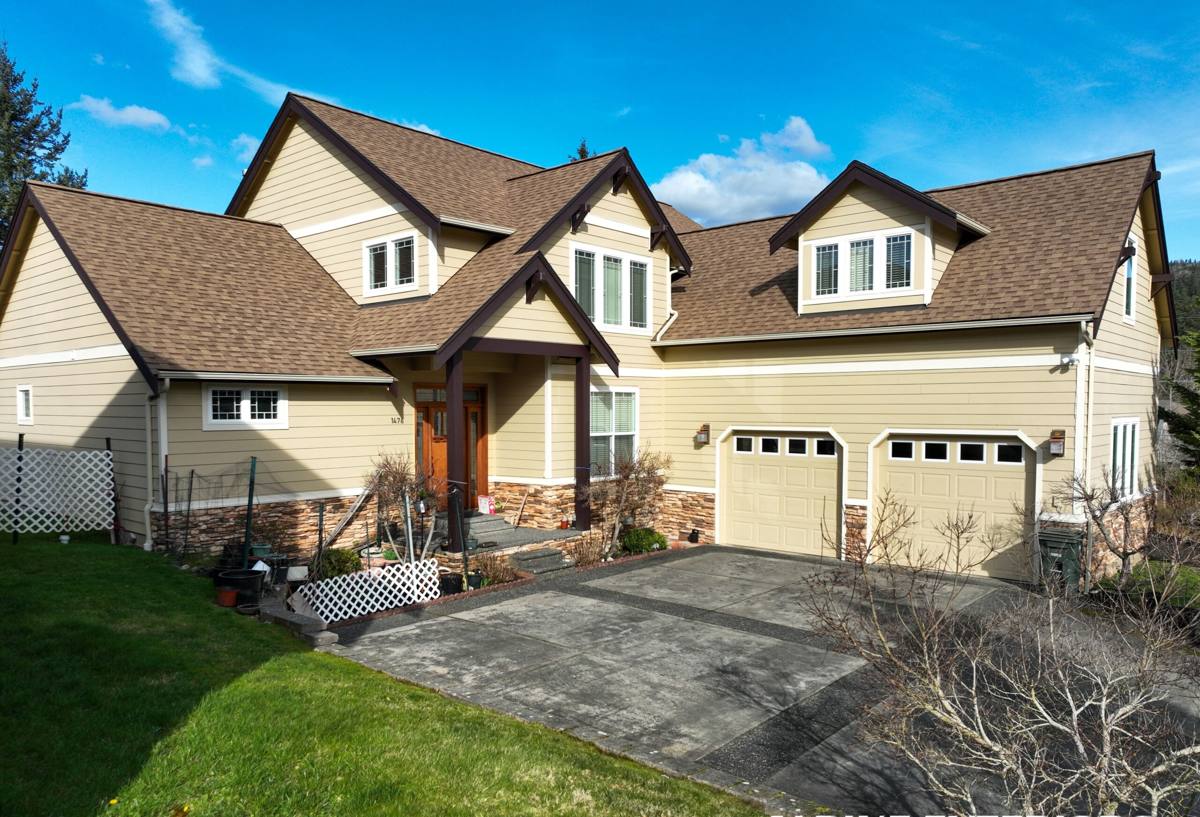
Why We Install Only James Hardie in This Neighborhood
We don't stock a lineup of siding brands and let a homeowner's budget sort out the decision. Every siding job we do, in Fairhaven and everywhere else we work in Whatcom County, is James Hardie fiber cement. That's a professional standard we set based on years of tear-offs and repair calls, not a marketing line.
What Fiber Cement Does That Matters Here
Fiber cement is dimensionally stable in a way that matters directly in a marine climate: it doesn't swell, cup, or warp through repeated wet-dry cycling the way engineered wood products can, and it doesn't crack or go brittle in a cold snap the way some vinyl products do. It's also non-combustible, which is worth factoring in regardless of climate. In a neighborhood that stays damp most of the year, the material's resistance to moisture-driven movement is the single biggest reason it holds up better than the alternatives over a full ownership cycle.
ColorPlus Finish Versus Field Paint
Most Hardie siding we install carries a ColorPlus factory finish, cured onto the board under controlled conditions before it ever reaches the jobsite. That matters in Fairhaven specifically because field-applied paint depends on weather at the time of application, and this neighborhood doesn't offer many long, dry, wind-free windows to work with. A factory-cured finish sidesteps that variability and holds color and sheen against salt air and UV exposure far longer than site-applied paint typically manages.
The HZ5 Formulation
For this climate we install Hardie's HZ5 product line, engineered specifically for regions with heavy sustained moisture and real freeze-thaw cycling. It's a different formulation than the boards Hardie builds for hot, dry climate zones, and the difference isn't cosmetic. It's the difference between a board engineered for exactly the moisture load Fairhaven sees and one that's just been shipped here because it's what a distributor had on the truck.
The Hardie Product Lines We Use on Fairhaven Homes
James Hardie isn't a single product, it's a system of lap siding, panel siding, shingle-profile siding, and trim, and the right combination depends on the home's style and exposure. The table below covers the lines we install most often in this neighborhood.
| Product | Profile | Where It Fits in Fairhaven |
|---|---|---|
| HardiePlank lap siding | Horizontal overlapping boards | The most common choice on Fairhaven's traditional and early-century homes; sheds wind-driven rain well when lapped and fastened correctly |
| HardiePanel vertical siding | Flat vertical panels with battens | Used on gables, additions, and more modern infill built into the hillside lots near the water |
| HardieShingle | Staggered or straight-edge shingle profile | A good match for Fairhaven's older, more architecturally detailed homes where a shingle look is part of the character |
| HardieTrim boards | Smooth trim stock | Corners, window and door surrounds, and fascia; factory finish resists the rot and paint failure common on wood trim this close to the bay |
Texture matters too. Smooth-finish boards read cleaner on newer construction, while cedarmill texture mimics traditional wood grain and tends to suit Fairhaven's older housing stock better. Neither choice affects moisture performance, since that comes from the HZ5 formulation and the ColorPlus finish underneath.
What a Correct Installation Actually Involves
The product is only half the job. A James Hardie installation performs the way it's engineered to only when the details underneath it are done right, and those details are exactly where wind-driven rain and salt air punish shortcuts fastest.
- House wrap and flashing as one system: water management has to work as an integrated assembly, not a series of separate steps done in isolation
- Correct fastening pattern: nails placed at the manufacturer's specified location and depth, not just wherever the framing happens to line up
- Proper clearance from grade and roofline: siding installed too close to the ground or a roof deck stays wet longer and invites the moss and mildew growth Fairhaven's shaded lots already encourage
- Lapped and sealed joints: every horizontal and vertical joint has to shed water in the direction it actually travels here, which is often sideways, not straight down
- Caulking only where Hardie specifies it: over-caulking traps moisture behind the board just as reliably as under-caulking lets it in
A rushed installation is the most common reason a genuinely good product ends up with a bad reputation on somebody's house. We treat installation detail with the same seriousness as the material decision, because in this climate the two aren't really separable.
Repair Versus Full Re-Side
Not every Fairhaven siding issue calls for a full tear-off. Isolated impact damage, a section that's failed around a window, or trim that's worked loose can often be repaired and color-matched into existing siding. But once moisture has been tracking behind the wall assembly for a while, or a home's original siding has simply reached the end of its service life, patching usually just delays a larger project by a year or two. We'll tell you honestly which situation you're actually in before we quote anything.
How We Approach a Fairhaven Siding Project
Every project starts with walking the property, not measuring it off a satellite photo. We look at wall orientation, tree cover, existing moisture damage, and how the current siding or trim has actually held up, since that tells us more about what the house needs than a generic spec sheet does.
- On-site assessment: we check every elevation for hidden moisture damage, note shaded and north-facing walls prone to moss, and evaluate existing flashing and water management
- Scope and product selection: we recommend the specific Hardie product line, texture, and color that fits the home's style and exposure, and explain the reasoning in plain terms
- Tear-off and substrate check: removing old siding is when hidden rot or trapped moisture actually surfaces, and we address that before anything new goes up, not after
- Installation to Hardie's fastening and flashing spec: house wrap, flashing, fastening pattern, and joint treatment installed as one integrated system
- Final walkthrough: we go over the finished work with you before we consider the job done
James Hardie's Warranty, in Plain Terms
James Hardie backs its siding with one of the stronger warranty structures in the industry, and ColorPlus finishes typically carry a separate finish warranty from the substrate warranty on the board itself, since color and material are really two different products bundled together. That warranty is only as good as the installation underneath it, though. Manufacturer warranties on siding generally require installation to spec, which is one more reason installation detail matters as much as the product choice. We'll walk you through exactly what's covered, what requires proper maintenance to stay in force, and what would void it, before you sign anything.
Cost Factors on a Fairhaven Hardie Project
| Factor | What It Affects | Why It Matters in Fairhaven |
|---|---|---|
| Home age and trim complexity | Material and labor total | Fairhaven's older housing stock often carries more trim detail and roofline intersections where wind-driven rain works its way in |
| Tear-off vs. install over existing substrate | Labor scope and access | Tear-off exposes moisture damage that's common under decades-old siding this close to the bay, and it's the only way to actually confirm what's behind the wall |
| Product line and texture | Material cost | HardieShingle and custom trim details generally run more than straight lap siding, but often suit older Fairhaven homes better |
| Site access and slope | Labor time and equipment | Hillside lots common near the waterfront can add staging and setup time |
| Color and finish | Material cost and longevity | ColorPlus factory finish outperforms field-applied paint against salt air and UV, and it's priced accordingly |
Real numbers depend on the specific house and its exposure, which is why we walk the property before quoting rather than pricing off square footage alone.
Signs Fairhaven Siding Needs a Closer Look
- Moss or dark staining that returns quickly after cleaning, especially on shaded or north-facing walls
- Soft or spongy siding near the base of the wall or around window and door trim
- Peeling, bubbling, or chalking paint on siding boards or trim
- Cracked, chipped, or missing sections after a windstorm off the bay
- Visible gaps at seams, corners, or trim joints where wind-driven rain can track in
- Rust staining around fasteners, a common early sign of marine air exposure
Why Hiring a Crew That Already Works Fairhaven Matters
A crew that installs siding in this neighborhood regularly knows things a spec sheet doesn't tell you: which wall orientations stay damp longest through the winter, where extra flashing attention actually pays off on a hillside lot, and how Fairhaven's older housing stock tends to hide moisture damage behind trim that looks fine from the ground. That experience shows up in small decisions made on install day, the kind that don't show up on an estimate but are the difference between a wall that performs for decades and one that needs attention again in five years. A generic approach that works fine forty miles inland doesn't automatically hold up on a lot facing straight into Bellingham Bay.
If you're weighing a Hardie install, a repair, or just want an honest opinion on what your current siding is telling you, we're glad to take a look. Reach out using the form below to schedule a free, no-pressure estimate.