 Bellingham Roofing
 Fairhaven's Roofs Work Harder Than Most
Fairhaven sits close enough to Bellingham Bay that salt-laden air is a daily fact of life, not an occasional weather event. Add in the driving, wind-pushed rain that rolls off the water during fall and winter storms, and the deep shade from mature trees along the neighborhood's older streets, and you've got a roofing environment that's noticeably tougher than what you'd find in a drier inland part of Whatcom County. A roof replacement here isn't just about swapping old shingles for new ones — it's about choosing materials and installation details that actually hold up to salt exposure, wind-driven moisture, and a moss season that can run most of the year.
Homeowners in Fairhaven tend to notice roof problems earlier than most, simply because the signs show up faster: dark streaking, soft moss patches on the north-facing slopes, and granule loss that shows up in the gutters after a hard rain. That's useful, because catching roof failure early gives you options. Waiting too long usually means dealing with sheathing damage, which turns a straightforward re-roof into a bigger repair job.
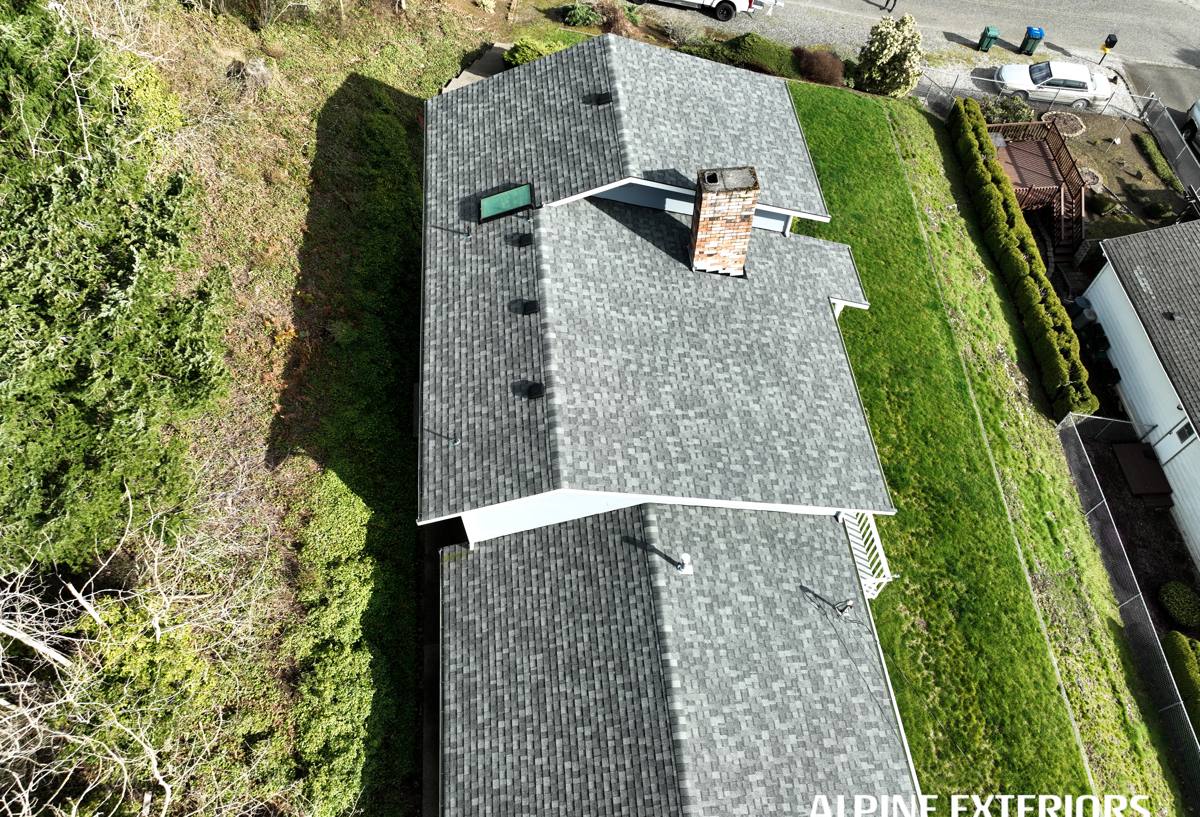
Signs a Repair Won't Cut It Anymore
Not every roofing problem in Fairhaven means a full replacement. But there's a point where patching a roof stops being the honest recommendation, and a straightforward re-roof is actually the more cost-effective path. Some of the clearest signals:
- Shingles are curling, cupping, or losing granules across large sections rather than in one isolated spot
- Moss has established itself under the shingle tabs, not just on the surface — this lifts shingles and lets water track underneath
- You can see daylight through the roof deck from the attic, or find damp insulation after a wind-driven rain
- The roof is original to a home built more than 20-25 years ago and has never been replaced
- You've had two or more repair visits in as many years for different leak locations
If two or three of these apply, a replacement is almost always the more economical decision over a five-to-ten-year horizon — repeated repairs on an aging roof add up, and they don't address the underlying moisture and moss problems that caused the damage in the first place.
What a Correct Roof Replacement Actually Involves
A roof replacement done right in a coastal, moss-prone neighborhood like Fairhaven is about more than the shingles you see from the street. Several layers work together, and skipping or shortcutting any one of them is where premature failures come from.
Tear-Off and Deck Inspection
Every layer of old roofing comes off down to the deck. This is the point where hidden rot, soft spots, or moisture-damaged sheathing get found and replaced — not covered over. In a wet climate like Bellingham's, skipping this step is one of the most common ways a re-roof fails early.
Underlayment and Ice/Water Protection
A synthetic underlayment provides the roof's real backup water barrier, and in areas prone to wind-driven rain — which describes most of Fairhaven during a winter storm — self-adhered ice-and-water membrane belongs at eaves, valleys, and any roof-to-wall transitions where wind can force water sideways under the shingles.
Flashing
Flashing around chimneys, skylights, and wall intersections is where the majority of roof leaks actually originate, not the field shingles themselves. Reusing old, corroded flashing to save money is a false economy — new flashing, correctly step-flashed and counter-flashed, is non-negotiable on a proper replacement.
Ventilation
Balanced intake and exhaust ventilation keeps the attic temperature and moisture level in check. In a humid, moss-favoring climate, poor ventilation traps moisture against the underside of the deck, which accelerates rot and gives moss and algae a head start from below as well as above.
Material Options for Fairhaven's Climate
There isn't one "correct" roofing material for every Fairhaven home — it depends on the roof's exposure, slope, budget, and how long you plan to own the house. Here's an honest comparison of the main options homeowners in this neighborhood consider.
| Material | How It Handles Salt Air & Moss | Typical Lifespan | Trade-Offs |
|---|---|---|---|
| Architectural asphalt shingle (algae-resistant) | Copper- or zinc-infused granules resist algae and moss growth better than standard shingles | 25-30 years | Best value; still needs periodic moss removal on shaded slopes |
| Standard 3-tab asphalt shingle | No built-in algae resistance; moss and dark streaking show up faster | 15-20 years | Lowest upfront cost, shortest service life in this climate |
| Metal (standing seam or coated panel) | Sheds moisture fast and gives moss little to grip; coastal-grade fasteners and coatings matter | 40-50+ years | Higher upfront cost; needs correct coating spec near salt air |
| Synthetic/composite shingle | Resists moisture absorption well; moss resistance varies by product line | 30-50 years | Mid-to-high cost; fewer local installers familiar with every brand |
For most Fairhaven homes, an algae-resistant architectural shingle strikes the best balance of cost and climate performance. Metal is worth the premium on steep, heavily shaded roofs where moss has been a chronic problem, since it gives moss far less to hold onto.
Our Replacement Process, Step by Step
Homeowners generally want to know two things upfront: what happens to their property during the job, and how we make sure the new roof is actually installed correctly rather than just "looking right" from the street.
- On-site inspection and measurement — we walk the roof, check the attic, and document the deck condition and drainage patterns specific to your lot.
- Written estimate with material options — you get a clear breakdown of scope, materials, and price, not a vague lump sum.
- Tear-off and disposal — old roofing is removed and hauled off; the yard and landscaping are protected with tarps and plywood.
- Deck repair as needed — any soft or damaged sheathing is replaced before anything else goes down.
- Underlayment, flashing, and ventilation installed — the parts you won't see once the job is done, done correctly the first time.
- Shingle or panel installation — installed to manufacturer spec, which matters for keeping the material warranty valid.
- Final walkthrough and cleanup — magnetic sweep for nails, gutter check, and a final inspection with you before we call the job complete.
What Drives the Cost of a Fairhaven Roof Replacement
Every roof is different, so we won't quote a number without seeing the job — but homeowners deserve to know what actually moves the price up or down before they call around for estimates.
| Cost Factor | Why It Matters |
|---|---|
| Roof pitch and accessibility | Steep slopes and limited driveway/yard access slow the job and require more safety equipment |
| Number of layers being removed | Tearing off two layers of old shingles costs more in labor and disposal than one |
| Deck condition | Rotted sheathing found during tear-off adds material and labor not visible in a curbside estimate |
| Material choice | Standard asphalt, algae-resistant asphalt, and metal carry different material and labor costs |
| Roof complexity | Valleys, dormers, skylights, and multiple chimneys all add flashing detail and labor time |
| Ventilation upgrades | Adding proper intake/exhaust venting where none existed is a worthwhile add, not a hidden fee |
Broadly, a straightforward asphalt shingle replacement on a modest single-story Fairhaven home runs in the lower range of what re-roofing typically costs regionally; steep, complex rooflines or a switch to metal will land toward the higher end. We'd rather walk your roof and give you real numbers than have you guess from a table.
Why a Crew That Already Works in Fairhaven Matters
Fairhaven's mix of older homes, mature tree canopy, and proximity to the water means the roofing challenges here aren't identical to a new subdivision on the edge of town. A crew that regularly works this neighborhood already knows which slopes tend to hold moss longest, where wind-driven rain from the bay causes problems other crews might not anticipate, and how to sequence a tear-off around narrow lots and established landscaping without doing damage.
That familiarity also shows up in smaller ways: knowing which flashing details tend to fail first on homes of a certain age and construction style common in this part of Bellingham, and not needing to relearn the neighborhood's quirks on your dime. It's the difference between a crew executing a generic checklist and one that's actually solving for your specific roof and your specific street.
Living With a New Roof Through Moss Season
A correctly installed roof with the right materials will resist moss far better than what you're replacing — but "resist" doesn't mean "immune," especially under Fairhaven's tree cover. A little seasonal upkeep goes a long way toward protecting your investment.
- Keep gutters clear of needles and leaf debris so water doesn't back up under the shingle edge
- Trim back overhanging branches to cut down on shade and debris buildup on north-facing slopes
- Have moss physically removed rather than pressure-washed, which can strip granules and shorten shingle life
- Schedule a visual roof check every year or two, ideally after the wettest months
- Address any small flashing or sealant issues right away — they're inexpensive to fix small and expensive to fix once water gets behind them
None of this requires climbing on the roof yourself. A quick annual look from the ground with binoculars, paired with an occasional professional check, is enough to catch problems while they're still small.
Ready for a Straight Answer About Your Roof?
If your Fairhaven home is showing signs of an aging roof — or you just want an honest opinion on whether repair or replacement makes more sense — we're happy to take a look. There's no pressure and no obligation, just a clear assessment and straightforward numbers. Use the form below to request your free estimate.