 Bellingham Roofing
 Siding That Has to Work in Cordata's Climate, Not Just Look Good on Day One
Cordata sits in the north end of Bellingham, close enough to the water and the lowland weather patterns of Whatcom County that siding here takes a different kind of beating than siding in a dry inland climate. Homes in this part of Bellingham deal with a long wet season, driving rain that comes sideways off wind gusts, a faint but real salt component to the coastal air, and months where north-facing walls barely see direct sun. That combination is exactly what breeds moss, softens wood trim, and finds every gap in a siding installation that wasn't detailed correctly.
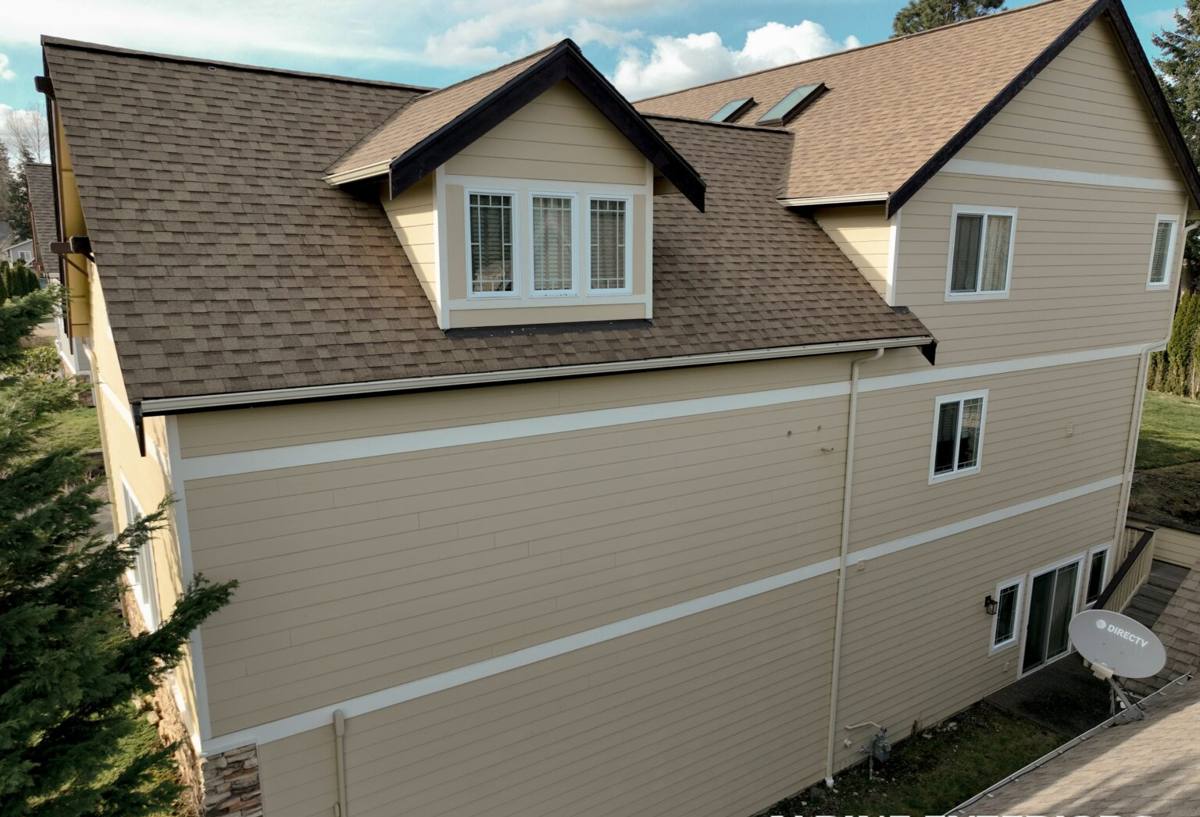
Siding is not one product doing one job. It is a system: the water-resistive barrier behind it, the flashing above every opening, the gap left at the bottom for drainage, and the material itself. Get any one of those wrong and the siding can look fine for a year or two while moisture quietly works behind it. This page is specific to fiber cement siding in Cordata — what the climate demands, what a correct job looks like, and why we install only one product to do it.
What Bellingham's Wet Season Actually Does to Siding
Moisture Load and Duration
Whatcom County doesn't get the heaviest rainfall totals in the state, but it gets a lot of days of rain, often light and prolonged rather than intense downpours. That matters more than total inches. Materials that absorb moisture slowly get a long, steady exposure window every fall through spring, and siding that can't manage that moisture — either by shedding it or by resisting it outright — stays damp longer than it should.
Moss and Organic Growth
Shaded, north- and west-facing walls in Cordata's tree-covered lots are prime moss territory. Moss holds moisture against the siding surface, and on materials that aren't inherently rot- and moisture-resistant, that sustained dampness is where trouble starts, especially at butt joints, corners, and anywhere caulking has started to fail.
Wind-Driven Rain
Storms coming off the Sound don't just fall straight down — they drive rain sideways into wall faces, exposed trim, and the underside of window and door openings. Flashing details and proper lap coverage matter more here than they would in a calmer climate, because water is being pushed into gaps it wouldn't normally reach.
Why This Company Installs Only James Hardie Fiber Cement
We don't install vinyl, LP SmartSide, Cemplank, Allura, primed spruce, or bare cedar. That's not a marketing line — it's a standard we set because of what we've seen these products do, and not do, in exactly this climate over time.
Vinyl is inexpensive and low-maintenance in the sense that it doesn't need painting, but it's a thin plastic product that expands, contracts, and can crack in cold snaps, and it doesn't hold up to sustained moisture exposure the way a cementitious product does — water finds its way behind and around panels rather than through them. Engineered wood products like LP SmartSide perform well when the wood fiber core stays sealed and dry, but any breach in that seal — a missed caulk joint, a scuff during installation, prolonged moss contact — lets moisture into the substrate, and wood fiber does not recover from that the way fiber cement does. Bare or primed wood siding (cedar, spruce) looks excellent but requires a maintenance commitment — recoating, caulking, inspection — that most homeowners don't keep up with for 20-plus years, and in a climate this wet, gaps in that maintenance show up fast.
James Hardie fiber cement is cement, sand, and cellulose fiber — it doesn't rot, it isn't attractive to pests, and it doesn't burn. It's heavier and more labor-intensive to install correctly, which is exactly why installation quality is the deciding factor in how it performs, not the material itself. That's the trade-off we've chosen: a harder install, done right, on a product built for wet coastal climates.
What a Correct Fiber Cement Installation Involves
Fiber cement siding fails less often because of the product and more often because of how it was installed. The details below are where a correct job separates itself from a fast one.
- Weather-resistive barrier installed continuously, with all seams and penetrations taped or sealed, before any siding goes up
- Rigid furring or proper rainscreen gap where conditions call for it, so water has somewhere to drain rather than sitting against the back of the panel
- Flashing installed above every window, door, and horizontal trim board — not caulk substituting for flashing
- Minimum clearance maintained between the bottom of the siding and grade, decks, patios, and roof lines per manufacturer requirements
- Correct fastener type, spacing, and depth — over-driven nails crack the board and under-driven nails leave it loose
- Factory-cut ends field-sealed, and all butt joints backed and caulked per Hardie's published details
- Proper overlap at laps so wind-driven rain can't be pushed upward behind the course above
None of this is unusual or proprietary — it's published in James Hardie's own installation instructions. The issue in the field is that these steps take more time than a rushed install allows for, and shortcuts are invisible until moisture finds them.
James Hardie Product Lines for This Climate
James Hardie makes climate-specific product formulations, and for Whatcom County's marine climate, the HZ5 line is engineered for the wet, moderate-temperature conditions we actually have — as opposed to formulations built for freeze-heavy or high-humidity southern climates. Beyond the substrate engineering, ColorPlus factory-applied finish is a meaningful part of the system: it's baked on under controlled conditions rather than field-applied, which means better adhesion and color consistency than a job-site paint job, and it comes with its own finish warranty separate from the substrate warranty.
| Product | Common Use | Why It Fits Cordata |
|---|---|---|
| HardiePlank lap siding | Primary wall cladding | Traditional lap profile, HZ5 formulation resists the sustained moisture exposure of a wet marine climate |
| HardiePanel vertical siding | Accent walls, gable ends, modern facades | Clean vertical lines with the same moisture and fire resistance as the lap product |
| HardieTrim boards | Corners, window and door trim, fascia | Consistent expansion behavior with the field siding, reducing gap and caulk failure at joints |
| HardieShingle siding | Accent gables, dormers | Cedar-shake look without the moisture and moss vulnerability of real cedar shingle |
Cost Factors for a Cordata Fiber Cement Project
Every project prices differently based on the condition of the home underneath the existing siding, but the same factors move the number up or down on nearly every job we quote in this area.
| Factor | Impact on Cost |
|---|---|
| Tear-off vs. new construction | Removing old siding, disposal, and repairing sheathing found underneath adds cost but is often necessary on older homes with hidden moisture damage |
| Sheathing and framing repair | Rot found once old siding comes off is common on shaded, moss-prone walls and needs to be addressed before new siding goes on |
| House complexity | Dormers, multiple gables, and cut-up wall faces increase labor and trim work compared to a simple rectangular footprint |
| Siding profile mix | Combining lap, panel, and shingle accents costs more than a single profile across the whole home |
| Color and finish choice | ColorPlus factory finish typically costs more upfront than primed board painted on-site, but avoids a repaint cycle for years |
Our Process for a Cordata Project
A siding job in this neighborhood starts with an honest look at the existing wall assembly, not just a measurement for material. We check for soft spots, moss buildup, and signs of trapped moisture before we ever talk about color or profile. From there we walk through product and profile options, provide a clear written scope, and schedule around the wet season realistically rather than promising a timeline the weather won't allow. During installation, the water-resistive barrier and flashing details go in before a single course of siding is hung, because that's the layer that actually keeps water out — the siding is the visible finish on top of it. We inspect our own flashing and fastening before final trim goes on, not after a problem shows up.
Living With Fiber Cement Siding Through Bellingham's Wet Season
One of the practical advantages of fiber cement in a climate like this is how little ongoing work it asks for compared to wood. It won't rot from moss contact the way untreated wood trim can, and it doesn't need periodic sealing to keep water out. That said, a little seasonal attention keeps it looking and performing its best.
- Rinse siding periodically to keep moss and mildew from building up on shaded north- and west-facing walls
- Keep gutters clear so overflow doesn't run down the wall face during heavy storms
- Trim back landscaping and tree branches that hold moisture against the siding or drop debris into moss-prone corners
- Inspect caulk joints at trim and butt joints every year or two and have any cracked sealant redone before winter rains
- Watch for any soft or discolored trim boards, which usually point to a flashing or sealant gap rather than a siding problem itself
Why Hiring a Crew That Already Works in Cordata Matters
Fiber cement siding installed to spec in a mild, dry climate can tolerate more installer error than the same product installed in a wet coastal marine climate like Whatcom County's. A crew that installs this product across Bellingham neighborhoods regularly already knows which details — flashing above openings, rainscreen gaps on shaded walls, correct clearance at grade — actually matter here, because they've seen what happens when those details are skipped on a home a few blocks away. That local repetition is what keeps a fiber cement installation performing for decades instead of just looking good until the first hard wet season finds the gaps.
If your Cordata home needs new siding, is showing early signs of moisture damage, or you're simply planning ahead, we're happy to walk the exterior with you and give you a straightforward, no-pressure estimate — no obligation, just an honest look at what your home needs. Use the form below to get started.