 Bellingham Roofing
 Decks in Happy Valley Take a Different Kind of Beating
Happy Valley is one of Bellingham's older, well-shaded neighborhoods, close enough to the water and downtown that homes here deal with a specific combination of weather most inland decks never see. Mature tree cover keeps a lot of yards cool and green, but it also keeps decks damp long after a storm has passed. Add in the salt-laden air that rolls off Bellingham Bay and the long, wet stretch of fall through spring that Whatcom County is known for, and you've got conditions that wear decks down faster than a sunny, open lot would.
None of that means a Happy Valley deck is doomed — it means the repair work has to account for moisture, shade, and salt exposure specifically, not just patch whatever's visibly broken.
Salt Air and Metal Fatigue
Salt air doesn't just affect homes right on the waterfront. Airborne salt travels with the wind and settles on exposed metal — fasteners, joist hangers, railing brackets, flashing — accelerating corrosion well before the wood around it looks like a problem. A deck can look structurally fine on the surface while the hardware holding it together is quietly rusting from the inside.
Shade, Moss, and Slow-Drying Surfaces
Tree cover is a mixed blessing. It shields decking from UV damage, but it also blocks sun and airflow, so boards, stairs, and the gaps between them stay wet longer after every rain. That extended dampness is exactly what moss, algae, and soft rot need to get established. On a shaded Happy Valley lot, a deck can hold moisture for days after a storm that a full-sun deck across town would shed in hours.
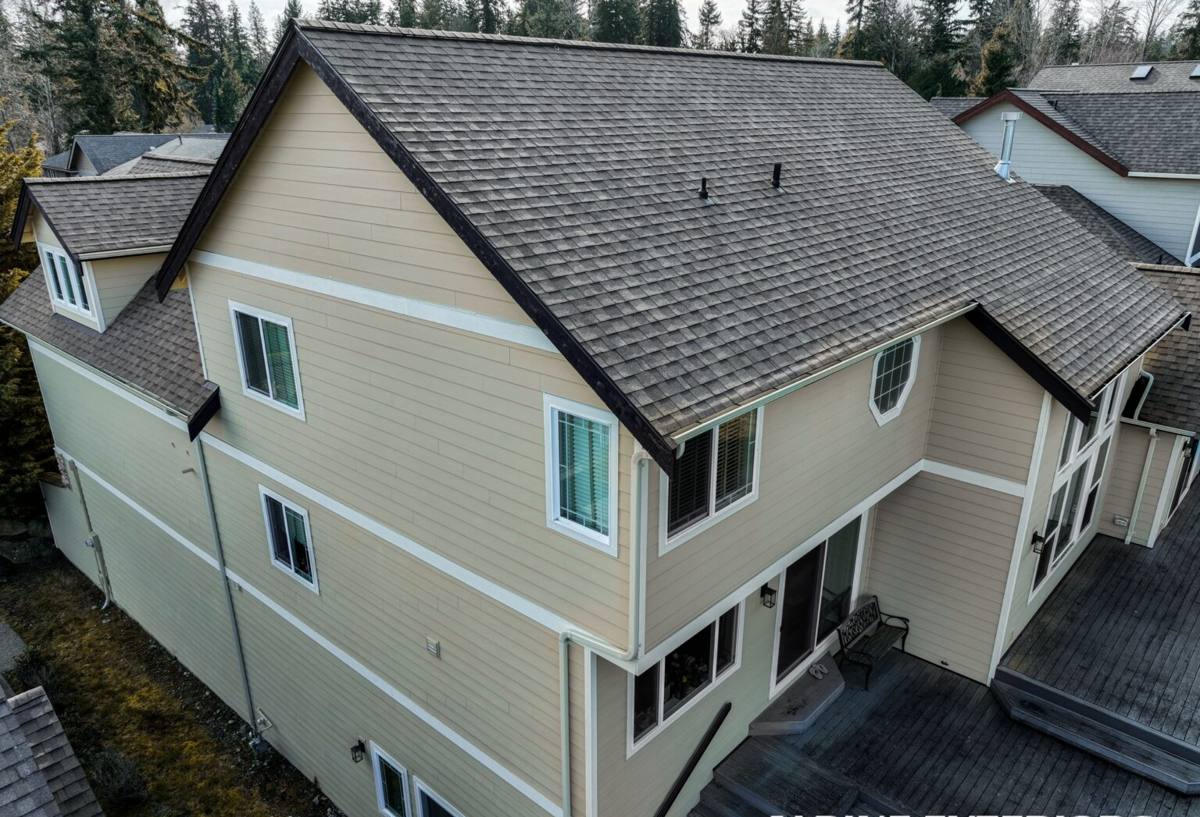
Signs a Deck Needs Repair — Before It Becomes a Bigger Problem
Most deck failures don't happen suddenly. They start small and get ignored because the deck still looks usable. Here's what we tell Happy Valley homeowners to check for, ideally before winter and again once the wet season lets up:
- Boards that feel spongy, springy, or noticeably softer underfoot than the boards around them
- Green or black staining that keeps coming back within weeks of cleaning
- Rust streaks bleeding out from screw heads or around joist hangers
- Railings or posts that wiggle, even slightly, when pushed
- Gaps opening up where the deck meets the house, or a ledger board that looks separated from the siding
- Stair stringers that flex or creak differently than they used to
- Standing water that takes more than a day to disappear after rain
- Fasteners backing out or heads that are corroded flush with the board
Any one of these on its own might just need a straightforward fix. Several at once, especially near the ledger or support posts, usually means it's time for a proper inspection rather than another round of surface patching.
What a Correct Deck Repair Actually Involves
A repair that only replaces the boards you can see is a repair that misses the reason those boards failed in the first place. We look at three layers on every deck: the structure underneath, the surface you walk on, and the connections that tie it all to the house.
Structural Framing and the Ledger Connection
The ledger board — where the deck attaches to the house — is the single most important connection on the whole structure, and it's also the piece most exposed to the kind of chronic moisture Happy Valley's shade and rain create. We check ledger flashing, look for rot behind the board, and confirm the connection is still doing its job before touching anything cosmetic. Joists, beams, and posts get the same scrutiny: soft spots, cracking, and rust at the hangers all get addressed at this stage, not covered over.
Decking Boards, Fasteners, and Flashing
Once the frame is sound, we deal with the decking itself — replacing boards that are cupping, splitting, or holding rot, and swapping out corroded fasteners for hardware rated for the exposure this area actually gets. Flashing details around the ledger and any post bases get corrected if they were installed wrong the first time, which is a common source of hidden rot on older decks.
Railings, Stairs, and Guard Details
Railings and stairs take direct abuse — foot traffic, hand pressure, weather — and they're also a safety issue, not just a cosmetic one. We tighten, replace, or rebuild sections that don't meet a solid, code-appropriate standard, particularly on older decks where railing height or baluster spacing may not match current requirements.
Repair or Replace? How We Help You Decide
Not every deck problem calls for a full rebuild, and not every deck is worth patching indefinitely. The honest answer usually comes down to where the damage is and how much of the structure it's touching.
| Factor | Points Toward Repair | Points Toward Replacement |
|---|---|---|
| Ledger board and main framing | Solid, no rot found | Soft, rotted, or improperly flashed |
| Decking boards | Isolated bad boards, rest is sound | Widespread cupping, splitting, or rot |
| Fasteners and hardware | Localized corrosion | Rust throughout, hangers failing |
| Age of the deck | Under 15–20 years, built to a reasonable standard | Original structure decades old or undersized for current use |
| Footings and posts | Stable, properly set | Settling, shifting, or undersized |
We'll give you a straight answer either way. If a repair genuinely solves the problem, that's what we'll recommend — a full rebuild isn't the right call just because it's on the table.
Material Choices That Actually Hold Up Here
Whatever material a deck is repaired with, it has to handle the same conditions the rest of the deck lives in: near-constant moisture, shade-driven mold and moss pressure, and salt air working on any exposed metal. That shapes a few decisions during a repair.
Pressure-treated lumber remains the standard for framing because it's rot-resistant and cost-effective, but it still needs proper drainage and airflow underneath to perform the way it's supposed to — something worth correcting during a repair if it wasn't handled right originally. For decking boards, wood offers a lower upfront cost and a traditional look but asks for regular cleaning and refinishing to keep moss and staining under control in a shaded yard. Composite decking costs more up front and doesn't need staining, but it still needs to be cleaned periodically — algae and pollen sit on composite surfaces just like they do on wood — and it depends entirely on correct fastening and spacing to drain properly. Neither material is a "fix it and forget it" solution in this climate; the difference is in what kind of upkeep you're signing up for.
For fasteners and hardware, we favor stainless or high-grade coated options rated for coastal exposure over standard hardware store fasteners, which corrode noticeably faster once salt air gets into the mix.
Our Deck Repair Process
- Inspection. We get under the deck, not just walk across the top — checking framing, the ledger connection, footings, and fastener condition, not just the boards you can see.
- Written scope. You get a clear breakdown of what's failing, what's sound, and what we recommend fixing now versus what can wait, along with an honest cost range.
- Repair work. Structural issues get corrected first, then decking, railings, and stairs. We match materials and fastener spacing to blend with the existing structure where that's the goal.
- Cleanup and finish. Debris is cleared, hardware is checked one more time, and if the scope includes sealing or staining, we make sure the deck is fully dry before that step — sealing over damp wood traps moisture and undoes the work.
Maintenance That Extends the Life of a Repaired Deck
A repaired deck holds up a lot longer with a small amount of regular attention, especially on a shaded lot like most in Happy Valley:
- Sweep leaves and debris off the deck surface and out of gaps between boards regularly through fall
- Clean moss and algae off boards and stairs before it gets a deep hold — it's far easier to remove early
- Check railings and stair connections for movement once or twice a year
- Keep gutters and downspouts clear so runoff isn't draining directly onto or under the deck
- Reseal or restain wood decking on the schedule the product actually calls for, not just when it looks faded
Why It Matters to Hire a Crew That Already Works Happy Valley
Deck repair in a shaded, moisture-heavy neighborhood like this isn't identical to deck work on an open, sunny lot elsewhere in Bellingham. A crew that already works in Happy Valley knows what to expect before they even get on the roof of the ladder — which framing details tend to fail first in this kind of shade and moisture, how the local drainage patterns behave on sloped lots, and what the City of Bellingham expects for permitting and railing code on repair and rebuild work. That familiarity shows up in fewer surprises mid-project and a repair that's built for the conditions it actually has to survive, not a generic fix pulled from a different climate.
If your deck is showing any of the signs above, or you just want an honest opinion on what shape it's really in, we're glad to take a look. Reach out for a free, no-pressure estimate using the form below — we'll tell you what we find, plain and simple.