 Bellingham Roofing
 Why Windows Take a Beating in Happy Valley
Happy Valley sits close enough to Bellingham Bay and the Salish Sea that salt-laden air is part of daily life, and it doesn't take a storm to notice it. Salt air corrodes exposed metal hardware, breaks down cheap weatherstripping faster than inland climates would, and works its way into seals that aren't properly protected. Add Whatcom County's long wet season — months of driving rain pushed sideways by wind off the water — and older or poorly installed windows start showing their weaknesses: fogged glass, soft trim, drafts around the frame, and heating bills that climb every winter.
Then there's moss season, which in this part of Washington can stretch from late fall through spring. Moss and algae don't just grow on roofs. They take hold in window sills, tracks, and any spot where moisture sits and sunlight is scarce. Over time that trapped moisture works into the frame material, especially around the bottom corners of a window, which is where we see the most rot and seal failure on older Happy Valley homes.
None of this means windows in this neighborhood need to be replaced constantly. It means the installation has to be done correctly the first time, with materials and flashing details suited to this specific climate, not a generic install job.
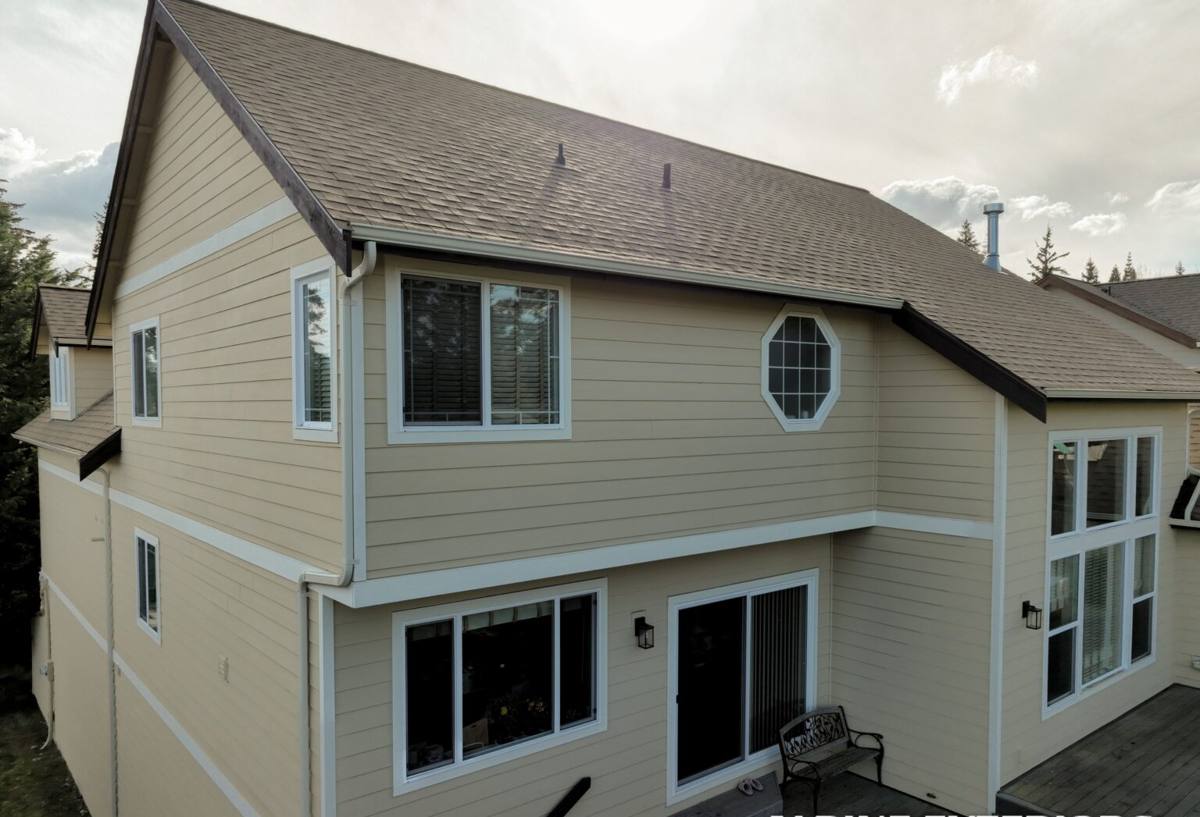
Signs Your Windows Are Losing the Battle
Most homeowners don't think about their windows until something is obviously wrong, but there are earlier warning signs worth watching for:
- Condensation or fog trapped between the panes of a double-pane window (a sign the seal has failed)
- Visible gaps, drafts, or cold spots near the frame when it's windy or raining
- Soft, discolored, or spongy wood at the sill or bottom corners of the frame
- Moss, algae, or dark staining building up in the tracks or on the exterior trim
- Windows that are difficult to open, close, or latch, especially after damp weather
- A noticeable rise in heating costs without any other change in the home
- Paint or finish that's peeling specifically around the window opening, not the rest of the wall
Any one of these can be a minor fix. Several at once, especially soft wood combined with drafts, usually means the window and possibly some of the surrounding framing needs attention.
What a Correct Energy-Efficient Window Job Actually Involves
Removal and Structural Check
The work that matters most happens before a new window ever goes in the opening. When we pull an old window, we check the rough opening, sill, and header for water damage or rot that's been hidden behind trim. In a climate that gets this much driving rain, it's common to find some moisture damage that wasn't visible from inside or outside. Skipping this step and installing a new window over a compromised opening just seals the problem in, where it keeps spreading unseen.
Flashing and Weatherproofing
A window is only as good as the flashing and sealant details around it. That means proper sill pan flashing to direct any water that gets past the window back outside, correctly lapped house wrap or building paper, and sealants applied in the right order and location — not just a bead of caulk around the trim. This detail matters more here than in drier climates, because wind-driven rain will find any shortcut in the weatherproofing over time.
Product Selection for This Climate
Energy efficiency in Bellingham isn't just about keeping heat in during the winter. It's also about managing condensation, resisting moisture at the frame, and holding up to salt air without corroding hardware or breaking down seals early. We select glass packages and frame materials with those conditions in mind, not just whatever has the lowest sticker price.
Choosing the Right Window Type
There's no single "best" window material for every home — it depends on the house's age, style, budget, and how much upkeep the owner wants to take on. Here's how the common options compare for a coastal Whatcom County home:
| Frame Material | Moisture & Salt Air Performance | Maintenance | Typical Fit |
|---|---|---|---|
| Vinyl | Good — won't rot or corrode, but lower-grade vinyl can become brittle over years of UV and temperature swings | Low | Most homes, budget-conscious replacements |
| Fiberglass | Excellent — very stable in wet, salty, temperature-shifting conditions | Low | Homes wanting long-term performance, higher budget |
| Wood-clad | Good exterior protection from the cladding, but any breach in the seal exposes wood beneath to rot risk | Higher — needs attention if cladding is ever damaged | Historic or traditional-style homes prioritizing interior wood look |
| Aluminum | Prone to condensation and heat loss unless thermally broken; can corrode near salt air over time | Moderate | Modern or commercial-style openings, less common in residential retrofits |
For most Happy Valley homes, vinyl or fiberglass frames paired with a quality low-E, argon- or krypton-filled glass package hit the right balance of energy performance, moisture resistance, and cost. We'll walk through the honest trade-offs for your specific home rather than pushing one product line for every job.
Understanding U-Factor and Solar Heat Gain
Two numbers matter most when comparing window performance: U-factor (how well the window resists heat loss — lower is better) and Solar Heat Gain Coefficient, or SHGC (how much solar heat passes through the glass). In this climate, where winters call for retaining heat but summers rarely bring intense direct sun, we typically recommend a lower U-factor paired with a moderate SHGC, adjusted based on which direction your windows face and how much sun exposure each side of the house actually gets.
Our Process From Estimate to Final Walkthrough
- On-site assessment — we look at every window being considered, check for rot or moisture issues, and measure openings precisely.
- Honest product recommendation — based on your home's exposure, budget, and how long you plan to stay in the house.
- Written estimate — clear line items, no vague allowances buried in the total.
- Careful removal — protecting interior floors and trim, checking framing as each window comes out.
- Installation with proper flashing and sealing — not just setting the window and caulking the outside edge.
- Interior and exterior finish work — trim, caulking, and touch-up so the job looks finished, not just functional.
- Final walkthrough — testing operation, checking seals, and cleaning up the job site.
What Affects the Cost
Window replacement costs vary widely based on several factors that are worth understanding before you get quotes:
| Factor | Why It Affects Price |
|---|---|
| Frame material | Vinyl is generally the most affordable; fiberglass and wood-clad cost more upfront |
| Glass package | Upgraded low-E coatings and gas fills add cost but lower long-term energy bills |
| Hidden damage | Rotted framing or sills found during removal require repair before the new window goes in |
| Window size and type | Custom shapes, larger openings, and operable styles (casement, awning) cost more than standard fixed or double-hung units |
| Number of windows | Whole-house replacements typically bring a better per-window price than one-off jobs |
| Access and site conditions | Second-story windows or tight access can add labor time |
We give straightforward, itemized estimates so you know exactly what's driving the price — not a flat number with no explanation behind it.
Why a Crew That Already Works Happy Valley Matters
Window installation looks similar on paper anywhere in the country, but the details that actually matter change based on local conditions. A crew that regularly works in this part of Bellingham already knows how homes here were built, what kind of moisture and rot patterns to expect, and how to detail flashing for wind-driven rain coming off the bay rather than a drier inland climate. That familiarity means fewer surprises during the job and a lower chance of callbacks for a leak or draft that shows up after the first real storm.
It also means faster response if something needs adjusting after installation. A local crew isn't traveling hours to handle a warranty check or a minor punch-list item — we're already working in the area.
Living With New Windows Through Moss Season and Beyond
New, correctly installed windows dramatically cut down on maintenance, but a little upkeep still goes a long way in this climate:
- Clear debris and moss buildup from window sills and tracks a couple times a year, especially going into and coming out of the wet season
- Check exterior caulking annually for cracking or gaps, particularly on south- and west-facing walls that take the most direct rain
- Keep gutters and downspouts clear so water isn't sheeting down across window openings
- Wipe down hardware periodically if you're close enough to the bay to notice salt residue on metal surfaces
- Open and close each window a few times through the seasons so tracks don't seize up from disuse
These are small habits, but they extend the life of even a well-installed window system and help you notice a developing issue before it becomes expensive.
Ready for an Honest Look at Your Windows
If your windows are drafty, fogged, or just past their prime, we're happy to take a look and give you a straight answer about what's actually needed — no pressure, no upsell on windows your home doesn't need. Fill out the form below to schedule a free estimate for your Happy Valley home.