 Bellingham Roofing
 Storm Damage in Happy Valley: What Our Climate Actually Does to a Roof
Happy Valley sits close enough to Bellingham Bay that salt-laden air is a constant factor in how a roof ages, and far enough into the trees that moss, needle litter, and shade are just as constant. Add Whatcom County's wind-driven winter storms coming off the water, and you've got a combination that wears on roofing materials from three directions at once: corrosion from salt exposure, moisture intrusion from driving rain, and slow structural damage from moss that holds water against shingles and decking for months at a time.
None of that means every roof in Happy Valley is in trouble. It means storm damage here rarely looks like a single dramatic event. More often it's a series of smaller hits — a windstorm that lifts a row of shingles, a heavy rain that finds a weak spot the wind opened up, a winter of moss growth that's been quietly rotting the felt underneath. By the time a homeowner notices a stain on the ceiling, the roof has usually been compromised for a while.
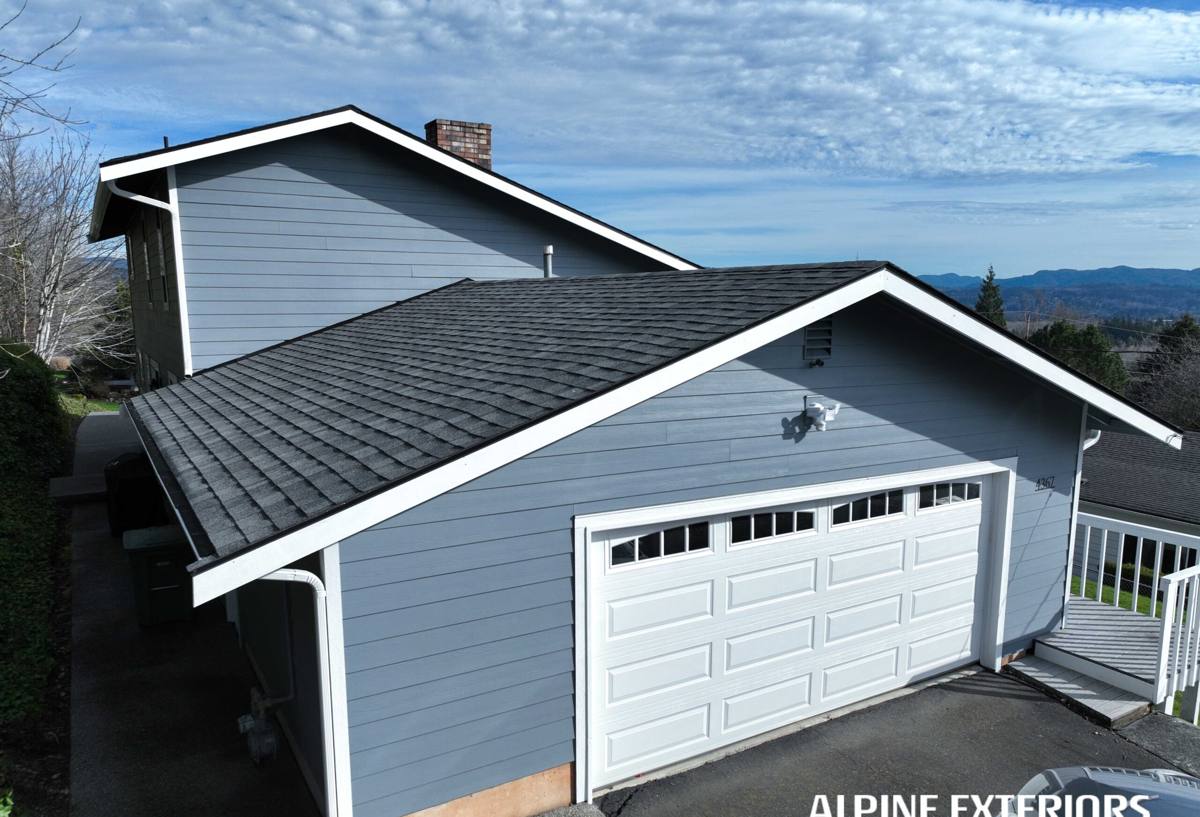
Signs Your Happy Valley Roof Has Storm Damage
Some damage is obvious from the ground. Some isn't, and that's exactly the damage that causes the most expensive problems if it sits through another wet season. Here's what we look for, and what you can check yourself before calling anyone out.
Visible from the ground
- Shingles that are curled, cracked, torn, or missing entirely after a windstorm
- Granules collecting in gutters or at the base of downspouts
- Sagging or uneven roof planes, especially over porches or additions
- Flashing that's bent, lifted, or pulled away from chimneys, skylights, or roof-wall intersections
- Heavy moss or algae buildup, particularly on north-facing slopes that stay shaded most of the day
Signs that require getting on the roof or into the attic
- Soft or spongy decking underfoot, usually a sign water has been getting in for a while
- Water stains, dark streaks, or mold smell in the attic after a storm
- Daylight visible through the roof deck from inside the attic
- Nail heads backing out or fastener corrosion around flashing and ridge caps
If you saw or heard significant wind during a storm, or heard debris hit the roof, it's worth having it looked at even if nothing looks wrong from the driveway. Wind damage in particular can lift a shingle's seal without tearing it off, which leaves no visible gap but destroys the roof's ability to shed water in the next rain.
What a Correct Storm Damage Repair Actually Involves
A repair that only replaces what's visibly broken often fails within a season or two, because it treats the symptom and ignores what let the damage happen. A repair that's actually correct starts with figuring out why the storm was able to do damage in the first place, then fixes that along with the visible problem.
What we check on every storm damage call
- Whether the shingle seal failed from age, from moss undermining adhesion, or from a one-time wind event
- Condition of the underlayment beneath the damaged area, not just the shingles on top of it
- Flashing at every penetration near the damaged zone — chimneys, vents, skylights, valleys
- Decking condition underneath, since Bellingham's rain cycles can rot plywood long before it shows on the surface
- Gutter and drainage function, since a storm that overwhelms clogged gutters can push water back under the roof edge
Where a repair is genuinely the right call, we match materials as closely as possible so the patch doesn't stand out and doesn't create a weak seam at the edges. Where the damage points to a bigger underlying problem — widespread granule loss, multiple failed seals, rot in the decking — we'll say so plainly rather than patching over something that's going to fail again next winter.
Our Process for Storm Repairs in Happy Valley
We keep this straightforward because storm damage is stressful enough without a confusing process on top of it.
1. Inspection and honest assessment
We get on the roof (or use a camera when conditions make that unsafe) and document exactly what's damaged, what's at risk, and what's fine. You get a plain-English explanation, not a sales pitch.
2. Temporary protection if needed
If there's an active leak or exposed decking, we'll tarp or dry-in the area to stop further water intrusion while repair materials are sourced. This matters most during Whatcom County's extended wet stretches, when a delay of even a few days can turn a repair into a replacement.
3. Written scope and pricing
You'll know what's being repaired, what materials are going on, and what it costs before any work starts. No surprise add-ons once the tarps come off.
4. The repair itself
This includes fixing the decking underneath if needed, correct underlayment and flashing detail, and matching shingles or roofing material as closely as the existing roof allows.
5. Follow-up check
We check that the repair is holding after the next real rain event, not just on a dry inspection day.
Repair or Replace? What Actually Drives That Decision
Homeowners often assume storm damage means a full new roof. Sometimes it does, but often a targeted repair is the honest answer — and sometimes a repair would just be delaying a replacement that's coming regardless. Here's how we think through it.
| Factor | Leans toward repair | Leans toward replacement |
|---|---|---|
| Age of roof | Under 10-12 years, or recently replaced | Near or past typical lifespan for its material |
| Extent of damage | Isolated to one section or slope | Spread across multiple slopes or the whole roof |
| Decking condition | Solid, dry, no rot found | Soft, rotted, or repeatedly wet in multiple spots |
| Moss/algae history | Minor, surface-level, recently cleaned | Heavy, longstanding, has undermined shingle seal |
| Prior repair history | First storm issue in years | Several patch repairs already on record |
None of these factors decide it alone — a 6-year-old roof with rotted decking under one bad flashing detail is still a repair candidate, while a 15-year-old roof with widespread granule loss after a moderate storm may be past the point where repair makes financial sense. We'll walk you through where your roof actually falls before recommending either direction.
Moss, Salt Air, and Why Storm Damage Keeps Coming Back for Some Roofs
A lot of "storm damage" in this part of Whatcom County isn't really caused by the storm — the storm just finds and exploits weakness that moss and salt exposure already created. Moss holds moisture against the shingle surface for weeks after a rain event, which softens the adhesive seal and makes shingles far easier for wind to lift. Salt-influenced air, especially closer to the Bay, accelerates corrosion on metal flashing, fasteners, and gutter systems, which is often where storm-driven leaks actually start.
This is why we treat moss removal and metal component inspection as part of storm damage repair, not as a separate service. Repairing the shingle without addressing the moss that's still growing on the shaded slope next to it just sets up the same failure for next season.
What helps between storms
- Keeping gutters clear so water isn't backing up under the roof edge during heavy rain
- Removing moss before it spreads past a light surface growth, rather than after it's established
- Trimming back tree cover that keeps roof sections shaded and slow to dry
- Having flashing and fasteners checked every couple of years, since corrosion damage is gradual and easy to miss until it fails
Why a Crew That Already Works Happy Valley Matters Here
Storm damage repair isn't just about roofing skill in general — it's about knowing how a specific area's conditions tend to fail. A crew that works Happy Valley regularly already knows which roof orientations in the neighborhood hold moss longest, which older homes are more likely to have decking issues under their existing roofing, and how quickly a temporary tarp job needs to become a permanent fix before the next weather system moves through.
That local pattern recognition shortens the inspection, sharpens the diagnosis, and usually means fewer surprises once a repair is underway. It also means we can move fast after a storm, which matters when the difference between a repair and a much larger problem is often just a matter of days.
What to Do Right After a Storm Hits Your Home
- Check the attic for water stains, damp insulation, or daylight through the decking
- Look at gutters and downspouts for granules, which indicate shingle wear or damage
- Photograph any visible damage from the ground for your own records
- Avoid getting on the roof yourself, especially after rain — wet, moss-covered roofing is genuinely dangerous
- Get a professional inspection before the next rain event if you suspect any damage at all
- Hold off on quick fixes like caulk or sealant over a suspected leak — they can mask a problem that needs a real repair
Get an Honest Look at Your Roof
If a recent storm has you wondering about your roof's condition, or you just want a professional set of eyes on it before the next system rolls in off the water, we're glad to take a look. We'll give you a straight answer about what's damaged, what's not, and what it actually takes to fix it right. Use the form below to request a free, no-pressure estimate for your Happy Valley home.