 Bellingham Roofing
 Barkley's Climate and What It Does to Siding
Barkley sits close enough to the water and tree cover that its homes take a specific kind of beating year-round. Salt-laden air drifts in off the Salish Sea and settles into anything porous or poorly sealed. Driving rain, pushed sideways by winter storms, finds every gap in a wall assembly instead of just running off the surface. And because Whatcom County stays cool and damp for most of the year, moss and algae get a long runway to establish themselves on north-facing walls, under eaves, and anywhere sunlight doesn't reach often enough to dry things out.
None of that is unique to one street or subdivision, but it adds up differently depending on the siding material already on the house. Wood-based products absorb moisture and swell. Vinyl chalks, warps, and gives algae something to grip. Paint film on wood or fiber cement without a factory finish breaks down faster here than it would in a drier climate. If you own a home in Barkley, the siding question isn't really "what looks good" — it's "what actually holds up to this specific combination of salt, rain, and shade."
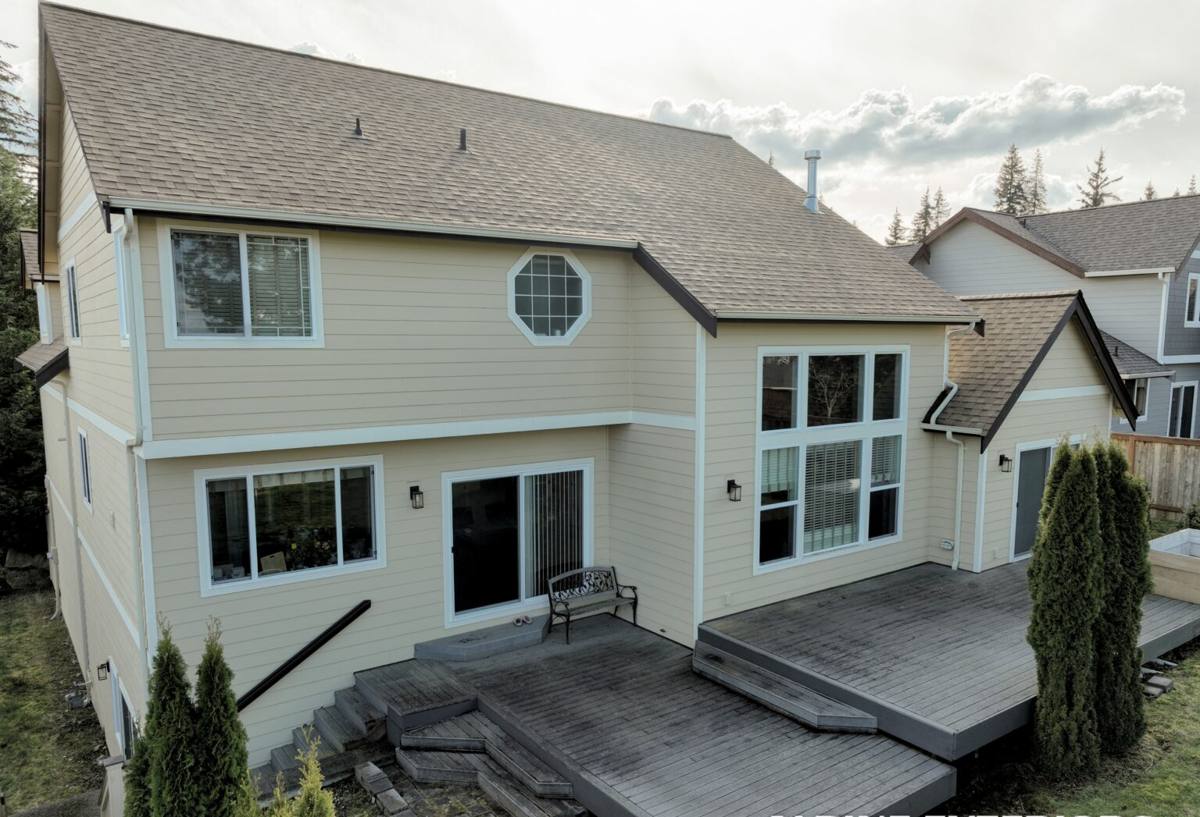
Why James Hardie Fits Barkley Homes
We install James Hardie fiber cement exclusively, and this climate is a big part of why. Fiber cement doesn't rot, doesn't feed moss the way porous wood surfaces do, and doesn't warp when it takes on moisture the way vinyl and some engineered wood products can. James Hardie's HZ5 product line is engineered specifically for the kind of wet, moderate-temperature climate we have in the Pacific Northwest, with moisture management built into the plank design rather than relying entirely on paint or caulk to keep water out.
The factory-applied ColorPlus finish matters here too. A factory finish cures under controlled conditions and bonds to the substrate in a way that a job-site paint job on bare material can't fully match, especially in a region where you don't get long stretches of dry, warm weather for paint to cure properly. That translates into a finish that holds its color and sheds grime — including the surface grime that helps moss and algae take hold — longer than field-painted alternatives.
What a Correct Installation Actually Involves
Fiber cement siding is only as good as its installation. A correct Hardie install in a wet climate like this one is mostly about managing water before it ever reaches the wall sheathing, not just fastening boards to studs.
Clearances and Flashing
Every horizontal surface — window heads, door heads, deck ledgers, roof-to-wall intersections — needs proper flashing that directs water away from the sheathing, not into it. Hardie boards also need the manufacturer's specified clearance from grade, roofing, decks, and walkways so water doesn't wick up into the bottom edge of the siding. Skipping these details is the single most common cause of siding failure we see, regardless of what material is on the wall.
Fastening and Fit
Hardie panels and lap siding have specific nailing patterns, fastener types, and butt-joint treatments spelled out by the manufacturer. Over-driven nails, wrong fastener spacing, or tight-fit joints without room for expansion all shorten the life of an installation, even with the best material. This is also where a crew's day-to-day experience with the product shows — the difference between a board that's merely attached and one that's installed to hold up through a wet winter is almost entirely in these details.
Finish and Sealant Details
Cut edges get sealed, joints get the right sealant (not just whatever's on the truck), and touch-up paint matches the ColorPlus finish rather than a generic tint. Small as they sound, these are the details that keep water out of end grain and joints for the life of the siding.
Signs Your Current Siding Is Already Losing the Fight
Homeowners in Barkley often call us after noticing one or two of these signs, not because they're planning a full remodel:
- Green or black growth that comes back within weeks of being washed off, especially on shaded or north-facing walls
- Soft or spongy spots when you press on wood-based siding, particularly near the bottom courses or under windows
- Paint that's peeling, bubbling, or chalking faster than a normal repaint cycle would explain
- Visible gaps, warping, or boards that have pulled away from the wall at the joints
- Staining or streaking below window sills or flashing points, which usually points to water getting behind the siding rather than just running down the face
Any one of these is worth a look. Several together usually means the underlying wall assembly has been taking on water for a while, and that's a bigger problem than the siding surface alone.
Our Process for Barkley Projects
Assessment
We start by looking at the whole wall system, not just the siding surface — sheathing condition, existing flashing, window and door details, and any areas where past water intrusion has already done damage. This tells us whether it's a straightforward siding swap or whether some sheathing repair needs to happen first.
Prep and Tear-Off
Old siding comes off, damaged sheathing gets replaced, and a proper weather-resistive barrier goes on before a single Hardie board is installed. This step is where a lot of corners get cut industry-wide, and it's where we spend the most care.
Installation
Hardie boards go on per manufacturer specifications for clearance, fastening, and flashing integration at every penetration and transition. We work in sections so the house isn't left exposed to weather longer than necessary — a real consideration given how often Barkley gets rain outside of the summer months.
Final Walkthrough
We check caulking, touch-up paint, and trim details with you before calling the job done, and make sure you know what warranty coverage applies and what (if any) simple maintenance is recommended going forward.
Hardie Product Lines and Colors for This Climate
James Hardie's lineup gives Barkley homeowners real options without stepping outside a product built for this weather:
- HardiePlank lap siding — the most common choice for traditional home styles, available in several exposure widths and textures
- HardiePanel vertical siding — often used for accent sections, gables, or more modern facades
- HardieTrim — matching trim boards for a consistent, factory-finished look around windows, corners, and fascia
- ColorPlus finishes — a range of factory-applied colors chosen for fade resistance, which matters more here than in drier climates where UV is the main enemy instead of UV plus constant moisture
We'll talk through which combination makes sense for your home's style and exposure — a wall that faces prevailing weather off the water may warrant a different product or detail treatment than a sheltered side yard.
James Hardie vs Other Siding Options
| Material | Moisture Behavior | Moss/Algae Resistance | Finish Longevity |
|---|---|---|---|
| James Hardie fiber cement | Does not rot or swell; engineered HZ5 line for wet climates | Non-organic surface resists growth better than wood | Factory ColorPlus finish, long fade resistance |
| Vinyl | Doesn't absorb water but can trap moisture behind it if installed poorly | Textured surfaces can hold grime that feeds growth | Color molded in, but can chalk and fade over time |
| Cedar | Absorbs moisture, prone to swelling and rot without diligent upkeep | Organic material, more susceptible to moss and algae | Requires repainting/staining on a recurring cycle |
| Primed spruce/engineered wood | Vulnerable at cut edges and joints if field-sealing isn't perfect | More susceptible than fiber cement | Depends heavily on job-site paint quality |
This is why we standardized on James Hardie rather than offering all of the above: in a climate like ours, the material itself does a lot of the work of keeping a wall assembly healthy for the long haul, and we'd rather install one product well than several products with more trade-offs.
Cost Factors for a Barkley Siding Project
| Factor | Why It Affects Cost |
|---|---|
| Tear-off and disposal | Removing old siding and hauling it away adds labor before installation even starts |
| Sheathing condition | Water-damaged sheathing found during tear-off needs repair before new siding goes on |
| Home size and wall complexity | More corners, gables, and penetrations mean more flashing and trim work |
| Product selection | Lap vs panel, exposure width, and trim choices all affect material cost |
| Access and site conditions | Grade, landscaping, and how close the house sits to property lines affect setup and staging |
We give a firm, itemized quote after seeing the actual wall conditions rather than guessing from a drive-by — that's the only way to give you a number you can trust.
Choosing a Contractor Who Actually Works Barkley
A crew that regularly works this neighborhood already understands the exposure patterns, the local permitting expectations, and the kind of moisture problems that show up here specifically. Before hiring anyone for a siding project, it's worth asking:
- Are you James Hardie factory-trained or certified installers, and can you explain your fastening and flashing approach?
- Will you inspect and repair sheathing before installing new siding, not just cover over what's there?
- What warranty applies to the material versus the labor, and who do I call if something needs attention later?
- Can you walk me through how you'll handle window and door flashing specifically?
- Do you carry current licensing and insurance for work in Whatcom County?
A contractor who's done this work up and down Barkley streets before should be able to answer all of these without hesitation.
If your siding is showing signs of wear, or you're planning ahead for a project, we're happy to take a look and put together a straightforward, no-pressure estimate — just fill out the form below.