 Bellingham Roofing
 Roofing in Lynden Faces a Specific Set of Problems
Lynden sits inland from the water, but it still lives inside Whatcom County's marine-influenced weather pattern — the same weather system that brings salt-laden air off the Sound, long stretches of driving rain, and a moss season that can run most of the year on a shaded roof slope. Asphalt shingles are the most common roofing material in this area for good reason: installed correctly, they hold up to that combination well and cost less to maintain over time than most alternatives. Installed carelessly, or with the wrong shingle for a north-facing slope buried in fir shade, they fail early in exactly the ways this climate is hardest on — granule loss from constant moisture cycling, moss lifting tabs at the edges, and nail heads working loose as the deck swells and dries with the seasons.
This page is about one job: asphalt shingle roofing on homes in and around Lynden. Not a general overview of every roofing option, but what actually matters for a shingle roof on a property in this specific part of Whatcom County.
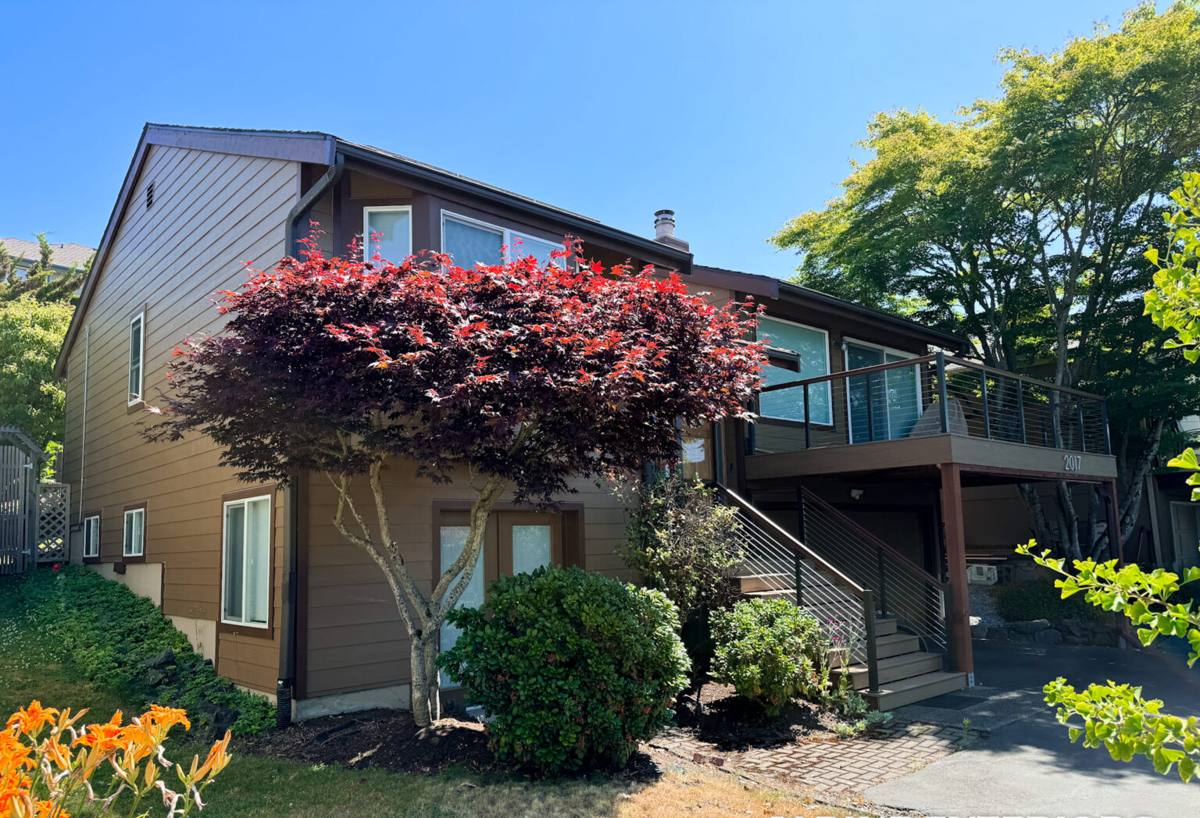
What Whatcom County Weather Does to a Shingle Roof
Driving Rain and Wind-Driven Moisture
Rain here doesn't just fall straight down — wind pushes it sideways under shingle tabs, into exposed nail heads, and up under ridge caps if they're not sealed properly. A roof that would hold up fine in a drier climate with less wind can leak within a few seasons here if the underlayment, flashing, and shingle overlap weren't sized for wind-driven rain in the first place.
Moss and Organic Growth
Shaded, north-facing roof slopes in this region can stay damp for weeks at a stretch, which is exactly what moss needs to take hold. Once moss establishes itself under shingle tabs, it holds moisture against the shingle surface, lifts the tabs, and accelerates granule loss — which is the beginning of the end for an asphalt shingle's lifespan. Left unaddressed, a mossy roof section can shave years off its expected service life.
Salt Air and Fastener Corrosion
Whatcom County's overall coastal exposure means galvanized or poorly rated fasteners and flashing corrode faster here than they would further inland in a drier state. It's a slower problem than moss or wind-driven rain, but it shows up over the years as rust streaking, loosened nail heads, and flashing that fails before the shingles around it do.
What a Correctly Installed Shingle Roof Needs Here
Given all of that, a shingle roof built for a Lynden home needs a few things that a generic install in a milder climate might skip:
- Proper underlayment coverage — synthetic or felt underlayment sized and lapped to shed wind-driven rain, not just standing water.
- Ice-and-water shield at vulnerable points — valleys, eaves, and around penetrations, where wind-driven moisture and freeze-thaw cycling do the most damage.
- Corrosion-resistant fasteners and flashing — hardware rated for the region's air and moisture exposure, not the cheapest option that meets minimum code.
- Balanced attic ventilation — intake and exhaust that actually work together, so moisture from inside the house isn't condensing on the underside of the deck and rotting it from below.
- Shingle selection matched to sun and shade exposure — a algae-resistant, higher-grade shingle on shaded northern slopes where moss and staining are worst.
Skip any one of these and the roof will likely still look fine for a year or two. The problems this climate causes are cumulative — they show up as leaks, granule loss, and moss colonies three, five, or eight years in, not on day one.
Signs a Lynden Roof Needs Attention
Most shingle roof failures here give warning signs well before there's an active leak inside the house. Worth checking for, especially after a wet winter:
- Dark streaking or green-black patches on shaded slopes — early moss or algae growth
- Granules collecting in gutters or at downspout outlets
- Curling, cupping, or lifted shingle tabs, especially near roof edges
- Visible daylight or gaps around flashing at chimneys, vents, or skylights
- Soft spots or sagging when walked on (should only be checked by a roofer, not the homeowner)
- Rust streaking below metal flashing or fasteners
- Ice-dam damage or peeling paint on eaves after a cold snap
Any one of these on its own isn't necessarily an emergency. Several at once, or any sign of interior water staining, means it's worth having someone look before the next wet season.
Choosing the Right Shingle for This Climate
Not every asphalt shingle product is built the same way, and the differences matter more here than in a drier climate. The table below is a general comparison — actual product lines and warranty terms vary by manufacturer.
| Shingle Type | Typical Lifespan Here | Moss/Algae Resistance | Best Use |
|---|---|---|---|
| 3-tab (standard) | 15–20 years | Low unless treated | Budget-conscious re-roofs, sun-exposed slopes |
| Architectural / dimensional | 25–30 years | Moderate to high (with algae-resistant granules) | Most homes; better wind and moisture performance |
| Premium/designer laminate | 30+ years | High (algae-resistant granules standard) | Shaded, moss-prone slopes; higher-end curb appeal |
For homes with significant shade from mature trees — common on larger Lynden lots — we generally steer homeowners toward algae-resistant architectural shingles even if it costs a bit more upfront. The maintenance savings and extra years of service life usually make up the difference. We don't push the cheapest 3-tab option on a shaded north slope, not because it's a bad product, but because it's the wrong product for that specific exposure — a standard has to account for where the shingle is actually going, not just what it costs at the yard.
How We Approach a Re-Roof or Repair
The process is straightforward, and we walk every homeowner through it before work starts:
- On-site inspection — we walk the roof (weather permitting) and check the attic from inside, looking at decking condition, ventilation, and existing flashing, not just the shingles themselves.
- Honest scope and estimate — what actually needs to happen, what it costs, and what's optional versus necessary. No pressure, no inflated scare-tactic pitch.
- Tear-off and deck check — old material comes off completely so we can check the decking underneath for rot or soft spots before anything new goes down.
- Underlayment and flashing first — this is the layer that actually keeps water out; it gets done right before a single shingle is nailed down.
- Shingle installation — matched to the slope's sun/shade exposure and nailed to manufacturer spec, not shortcut spacing.
- Ventilation check — intake and exhaust confirmed to be working together, adjusted if the existing setup was inadequate.
- Final walkthrough — we go over the finished roof and the warranty coverage with the homeowner before calling the job done.
Why a Crew That Already Works Lynden Matters
A roofing crew that regularly works Lynden and the surrounding parts of Whatcom County has already seen how the local weather pattern plays out on real roofs over years, not just at the point of installation. That matters in a few concrete ways: knowing which slope orientations on local homes tend to grow moss fastest, understanding how wind direction affects where driving rain actually hits a roof, and having a working sense of which fastener and flashing grades hold up versus which corrode early. It also means being reachable if a problem shows up two years after the job — not a crew that did one job in the area and moved on.
Local crews also tend to have a better read on permitting and code requirements specific to Whatcom County jurisdictions, which avoids delays or rework on the paperwork side of a re-roof.
Maintenance That Actually Extends a Shingle Roof's Life Here
A correctly installed shingle roof still benefits from basic upkeep in this climate — this isn't optional in a region with a moss season this long:
- Keep gutters clear so water isn't backing up under the eaves during heavy rain
- Trim back overhanging branches to reduce shade and debris buildup on the roof surface
- Have moss treated (not power-washed, which can strip granules) as soon as it appears, rather than waiting until it's established
- Check attic ventilation isn't blocked by insulation or storage
- Get an inspection after any major windstorm, even if nothing looks obviously wrong from the ground
What Drives the Cost of a Shingle Roof Here
Every roof is different, but the same handful of factors tend to move the price on shingle jobs in this area:
| Factor | Why It Matters Here |
|---|---|
| Roof pitch and complexity | Steeper or multi-valley roofs take longer and need more flashing work to handle wind-driven rain properly |
| Deck condition | Rot found under old shingles (common on shaded, moss-affected slopes) adds repair cost before new shingles go down |
| Shingle tier chosen | Algae-resistant, higher-grade shingles cost more upfront but reduce moss-related maintenance and last longer |
| Ventilation upgrades | Adding or correcting intake/exhaust ventilation protects the new roof's warranty and lifespan |
| Tear-off vs. overlay | A full tear-off costs more than overlaying but is usually the right call in a climate where trapped moisture under old layers causes real damage |
We give a written, itemized estimate before any work starts, so there's no guessing about what's driving the number.
If you're noticing granules in the gutters, moss creeping in on a shaded slope, or just haven't had your roof looked at in a few years, we're happy to come out, walk the roof, and give you a straight answer — no pressure, no obligation. The estimate is free.