 Bellingham Roofing
 Composite Decking in Lynden: Built for the Weather We Actually Get
Lynden sits in farm country, but it isn't spared from what makes Whatcom County decks fail early. The same weather pattern that soaks the rest of the county — long stretches of drizzle from fall through spring, short bright summers, and a moss season that seems to start earlier every year — hits Lynden decks just as hard as anywhere else in the region. Add in proximity to Puget Sound air moving up the valley, and you've got wood surfaces that stay damp longer than most homeowners realize, even when it isn't actively raining.
Composite decking exists specifically to solve that problem. It doesn't mean a deck here is maintenance-free, but it does mean the material itself stops being the weak link. The rest comes down to how it's built — substructure, fastening, ventilation, and drainage — which is where a lot of decks in this area actually go wrong, regardless of what surface material sits on top.
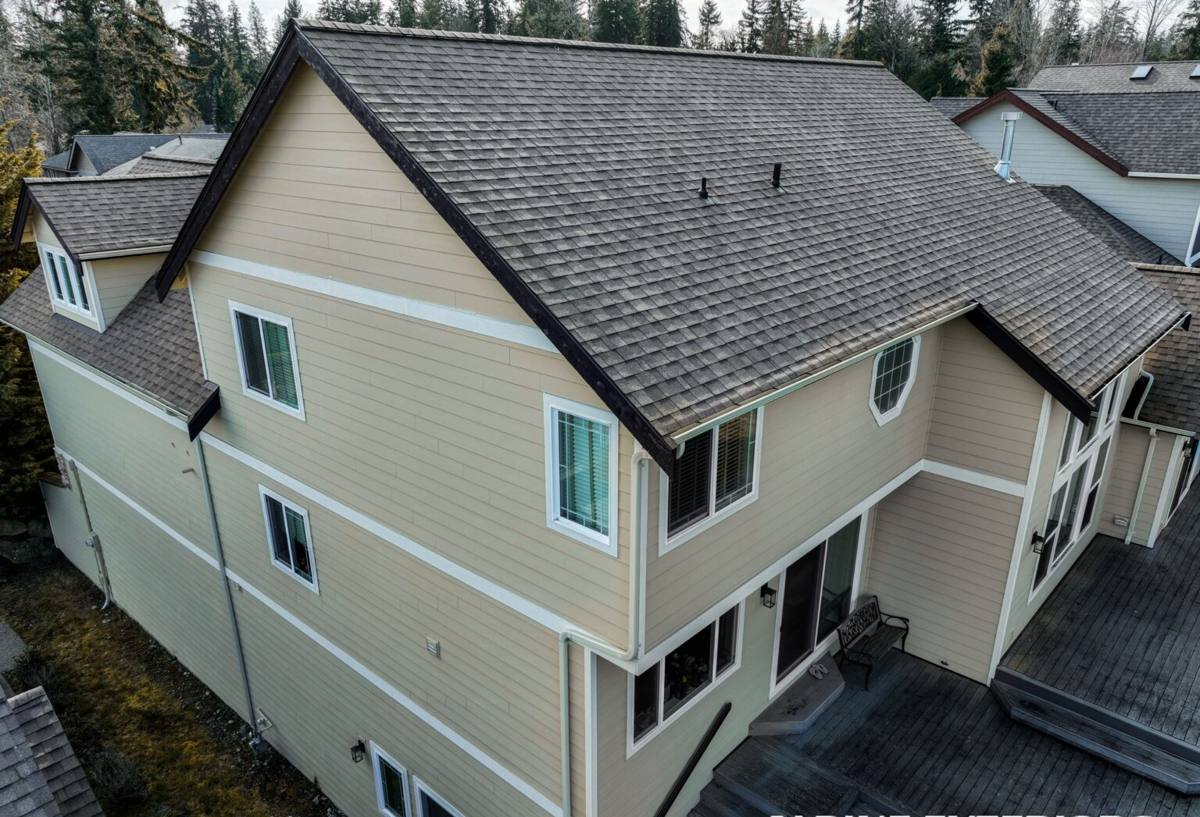
What Lynden's Climate Does to a Deck Over Time
Before talking about the product, it's worth understanding what you're actually building against:
- Driving rain — wind-driven moisture gets pushed sideways into fascia boards, railing posts, and any gap where two materials meet, not just onto the horizontal surface.
- Extended damp periods — Whatcom County doesn't get the heaviest annual rainfall in the state, but it gets some of the longest stretches of low-intensity, low-evaporation moisture, which is worse for wood rot than a few hard storms.
- Moss and algae growth — shaded decks, north-facing decks, and anything under tree cover will grow moss on wood or low-grade composite boards within a couple of seasons if the surface can't shed water and dry between rains.
- Seasonal freeze-thaw — Lynden gets real cold snaps most winters. Water trapped in wood grain or under fasteners expands and contracts, which is what eventually splits boards and loosens connections.
None of this is unique to Lynden, but it's a good reminder that "composite decking" isn't a single answer — the quality of the board and the quality of the build both matter, and one doesn't fix the other.
Why Composite Makes Sense Here
Moisture Behavior
Wood decking absorbs and releases moisture constantly, which is what drives cupping, splintering, and eventually rot at fastener points. Composite boards are far less absorptive — most modern composites use a capped outer shell specifically to keep water from soaking into the core. That matters more in a climate like ours, where boards rarely get a long dry stretch to fully release moisture before the next rain arrives.
Moss Resistance
Moss needs a damp, textured surface to colonize. Capped composite boards with a tighter, more consistent surface texture give moss spores less to grab onto compared to raw wood grain or older uncapped composite products. It won't stop moss from forming in a heavily shaded, poorly ventilated spot — nothing will — but it slows the process and makes cleaning it off far less destructive than scrubbing or pressure-washing wood fibers.
Long-Term Maintenance
You still have to clean a composite deck. You don't have to sand, stain, or seal it. For homeowners in Lynden who are already dealing with moss on the roof, the driveway, and the fence line every year, cutting one more surface out of that annual maintenance list is a real, practical benefit — not just a sales pitch.
Composite vs. Other Decking Materials
| Material | Moisture Behavior | Moss/Algae Resistance | Maintenance | Typical Lifespan |
|---|---|---|---|---|
| Pressure-treated wood | Absorbs and releases moisture; prone to cupping and splitting | Low — porous surface holds spores | Annual cleaning, periodic staining/sealing | 10-15 years with upkeep |
| Cedar | Naturally moisture-resistant but still absorbs over time | Moderate | Regular sealing, more expensive to maintain | 15-20 years with upkeep |
| Capped composite | Low absorption, shell resists moisture intrusion | High — smoother, tighter surface | Periodic washing, no sealing/staining | 25-30+ years (manufacturer-backed) |
| PVC/vinyl decking | Very low absorption | High | Low, but can look and feel less like natural wood | 25-30+ years |
We install capped composite as our standard recommendation for most Lynden homes because it strikes the right balance for this climate — strong moisture performance, a natural look, and a maintenance routine homeowners will actually keep up with.
What a Correct Composite Deck Build Involves
The board itself is maybe half the equation. The other half is the structure underneath it, and this is where corners get cut on a lot of decks — old and new.
Substructure and Framing
Composite boards are heavier than wood and behave differently under load and temperature change. Joist spacing, beam sizing, and ledger attachment all need to match the manufacturer's specs for the specific product being installed — not just "what worked for the last deck." Using wood joist spacing rules for a composite deck is a common shortcut that leads to bounce and premature sagging.
Ventilation Underneath
A deck built low to the ground or against a house wall with poor airflow underneath will trap moisture regardless of what surface material sits on top. Proper joist spacing, gapping, and in some cases venting or drainage systems underneath the deck keep air moving so the structure actually gets to dry out between rain events — which, in Lynden, matters more than people expect.
Fastening
Hidden fastener systems are the standard for a clean composite deck surface, but they have to be rated for the specific board profile and installed at the correct spacing. Incorrect fastener choice is one of the most common causes of board movement, squeaking, and edge lifting over time.
Flashing and Ledger Connections
Where the deck meets the house is the single most important detail on the entire build. A ledger board without proper flashing is an invitation for water to travel behind siding and into the house structure — this is true whether the decking is wood or composite, and it's not something a nice-looking board can compensate for.
Railing and Post Attachment
Composite railing systems need the same attention to fastening and water management as the decking surface, particularly at post bases where water tends to collect.
Our Process for a Lynden Composite Deck
- On-site assessment — we look at the existing structure (if there is one), sun exposure, drainage patterns, and how water currently moves around the area before recommending anything.
- Design and product selection — board profile, color, and railing style based on your home, budget, and how much sun or shade the deck actually gets.
- Permitting — most deck projects in Whatcom County and the City of Lynden require a permit; we handle that process rather than leaving it on you.
- Demo and structural work — removal of the old deck if applicable, and framing built to the new board manufacturer's specifications.
- Decking, railing, and fastening — installed with attention to ventilation, expansion gaps, and proper hidden fastening.
- Final walkthrough — we go over care basics with you before we consider the job done, not just hand you an invoice.
Cost Factors on a Composite Deck Project
| Factor | Why It Matters |
|---|---|
| Deck size and footprint | Larger square footage means more boards, more framing, and more labor hours |
| Height and grade | A raised deck needs more substructure, footings, and stairs than a low ground-level deck |
| Board tier | Composite lines range from entry-level to premium; higher tiers usually mean better fade and stain resistance |
| Railing system | Composite or aluminum railing adds cost over basic wood railing but matches the low-maintenance goal |
| Demo requirements | Removing and hauling away an old deck adds labor and disposal cost |
| Site access | Tight side yards or fenced backyards can slow material staging and increase labor time |
We won't quote a number without seeing the site — anyone who does is guessing. What we can tell you is that composite decking typically costs more upfront than pressure-treated wood and less than most premium cedar builds, with the payoff coming in avoided maintenance over the deck's life.
What to Check Before You Hire Anyone for a Deck in Lynden
- Are they licensed and insured to do structural work in Washington, not just a handyman operation?
- Do they pull the required permit, or suggest skipping it?
- Can they explain their joist spacing and fastener choice for the specific composite product they're recommending?
- Do they address ledger flashing and under-deck ventilation, or just talk about the surface boards?
- Do they work in Lynden and Whatcom County regularly, or is this a one-off trip for them?
- Will they walk you through basic maintenance before the job is finished?
Why a Crew That Works Lynden Regularly Matters
A deck built to a generic spec sheet without accounting for local conditions is how you end up with moss by year two and soft spots by year five. Working in Whatcom County regularly means knowing how local drainage, shade patterns, and moisture cycles actually behave over a full year — not just what a manufacturer's installation guide says in the abstract. It also means being available if something needs a look after the first winter, rather than being a crew that was passing through.
If you're weighing a new composite deck or replacing a tired wood deck in Lynden, we're happy to come take a look, walk the site with you, and put together a straightforward, no-pressure estimate — no obligation, no hard sell.