 Bellingham Roofing
 Custom Decks for Lynden Homes
Lynden sits inland from Bellingham Bay in the flat, fertile stretch of Whatcom County near the Nooksack River, and that setting shapes what a deck needs to survive here. Homes on larger lots, farm properties, and newer residential streets around Lynden all deal with the same basic problem: long wet seasons, ground that stays damp well into spring, and enough shade from mature trees and fence lines to keep moss and algae established on any horizontal wood surface. A deck built the same way you'd build one in a dry inland climate does not hold up here. A deck built for this specific ground and this specific weather pattern does.
We build and repair custom decks throughout the Lynden area as part of our regular Bellingham-area service territory. This page covers what actually matters for a deck in this specific part of Whatcom County — not generic deck-building advice, but the details that separate a deck that looks good for two summers from one that's still solid in fifteen years.
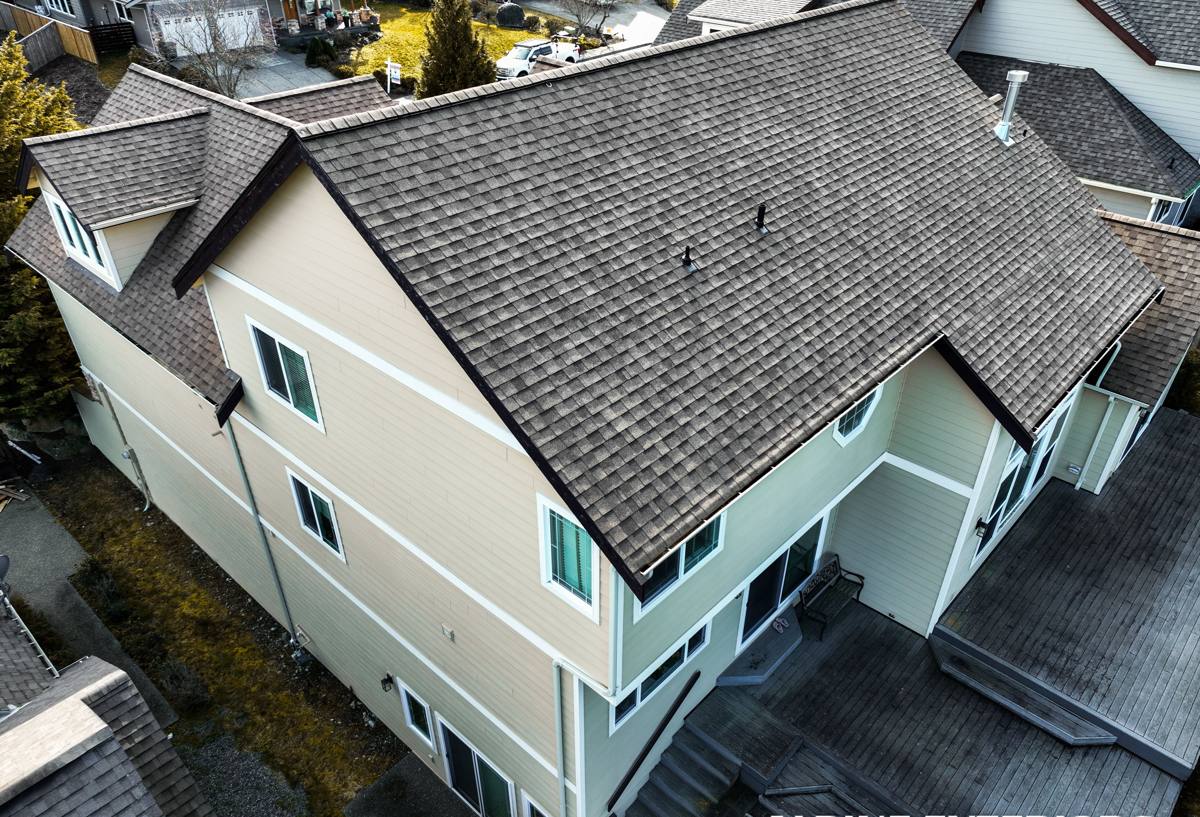
What Lynden's Climate Actually Does to a Deck
Driving Rain and Standing Water
Whatcom County gets a long, steady wet season, and Lynden's flat terrain means water doesn't always drain away from a house as fast as it should. On a deck, that shows up as moisture that sits in joints, around post bases, and under decking boards longer than it should. Wood that stays damp for weeks at a stretch is wood that's setting up for rot, no matter how good it looked when it was installed. The framing underneath the visible deck surface is where this damage actually starts, and it's almost always invisible until a board feels soft underfoot or a railing post starts to wobble.
A Long Moss and Algae Season
Shaded decks, north-facing decks, and decks near trees or tall fencing in this area grow moss and green algae film for a large part of the year, not just a few weeks. That growth isn't just cosmetic — moss holds moisture directly against the wood surface and speeds up decay, and it makes boards genuinely slick and dangerous to walk on when wet. A deck design that ignores sun exposure and airflow is signing up for a moss problem from day one, regardless of what material it's built from.
Marine Air Across the County
Whatcom County's climate is shaped by its proximity to Bellingham Bay and the Salish Sea, and that marine influence — cooler, damp air that carries salt content closer to the water — affects fasteners, hardware, and finishes on outdoor structures countywide, Lynden included, even at a distance from the shoreline. Hardware that isn't rated for a coastal-influenced climate corrodes faster than homeowners expect, which is one of the most common causes of premature deck failure we see on older builds.
What a Correct Deck Build Involves Here
Framing and Ledger Attachment
The ledger board — where the deck attaches to the house — is the single most important connection on any deck, and it's also the point most exposed to trapped moisture if it's flashed wrong. A correct ledger installation uses proper flashing that sheds water away from the house framing, not just caulk or a wrap that looks sealed but traps moisture behind it. This is not an area to cut corners, and it's one of the first things we check on any repair call for a deck that's failing early.
Post Bases and Footings
Ground contact is where wet, low-lying Lynden soil causes the most long-term damage. Post bases should sit above grade on proper hardware, not buried in soil or sitting directly on a footing where water pools. Footings need to be sized and set to local frost and load requirements, not guessed at.
Decking Material Choices
The boards you walk on need to handle standing moisture, resist moss colonization, and stay safe underfoot when wet. That doesn't mean every deck should be composite, and it doesn't mean cedar is off the table — it means the choice should be made with this climate in mind, not just upfront cost or appearance.
Fasteners and Hardware
Given the marine-influenced air across the county, we use fasteners and structural hardware rated for coastal/damp exposure as our standard, not an upgrade option. Using bargain fasteners on a deck in this region is one of the more common shortcuts that leads to rust streaking, loosened boards, and structural connections weakening years before the wood itself would have failed.
Comparing Decking Materials for Lynden Conditions
| Material | Moisture Behavior | Moss Resistance | Maintenance |
|---|---|---|---|
| Pressure-treated lumber | Handles moisture well when properly maintained; can cup or check if finish is neglected | Moderate — needs regular cleaning in shaded areas | Annual cleaning and periodic re-sealing |
| Cedar | Naturally moisture-resistant but still needs finish upkeep in a wet climate | Moderate to good with proper airflow and cleaning | Regular cleaning; refinishing every few years |
| Composite decking | Does not absorb moisture or rot; core materials vary by brand | Still grows surface moss/algae film if shaded and not cleaned | Periodic washing; no staining or sealing needed |
Composite eliminates the rot risk that plagues shaded, damp decks in this area, but it is not moss-proof — any horizontal surface in a shaded Lynden yard will grow surface algae if it's never cleaned, composite or not. Real wood, properly finished and maintained, remains a solid choice for homeowners who want that look and are willing to keep up with sealing on a regular schedule. We'll walk through the honest trade-offs of each option based on your specific lot's sun exposure and tree cover rather than pushing one material by default.
Our Process
- On-site assessment — we look at your lot's drainage, sun exposure, tree cover, and how the deck will tie into the house before recommending anything.
- Design and material selection — layout, railing style, and decking material chosen around how the space will actually be used and how much shade/moisture it will see.
- Permitting — Whatcom County and City of Lynden permit requirements vary by project scope and deck height; we handle what applies to your build.
- Framing and structural work — proper ledger flashing, footings, post bases, and coastal-rated hardware as the baseline standard, not an add-on.
- Decking, railing, and finish work — installed with attention to drainage gaps and airflow underneath, which matters more here than in a dry climate.
- Final walkthrough — we go over maintenance expectations specific to your deck's material and sun exposure before we call the job done.
Permits and Local Considerations Around Lynden
Depending on where a property sits, deck permitting may fall under Whatcom County jurisdiction or City of Lynden requirements, and the rules differ based on deck height, attachment to the house, and total square footage. Rural and larger-lot properties around Lynden sometimes have setback or septic-related considerations that don't come up on a standard in-town city lot. We handle the permit process as part of the job so you're not left figuring out which jurisdiction applies or what documentation is needed.
Keeping a Lynden Deck in Good Shape Year-Round
- Clean moss and algae off decking surfaces at least once a year, more often on shaded sections
- Keep gutters and downspouts clear so runoff isn't draining directly onto or under the deck
- Check post bases and ledger flashing yearly for signs of trapped moisture or corrosion
- Trim back overhanging branches and vegetation to improve airflow and sun exposure on shaded decks
- Re-seal or re-stain wood decking on the schedule appropriate for the product used — don't wait until it looks obviously worn
- Address soft boards, loose railings, or rust staining right away rather than waiting for the next season
Why a Crew That Already Works in Lynden Matters
A deck built by a crew unfamiliar with this specific stretch of Whatcom County is more likely to make assumptions that don't hold up — using a flashing detail that works fine in a drier climate, skipping coastal-rated hardware because it wasn't standard where they usually build, or missing how much shade a particular lot actually gets through the year. We work across the greater Bellingham area, including Lynden, regularly enough to know how this region's rain, drainage, and moss season actually behave on a deck over time, not just at the moment it's finished. That local pattern recognition is what keeps a deck performing well past the first few wet seasons.
Get a Free, No-Pressure Estimate
If you're planning a new deck or need an existing one assessed for rot, moss buildup, or hardware corrosion, we're happy to take a look and give you an honest read on what your property needs. Use the form below to request a free estimate — no pressure, just a straight answer about what a deck built for Lynden's climate actually requires.