 Bellingham Roofing
 Why Lynden's Climate Is Harder on Siding Than It Looks
Lynden sits inland from Bellingham Bay but still lives inside the same weather system that defines this corner of Whatcom County: long wet winters, driving rain that comes sideways more often than straight down, and a marine air mass that carries salt and moisture well past the immediate coastline. Add the valley's fog and dew cycles, and you get siding that stays damp longer than it does in drier parts of the state. That combination — salt air, wind-driven rain, and months of shade and moisture that feed moss and algae growth — is exactly the environment fiber cement siding was engineered to handle, and exactly the environment where the wrong siding choice or a sloppy install shows up fastest.
Homeowners in Lynden don't need a siding product that merely survives an average American winter. They need one that resists moisture intrusion at the seams, holds paint or factory finish through repeated wet-dry cycles, and doesn't feed the moss and mildew that Whatcom County's damp shoulder seasons practically guarantee. That's the standard we hold every Lynden project to.
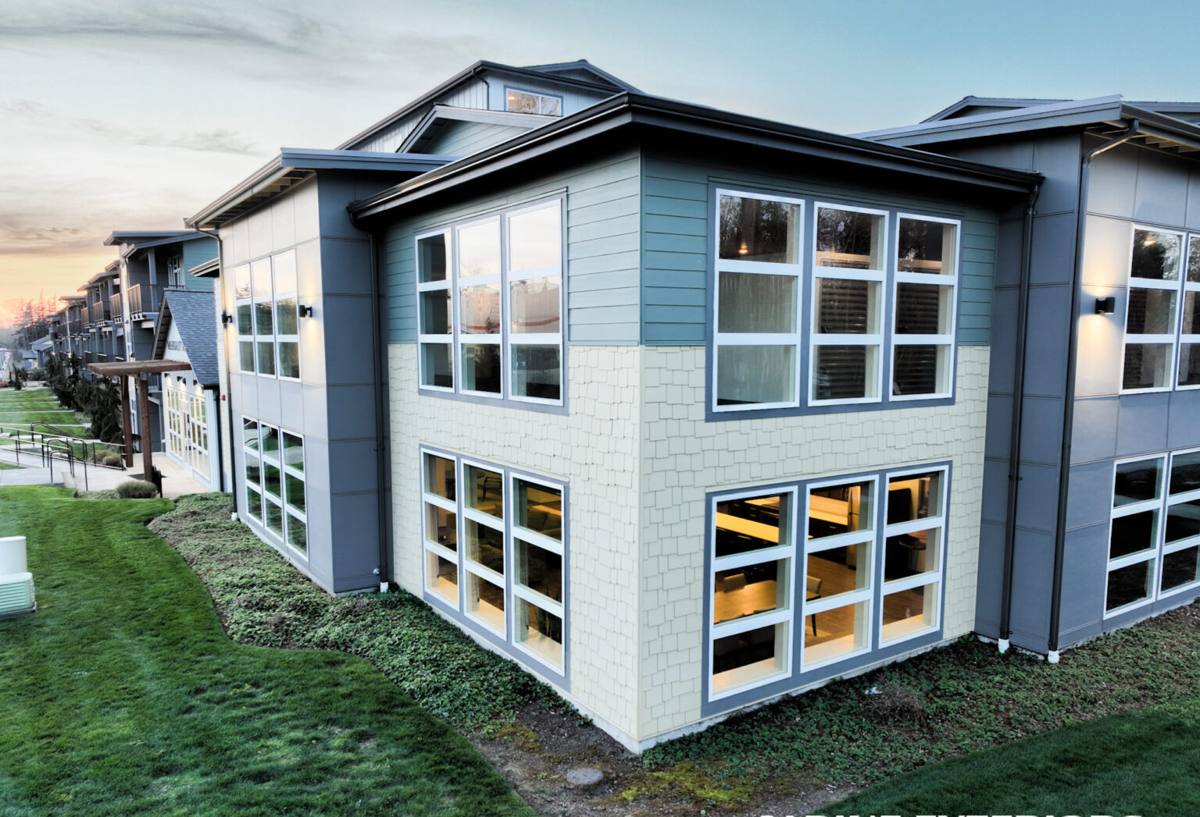
What "Correct" Siding Installation Actually Means Here
Siding failures in this region are almost never about the material itself failing outright — they're about water finding a way behind it. A roofing and siding crew that understands Lynden's weather pattern builds the assembly to shed water at every layer, not just at the surface.
The Details That Matter Most in a Wet Climate
- A drainable weather-resistive barrier installed with correct shingle-lap sequencing, so water draining down the wall exits instead of pooling behind the cladding
- A rainscreen gap (furring strips or a drainage mat) that lets bulk water and moisture vapor escape instead of sitting against the back of the siding
- Proper flashing at every window, door, deck ledger, and roof-to-wall transition — the spots where the vast majority of moisture problems actually start
- Correct fastener placement and pattern per the James Hardie installation instructions, not "close enough"
- Butt joints, corners, and trim sealed with the right sealant in the right locations — and left open where they need to breathe
- Minimum ground clearance and proper flashing above grade, decks, and roof lines to keep siding out of standing water and splash-back
Skip any one of these and the siding itself — even a premium product — can still trap moisture and fail early. This is why we treat installation quality as inseparable from the product decision.
Why We Standardized on James Hardie for Every Job, Including Lynden
We install James Hardie fiber cement siding exclusively. We don't offer vinyl, LP SmartSide, cedar, primed spruce, or other fiber cement brands as alternatives, and that's a deliberate standard, not a sales pitch. Fiber cement in general handles wet Pacific Northwest climates better than wood-based or vinyl products because it doesn't rot, doesn't provide a food source for moss and mildew the way wood does, and doesn't warp or become brittle the way vinyl can under our region's temperature swings and UV exposure. Within fiber cement, James Hardie has the manufacturing track record, the climate-specific engineering, and the factory-finish system that we've found holds up best when it's installed correctly and left to do its job.
We're not going to tell you every other siding product is bad — plenty of them have real strengths. But after years of doing exterior work in this climate, we settled on one product line we trust completely rather than juggling several we'd have to caveat.
HardieZone HZ5 and Why the Zone Rating Matters
James Hardie engineers its products by climate zone, and most of Western Washington, including Whatcom County, falls into the HZ5 zone — formulated for regions with significant moisture exposure and freeze-thaw cycling. HZ5 products are built with that moisture profile in mind from the manufacturing stage, not just coated afterward. For a Lynden home taking on salt-laden air and near-constant seasonal dampness, installing product engineered for the correct climate zone isn't a marketing detail — it affects how the board performs over decades.
ColorPlus Finish vs. Field-Applied Paint
One of the more overlooked differences between fiber cement products is how the color gets applied. James Hardie's ColorPlus Technology bakes a multi-coat finish onto the board in a controlled factory environment, cured and bonded before the siding ever ships. Field-applied paint, by contrast, goes on outdoors, at whatever temperature and humidity the install day happens to have — which in this part of Washington often means less-than-ideal drying conditions.
| Factor | ColorPlus (Factory Finish) | Field-Applied Paint |
|---|---|---|
| Cure environment | Controlled factory conditions | Outdoor conditions, weather-dependent |
| Coverage consistency | Uniform multi-coat application | Depends on applicator and weather at time of paint |
| Fade/chip resistance | Engineered for long-term color retention | Varies by paint product and prep |
| Repaint interval | Extended vs. typical field-painted siding | Standard repaint cycle applies |
| Touch-up matching | Manufacturer-matched touch-up available | Depends on paint records being kept |
For Lynden's wet-dry cycling in particular, a finish that was cured properly before it ever went on the wall has a real head start over one that had to cure outdoors in Whatcom County's shoulder-season weather.
Moss, Algae, and the Long Shoulder Season
Anyone who's dealt with roofs or siding in this county knows the moss issue isn't seasonal here so much as it's a permanent background condition that flares up for months at a time. Shaded north-facing walls, tree cover, and the valley's fog cycles all extend the window where surfaces stay damp long enough for organic growth to take hold.
Fiber cement doesn't feed moss and algae the way wood siding does, but that doesn't mean it's immune to buildup sitting on the surface. A correctly installed rainscreen gap makes a real difference here, since it lets the wall assembly dry out between rain events instead of staying saturated. Beyond installation, a bit of routine homeowner maintenance goes a long way:
- Rinse siding annually, especially on shaded or north-facing walls, to keep organic buildup from setting in
- Keep gutters clear so overflow doesn't run down the face of the siding
- Trim back vegetation and tree cover that keeps a wall section shaded and damp longer than the rest of the house
- Inspect caulking at trim and penetrations every year or two, since sealant is the first thing to wear in this climate
Our Process for a Lynden Siding Project
Every project follows the same sequence, adjusted for the specific house:
- On-site assessment — we look at existing siding condition, wall exposure to prevailing wind and rain, moisture staining, and any trouble spots around windows, decks, and roof lines
- Tear-off and sheathing check — removing old siding is also when hidden moisture damage gets found; sheathing repairs happen before anything new goes on
- Weather barrier and rainscreen installation — the drainage plane and gap that most homeowners never see but that determines long-term performance
- Flashing at every penetration — windows, doors, vents, deck ledgers, and roof transitions
- James Hardie board and trim installation — per manufacturer fastening and clearance specifications
- Final detailing — caulking, touch-up, and a walkthrough so you know what maintenance, if any, the finish needs going forward
Warranty: What's Actually Backing the Work
James Hardie backs its siding products with a manufacturer's product warranty, and ColorPlus finishes carry their own finish warranty covering things like chipping, cracking, and fading under normal conditions. Warranty terms are transferable to a subsequent homeowner, which matters if you're thinking about resale value down the road, not just how the house looks next year. On top of the manufacturer coverage, our own installation workmanship is what determines whether that product warranty actually holds up over time — a manufacturer warranty on the board doesn't protect you from a flashing detail that was installed wrong. That's why we treat the installation itself as the part we're most accountable for.
Why Local Experience in Whatcom County Matters
A crew that's worked houses throughout Bellingham and Whatcom County — including communities like Lynden — has already seen how this specific climate treats an exterior over multiple seasons, not just how a product performs in a manufacturer's spec sheet. That means knowing which wall orientations take the worst of the driving rain, where moss tends to establish first, and which flashing details actually hold up through a full Whatcom County winter and the wet stretches that follow it. It also means being available for warranty questions, maintenance advice, or a second look years after the job is done, rather than being a name from a one-time out-of-town bid.
If you're weighing a siding replacement in Lynden, we're happy to walk the exterior with you, point out what's actually driving any current issues, and give you a straightforward, no-pressure estimate for a James Hardie installation built for this climate. Use the form below to get started.