 Bellingham Roofing
 Why Sehome Roofs Face a Different Set of Demands
Sehome sits close enough to Bellingham Bay that salt-laden marine air is a constant factor, not an occasional one. Add in the driving rain that rolls off the Pacific through the fall and winter, and a moss season in Whatcom County that can stretch across most of the year on shaded, north-facing slopes, and you have a roofing environment that punishes anything less than a correctly built system. Many streets in Sehome also carry a mature tree canopy, which keeps roofs shaded, damp, and slower to dry out after a storm than roofs in more open parts of Bellingham.
None of this means metal roofing is the only answer, but it does mean that whatever goes on a Sehome roof has to handle moisture that lingers, air that corrodes unprotected metals over time, and organic growth that thrives in shade. A metal roof done right addresses all three. A metal roof done poorly — wrong fastener type, wrong coating, sloppy flashing — will show its weaknesses here faster than it would in a drier inland climate.
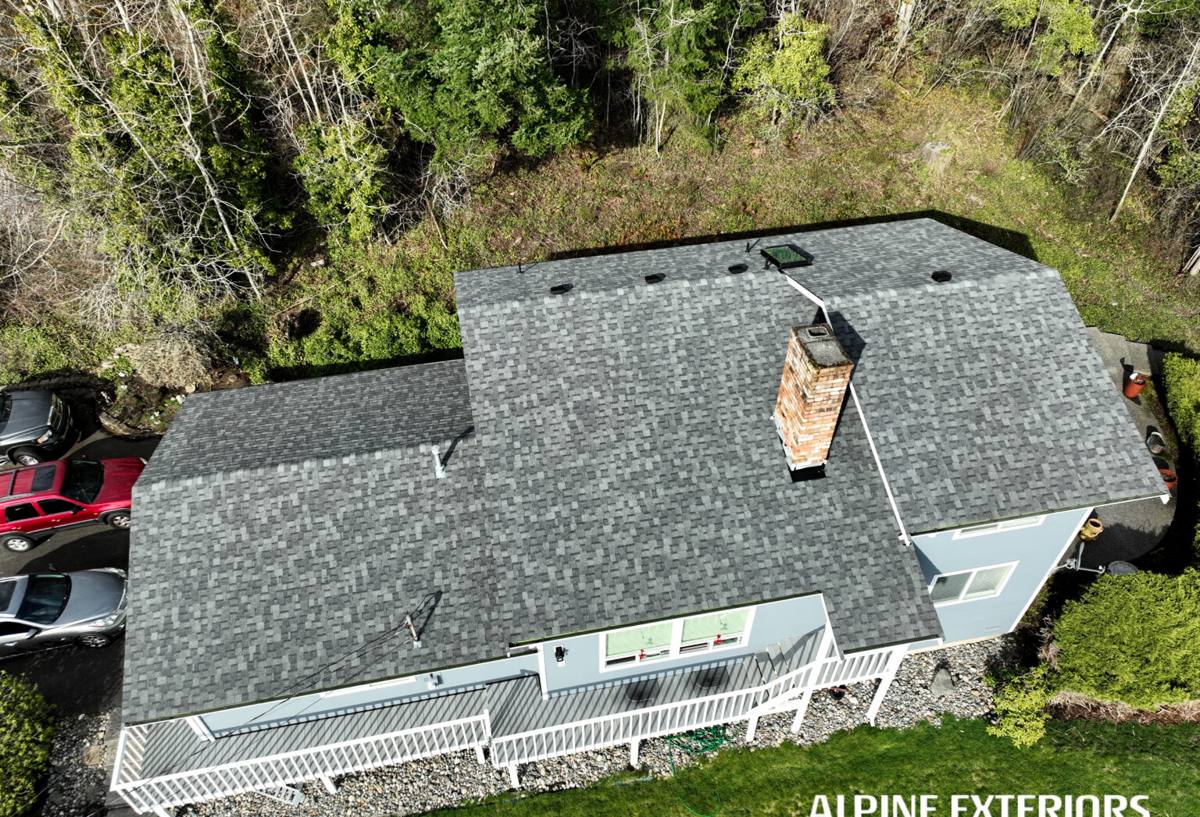
What a Metal Roof Actually Needs to Do Here
A metal roofing system installed in Sehome has a specific job beyond just shedding rain. It needs to:
- Resist corrosion from salt-influenced marine air over decades, not just years
- Shed heavy, sustained rain without relying on gravity alone at seams and penetrations
- Present a surface that doesn't give moss and lichen anything to grip onto
- Move water off the roof and away from valleys, chimneys, and skylights without pooling
- Stay properly ventilated underneath so trapped moisture doesn't condense against the panel deck
That last point gets overlooked constantly. A metal roof is only as good as the assembly underneath it — deck, underlayment, and airflow — and in a climate this damp, that assembly matters as much as the panels themselves.
Choosing the Right Metal Roofing System
Not all metal roofing is the same product wearing different colors. The two systems homeowners in Sehome usually weigh against each other are standing seam panels and exposed fastener panels, and the difference between them shows up most clearly in a climate with this much sustained rain.
Standing Seam vs. Exposed Fastener Panels
| Factor | Standing Seam | Exposed Fastener |
|---|---|---|
| How seams are sealed | Interlocking, concealed seams with no exposed screws on the field of the roof | Screws with rubber washers driven through the panel face |
| Long-term watertightness | Very high; nothing on the roof surface to work loose | Good, but washers age and screws can back out or need re-torquing |
| Upfront cost | Higher | Lower |
| Best fit | Homes prioritizing decades of low-maintenance performance | Budget-conscious projects, secondary structures, shorter ownership horizons |
| Maintenance | Minimal — periodic inspection | Washer and fastener condition should be checked every several years |
Our standard recommendation for a primary Sehome residence is standing seam, specifically because exposed fasteners rely on a rubber washer to stay compressed and watertight for the life of the roof. In a marine climate with year-round moisture cycling, that washer is under more stress than it would be somewhere drier. Standing seam removes that failure point entirely by keeping the water-shedding seam mechanical rather than dependent on a gasket. We'll still install exposed fastener systems when a project calls for it — a detached garage or shop roof, for instance — but we say so plainly when we think a lower-cost option carries a maintenance trade-off worth knowing about upfront.
What a Correct Installation Actually Involves
The panels are the visible part of a metal roof. The parts that determine whether it performs for thirty-plus years are mostly hidden.
Deck and Underlayment
We start with an honest look at the existing roof deck. Soft, delaminated, or moisture-damaged sheathing gets replaced before anything else happens — installing new panels over a compromised deck just hides a problem instead of fixing it. Over solid decking, we install a high-temperature synthetic underlayment rated for the sustained moisture exposure common here, with self-adhered ice-and-water membrane at valleys, eaves, and any place water tends to concentrate.
Fastening and Flashing
Panel clips and fasteners are matched to the panel metal to avoid galvanic corrosion — mixing incompatible metals is a common shortcut that causes premature staining and pitting, especially with salt air in the mix. Flashing at chimneys, skylights, dormers, and sidewalls is formed and layered correctly rather than caulked over gaps, which is one of the most common corner-cutting mistakes we see when correcting other contractors' work.
Ventilation
Intake at the eaves and exhaust at the ridge keep air moving under the roof deck. Without it, warm indoor air meets a cool metal underside and condenses, which over time can rot decking from underneath — a problem that has nothing to do with the panels and everything to do with an incomplete system.
Installation Checklist We Follow on Every Sehome Metal Roof
- Deck inspected and any soft or damaged sheathing replaced
- Underlayment rated for sustained moisture exposure, with ice-and-water membrane at vulnerable areas
- Fasteners and clips matched to panel metal to prevent galvanic corrosion
- Flashing formed and layered at every penetration, chimney, and sidewall
- Ridge and eave ventilation confirmed and balanced
- Panel seams and end laps checked for proper engagement before final walkthrough
- Gutters and downspouts confirmed clear and properly pitched before we leave
Our Process From Estimate to Finished Roof
A metal roof is a bigger decision than a standard reroof, so we keep the process straightforward rather than adding steps that don't help you decide.
- On-site inspection: We walk the roof and attic, note the deck condition, current ventilation, and any trouble spots like valleys or chimney flashing.
- System and panel selection: Based on the roof's exposure to weather and your budget, we walk through standing seam versus exposed fastener, panel gauge, and finish options.
- Written estimate: A clear scope covering tear-off or overlay, deck repairs if needed, underlayment, flashing, and ventilation — no vague allowances.
- Tear-off and deck prep: Old roofing removed, deck inspected in daylight, any repairs made before covering it.
- Underlayment and flashing install: The waterproofing layer goes on correctly before a single panel is set.
- Panel installation: Panels run, seamed or fastened per the system, with careful attention at valleys and penetrations.
- Final walkthrough: We check the roof with you, confirm gutters and downspouts are clear, and answer any questions before we consider the job done.
Maintenance in a Marine, Moss-Prone Climate
Metal roofing is genuinely low-maintenance compared to other materials, but "low-maintenance" isn't "no-maintenance," especially with Sehome's tree cover and moss season. A few habits go a long way:
- Clear gutters and downspouts each fall before the heavy rains settle in, since a metal roof still needs somewhere for water to go
- Rinse off accumulated debris, needles, and organic buildup in valleys where moisture and shade combine
- Have exposed fastener systems checked periodically for washer wear or fasteners that have backed out
- Watch for any moss or algae establishing at seams or under debris piles, and remove it before it holds moisture against the panel
- Keep overhanging branches trimmed back where practical to reduce shade, debris, and abrasion against the roof surface
None of this is heavy lifting, but skipping it for years at a time is how a well-installed roof starts developing problems it was never designed to have.
What Metal Roofing Costs and What Actually Drives the Price
Metal roofing costs more upfront than asphalt shingles, and we won't pretend otherwise. What varies project to project is how much more, and that comes down to a handful of concrete factors rather than a single flat rate.
| Cost Factor | Why It Matters |
|---|---|
| Panel system | Standing seam runs higher than exposed fastener due to material and labor for the interlocking seams |
| Roof complexity | Multiple valleys, dormers, and penetrations add labor and custom flashing work |
| Tear-off vs. overlay | Removing old roofing and repairing deck issues adds cost but avoids covering existing problems |
| Panel gauge and finish | Heavier gauge metal and higher-grade coatings cost more but extend service life |
| Roof pitch and access | Steep or hard-to-access roofs take longer and require additional safety equipment |
As a broad range, homeowners in this region typically see metal roofing installed costs running several times what an asphalt reroof of the same size would cost. Where a project lands within that range depends heavily on the factors above, and we break each one out clearly in a written estimate rather than handing over a single number with no explanation behind it.
Why Hiring a Crew That Already Works in Sehome Matters
A metal roof installed correctly in a dry inland climate can still fail early in a neighborhood like Sehome if the crew doesn't account for the marine air, the rain volume, and the moss pressure that come with this location. Local experience means we already know which fastener and flashing details need extra attention here, how much ventilation a shaded roof actually needs, and what corrosion looks like after a few Bellingham winters versus what it looks like on paper.
It also means fewer surprises during the permitting and inspection process with the City of Bellingham, and a crew that shows up understanding the practical realities of working on roofs surrounded by mature trees and tight residential lots common to this part of Whatcom County. A roofing crew that treats Sehome as just another job site, rather than a specific climate with specific demands, is more likely to cut a corner that doesn't show up as a problem until years later.
Signs It's Worth Discussing Metal Roofing for Your Home
Metal roofing isn't the right call for every Sehome home, but it's worth a serious look if any of the following apply to yours:
- You're replacing a roof that's failed well before its expected lifespan due to moss, moisture, or granule loss
- Your roof sits under heavy tree cover and stays damp longer than roofs on more open lots nearby
- You're planning to stay in the home long enough that a longer-lived roofing system pays off
- You want to reduce how often moss and algae treatment becomes a recurring maintenance chore
- You're doing a larger exterior renovation and want the roof to match that long-term investment
If you're weighing metal roofing for a home in Sehome, we're happy to take a look and give you a straight answer about whether it fits your roof, your budget, and how long you plan to stay in the house. We offer free, no-pressure estimates — use the form below to get one scheduled.