 Bellingham Roofing
 Metal Roofing Built for York's Weather, Not Just Its Looks
Homes in the York neighborhood sit close enough to Bellingham Bay and the Whatcom County coastline that the weather isn't an abstract concern — it's a daily fact of roof life. Salt-laden air moves in off the water, driving rain comes sideways more often than straight down, and the shaded, tree-lined character of many York streets keeps roofs damp long after a storm has passed. Metal roofing has become a popular answer for homeowners here, not because it's trendy, but because a correctly installed metal roof handles moisture, wind-driven rain, and moss pressure better than most alternatives over a 40-to-60-year service life. This page covers what metal roofing actually involves for a York home specifically — the products, the installation details that matter in this climate, and what to expect when you hire a crew for the job.
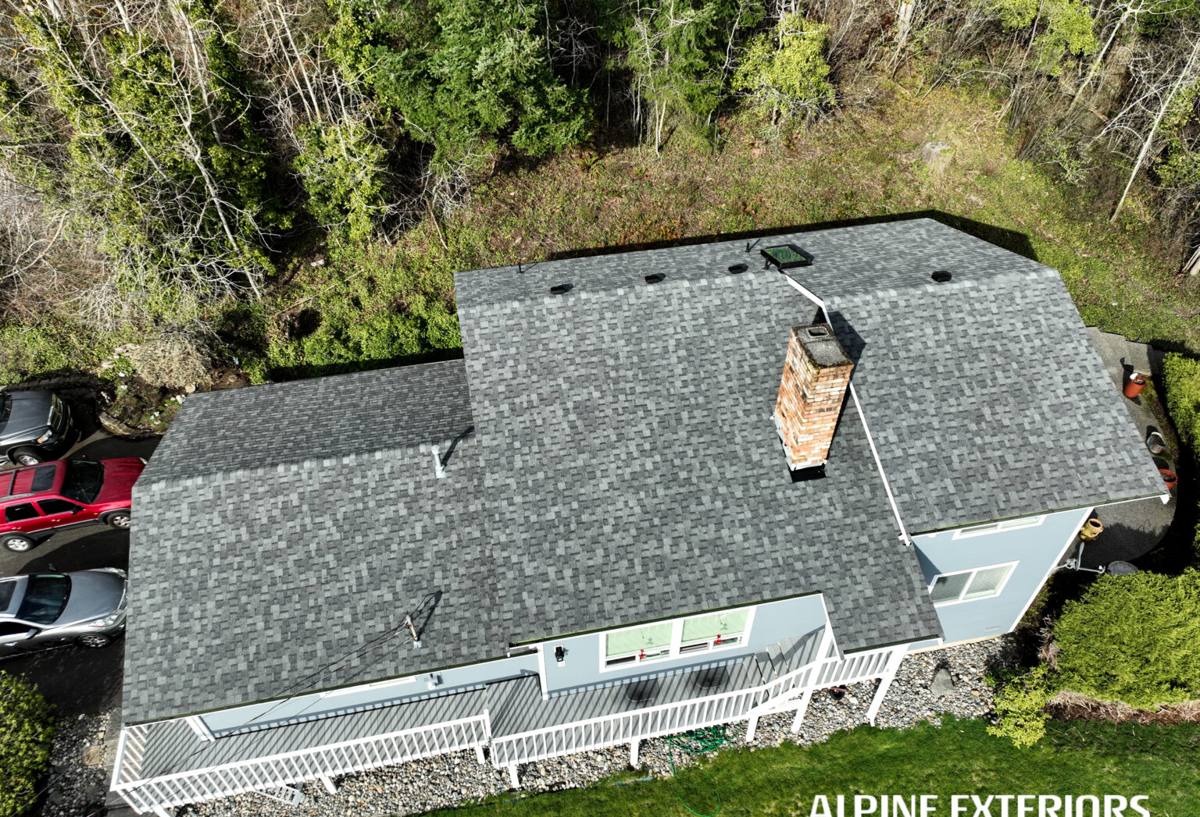
What Bellingham's Climate Actually Does to a Roof
Whatcom County's marine climate is mild, but mild doesn't mean easy on a roof. Three conditions do most of the damage over time:
- Salt air — corrosion accelerates on any exposed metal fasteners, flashing, or trim that isn't rated for coastal exposure. This matters more in York than in inland Whatcom neighborhoods because of proximity to the bay.
- Driving rain — wind pushes rain up and under laps, seams, and flashing that would shed water fine in a straight downpour. Roof details that work in drier climates fail here.
- Extended moss season — cool, damp, shaded conditions for much of the year let moss and algae establish quickly on roofs that don't drain and dry fast, especially on north-facing slopes and under tree cover common in older York lots.
Metal roofing addresses all three when it's specified and installed correctly: smooth, hard, non-porous panels give moss very little to hold onto, properly rated fasteners and flashings resist coastal corrosion, and continuous panel runs with correctly lapped seams shed wind-driven rain far better than a shingle roof with thousands of individual tab edges.
Metal Roofing Options for York Homes
"Metal roofing" isn't one product — the panel type changes the price, the look, and how the roof performs over decades. Here's how the main options compare for a York-area home:
| Panel Type | Appearance | Coastal Performance | Typical Lifespan |
|---|---|---|---|
| Standing seam (concealed fastener) | Clean vertical lines, no visible screws | Excellent — no exposed fastener heads to corrode or work loose | 40-60+ years |
| Exposed fastener panel | Ribbed, agricultural/industrial look | Good if fasteners are stainless or coated, but seals need periodic checking | 25-40 years |
| Stone-coated steel | Mimics shingle or shake profiles | Very good — coating protects the steel and hides granule wear | 40-50 years |
For most York homes, we lean toward standing seam because the fastener clips are hidden beneath the panel and under continuous tension, which is the detail that matters most in a driving-rain, salt-air environment — there's simply less hardware exposed to the weather. Exposed-fastener panels cost less up front and are a reasonable option on outbuildings, garages, or budget-driven projects, but they carry a longer-term maintenance commitment we're upfront about before you commit to one.
What a Correct Metal Roof Installation Actually Involves
The panel itself is only part of the system. Most metal roof failures we're called to inspect in this region trace back to what's underneath or around the panels, not the metal itself.
Underlayment and Moisture Barrier
Under every metal panel we install, we use a high-temperature synthetic or self-adhering underlayment rated for the sustained dampness typical of a Whatcom County roof. In valleys, around penetrations, and along eaves, we use self-adhering ice-and-water-shield-type membrane — not because York sees heavy ice, but because that membrane is also the best defense against wind-driven rain finding its way under a lap.
Fastening and Panel Layout
Panel runs are laid out to minimize seams in the direction water travels and to keep laps oriented so wind-driven rain can't work its way upslope under a joint. Fasteners — whether concealed clips or exposed screws — are matched to the panel metal to prevent galvanic corrosion, a real risk in salt-air environments where mismatched metals accelerate each other's breakdown.
Flashing Details
Flashing at valleys, walls, chimneys, and roof-to-wall transitions is where most leaks start on any roof, metal included. We custom-bend flashing to fit the actual geometry of your roof rather than relying on generic stock pieces, and we detail every penetration so water is directed off the roof, not just covered over.
Ventilation
A tight, well-insulated attic with poor ventilation traps moisture against the underside of the roof deck — a slow, invisible problem that shows up years later as rot or mold, regardless of how good the roofing material above it is. We check and correct intake and exhaust ventilation as part of every metal roof installation, not as an upsell.
Our Process, Start to Finish
- On-site inspection — we walk the roof and attic, not just look from the ground, to assess deck condition, existing ventilation, and any moss or moisture damage already present.
- Written estimate — panel type, color, underlayment spec, and flashing plan laid out clearly, with cost factors explained rather than a single lump number.
- Tear-off and deck check — old roofing removed and the deck inspected for soft spots or rot before anything new goes down; any repairs are flagged and priced before we cover them up.
- Underlayment and flashing — the moisture-management layer goes in first and gets the same care as the visible metal.
- Panel installation — panels run and fastened to the layout plan, with attention to seams, laps, and penetrations.
- Final walkthrough and cleanup — magnetic sweep for stray fasteners, site cleanup, and a walk-through so you know what was done and why.
Living With a Metal Roof in a Moss-Prone, Salt-Air Area
Metal roofing is genuinely lower-maintenance than shingles in this climate, but "lower-maintenance" isn't "no maintenance." A short annual routine keeps a metal roof performing for its full service life:
- Clear leaves, needles, and debris from valleys and gutters before the wet season sets in — trapped organic matter is what actually feeds moss growth, not the metal itself.
- Do a visual check of exposed-fastener panels (if you have them) for any screws that have backed out or lost their seal.
- Look at flashing around chimneys, vents, and skylights for gaps opened up by seasonal expansion and contraction.
- Rinse off any moss or algae buildup on shaded, north-facing slopes rather than letting it establish — it's far easier to prevent than remove once it's rooted in.
- Keep overhanging branches trimmed back where practical, since constant shade and leaf drop are what create moss-friendly conditions in the first place.
Cost Factors for a York Metal Roof
Every roof is priced on its own specifics, but the variables that move the number the most are consistent:
| Factor | Why It Matters |
|---|---|
| Panel type (standing seam vs. exposed fastener) | Concealed-fastener systems cost more in material and labor but reduce long-term maintenance |
| Roof pitch and complexity | Steep roofs, multiple valleys, and dormers increase labor time and flashing work |
| Existing deck condition | Rot or soft spots found during tear-off require repair before new roofing goes on |
| Tear-off vs. layover | Full tear-off costs more upfront but lets us inspect and correct the deck and ventilation |
| Gutter and flashing scope | Coastal-rated flashing and gutter upgrades add cost but reduce corrosion risk |
We don't quote a roof over the phone or from a satellite photo — every estimate in York comes from an actual on-site look at your roof, because the cost drivers above vary lot to lot even within the same neighborhood.
Why It Matters That We Already Work in York
A crew that regularly works the York area already understands the practical realities of the neighborhood — the tree cover that shades certain roof slopes year-round, the exposure to bay-driven wind and rain on homes closer to the water, and the moss pressure that builds faster here than in drier inland parts of Whatcom County. That familiarity shows up in small decisions during an install: where we add extra underlayment, which slopes get flagged for future moss risk, and how we detail flashing for the specific way rain hits your roof. It also means we're a known, reachable local business if you have a question five years after the install, not a crew that showed up once from out of the area.
Ready for a Straight Answer on Your Roof
If you're weighing metal roofing for a York home — whether you're replacing an aging roof or building new — we're glad to come take an honest look and walk you through what your specific roof needs. There's no pressure and no cost to get our assessment; use the form below to request a free estimate.