 Bellingham Roofing
 Why Lynden Roofs Wear Differently Than You'd Expect
Lynden sits inland from Bellingham Bay, but that doesn't mean the roof over your head gets a break from the marine climate that defines Whatcom County. Wind off the Salish Sea still carries salt-laden moisture into the lowlands, and it settles on shingles, flashing, and fasteners the same way it does closer to the water — just a little more slowly. Add in the driving, sideways rain that shows up every fall and winter, plus a moss season that can run eight months or longer under the tree cover and open farmland shade patterns common around Lynden, and you've got a roof that's working harder than most homeowners realize.
A roof built for a drier climate, or installed without attention to these specific pressures, tends to show problems early: soft spots at the eaves, streaking and moss growth on north-facing slopes, and flashing that corrodes years before it should. A roof built correctly for this specific area holds up the way it's supposed to.
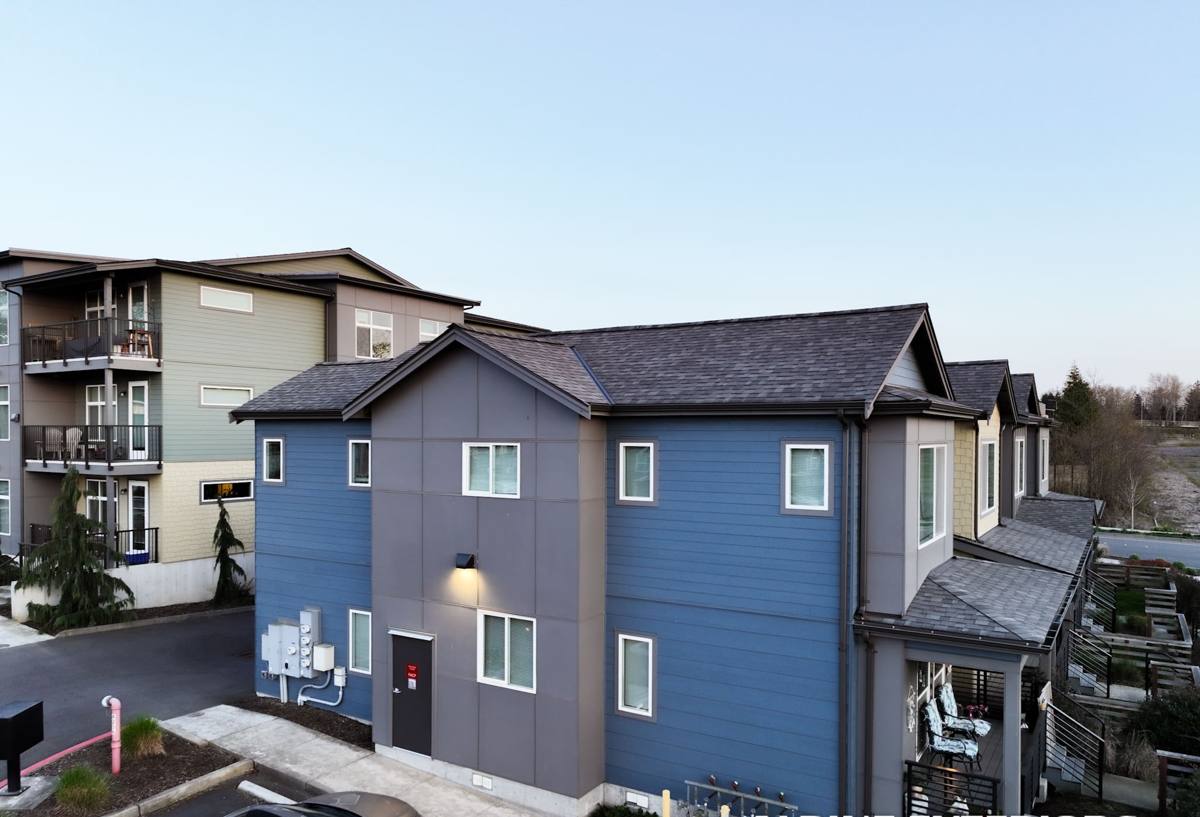
What Whatcom County's Climate Actually Does to a Roof
Salt Air and Metal Fatigue
Salt in the air accelerates corrosion on anything exposed metal — flashing, drip edge, nail heads, vent caps. Standard electro-galvanized fasteners and thin-gauge flashing can start rusting within a handful of years in this environment. It's not dramatic, but it's steady, and it's one of the most common reasons we find leaks starting at flashing points rather than in the field of the roof itself.
Driving Rain
Wind-driven rain doesn't just fall straight down — it pushes sideways and upward under shingle edges, around chimneys, and into any gap in a roof's water-shedding layers. A roof that would perform fine in a calmer climate can leak here simply because the underlayment, flashing laps, and shingle exposure weren't sized for wind-driven water intrusion.
Moss and Shade
Lynden's mix of tree lines, farm structures, and residential lots with mature landscaping creates a lot of shaded, slow-to-dry roof surface. Moss doesn't just sit there looking bad — its root structure lifts shingle edges, holds moisture against the roof deck, and shortens the life of the shingles underneath it by years.
Signs a Lynden Roof Needs Replacement, Not Another Repair
Homeowners often call us for a repair and learn the roof has quietly moved past the point where patching makes sense. Some signs are obvious; others take a trained eye.
- Granules collecting in gutters or at downspout outlets — a sign shingles are past their protective lifespan
- Shingles that are curling, cupping, or losing their flat profile, especially on south and west-facing slopes
- Moss or algae staining that returns within a season or two of cleaning
- Soft or spongy decking felt underfoot during an inspection
- Daylight visible through the attic roof boards, or damp insulation below the deck
- Flashing around chimneys, skylights, or wall intersections that's rusted, lifted, or was never properly stepped
- A roof approaching or past 20–25 years old with asphalt shingles, regardless of visible condition
If you're seeing two or more of these, a full inspection is worth the time before winter storms make the decision for you.
What a Correct New Roof Installation Actually Involves
A roof is a system, not a single layer of shingles. Skipping or shortcutting any part of it is where premature failures come from — and it's usually invisible until the leak shows up.
Deck Inspection and Repair
Every new roof starts with pulling the old roofing back to bare deck and inspecting the sheathing. Any soft, delaminated, or water-damaged plywood or OSB gets replaced before anything new goes down. Installing new shingles over a compromised deck is one of the most common shortcuts we see — and one of the most expensive to fix later.
Ice and Water Barrier
Self-adhering ice and water shield goes at eaves, valleys, and around all penetrations — the areas most exposed to wind-driven rain and the slow water intrusion that comes from moss holding moisture against the deck. This is a place we don't cut corners, given how much of this county's rain arrives at an angle rather than straight down.
Synthetic Underlayment
A full synthetic underlayment across the rest of the roof adds a secondary water barrier, resists tearing during install, and holds up better long-term in damp conditions than older felt products, which can absorb moisture and degrade in exactly the kind of extended wet weather Whatcom County sees each winter.
Flashing
New step flashing, counter-flashing, and valley metal — not a reuse of old flashing, and not a caulk-and-cover shortcut. Given how corrosive salt air is to lower-grade metal, we use flashing rated to hold up in coastal-influenced climates, not generic hardware-store stock.
Ventilation
Balanced intake and exhaust ventilation keeps the attic temperature and moisture level in check, which matters for two reasons here: it prevents condensation buildup during our long damp winters, and it helps shingles shed heat evenly in summer so they don't age unevenly across the roof.
Fastening and Nailing Pattern
Manufacturer-specified nailing patterns, correct fastener count per shingle, and corrosion-resistant nails matter more here than in drier climates. Under-nailed or improperly placed fasteners are a leading cause of shingle blow-off in the wind events that come through the lowlands most winters.
Choosing the Right Roofing Material for Lynden's Climate
There's no single "best" roofing material — the right choice depends on your home's exposure, your budget, and how much long-term maintenance you're willing to take on. Here's how the common options stack up against this specific climate.
| Material | Salt Air Resistance | Moss Resistance | Typical Lifespan Here | Maintenance Burden |
|---|---|---|---|---|
| Architectural asphalt shingle | Good, with proper flashing/fasteners | Moderate — benefits from algae-resistant granules | 20–25 years | Low to moderate |
| 3-tab asphalt shingle | Fair | Lower — thinner profile holds moisture longer | 15–18 years | Moderate |
| Metal (standing seam or panel) | Very good with coated/marine-rated fasteners | Very good — sheds moisture, little for moss to grip | 40–50+ years | Low |
| Composite/synthetic shake | Good | Moderate to good | 30–40 years | Low |
We install and stand behind asphalt and metal roofing systems suited to this climate. On products with known moisture-retention issues in wet coastal-influenced regions — certain wood shake systems, for example — we'll walk you through the trade-offs honestly: the upkeep required, how they perform under sustained moss pressure, and what that means for warranty coverage, rather than just quoting whatever's asked for.
Our New Roof Installation Process
- On-site inspection and estimate. We walk the roof (not just the yard), check the attic where accessible, and give you a written, itemized estimate — no pressure, no inflated "today only" pricing tactics.
- Material selection. We go over the options that make sense for your home's exposure, slope, and shade pattern, and for your budget.
- Scheduling around the weather. Given how much rain this area gets, we plan installs around forecast windows and keep the roof protected if weather moves in mid-project.
- Tear-off and deck inspection. Full removal of old roofing, deck inspected and repaired as needed.
- System installation. Ice and water barrier, underlayment, flashing, ventilation, and roofing material installed to manufacturer spec.
- Site cleanup. Magnetic sweep for nails, debris hauled off, gutters checked and cleared of installation debris.
- Final walkthrough. We review the finished roof with you and go over warranty paperwork before we consider the job done.
Moss Prevention and Long-Term Roof Care
A new roof is the best time to build in long-term moss defense, since prevention is far cheaper than repeated cleanings. Zinc or copper control strips installed near the ridge release trace metal ions with every rain, which discourages moss and algae growth on the slopes below without chemical treatment. We'll also point out any spots — usually shaded north slopes or areas under overhanging trees — where you may want to keep an eye on things or consider periodic soft washing rather than pressure washing, which can strip granules and shorten shingle life.
Keeping gutters clear and trimming back overhanging branches where practical also goes a long way toward keeping a new roof performing at its best through Whatcom County's wet season after wet season.
What Affects the Cost of a New Roof in Lynden
Every roof is different, and we won't quote a number without seeing the job, but these are the factors that most often move the price up or down:
- Roof size and number of squares (100 sq. ft. units) to be covered
- Roof pitch and complexity — steep slopes and multiple valleys or dormers take more labor and material
- Number of layers being removed (tear-off of one layer vs. multiple)
- Deck condition and how much sheathing replacement is needed
- Material choice — asphalt, metal, and composite systems carry different material and labor costs
- Ventilation and flashing upgrades needed to bring an older roof up to current standards
- Access — steep sites, detached structures, or limited driveway access can affect setup and disposal costs
Most asphalt shingle replacements on typical single-family homes in this area fall into a broad mid-range once these factors are accounted for; metal roofing runs higher up front but lower over the life of the roof given how little maintenance it needs in this climate.
Why It Matters to Hire a Crew That Already Works in Lynden
A roofing crew that works this specific corner of Whatcom County regularly knows which details actually matter here — where wind-driven rain tends to find weak flashing, which slopes hold moss longest through the season, and how local permitting and inspection processes typically run. That's different from general roofing knowledge, and it shows up in fewer callbacks and a roof that performs the way it's supposed to from year one.
We're a Bellingham-based crew that works throughout Whatcom County, including Lynden, and we build every new roof installation around the climate our customers actually live with — not a generic spec sheet.
If your roof is showing its age or you're planning ahead, we're happy to take a look and give you a straightforward, no-pressure estimate. Use the form below to get started.