 Bellingham Roofing
 Asphalt Shingle Roofing for Puget Homes
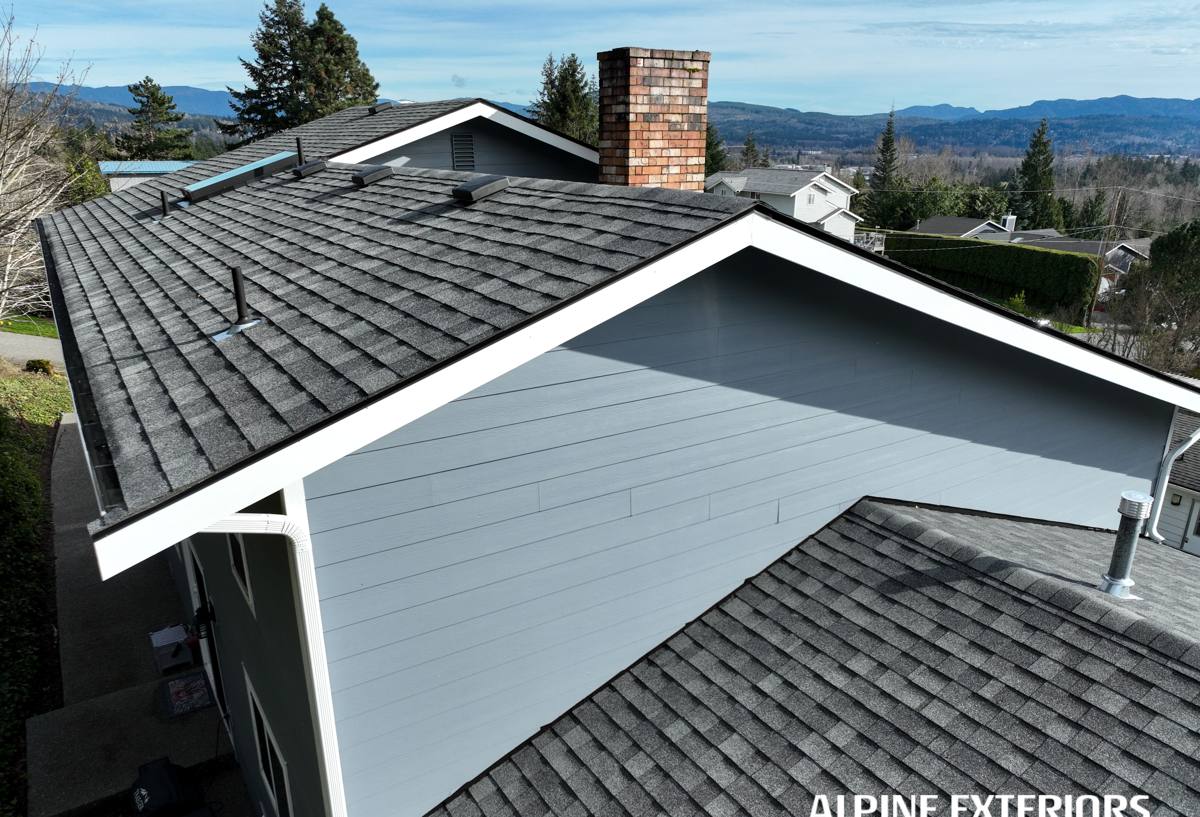
Puget is one of Bellingham's hillside neighborhoods, with a mix of older homes and newer builds spread across sloped, often tree-covered lots that sit within reach of Bellingham Bay's marine air. That setting is a good one to live in and a demanding one to roof. Salt-tinged air off the Sound, rain that arrives sideways as often as it falls straight down, and a mild, wet climate that gives moss and algae months to establish themselves all put real, sustained load on a roof surface. Asphalt shingles remain the most practical roofing choice for most homes here, but "asphalt shingle roof" covers a wide range of products and installation quality, and the difference between a roof that holds up for its full rated life and one that fails early almost always comes down to details most homeowners never see once the job is done.
Bellingham Roofing Company installs and repairs asphalt shingle roofs across Puget and the surrounding Bellingham neighborhoods, and we build every one of them around this specific climate rather than a generic, one-size-fits-all spec. That means paying close attention to the parts of the job that don't show up in a sales photo — ventilation, flashing, underlayment, and fastener choice — because those are exactly what determines whether a roof ages gracefully here or starts showing problems years ahead of schedule.
What Puget's Climate Actually Does to a Shingle Roof
Salt Air and Corrosion
Homes in Puget sit close enough to Bellingham Bay that salt-laden marine air is a constant, low-level presence, even on days without visible weather. Over years, that air accelerates corrosion on unprotected metal — flashing, nail heads, vent stacks, and gutter hardware in particular. A shingle itself isn't much affected by salt air, but the metal components that make a roof actually watertight are, and a roof built with standard-grade fasteners and flashing in a coastal-influenced climate like this one corrodes faster than the shingles wear out.
Driving, Wind-Pushed Rain
Rain in this part of Whatcom County frequently comes in at an angle rather than straight down, pushed by wind off the water and funneled by the terrain around Bellingham's hillside neighborhoods. That matters because wind-driven rain finds its way under shingle edges, around chimney and vent penetrations, and into valleys in a way that a simple annual rainfall number doesn't capture. Roofs with underlayment, flashing, or shingle sealing that's just adequate for a calmer climate tend to leak first at exactly these spots.
A Long Moss and Algae Season
Mild temperatures and consistent moisture give moss and algae a growing season that runs most of the year here, not just a few weeks in spring. Shaded roof planes and slopes under mature trees, common on Puget's wooded lots, stay damp longer between rain events and are the first places moss takes hold. Left unchecked, moss holds water against the shingle surface, works under tabs and edges, and can lift or separate roofing material over time — it's a moisture problem with a green color, not just a cosmetic one.
What a Correct Asphalt Shingle Job Involves
A shingle is only as good as everything installed underneath and around it. On every asphalt shingle roof we install in Puget, that means:
- Synthetic underlayment rated for sustained moisture exposure, installed with proper overlap, not a minimum-code product chosen for cost
- Ice-and-water shield at eaves, valleys, and other spots where water and debris collect and linger
- Properly lapped, sealed flashing at every valley, chimney, skylight, vent pipe, and roof-to-wall transition
- Balanced intake and exhaust ventilation so moist attic air can actually escape rather than condensing against the roof deck
- Corrosion-resistant fasteners and metal flashing suited to a marine-influenced climate, not standard galvanized hardware
- Manufacturer-spec nailing pattern and shingle exposure, since under-nailing is a common, invisible cause of early wind damage
None of these line items add much to the total cost of a roofing job relative to the shingles themselves. Skipping them is what turns a roof rated for twenty-five or thirty years into one that needs attention in fifteen.
Choosing the Right Shingle for a Puget Roof
There's no single correct shingle for every home in this neighborhood — roof pitch, how much shade a roof gets from surrounding trees, and budget all factor in. What matters is choosing with this climate's specific demands in mind rather than defaulting to whatever's cheapest per square.
| Shingle Type | Moss & Algae Resistance | Wind Rating | Realistic Lifespan Here |
|---|---|---|---|
| Standard 3-tab | Basic; no algae-resistant granules unless specified | Lower; more prone to lifting in wind-driven rain | 15-20 years |
| Architectural (laminated) | Good, especially with algae-resistant (AR) granule options | Higher; better sealing and wind resistance | 25-30 years |
| Algae-resistant premium architectural | Best available in asphalt; copper- or zinc-infused granules slow algae growth | Highest asphalt option | 30 years, sometimes longer with upkeep |
| Impact-resistant (Class 4) | Good, varies by product | High | 30+ years; added cost for the impact rating, not primarily a moss benefit |
For most Puget homes, especially those on shaded or partially wooded lots, we recommend architectural shingles with algae-resistant granules as the practical baseline. Standard 3-tab shingles still have a place on budget-driven projects or accessory structures, but we'll tell you plainly where that trade-off shows up over time rather than letting price be the only factor you're weighing.
Our Asphalt Shingle Roofing Process
Inspection and Estimate
We start by getting on the roof, not just looking at it from the ground. That means checking the condition of the existing shingles, the state of the deck underneath, ventilation, flashing, and any moss or moisture damage already present. You get a straightforward written estimate based on what we actually find.
Tear-Off and Deck Prep
On a full replacement, we remove the old roofing down to the deck and inspect the sheathing for soft spots or rot, particularly around valleys and penetrations where wind-driven rain tends to find its way in over the years. Any damaged decking gets replaced before anything new goes down.
Underlayment, Flashing, and Ventilation
This is where a roof's real durability gets decided. We install underlayment and ice-and-water shield to spec, form and seal flashing at every penetration and transition, and confirm the ventilation system will actually move air rather than just being present on paper.
Shingle Installation
Shingles go down to manufacturer nailing and exposure specifications, not shortcuts to save time. On a coastal-influenced roof like a Puget home, we also pay close attention to shingle sealing along edges and in valleys, since that's where wind-driven rain applies the most pressure.
Final Walkthrough
We walk the finished roof and the site with you, confirm cleanup is complete, and go over care and maintenance specific to your roof's shade exposure and pitch.
Signs a Puget Roof Needs a Look
- Moss returning quickly to the same shaded slopes even after cleaning
- Granule buildup in gutters or at the base of downspouts
- Curling, cupping, cracking, or missing shingles, especially after a windstorm
- Rust streaking from flashing, vent stacks, or fasteners
- Water stains on interior ceilings near exterior walls, chimneys, or skylights
- Soft spots or sagging when the roof is walked
- Daylight visible through the roof deck from inside the attic
Any single item on that list is worth a professional inspection. Several of them together, especially on a roof past the fifteen-year mark, usually point toward a replacement conversation rather than another round of patch repairs.
Repair or Replace? How We Help You Decide
We don't default to recommending a full replacement just because a roof has a problem. We look at the roof's age, how much surface area is affected, whether the deck underneath has moisture damage, and how many repairs it's already had. A single leak on an otherwise sound roof is usually a straightforward, contained repair. A roof approaching the end of its rated life with moss-related damage across multiple slopes, or a deck already showing soft spots, is more honestly addressed with a replacement than with more patchwork that won't hold. We explain what we find and why, in plain terms, so the decision is yours to make with real information.
Why a Crew That Already Works Puget Matters
Roofing crews that work Puget's hillside lots regularly understand things a one-time visiting contractor doesn't: which roof orientations stay shaded and damp long enough to need extra moss prevention, how much ice-and-water shield a given valley actually needs given the neighborhood's tree cover, and which flashing details are worth the extra time on install day so you're not dealing with a callback two winters later. It also means working with someone who treats the salt-air corrosion risk near Bellingham Bay as a standard part of material selection, not an afterthought. That local, repeated experience is what separates a roof that's technically code-compliant from one that's actually built for where it sits.
Beyond the Roof
Asphalt shingle roofing is a major part of our work in Puget, but the same climate that wears on a roof wears on the rest of a home's exterior. We also handle siding, window replacement, and decks, and we install James Hardie fiber cement siding as our standard for the same reason we're particular about roofing details here — it holds up to sustained moisture and moss better than lower-cost alternatives. If a roofing project turns up damage at a wall-to-roof transition or in nearby trim and siding, we can address it as part of the same conversation instead of sending you to find a second contractor.
If your Puget home needs a new asphalt shingle roof, a repair, or you're just not sure which one it needs yet, we're happy to take a look and give you an honest answer. Reach out using the form below for a free, no-pressure estimate.