 Bellingham Roofing
 Board & Batten Siding in Puget: Built for This Corner of Whatcom County
Puget sits close enough to the water and the tree line that its homes take a specific kind of weather beating — salt-tinged air drifting off the Sound, driving rain that comes in sideways during winter storms, and a moss season that seems to start earlier and last longer every year. Board and batten siding, when it's done right, holds up to all three better than almost any other style. Done wrong, it's one of the fastest ways to trap moisture behind a wall and not know it until the damage is already sitting there. This page is about doing it right, specifically for homes in this area.
We install board and batten siding exclusively in James Hardie fiber cement. That's not a marketing line — it's a standard we hold because we've seen what happens to the alternatives once the Puget climate gets a few years into them.
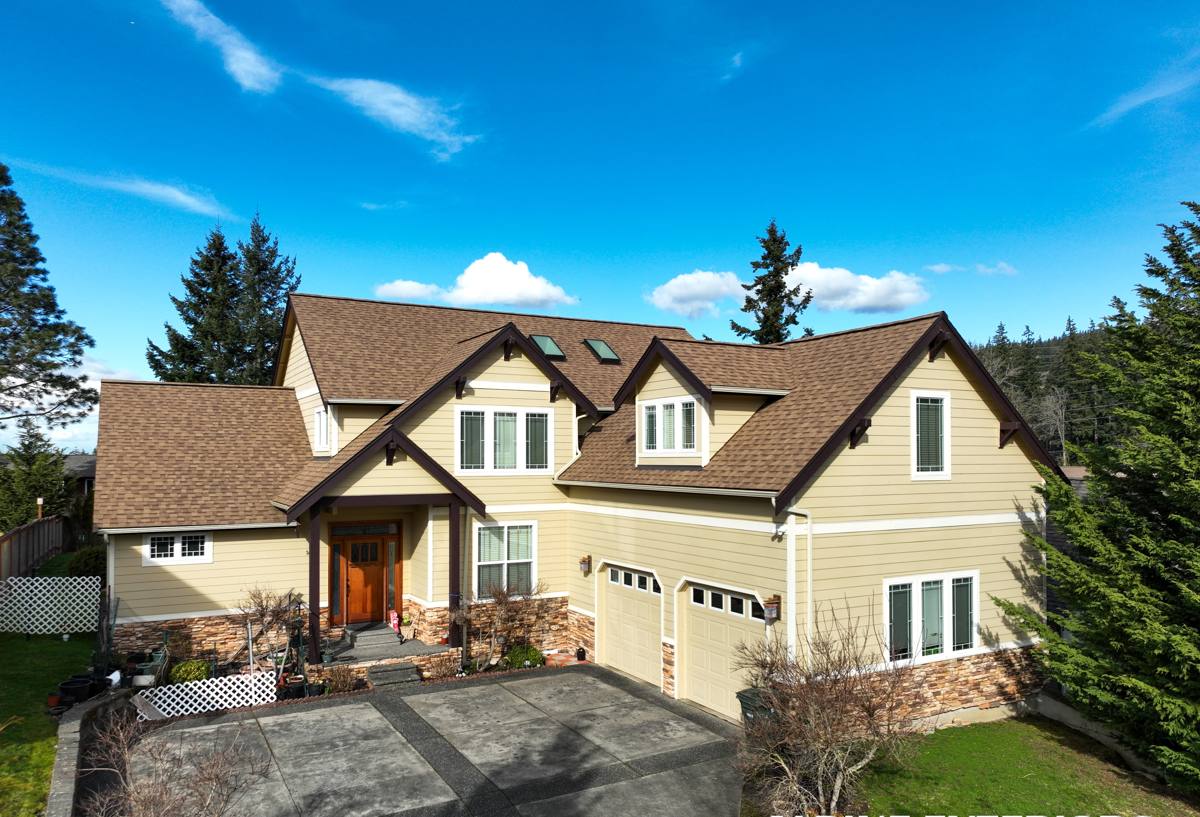
What Puget's Climate Actually Does to a Vertical Siding Profile
Salt Air
Homes closer to the water deal with airborne salt that settles on exterior surfaces and accelerates corrosion of fasteners, trim, and any metal flashing components. Over time, salt exposure also breaks down certain paint films and coatings faster than inland areas would see, which matters a lot on a siding style that depends on painted seams and battens staying sealed.
Driving Rain
Whatcom County storms don't always come straight down. Wind-driven rain hits vertical siding at an angle, which means water gets pushed up under laps and into batten joints far more aggressively than it would on a calm-weather day. Board and batten has more vertical seams than horizontal lap siding, and every one of those seams is a potential entry point if it isn't detailed correctly.
Moss and Sustained Dampness
Shaded north and west-facing walls in this area stay damp longer after a storm, and moss will colonize any surface that holds moisture and organic debris — including siding, trim, and the gaps where battens meet panel. Moss holds water against the substrate, and that sustained dampness is what actually causes rot, not the rain itself.
Why Board & Batten in Wood, Vinyl, or LP Struggles Here
Board and batten is traditionally a wood siding style, and cedar or primed spruce board and batten can look great going up. The problem shows up over the following years. Wood battens and boards absorb moisture at end grain and joints, and in a climate with this much sustained dampness, that means recurring paint failure, cupping, and eventually soft spots — usually starting at the battens themselves since they're thinner and more exposed than the field boards.
Vinyl board and batten avoids rot but has its own issue in this climate: it expands and contracts with temperature swings, and those seams and battens can work loose or show gapping over time, which becomes an entry point for wind-driven rain. It also doesn't hold a factory finish the way fiber cement does — color life on vinyl is limited, and it can't be painted to refresh it without specialty coatings.
LP SmartSide is a wood-strand product with a resin-treated core, which helps its moisture resistance compared to raw wood, but it's still an engineered wood product at its core — cut edges, fastener penetrations, and butt joints all need to stay sealed for the life of the siding, and any breach in that seal lets moisture into a wood-based substrate. In a climate this wet, we don't want that risk on a job with our name on it.
James Hardie fiber cement doesn't have these failure points. It's non-combustible, doesn't swell or rot from moisture, and holds its factory-applied ColorPlus finish for decades without the repaint cycle wood siding demands.
What a Correct Board & Batten Installation Actually Involves
The finished look of board and batten is simple — vertical boards or panels with battens covering the seams — but the water management behind that look is where jobs succeed or fail.
Weather-Resistive Barrier and Drainage
Every board and batten installation needs a proper weather-resistive barrier behind it, and in a climate like ours, we prefer a drainage plane that lets any incidental moisture that does get behind the siding find its way back out rather than sitting against the sheathing.
Fastening Pattern
James Hardie panels and battens have specific fastener spacing and edge-distance requirements. Skipping studs, over-driving nails, or fastening too close to an edge are the most common shortcuts that cause problems years later — cracked panel edges, blow-through, or fasteners that back out and let water track in behind the head.
Flashing at Penetrations and Transitions
Windows, doors, hose bibs, light fixtures, and roof-to-wall transitions all need flashing detailed to shed water down and out, not into the wall assembly. This is the single most common place we find failures on homes we're asked to look at that were sided by someone unfamiliar with the region's weather.
Batten Spacing and Caulk Joints
Battens need consistent spacing for both appearance and function, and any caulked joints have to use a sealant rated for the movement and moisture exposure this climate produces — not a bargain caulk that shrinks and cracks within a couple of seasons.
James Hardie Board & Batten Product Options
| Product | What It Is | Best Use |
|---|---|---|
| HardiePanel Vertical Siding | Large-format fiber cement panel installed vertically with battens over the seams | Full board and batten walls, accent walls, gable ends |
| Batten strips | Fiber cement or matching trim boards installed over panel seams | Completes the board and batten profile, can be color-matched or contrasted |
| HZ5 / HZ10 engineered lines | James Hardie's regional climate engineering for moisture and freeze-thaw performance | Selected based on Whatcom County's specific exposure conditions |
| ColorPlus finish | Factory-applied, baked-on finish with a longer color life than field-applied paint | Reduces repaint frequency and touch-up needs long term |
Our Process on Board & Batten Jobs in Puget
We treat every board and batten job as a water-management project first and a finish-carpentry project second, because that order is what determines whether the siding still looks right in fifteen years.
- Walk the home and assess current siding, trim, and any existing moisture damage before quoting
- Check flashing at all window, door, and roofline transitions as part of the estimate, not as a surprise mid-job
- Remove old siding and inspect sheathing for hidden rot before anything new goes up
- Install or repair the weather-resistive barrier and drainage plane
- Install HardiePanel vertical siding to manufacturer fastening specifications
- Install battens with consistent spacing and climate-rated sealant at joints
- Flash and seal every penetration and transition individually
- Final walkthrough with the homeowner before we consider the job finished
What Affects Cost on a Board & Batten Job
| Factor | Why It Matters |
|---|---|
| Wall complexity | Gables, dormers, and multiple transitions take more time and more flashing detail than flat wall sections |
| Existing siding removal | Tear-off and disposal, plus any sheathing repair found underneath, adds to the scope |
| Panel vs. individual board approach | HardiePanel vertical installation is generally more efficient than installing individual narrow boards |
| Trim and batten detail | Batten spacing, corner treatment, and color contrasting affect both material and labor |
| Accessibility | Height, roof pitch, and site access around the home affect labor time |
We give honest, itemized estimates rather than a flat per-square-foot number pulled out of the air — every home's exposure and condition is different, and Puget's mix of sun, shade, and wind exposure varies block to block.
Maintaining Board & Batten Siding Long-Term
James Hardie fiber cement is low-maintenance, not no-maintenance. A little seasonal attention keeps it performing the way it should for decades.
- Rinse siding periodically to remove salt residue and organic buildup, especially on shaded or water-facing walls
- Trim back vegetation and tree limbs that keep siding shaded and damp longer than necessary
- Inspect caulked joints and touch up any cracked or missing sealant before the wet season
- Watch for moss starting at battens or corners and address it early rather than letting it establish
- Check gutters and downspouts so roof runoff isn't dumping directly onto siding sections
Why Local Experience Matters for This Job
Board and batten siding done well in Whatcom County looks the same everywhere it's installed nationwide — but doing it well here means understanding how salt air, wind-driven rain, and a long moss season interact with a vertical seam profile specifically. A crew that mostly installs in drier climates may not flash a batten joint the same way we would for a wall that faces prevailing storm winds off the Sound. That's the value of hiring a crew that already works this area regularly: the details that matter here are second nature, not an afterthought.
If you're considering board and batten siding for a home in Puget, we're happy to walk the property, look at what you're working with, and give you a straight answer on what it would take — no pressure, no inflated scope. Reach out for a free estimate using the form below.