 Bellingham Roofing
 Composite Decking Built for the Puget Area, Not a Catalog Photo
Puget sits close enough to the water and the tree line that a deck here works harder than a deck in a drier inland town. Between the salt-laden air rolling in off the Sound, the long stretches of driving rain that define a Whatcom County winter, and a moss season that can run from October well into April, a deck surface and its substructure take a real beating. Composite decking has become the go-to choice for homeowners in this area because, done correctly, it holds up to that combination better than a painted or stained wood deck ever will. Done incorrectly, it fails in the same ways wood does — just more expensively.
This page is about what composite decking actually needs to succeed on a Puget-area home: the climate factors that matter, what a correct installation looks like from the ground up, and what our process looks like when we build one.
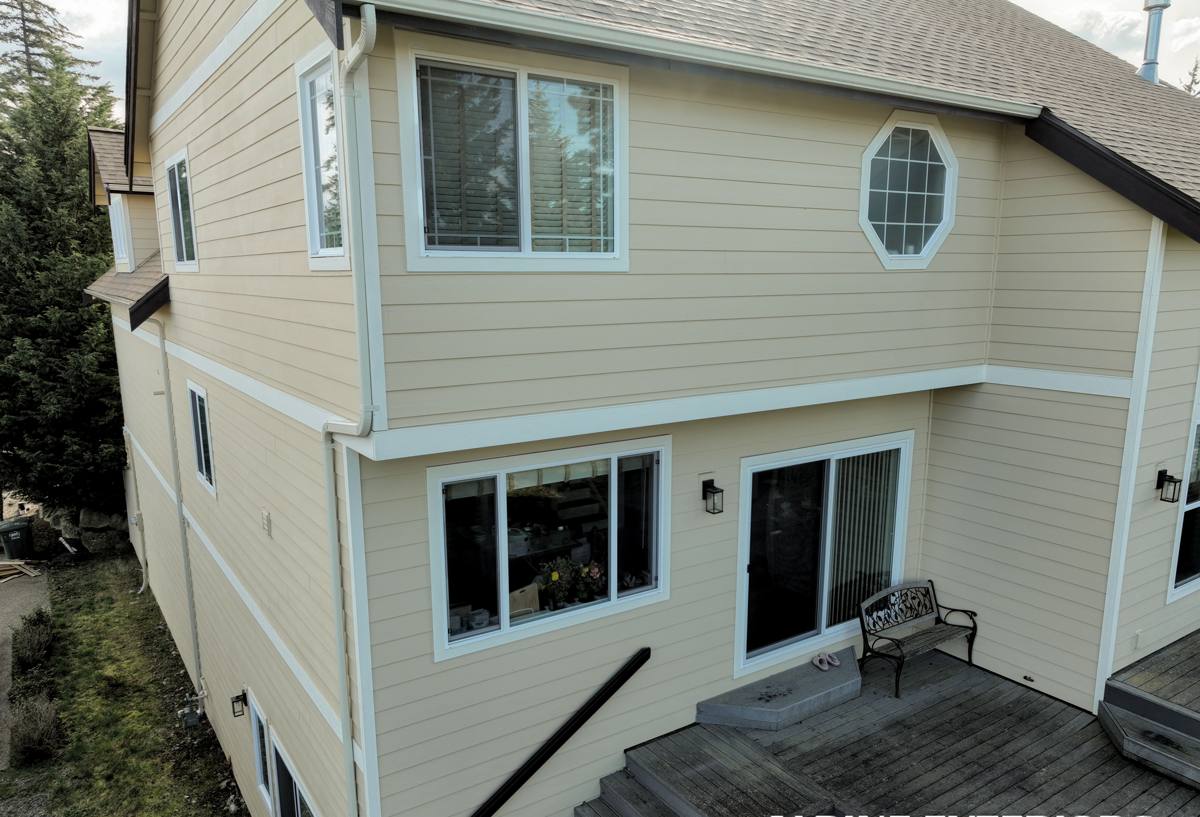
What Bellingham's Marine Climate Does to a Deck
Bellingham's weather isn't extreme, but it's persistent. That's the part that catches homeowners off guard — it's rarely one big storm that damages a deck, it's months of steady moisture and salt exposure working on fasteners, framing, and any spot where water can sit instead of drain.
Salt Air and Fasteners
Homes closer to the water get a steady, low-grade dose of salt-laden air. Over time, that air corrodes standard fasteners, connector hardware, and lower-grade railing brackets faster than most people expect. It's not dramatic — you won't see it happen — but a deck built with the wrong hardware grade will show rust streaks and weakened connections years before it should. We spec stainless or coated fasteners rated for coastal exposure on every Puget-area deck, not just the ones sitting right on the shoreline, because salt air travels further inland than most homeowners assume.
Driving Rain and Drainage
Whatcom County rain doesn't just fall straight down — wind-driven rain gets pushed sideways into ledger connections, under rail post bases, and into any gap where flashing was skipped or shortcut. A deck ledger board attached to the house is the single most common failure point we see on rebuilds, because water worked behind improperly flashed ledger boards for years before anyone noticed the rot underneath. Composite boards on top don't fix a bad ledger detail below — the water damage just happens out of sight.
The Long Moss Season
Puget's tree cover and consistent moisture give moss and algae a long runway to establish themselves on any horizontal surface that stays damp and shaded. On composite decking, this shows up as green or black staining, especially in board grooves, near the house where sun exposure is lowest, and anywhere debris collects. It's a maintenance issue rather than a structural one, but the boards, surface texture, and gap spacing you choose make a real difference in how much moss takes hold and how easy it is to clean off.
What a Correctly Built Composite Deck Involves
Composite boards get most of the attention, but the boards are only part of what makes a deck last in this climate. The framing, fastening method, and airflow underneath matter just as much — arguably more, since that's the part nobody sees until something goes wrong.
Substructure First
Composite decking is heavier than wood decking, and it doesn't flex the same way, so joist spacing has to match the manufacturer's spec for composite specifically — not the wider spacing that's fine for a 2x6 cedar board. We use pressure-treated framing rated for ground contact where required, with joist tape over the top edge of every joist. Joist tape isn't optional in this climate: it's a cheap barrier that keeps rainwater from soaking directly into cut and fastened wood, which is exactly where rot starts on a deck frame in a wet region like this.
Board Selection and Layout
Not all composite is the same, and the differences matter more here than in a drier climate. We favor capped composite boards — where a solid polymer shell wraps the wood-composite core — over uncapped composite, because the cap is what actually resists moisture absorption, staining, and mold growth at the surface. Board layout also matters: running boards to allow proper drainage pitch, keeping picture-frame borders and fascia details from trapping water at the edges, and leaving correct gapping between boards so moisture and debris can pass through instead of collecting.
Fastening and Ventilation
Hidden fastener systems give a cleaner look and avoid the face screws that become moss traps and stain points over time, but they have to be installed to the exact spacing the manufacturer specifies — composite expands and contracts with temperature and humidity swings more than solid wood does, and Bellingham's marine layer means a bigger daily humidity swing than a lot of installers account for. Underneath, we make sure there's enough ground clearance and cross-ventilation so air actually moves under the deck instead of sitting stagnant against damp soil, which is one of the biggest drivers of moss and mildew creeping up from below.
Composite vs. Other Decking Materials for This Climate
| Material | Moisture Resistance | Moss/Algae Resistance | Maintenance | Typical Lifespan Here |
|---|---|---|---|---|
| Capped composite | Very good — sealed shell resists absorption | Good, especially textured/streaked colors | Occasional wash, no staining or sealing | 25–30+ years |
| Uncapped composite | Fair — core can absorb moisture at cut edges | Fair — more prone to surface staining | Periodic cleaning, edge sealing on cuts | 15–20 years |
| Pressure-treated wood | Fair — needs consistent sealing | Poor without regular treatment | Annual cleaning, restaining every 2–3 years | 10–15 years |
| PVC decking | Excellent — fully synthetic | Good | Low, but can look less natural | 25–30+ years |
We install capped composite as our standard recommendation for most Puget-area homes because it balances moisture performance, moss resistance, and a natural wood-look appearance without the ongoing maintenance burden of real wood. Where a homeowner wants the lowest possible maintenance and isn't concerned about a wood-grain look, PVC is a reasonable alternative we'll discuss honestly rather than push one product over another.
Cost Factors on a Composite Deck Project
| Factor | Why It Affects Cost |
|---|---|
| Deck size and shape | More linear footage of board cuts, framing, and fascia; complex shapes add labor |
| Height off grade | Taller decks need more substructure, railing, and often stairs |
| Ledger and flashing condition | Rot or improper flashing at the house connection adds repair scope before decking begins |
| Board and rail selection | Composite tiers vary; hidden-fastener systems and premium rail packages cost more than base packages |
| Site access and grade | Sloped or hard-to-access lots, common around Puget, add time for material staging and footings |
We don't quote a project without seeing the site — the ledger condition, the grade, and what's already there change the number too much to guess over the phone.
Our Process, Start to Finish
- On-site assessment: We look at the existing structure (if any), the ledger connection, drainage path, and sun/shade exposure that will affect moss growth.
- Honest scope and estimate: We tell you what's actually needed — including if an existing substructure isn't salvageable — before we talk board selection.
- Framing and flashing: Correct joist spacing for composite, joist tape, and proper ledger flashing tied into the house's existing water management, not just caulked over it.
- Decking installation: Manufacturer-spec fastening, correct expansion gaps, and drainage-conscious board layout.
- Rail and finish details: Post bases and rail hardware rated for coastal exposure, fascia and edge details that don't trap water.
- Final walkthrough: We go over basic care so the deck actually reaches its expected lifespan.
Maintenance Checklist for a Puget-Area Composite Deck
- Sweep debris (needles, leaves, pollen) off the surface regularly — it holds moisture and feeds moss
- Rinse or wash the deck surface with mild soap and water once or twice a year, more often in heavily shaded spots
- Check board gaps and drainage paths for buildup after fall leaf drop
- Inspect railing posts and hardware annually for early rust or looseness
- Confirm under-deck ventilation isn't blocked by stored items or overgrown landscaping
- Address any soft spots or discoloration at the ledger connection immediately — that's usually a sign of water intrusion below, not a surface issue
Permits and Working With Local Code
Deck projects in and around Bellingham typically require a permit through the City of Bellingham or Whatcom County, depending on where the property falls, especially for decks attached to the house or built above a certain height off grade. Permitting covers ledger attachment, footing depth, and railing height and spacing — all details that matter more, not less, in a wet climate where a missed inspection point can turn into a hidden rot problem years later. We handle the permitting process as part of the job rather than leaving it to the homeowner to sort out.
Why a Crew That Already Works Puget Matters
A lot of composite deck problems we get called to look at weren't caused by bad composite material — they were caused by installation habits that work fine in a drier climate and fail here. Wrong fastener spacing for the humidity swing, ledger flashing that wasn't tied properly into the wall assembly, or joist spacing pulled from a wood-decking chart instead of the composite manufacturer's chart. A crew that works this area regularly builds these details in as standard practice, not as an afterthought, because we've seen what happens when they're skipped in a climate that doesn't forgive shortcuts.
Puget's mix of coastal air, consistent rain, and heavy tree cover isn't unusual for this part of Washington, but it does mean a deck built to a generic spec sheet is more likely to disappoint. Building to the actual conditions here is the difference between a deck that looks good for a couple of seasons and one that holds up for decades.
Get a Straightforward Estimate
If you're considering a new composite deck or replacing an aging one near Puget, we're happy to come take a look, walk you through what your site actually needs, and give you a straightforward estimate — no pressure, no upsell script. Use the form below to get started.