 Bellingham Roofing
 Deck Building in Puget: What This Climate Actually Demands
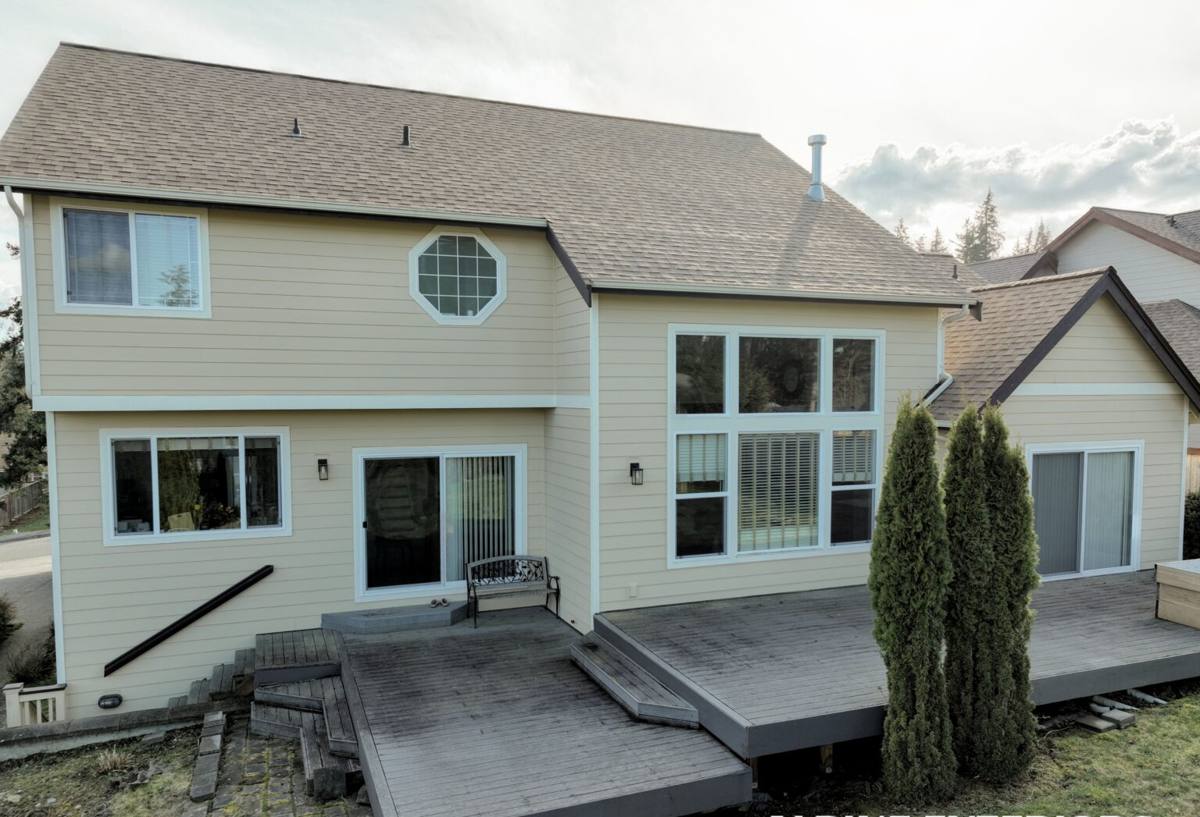
Puget sits close enough to the water that salt-laden air, driving rain off the Strait, and Whatcom County's long gray moss season all work on a deck the moment it's built. A deck design that looks fine on paper can fail early here if it isn't built with this specific environment in mind. This page covers what a deck built for Puget conditions actually needs — the materials, the details, and the build process — so you know what a correct job looks like before you hire anyone.
Most deck problems we see in this area aren't dramatic structural failures. They're slow: fasteners that weep rust stains within a couple of seasons, boards that stay damp two extra days after every rain because airflow underneath was never planned for, ledger connections that trap moisture against the house, and moss that gets a foothold in shaded corners and never lets go. None of that is inevitable. It's a function of whether the crew that built it understood the climate they were building into.
Salt Air and Metal Fasteners
Bellingham isn't a heavy salt-spray environment the way an oceanfront town is, but Puget's proximity to Bellingham Bay and the Strait means airborne salt is a real factor, especially on decks with any western or northern exposure. Standard electro-galvanized screws and hardware corrode faster here than most homeowners expect — often visibly within two or three years, well before the wood itself shows real wear.
The fix isn't complicated, it's just a standard we hold to: stainless steel or heavy hot-dip galvanized fasteners and structural hardware rated for coastal exposure, full stop, on every ledger bolt, joist hanger, and deck screw. It costs more up front than mixing in whatever's on the shelf at a big-box store. It's also the difference between hardware that's still sound at year fifteen and hardware that's staining the decking and losing grip strength by year five.
Where Corrosion Shows Up First
- Joist hanger nails and screws, especially on the shaded north side of the structure
- Ledger board lag bolts where the connection meets the house
- Railing post hardware, particularly at the base where water pools
- Any fastener left exposed on a top-mounted (versus hidden) decking system
Driving Rain and Water Management
Whatcom County rain doesn't fall straight down — driving rain off the water pushes moisture sideways into ledger connections, under railing caps, and into end grain that a purely vertical rain design would never see. A deck built without this in mind ends up with water intrusion in places that look fine from the surface but are rotting or corroding underneath.
Correct water management on a Puget deck comes down to a handful of details done right, every time:
- Ledger flashing: a proper flashing system where the deck ties into the house, not just caulk, which fails silently over time
- Joist tape: self-adhering flashing tape on top of every joist so fastener penetrations don't become entry points for water into the wood
- Proper slope: a slight pitch away from the house so water sheds instead of pooling against the structure
- Board gapping: spacing that accounts for wood movement and lets water drain through rather than sit on the surface
- End-grain sealing: cut ends of boards sealed before installation, since end grain absorbs water many times faster than the face of the board
Skip any one of these and the deck can still look good for a year or two. The failures show up later, and by then they're usually hidden under the decking where they're expensive to find and fix.
Moss, Shade, and Airflow Underneath the Deck
Puget has enough tree cover and enough damp shoulder seasons that moss isn't a maybe — it's an expected condition on any deck surface that doesn't get regular sun and airflow. Moss holds moisture directly against the decking material, and on wood that means accelerated rot in exactly the spots it takes hold.
Two things matter more than any moss-killing product: clearance under the deck for airflow, and decking material choice that matches how much shade the specific spot actually gets. A low-clearance deck tucked against a shaded side of the house is going to fight moss every single season no matter what it's built from. A deck with adequate under-structure ventilation and the right material for its light conditions fights moss a lot less.
Choosing the Right Decking Material for Puget Conditions
There's no single "best" decking material — there's a best material for a given deck's sun exposure, budget, and how much upkeep the homeowner actually wants to do. Here's how the common options hold up specifically against Puget's salt air, driving rain, and moss pressure.
| Material | Moss/Moisture Resistance | Maintenance | Notes for This Climate |
|---|---|---|---|
| Pressure-treated wood | Moderate — needs sealing | Annual cleaning, periodic re-sealing | Lowest upfront cost; requires real upkeep discipline in a wet climate or it goes downhill fast |
| Cedar | Good natural resistance, but surface still needs care | Regular cleaning, occasional staining | Handsome look; still needs moss management in shaded areas |
| Composite decking | Very good — won't rot | Periodic washing only | Best option where shade and moss pressure are heaviest; still needs airflow underneath |
| PVC decking | Excellent — fully moisture-proof surface | Low, mostly rinsing | Strong choice for full sun-to-shade transition areas; premium cost |
We'll walk through these trade-offs honestly during an estimate rather than pushing whatever has the best margin. A shaded, mostly-north-facing deck in Puget is a very different recommendation than a sunny, open one, even on the same street.
Framing and Structure: What Doesn't Show But Matters Most
The decking surface is what a homeowner sees, but the framing underneath is what determines whether the deck is still sound in twenty years. In this climate, that means:
- Pressure-treated framing lumber rated for ground contact where posts meet the soil
- Post bases that keep wood off the ground and out of standing water, rather than direct burial
- Joist spacing sized correctly for the decking material chosen — composite and PVC often need tighter spacing than solid wood
- A ledger connection engineered to code, not just toe-nailed or lag-bolted without flashing
None of this is visible once the deck is finished. It's also exactly where a corner cut on a rushed build shows up as a problem five or ten years down the road, usually as a soft spot, a sagging section, or a railing that's gone loose at the post.
Our Process for a Puget Deck Build
1. On-Site Assessment
We look at the actual sun exposure, shade pattern, drainage, and wind/rain direction for the specific spot the deck will sit — not a generic assumption about "Bellingham weather," but what that particular yard actually experiences.
2. Material and Design Conversation
We talk through decking material, railing style, and layout against the site conditions and your budget, including the honest maintenance commitment each option carries.
3. Permitting and Structural Planning
Deck permitting requirements vary by jurisdiction and by structure size and height — we handle the permit process and make sure the framing plan meets code for your specific build.
4. Build with Climate-Specific Details
Ledger flashing, joist tape, corrosion-resistant hardware, proper slope, and end-grain sealing aren't upgrades we offer — they're the standard we build to on every deck.
5. Walkthrough and Care Guidance
Before we're done, we walk the finished deck with you and go over what maintenance it actually needs — cleaning schedule, what to watch for with moss, and how to care for the specific material installed.
Why a Crew That Already Works in Puget Matters
A contractor who mostly builds in drier inland climates, or who treats every job the same regardless of location, tends to under-build for what this specific coastal-adjacent environment throws at a structure over time. Working regularly in and around Bellingham and Whatcom County means we're not guessing at what salt air, driving rain, and moss do to a deck here — we've seen it, and we build against it as a matter of course, not as an upsell.
That local familiarity also means realistic timelines and scheduling around this region's weather windows, rather than a build plan that assumes a drier climate's construction calendar.
Signs an Existing Puget Deck Needs Attention
- Rust staining streaking down from screw heads or hardware
- Soft or spongy spots underfoot, especially near the ledger or post bases
- Persistent moss or dark staining that returns quickly after cleaning
- Railing posts that have loosened or shifted
- Standing water on the deck surface more than a few hours after rain stops
- Visible gaps or separation at the ledger-to-house connection
Catching these early is usually a repair. Left alone through another Whatcom County wet season, they tend to become a rebuild.
If you're planning a new deck in Puget or want an honest look at whether an existing one is holding up the way it should, we're happy to come take a look. Reach out for a free, no-pressure estimate using the form below.