 Bellingham Roofing
 Bellingham's Marine Climate Is Hard on Decks — Puget Feels It First
Decks in the Puget area of Bellingham take a beating that inland homes simply don't deal with. Sitting close enough to the water that salt air is a daily fact of life, these decks are exposed to a steady mix of moisture and corrosion that most manufacturers' warranty language never accounts for. Add in Whatcom County's driving winter rain — often coming in sideways off the water — and a moss season that can stretch from October well into spring in shaded, north-facing yards, and you have a recipe for deck problems that show up faster and hit harder than a generic repair guide would suggest.
We're not describing a hypothetical. This is the normal wear pattern we find on almost every Puget-area deck we're called out to look at: fasteners going soft before the boards around them show any obvious damage, moss holding water against wood long after a storm has passed, and structural connections that were built to code but never accounted for decades of salt-laden air working on the metal. A correct repair in this part of Bellingham has to plan for all three at once — not just patch the board that's visibly failing.
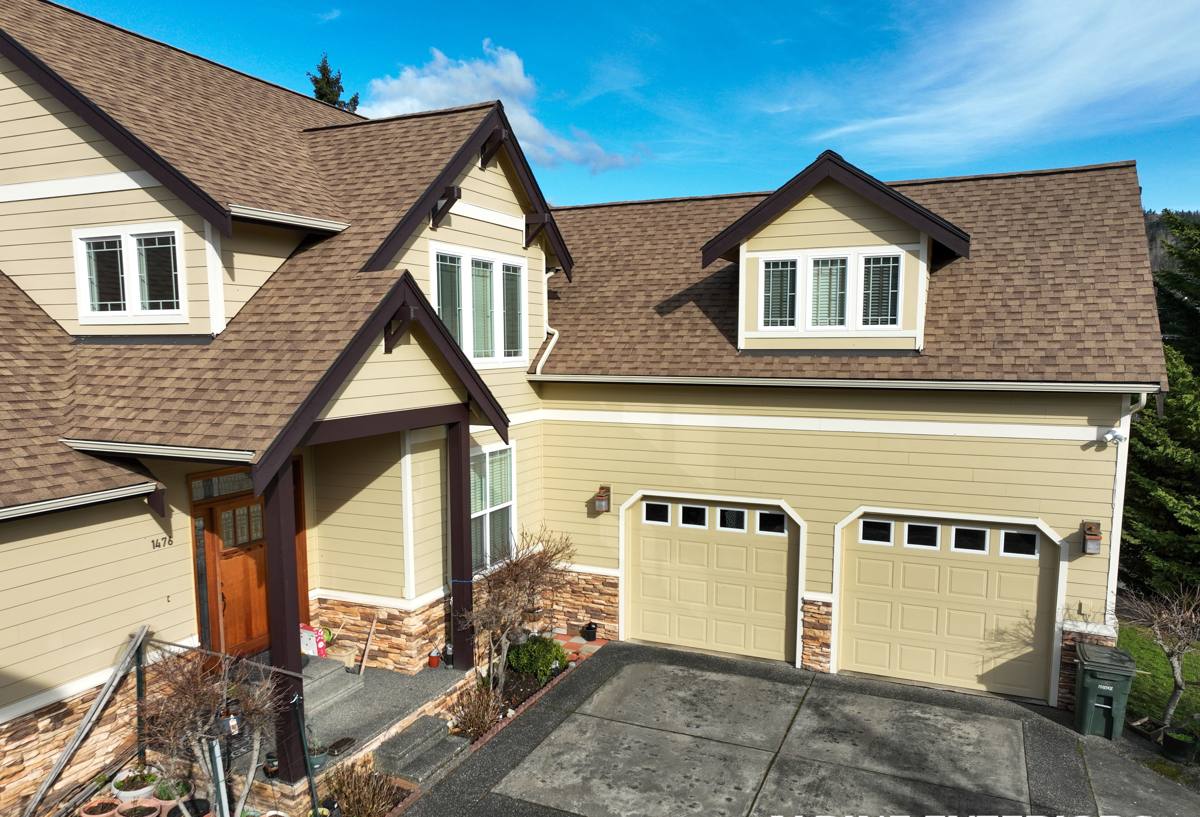
What a Correct Deck Inspection Covers Before Any Repair Starts
A deck repair is only as good as the inspection behind it. We don't quote a repair from a walk-around and a guess — we check the parts of the deck that actually determine whether it's safe and how long a repair will hold up. On every Puget-area call, that means going through the same list regardless of what the homeowner initially called about:
- Ledger board attachment and flashing where the deck meets the house — the single most common source of hidden rot
- Joist hangers and structural fasteners for rust, pitting, or loss of holding strength
- Support posts and footings at or below grade, where saturated soil can shift or settle a structure over time
- Decking boards for cupping, splitting, soft spots, or delamination, especially in shaded or low-airflow areas
- Railing posts and connections, which take direct load and are a safety priority, not a cosmetic one
- Stairs and stringers, which see concentrated foot traffic and often fail before the deck field does
- Under-deck drainage and airflow, since trapped moisture is usually the real reason a repair is needed at all
This is also where we tell homeowners honestly if a problem is cosmetic versus structural. Moss staining on the surface is not the same issue as a soft ledger connection, and the repair — and the cost — should reflect that difference.
The Deck Problems We See Most Often in Puget
Every coastal Whatcom County neighborhood has its own wear pattern, and Puget's is fairly consistent. The table below covers what we run into most, why it happens here specifically, and how we typically approach fixing it.
| What You Notice | Likely Cause in This Climate | Typical Repair Approach |
|---|---|---|
| Green or black film on boards, slick footing | Shade, moisture, and a long moss season with little dry-out time between rains | Surface cleaning, improving airflow/sun exposure where possible, and a breathable protective finish |
| Rust streaks around screws or hardware | Standard fasteners corroding faster near salt air | Replace with stainless or marine-grade coated fasteners, not a matching replacement of what failed |
| Soft or spongy decking near the house | Poor or failed ledger flashing letting water track behind the siding | Remove affected boards, correct the flashing detail, replace framing if rot has spread |
| Boards cupping or separating at the edges | Repeated wet-dry cycling from driving rain and inconsistent drainage underneath | Replace affected boards and address the drainage or airflow issue causing the cycling |
| Composite decking flaking or swelling at seams | Water intrusion at cut ends or fastener points not sealed at installation | Section replacement with properly sealed cut ends; full deck evaluation if it's widespread |
| Railings that feel loose or wobble | Corroded lag bolts or a post base that's been sitting in standing water | Reinforce or rebuild the connection with corrosion-resistant hardware |
Repair or Replace? How We Help You Decide
Not every deck problem in Puget needs a full rebuild, and we're not going to tell you it does. But we also won't patch over a structural issue just to keep a job smaller. Here's the honest way we think through it with homeowners:
| Factor | Repair Usually Makes Sense | Replacement Usually Makes Sense |
|---|---|---|
| Framing condition | Joists and ledger are sound; damage is isolated to a few boards or fasteners | Rot has spread through multiple joists or the ledger connection is compromised |
| Age of the deck | Deck is under 15-20 years old and was built to current flashing standards | Deck predates modern flashing practices and problems keep recurring in the same spots |
| Extent of moss/moisture damage | Damage is surface-level or limited to a shaded section | Moisture has been trapped long enough to affect structural wood, not just the surface |
| Fastener condition | A subset of hardware is corroded; the rest tests solid | Corrosion is widespread across the structure, not isolated |
| Homeowner's timeline | You want to address the current issue and monitor the rest | You'd rather solve it once and stop budgeting for repeat repairs |
We'll always give you our honest read on which side of that table your deck falls on — including when a smaller repair now is the right call, even if a replacement would be a bigger job for us.
Our Deck Repair Process
- On-site inspection. We walk the full structure — not just the area you flagged — checking framing, fasteners, drainage, and surface condition.
- Moisture and structural assessment. We probe suspect wood, check ledger flashing, and identify whether damage is contained or spreading.
- Written scope and estimate. You get a clear breakdown of what's being repaired, what materials we're using, and why — no vague line items.
- Repair work. Framing, fasteners, and decking are addressed in that order, since surface work over a weak structure isn't a real repair.
- Sealing and finish. Cut ends, fastener points, and exposed wood get properly sealed before any finish coat goes on.
- Final walkthrough. We show you exactly what was done and what to watch going forward, including anything we think is worth monitoring next season.
Materials and Fasteners We Choose for This Climate
Salt air and near-constant moisture change what "standard" hardware should mean on a Puget deck. Our default is stainless steel or heavy marine-grade coated fasteners on any repair, even when the original build used standard galvanized hardware — matching what failed with the same product that failed isn't a real fix. We also pay close attention to flashing tape and detailing at the ledger board, since that single connection is responsible for more hidden rot than any other part of a deck.
On framing lumber, we favor borate-treated or naturally decay-resistant wood in any section that's being rebuilt, particularly close to grade or under low-airflow sections of the deck. And on finishes, we lean toward breathable, penetrating sealers over heavy film-forming coatings. A thick film finish can look good the day it's applied, but it traps moisture underneath once it starts to crack — which, in a climate with this much rain and moss pressure, tends to happen faster than homeowners expect. That's a maintenance trade-off we'd rather be upfront about than sell around.
Maintenance Checklist for Puget Homeowners
A repair holds up longer when it's paired with a bit of seasonal upkeep. This is the short list we give homeowners after finishing a job:
- Sweep or brush off moss and debris before it has a chance to sit through a wet season
- Keep gutters and downspouts clear so runoff isn't draining directly onto or under the deck
- Check fastener heads and railing connections once a year for early rust or looseness
- Reapply a breathable sealer on the schedule the product calls for, not just when it looks worn
- Trim back overhanging branches or vegetation that's keeping a section of decking shaded and damp
- Look underneath the deck occasionally for standing water or blocked airflow, not just at the surface
Why a Crew That Already Works in Puget Matters
A deck repair company that mostly works drier, inland jobs will often underestimate what a Puget-area deck needs — they'll spec standard hardware, skip the flashing detail that matters most here, or miss how much moss buildup is actually contributing to a moisture problem. A crew that already works this specific stretch of Bellingham knows the wear pattern before we even start the inspection, because we've seen it on the house down the street.
That local familiarity also means we're not guessing on permitting requirements or typical construction details for homes built in this area during different eras, and we can usually get to storm-related repair calls faster because we're already working nearby. None of that replaces a proper inspection — we still check every deck on its own merits — but it does mean less time spent diagnosing problems we've already solved elsewhere in the neighborhood.
Getting Started
If your deck in Puget is showing rust, soft spots, moss buildup, or just doesn't feel as solid as it used to, we're happy to come take an honest look. We'll walk the full structure, tell you plainly what we find, and lay out your options — repair or replace — without pressure either way. Reach out below for a free estimate.