 Bellingham Roofing
 Storm Damage Roof Repair for Puget-Area Homes
Homes in the Puget area of Bellingham take a different kind of beating than roofs further inland. You're close enough to open water that salt air is part of daily life, exposed enough that wind-driven rain finds every weak seam, and shaded enough by the surrounding tree cover that moss has months to work on shingles before anyone notices. When a storm rolls through Whatcom County, it doesn't just test your roof once — it tests every repair, patch, and shortcut that's ever been done to it.
This page covers what storm damage repair actually looks like for a Puget-area home: what to watch for after a bad storm, what a correct repair involves, and how we approach the work so it holds up through the next one, not just until the insurance check clears.
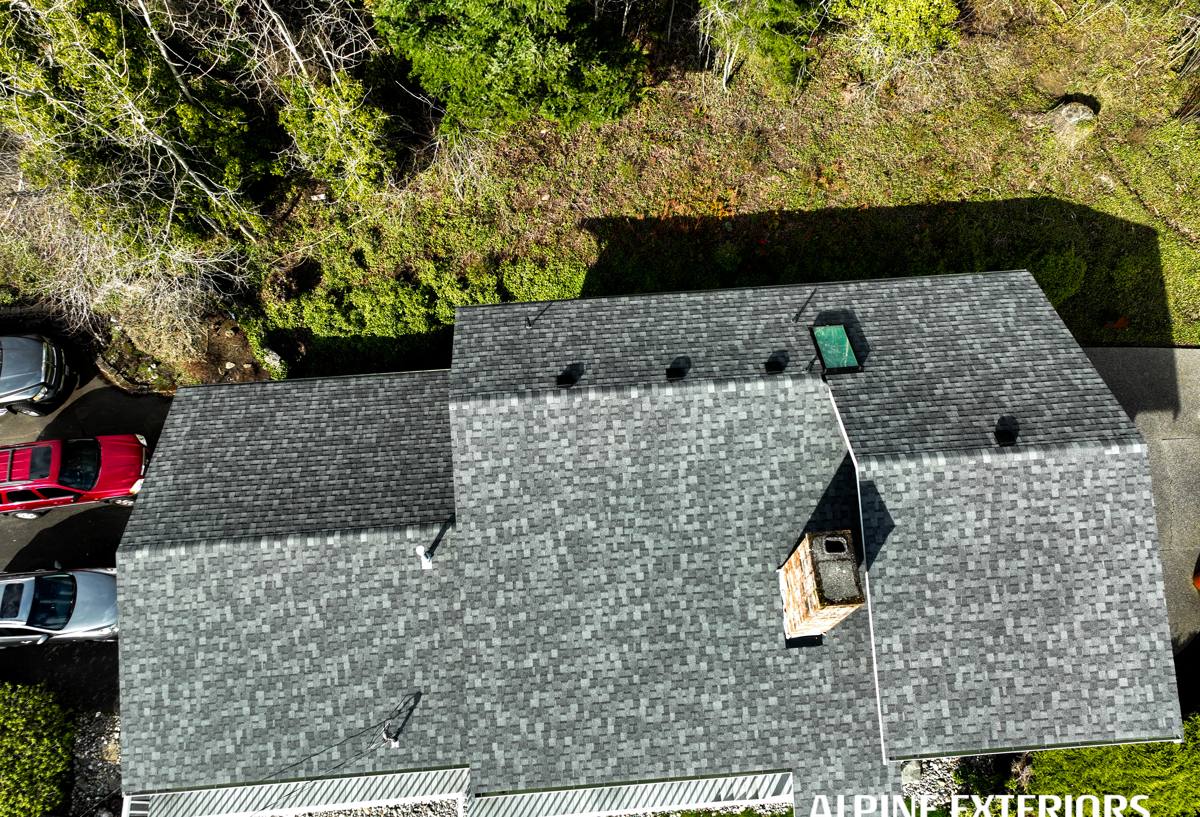
What Bellingham's Weather Does to a Roof
Storm damage here rarely comes from a single dramatic event. It's usually the cumulative effect of a marine climate working on a roof year-round, with storms acting as the trigger that turns slow deterioration into an active leak.
Wind-Driven Rain
Straight-down rain is easy for any roof to shed. The problem is wind-driven rain, which pushes water sideways and upward under shingle tabs, around flashing edges, and into any gap that's opened up over time. Puget's exposure to weather moving in off the water means gusts here can drive rain into places a roof was never designed to handle water from — which is exactly where storm damage shows up first.
Salt Air and Corrosion
Being close to Bellingham Bay means metal components age faster here than they would twenty miles inland. Flashing, fasteners, vent caps, and gutter hardware are all vulnerable to salt-accelerated corrosion. A fastener that's lost holding strength to rust doesn't announce itself — it just lets go during the next real wind event, and that's when a small weak point becomes a torn-off shingle or a lifted flashing edge.
A Long Moss Season
Whatcom County's wet, mild climate gives moss and moisture-loving growth a long window to establish itself on north-facing and shaded slopes. Moss holds water against the roof surface, lifts shingle edges as it grows, and breaks the granule surface down over time. A roof already weakened by moss is far more likely to suffer real damage in a storm than one that's been kept clean, because the wind has more loose edges to grab.
Signs of Storm Damage on a Puget Home
Some storm damage is obvious — a shingle in the yard, a visible tear on the roof plane. Most of it isn't. After any significant wind or rain event, it's worth doing a quick check from the ground and inside the attic if you can safely access it.
- Shingles that look lifted, curled, or out of alignment compared to the surrounding field
- Granules collecting in gutters or at downspout outlets after a storm
- New or worsening moss growth that wasn't there before the last inspection
- Water stains or discoloration on ceilings, especially near exterior walls or chimneys
- Soft or spongy spots when walking near a roof edge, if that's ever been done for other work
- Flashing around chimneys, skylights, or vent pipes that looks bent, separated, or rusted
- Gutters pulling away from the fascia or sagging under debris weight
- A musty smell in the attic, which often shows up before a visible stain does
None of these guarantee a major problem, but any one of them is a reason to get a roof looked at rather than waiting for the next storm to make the decision for you.
What a Correct Storm Damage Repair Involves
Start With an Honest Inspection
A proper storm damage inspection covers more than the spot that's obviously leaking. Wind and rain rarely damage a roof in just one place — they find every existing weak point at once. That means checking flashing at every penetration, the condition of the underlayment where it's exposed, the state of the ridge and hip caps, and the gutters and fascia that channel water away from the structure. Skipping this step is how a homeowner ends up back on a roof crew's schedule three months later for a "new" leak that was actually there the whole time.
Repair or Replace: What Actually Decides It
Not every storm-damaged roof needs full replacement, and not every roof can be safely patched. The right call depends on a handful of concrete factors, not guesswork.
| Factor | Leans Toward Repair | Leans Toward Replacement |
|---|---|---|
| Age of existing roof | Under 10-12 years, otherwise healthy | Near or past expected lifespan |
| Extent of damage | Isolated to one section or penetration | Spread across multiple roof planes |
| Underlayment condition | Dry, intact where exposed | Saturated, deteriorated, or missing |
| Prior moss or algae damage | Minimal granule loss | Significant granule loss under moss |
| Decking condition | Solid, no soft spots | Soft, delaminated, or water-stained |
We walk homeowners through this table's factors during the inspection itself, with photos, so the recommendation isn't something you have to take on faith.
How Our Storm Damage Repair Process Works
1. Immediate Mitigation
If a roof is actively leaking or has an open section exposed to weather, the first job is stopping further water intrusion — tarping, temporary flashing, or sealing an open area. This buys time to do the actual repair correctly instead of rushing it.
2. Documentation
We photograph and document the damage clearly, which matters whether or not you're filing an insurance claim. Good documentation is also just good practice — it gives you a record of what was found, what was repaired, and why.
3. The Repair Itself
Depending on what the inspection turns up, this might mean replacing a section of shingles and underlayment, resetting or replacing flashing, repairing or replacing damaged decking, or a combination. We match materials to the existing roof where possible and explain any place where an exact match isn't realistic.
4. Final Check and Cleanup
Before we consider the job done, we check the repair itself, the surrounding area for any damage we may have missed on the first pass, and the ground and gutters for debris and stray fasteners.
Materials That Hold Up in a Marine Climate
Storm repairs on the Puget area's exposed, wet, salt-influenced sites need materials chosen for that specific environment, not just whatever's cheapest or fastest to install.
| Component | Standard Choice | Why It Matters Here |
|---|---|---|
| Fasteners | Corrosion-resistant coated or stainless | Resists salt-air corrosion that weakens standard fasteners over time |
| Underlayment | Synthetic, high water-resistance | Handles the extended wet season better than older felt products |
| Flashing | Properly lapped, sealed metal flashing | Directly addresses wind-driven rain intrusion points |
| Ridge and hip caps | Matched to existing shingle system | Maintains wind resistance at the roof's most exposed lines |
We don't push a specific brand as the only option that works. What we push is matching the right product to the exposure and slope of your specific roof, and being upfront about the trade-offs — cost, appearance, and maintenance — of each choice.
Insurance Claims and Storm Damage
Many storm damage repairs in Whatcom County go through homeowners insurance. Our documentation and inspection findings are written to be useful for that process — clear photos, a plain description of the damage and its likely cause, and a repair scope that matches what was actually found. We're not a public adjuster and don't represent your insurance company or negotiate your claim for you, but we'll give you the honest information you need to have that conversation on solid footing.
Why a Crew That Already Works in Puget Matters
A roofing crew that regularly works this specific area already knows what Bellingham's marine exposure does to different roof types, which flashing details tend to fail first in wind-driven rain, and how aggressive the moss season really gets on shaded lots. That's not a marketing point — it changes what we look for during an inspection and how we prioritize repairs. A crew unfamiliar with this climate can miss the difference between cosmetic wear and a real point of water entry, because they're used to conditions that are drier, calmer, or less exposed to salt air.
Keeping Storm Damage From Coming Back
A repair is only as good as what happens after it. A few habits go a long way toward protecting a Puget-area roof between storms:
- Clear moss and organic debris on a regular schedule, not just when it's visibly heavy
- Keep gutters and downspouts clear so wind-driven rain has somewhere to go
- Have flashing and fasteners checked periodically, since salt-air corrosion isn't always visible from the ground
- Address minor issues — a lifted shingle, a small stain — before the next storm turns them into major ones
- Keep a simple record of past repairs so any future contractor knows what's already been done
If a recent storm has you wondering about the condition of your roof, we're happy to take a look. We offer free, no-pressure estimates for storm damage repair in the Puget area of Bellingham — just fill out the form below and we'll get in touch.