 Bellingham Roofing
 Roof Repair Built for Columbia's Weather, Not a Generic Climate
Columbia is one of the older, established pockets of Bellingham, sitting close enough to the water that homes here take on a different kind of weather stress than roofs further inland in Whatcom County. Salt-laden air off the bay works on metal fasteners, flashing, and vent caps year-round. Driving rain — the sideways kind that Bellingham gets during fall and winter storms — finds every gap a roof has been hiding. And a moss season that can stretch from late fall through spring keeps organic growth working on shingles even when nothing looks obviously wrong from the ground.
None of that means Columbia roofs fail faster than average. It means the failure points are specific, and a repair that doesn't account for them is a repair that comes back. We've worked enough roofs in this neighborhood to know which details actually matter here versus what's just generic advice from a roofing guide written for a drier climate.
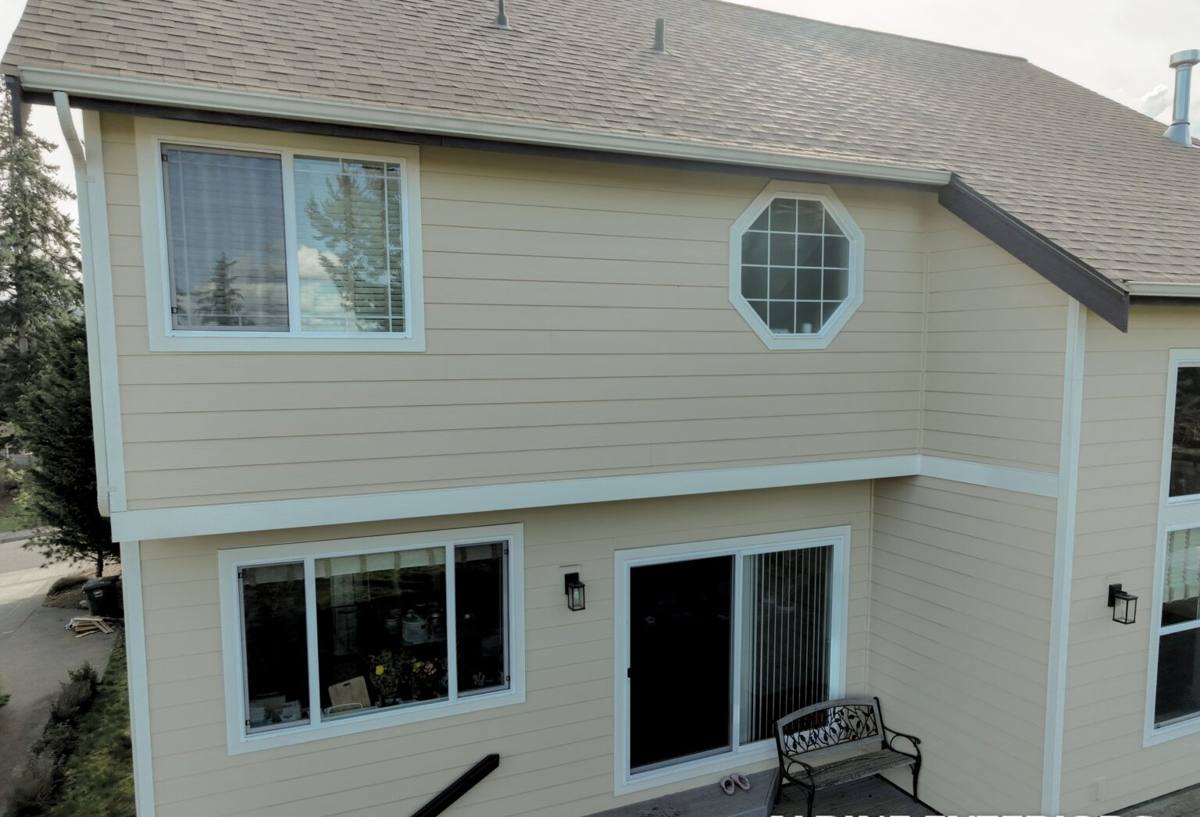
What Actually Wears Out First on a Columbia Roof
Salt Air and Metal Fatigue
Proximity to the water means airborne salt settles on every exposed surface, including roofing. It accelerates corrosion on exposed fasteners, drip edge, flashing, and any unpainted metal components. A nail that would last decades inland can start rusting and backing out years earlier this close to the bay. Rusted fasteners don't just look bad — they lose their grip on the decking underneath, which is exactly where leaks start.
Driving Rain and Wind-Driven Water
Bellingham's storms don't always come straight down. Wind-driven rain pushes water sideways and upward under shingle edges, around chimneys, and into any flashing that's slightly loose or improperly lapped. A roof can shed a light, vertical rain just fine and still leak badly in a windstorm, because the failure points are lateral, not top-down.
Moss, Shade, and Slow Rot
Many lots in Columbia have mature trees, and shaded, north-facing roof sections stay damp far longer after a rain than open, sun-exposed slopes. That moisture retention is what lets moss take hold. Moss roots work into the granule layer of asphalt shingles and lift shingle edges, which is often the real cause when a homeowner assumes their shingles are simply "old." The moss is a symptom of moisture retention — but left alone, it becomes its own cause of damage.
Common Repair Calls We See in This Neighborhood
- Flashing leaks around chimneys, skylights, and where a lower roof section meets a wall
- Rusted or lifted fasteners along ridge caps and drip edges near the water side of a home
- Moss-damaged shingles on shaded or north-facing slopes
- Gutter and downspout backups that push water under the roof edge during heavy storms
- Cracked or dried-out pipe boot seals letting water track down into the attic
- Nail pops and lifted shingle tabs from wind uplift during winter storm systems
Most of these show up as a small stain on a ceiling or a slightly damp attic smell long before they become a visible hole. Catching them at that stage is the difference between a repair measured in a few hundred dollars and one that involves replacing decking.
What a Correct Roof Repair Actually Involves
A repair that just covers the visible symptom — tarring over a crack, swapping one shingle — is not the same as a repair that fixes the underlying cause. A correct repair on a Columbia roof usually means:
Finding the Real Entry Point
Water often travels along the underside of the decking before it shows up as a stain, so the visible drip location is rarely the actual leak location. We trace the path from the inside where possible, and inspect flashing, valleys, and penetrations from the outside before touching anything.
Matching Materials, Not Just Patching Color
A patch that doesn't match the existing shingle's granule wear, exposure, and fastening pattern can create a new weak seam rather than blend in. We match shingle type, exposure, and fastening approach to the existing roof so the repair performs the same as the surrounding material, not just looks similar from the ground.
Flashing Detail Over Sealant
Sealant and roofing cement have their place, but they degrade under UV and salt exposure faster than properly lapped and fastened flashing. Where flashing is the real problem, we rebuild the flashing detail rather than relying on caulk as a long-term fix.
Checking What's Underneath
Any repair that involves removing shingles is a chance to check the decking underneath for soft spots or rot. Repairing the surface over compromised decking is a short-term fix that fails again quickly — we flag decking issues honestly rather than covering them.
Our Roof Repair Process
- Inspection and diagnosis — We look at the roof from the ground, from the attic where accessible, and up close on the surface itself, tracing water paths rather than guessing from the stain location alone.
- Honest estimate — You get a clear explanation of what's actually failing, what it will take to fix it correctly, and what it costs — no upsell pressure toward a full replacement if a repair is the right call.
- The repair itself — Matched materials, rebuilt flashing where needed, and fasteners suited to this climate's salt and moisture exposure.
- Cleanup and debris check — Old material, nails, and granule debris cleared from gutters and the ground, not left for you to find later.
- Follow-up — If a repair was done to address a leak, we want to know it held through the next real storm, not just on a dry day.
Repair or Replace? How We Help You Decide
Not every roof problem in Columbia needs a full replacement, and not every roof is a good candidate for another round of patching. The honest answer depends on the roof's age, how widespread the damage is, and what's happening underneath the surface.
| Factor | Favors Repair | Favors Replacement |
|---|---|---|
| Roof age | Under roughly 12–15 years | Approaching or past typical service life for the material |
| Damage extent | Isolated to one section or penetration | Spread across multiple slopes or repeat failures |
| Decking condition | Solid, dry decking under the damage | Soft spots, rot, or sagging found during inspection |
| Moss/algae history | Surface growth, shingles intact underneath | Granule loss and lifted shingles from long-term moss |
| Repair history | First or second repair in this area of the roof | Same spot has been patched multiple times already |
We'll tell you plainly which side of that table your roof falls on. If a repair is the right call, that's what we'll recommend — a roof that doesn't need replacing yet is a roof we'd rather fix correctly and let you get more years out of it.
Preventive Care That Extends the Life of a Repair
A good repair holds longer when the rest of the roof isn't working against it. A few habits make a real difference in a climate like this one:
- Keep gutters and downspouts clear, especially before the fall storm season — overflow is one of the most common causes of edge and fascia damage
- Trim back tree limbs that shade roof sections and drop debris, since shade and debris both extend how long a roof surface stays wet
- Address moss when it first appears rather than waiting until it's visibly lifting shingles
- Have flashing and pipe boots checked every few years — they wear out faster than the shingle field around them
- Walk the attic after a hard windstorm and check for new light, staining, or damp insulation
Why We're Careful About Moss Treatment Chemicals
Moss killers and zinc or copper strips can help manage regrowth, but harsh treatments can also degrade granule adhesion on asphalt shingles if used too aggressively or too often. Our standard is to treat moss as part of a broader maintenance plan — removal, gentle treatment, and addressing the shade or moisture issue causing it — rather than relying on repeated chemical applications as the only fix.
Why a Local Bellingham Crew Matters for This Job
Roof repair is one of those jobs where local knowledge changes the outcome. A crew that already works in Whatcom County knows how Bellingham's building department handles repair permitting, what flashing details actually hold up against wind-driven rain off the bay, and which shingle and metal products are rated to handle salt air without failing early. That's different knowledge than a crew that mostly works drier, inland climates and treats every roof the same way.
Working regularly in neighborhoods like Columbia also means we're not guessing at typical roof ages, common construction styles, or the kind of tree cover and shade patterns that drive moss growth here. That familiarity shows up in a faster, more accurate diagnosis and a repair that's built for the conditions the roof will actually face, not a generic set of assumptions.
Signs You Need a Roof Repair Now, Not Later
Some roof problems can wait for a scheduled inspection. Others shouldn't wait through another storm cycle. Watch for:
- A new stain or discoloration on a ceiling or wall, even a small one
- Visible moss buildup, especially on shaded slopes or along the roof edge
- Granules collecting in gutters or at downspout outlets
- Shingle tabs that look lifted, curled, or missing after a windstorm
- A musty smell in the attic or upper floor after heavy rain
- Daylight visible through the roof deck from inside the attic
If any of these sound familiar, it's worth having it looked at before the next round of driving rain finds the weak spot for you.
Get a Straight Answer on Your Columbia Roof
If you're dealing with a leak, moss buildup, or storm damage on a roof in Columbia or elsewhere in Bellingham, we're happy to take a look and give you an honest read on whether it needs a repair or something more. There's no pressure and no upsell — just a clear estimate based on what we actually find. Fill out the form below and we'll get back to you to schedule a time.