 Bellingham Roofing
 Roof Repair in Fairhaven: A Neighborhood That Sits Close to the Weather
Fairhaven sits right at the edge of Bellingham Bay, and that position shapes what a roof in this neighborhood has to deal with year after year. It's one of Bellingham's older, more established neighborhoods, with a mix of early-century homes and newer construction tucked into the same sloped terrain leading up from the water. Roof age varies block to block, but the weather doesn't discriminate: salt-tinged marine air, rain that gets pushed sideways by wind more often than it falls straight down, and a moss season that can run most of the year on shaded, tree-covered lots.
Roof repair calls in Fairhaven tend to follow a pattern we see less often in drier, more sheltered parts of Whatcom County. Leaks show up at flashing and penetrations more than in the open field of the roof. Moss takes hold faster on north-facing slopes shaded by mature trees. And because Fairhaven homes often sit close together on sloped lots, water management around valleys and roof-to-wall transitions matters more than it might on a newer, simpler roofline further inland.
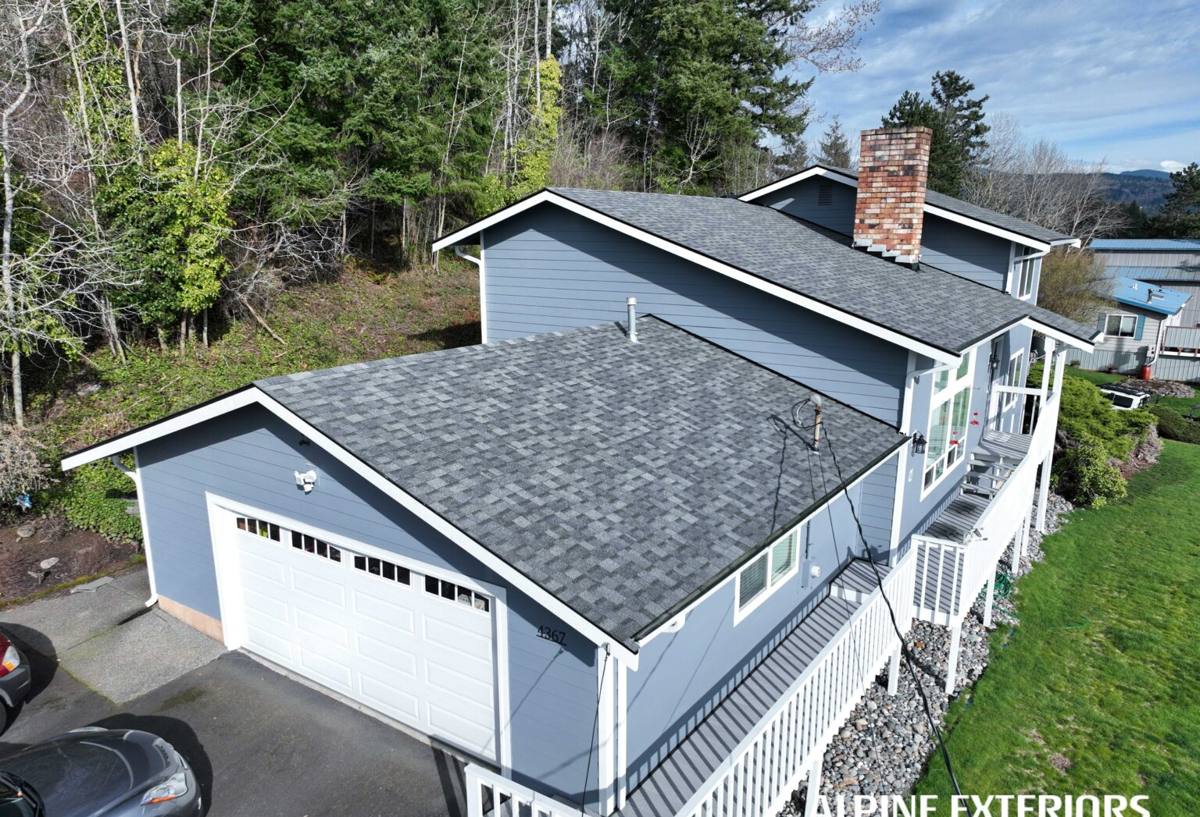
What Salt Air, Driving Rain, and Moss Actually Do to a Roof Here
Salt-Laden Marine Air
Homes close to Bellingham Bay sit in a steady drift of moisture-laden, mildly corrosive air, not just during storms but as a background condition most of the year. That kind of exposure works slowly on exposed fasteners, flashing metal, and vent boots. It rarely causes a dramatic failure. More often it shows up as rust streaking below a nail line, a flashing seam that's quietly corroded through, or a pipe boot that's gone brittle years before it should have.
Wind-Driven Rain
Fairhaven's open exposure toward the water means rain doesn't just fall on a roof, it gets driven into it. Wind-driven rain finds its way up under shingle edges, into valleys, and around chimneys and vent penetrations from angles a standard installation doesn't always account for. A roof that would hold up fine on a calmer, more sheltered inland lot can still take on water here specifically because of how wind interacts with the shoreline.
A Long Moss and Mildew Season
Mild temperatures, consistent dampness, and Fairhaven's mature tree canopy add up to an extended moss and algae growing season, especially on shaded and north-facing roof planes. Moss does more than look bad. It holds water against the roofing material, works its way under shingle tabs as it grows, and can lift or loosen roofing over time if it's left unchecked. It also tends to establish first in the areas homeowners check least — behind chimneys, under overhanging branches, along shaded valleys.
Hillside Drainage
A fair amount of Fairhaven's housing sits on sloped ground rising from the waterfront, which affects how water sheets off a roof and where it collects at gutters, valleys, and lower roof edges during a heavy rain event. On these lots, a repair that only addresses the visible damage without accounting for how water actually moves across that specific roof tends to fail again in the same spot.
Signs Your Fairhaven Roof Needs Repair
Most roof repair calls start with a homeowner noticing one of these. None of them mean you automatically need a new roof — but all of them are worth a real inspection rather than a wait-and-see approach.
- A water stain on a ceiling or ceiling and wall corner, especially after a windy rainstorm
- Moss that returns quickly after cleaning, particularly on shaded or north-facing slopes
- Shingles that are cracked, curling, or missing after a wind event
- Granules collecting in gutters or at downspout outlets, a sign the shingle surface is wearing thin
- Visible daylight or gaps in the attic around vent pipes, chimneys, or roof valleys
- Rust staining or a soft, spongy feel around a chimney or skylight flashing
- A musty smell in an upstairs room or attic that wasn't there before
- Sagging or a soft spot anywhere on the roof deck when walked
What a Correct Roof Repair Actually Involves
Diagnosing the Real Source, Not Just Chasing the Stain
Water rarely shows up on a ceiling directly below where it entered the roof. It travels along rafters, sheathing, and insulation before it becomes visible, sometimes for several feet. A repair that patches the spot nearest the stain without tracing the actual entry point is one of the most common reasons a "fixed" leak comes back the following winter. A proper diagnosis means getting on the roof, checking the attic from underneath when possible, and following the water's actual path before deciding what needs to be opened up.
Matching Materials Without Creating a Weak Seam
A repair section that doesn't tie into the surrounding roofing correctly becomes its own future leak point. That means using compatible underlayment, weaving or lapping shingles the way the original roof was installed, and matching fastening patterns so the repaired section sheds water the same way the rest of the roof does, instead of creating a seam where wind-driven rain can work its way underneath.
Flashing Repair, Not Just Patching Around It
In this climate, the flashing at valleys, chimneys, skylights, and roof-to-wall transitions is where most leaks actually originate, far more often than in the open field of the roof. A repair that caulks over failing flashing instead of replacing it buys a season or two at most. Correct flashing repair means removing the failed metal or membrane, replacing it properly, and re-integrating it with the surrounding shingles and underlayment so water is directed off the roof rather than just covered over.
Moss and Debris Removal Done the Right Way
Moss removal matters, but how it's done matters just as much. Aggressive pressure washing can strip protective granules off asphalt shingles and shorten the roof's remaining life, which is the opposite of what a repair is supposed to accomplish. We remove moss and debris by hand where it counts and treat the roof to slow regrowth, rather than blasting the surface and creating a bigger problem than the one we came to fix.
Repair or Replace? How We Make That Call
Not every leak or damaged section means the whole roof needs to come off. An isolated repair can make sense when the damage is limited to one area, the surrounding roofing is still in reasonably sound condition, and the underlying deck hasn't been compromised by long-term moisture. Full replacement becomes the more honest recommendation when the roof is already near the end of its expected service life, when moss and moisture have been working their way in for years across multiple areas, or when the repair would end up costing a significant share of what a new roof would cost anyway without buying you much additional time.
We'll tell you plainly which situation your roof is actually in. A roof repair company that only offers one answer, regardless of what they find, isn't giving you the full picture.
Roof Repair Cost Factors in Fairhaven
| Factor | What It Affects | Why It Matters Here |
|---|---|---|
| Where the damage is located | Access, labor time, and repair complexity | Valley and flashing repairs near chimneys or vent penetrations are more involved than field-of-roof shingle swaps |
| Roof pitch and access | Staging, safety equipment, labor time | Fairhaven's hillside lots and older rooflines can add setup time compared to a simple, level-access roof |
| Extent of hidden moisture damage | Whether decking or framing needs repair before re-roofing the section | Wind-driven rain and long moss seasons can let moisture track into the deck well before it's visible from the attic |
| Material match availability | Whether the repair blends in or looks patched | Older Fairhaven roofs sometimes use discontinued shingle profiles or colors, which affects how closely a repair can match |
| Moss and debris condition | Prep work required before the repair itself | Heavier moss growth common on shaded Fairhaven roofs adds cleaning and treatment time to the job |
Real numbers depend on what we actually find once we're on the roof, which is why we inspect in person before quoting rather than pricing a repair over the phone.
Our Roof Repair Process
Inspection and Diagnosis
We get on the roof and, where access allows, check the attic from underneath to trace the actual path water is taking, not just the spot where it became visible.
A Written Scope Before Anything Is Touched
You get a clear explanation of what's failing, what we recommend, and why, along with a written scope before any work starts. No surprise add-ons discovered after the fact without a conversation first.
The Repair Itself
We remove and replace failed materials rather than patching over them, re-integrate flashing properly with the surrounding roof, and match shingles and underlayment as closely as the situation allows.
A Straight Answer on What's Next
If the inspection turns up more than an isolated repair can reasonably solve, we'll tell you that directly, along with what a full replacement would actually involve, instead of stretching a patch job past what it can realistically do.
Why a Local Whatcom County Crew Matters for a Fairhaven Repair
A crew that works Fairhaven and the rest of Whatcom County regularly has seen how salt air corrodes fasteners, how wind-driven rain finds its way under improperly lapped flashing, and which roof slopes hold moss longest through a wet winter. That's the kind of knowledge that shows up in small decisions on repair day — which flashing detail is worth extra time, where a "small" leak is likely coming from before we even open anything up, and which shortcuts a roof in this specific climate simply can't afford. Fairhaven's proximity to the bay, its older housing stock, and its sloped terrain aren't identical to conditions elsewhere in Bellingham, and a crew with real local experience treats that as relevant information, not a detail to skip past.
If you've got a leak, storm damage, or a roof that's showing its age in Fairhaven, we're glad to take a look and give you an honest read on what it actually needs. Reach out using the form below to schedule a free, no-pressure estimate.