 Bellingham Roofing
 Why Birch Bay's Waterfront Location Changes the Roofing Equation
Birch Bay sits right on the water along the Whatcom County coastline, and that location does things to a roof that inland Bellingham neighborhoods rarely deal with in the same combination. Salt-laden air, near-constant onshore wind, and rain that comes in sideways instead of straight down all add up to a different wear pattern than you'd see on a roof a few miles inland. A roof replacement here isn't just about swapping old shingles for new ones — it's about building an assembly that's matched to what this stretch of coastline actually throws at it.
Salt Air and Metal Fatigue
Airborne salt accelerates corrosion on anything metal — nail heads, flashing, gutter hangers, roof vents. On a standard-grade roofing package, that corrosion shows up years before it should, usually first at fastener heads and cut edges of flashing where the protective coating has been broken. It's a slow problem, which is exactly why it gets ignored until it's a leak.
Wind-Driven Rain
Rain that's being pushed sideways by wind off the water doesn't behave like rain falling straight down. It finds its way under shingle tabs, into loose valleys, and behind flashing that would be perfectly adequate on a calmer site. Roofs near the water need tighter seal strips, properly lapped underlayment, and valley and edge details built with wind exposure in mind, not just rainfall totals.
Moss, Shade, and Moisture
Whatcom County's long moss season is a factor everywhere in the region, but it's often worse on shaded, moisture-retaining roofs near the water where humidity stays elevated for more of the year. Moss holds water against the roofing material, which shortens the life of the roof underneath it and can lift shingle edges as it grows.
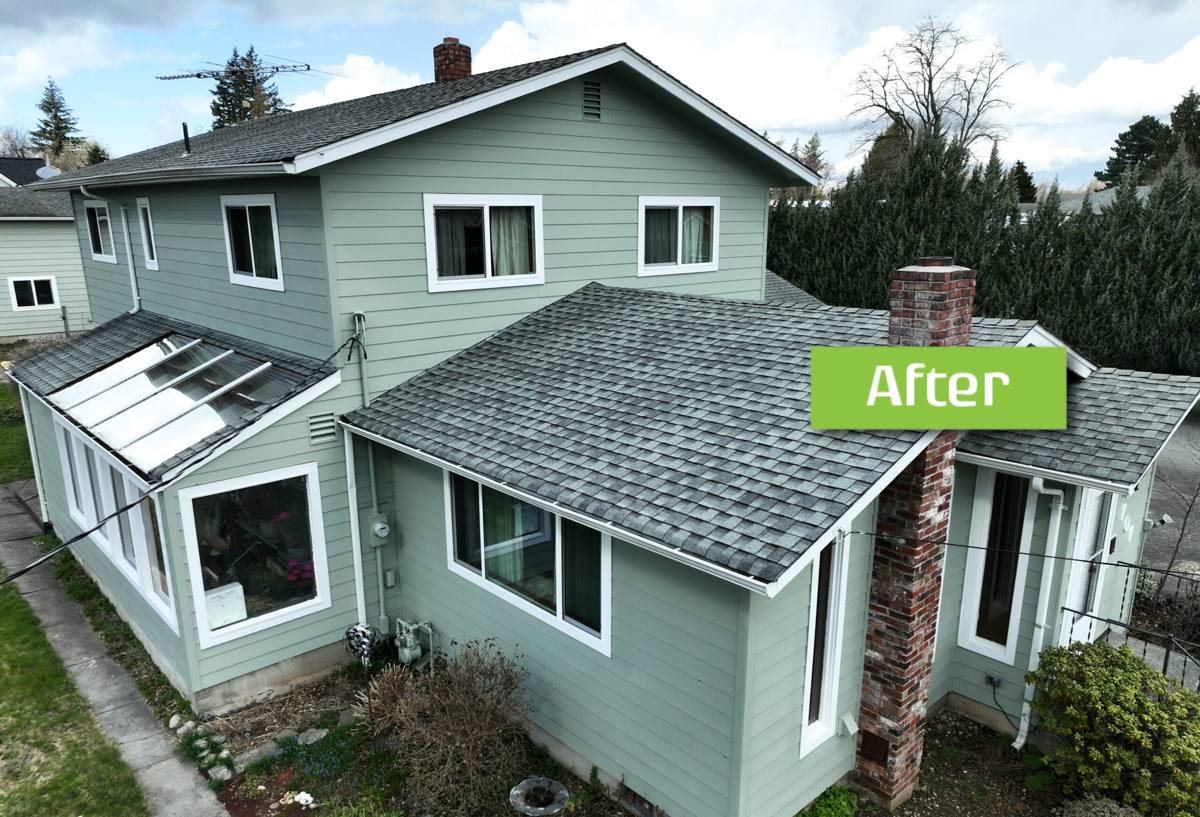
Signs Your Birch Bay Roof Needs Replacement, Not Another Repair
Every roof reaches a point where patching stops making sense and full replacement becomes the honest recommendation. In a salt-air, high-moisture environment, that point tends to arrive earlier than the manufacturer's rated lifespan would suggest. Signs worth taking seriously include:
- Granule loss heavy enough that you can see bare, shiny patches on shingles
- Shingles that are cupping, curling, or cracking, especially on wind-exposed slopes
- Rusted or heavily corroded flashing, vents, or fasteners
- Persistent moss or algae staining that keeps returning after cleaning
- Soft spots in the roof deck, or daylight visible through the attic sheathing
- Leaks that show up in more than one spot, or after every heavy wind event
- A roof already at or past the age where a second layer of repairs isn't worth the cost
One or two of these on their own might still be repairable. Several at once, especially on a roof that's already 18-20+ years old, usually means replacement is the more honest answer than another round of patchwork.
What a Correct Roof Replacement Looks Like in a Coastal Climate
A roof replacement done right in Birch Bay isn't dramatically different in sequence from one done anywhere else — but several steps get more attention because of where the house sits.
Tear-Off and Deck Inspection
We remove the old roofing down to the deck rather than installing over it. That's the only way to actually see what's happening underneath — soft or delaminated sheathing, hidden moisture staining, or old flashing that's been quietly failing for years. Any damaged decking gets replaced before anything new goes down.
Underlayment and Ice-and-Water Protection
On a wind-exposed, waterfront lot, underlayment choice matters more than it does on a sheltered inland roof. We use synthetic underlayment rated for the exposure, with self-adhered ice-and-water shield at eaves, valleys, and around every penetration — the places wind-driven rain is most likely to find a way in.
Flashing and Fastener Choices
Given the salt exposure, we don't treat flashing and fasteners as an afterthought. Corrosion-resistant fastener and flashing choices cost a little more up front but hold up substantially longer against salt air than standard-grade hardware, which matters on a roof you're expecting to last two decades or more.
Ventilation
Proper intake and exhaust ventilation keeps moisture from building up in the attic, which matters everywhere in this climate but especially on a home dealing with elevated humidity off the water. Poor ventilation shortens shingle life from underneath, which is easy to miss until the roof is already failing.
Choosing a Roofing Material for Birch Bay
There's no single "best" roofing material for every home — it depends on budget, roof pitch, how long you plan to own the home, and how much long-term maintenance you're willing to commit to. Here's how the common options stack up specifically against salt air, wind, and moss:
| Material | Coastal/Salt-Air Durability | Moss Resistance | Typical Lifespan | Considerations |
|---|---|---|---|---|
| Architectural asphalt shingle | Good, with corrosion-resistant fasteners | Moderate — benefits from algae-resistant granules | 25-30 years | Best balance of cost and performance for most homes |
| Standard 3-tab shingle | Fair | Lower — flatter profile holds moisture longer | 15-20 years | Lowest upfront cost, shortest coastal lifespan |
| Metal roofing (standing seam) | Excellent with proper coatings/fasteners | High — sheds moisture quickly | 40-60 years | Higher upfront cost, longer maintenance-free stretch |
| Synthetic/composite shingle | Good | Moderate to high depending on product | 30-50 years | Good middle ground; verify manufacturer's coastal rating |
For most Birch Bay homes, a quality architectural shingle with algae-resistant granules and corrosion-resistant hardware hits the right balance of upfront cost and coastal durability. Homeowners planning to stay long-term, or dealing with heavier wind exposure right on the water, often find the extra cost of metal roofing pays off in fewer maintenance calls over the years.
Our Roof Replacement Process
- On-site inspection and estimate. We walk the roof, check the attic where accessible, and talk through what we're seeing before recommending anything.
- Written scope and material selection. You get a clear breakdown of the work and material options, with an honest recommendation for your specific roof and exposure.
- Scheduling around the weather. We plan the tear-off for a stretch of dry weather whenever possible — critical for a job that leaves a roof deck briefly exposed.
- Tear-off and deck repair. Old roofing comes off, the deck gets inspected, and any soft or damaged sheathing is replaced.
- Underlayment, flashing, and new roofing installation. Built to the coastal-exposure standards described above, not a generic inland install.
- Cleanup and magnetic sweep. Job site and yard cleared of debris and stray fasteners.
- Final walkthrough. We go over the finished roof with you and answer any questions before calling the job done.
Timing a Replacement Around Whatcom County's Weather Windows
Roofing can be done in any season, but Birch Bay's exposed location makes dry-weather scheduling more valuable than it might be a few miles inland — a tear-off left partially exposed during a wind-driven rain event is a real problem. We plan installs around realistic dry windows and never leave a roof more open than it needs to be at the end of a work day. If you're planning ahead, scheduling during the drier stretches of the year gives the most flexibility, but a well-managed job can still be done responsibly outside that window when needed.
Why Local Experience in Birch Bay Matters
A crew that only occasionally works this stretch of coastline tends to default to whatever specs work fine on a typical inland Bellingham roof — and those specs are sometimes under-built for a waterfront lot. A crew that regularly works in Birch Bay already knows to spec corrosion-resistant hardware without being asked, to pay extra attention to wind-exposed valleys and edges, and to recognize moss and moisture patterns specific to shaded, humid, coastal roofs. That familiarity shows up in fewer callbacks and a roof that actually performs the way it's supposed to for its full expected lifespan.
It also matters when it comes to permitting and code requirements, which can vary by jurisdiction within Whatcom County. A local crew already knows the process rather than learning it on your project.
Protecting Your Investment After Installation
A correctly installed roof still benefits from a bit of ongoing attention, especially in this climate. A simple annual routine goes a long way:
- Keep gutters and downspouts clear so water isn't backing up under the roof edge
- Have moss and algae growth treated before it spreads, rather than after it's established
- Trim back overhanging branches to reduce shade and debris buildup on the roof
- Check attic ventilation isn't blocked by insulation or debris
- Have flashing and fasteners visually checked every couple of years for early corrosion
- Address any small leak signs immediately rather than waiting for them to spread
None of this requires much time or money, but skipping it is how a well-built roof still ends up with an avoidable problem a decade in.
Get a Straightforward Estimate
If your roof is showing its age, or you just want an honest read on how much life it has left, we're happy to take a look. There's no pressure and no obligation — just a straight answer about what your roof needs and what a proper replacement would involve. Use the form below to request a free estimate.