 Bellingham Roofing
 Sehome's Siding Takes a Different Kind of Beating
Sehome sits close enough to Bellingham Bay that salt-laden air is a constant factor, and the neighborhood's mix of older homes near Western Washington University and newer infill construction means we see a wide range of siding conditions on every street. Add Whatcom County's long, wet moss season and the driving rain that comes off the Sound in fall and winter storms, and you've got three separate stressors working on exterior siding at the same time — not just one.
Most homeowners notice a siding problem when it's already visible: a bubbled patch of paint, a soft spot near a downspout, a section that looks darker or greener than the rest of the wall. By the time siding damage is visible from the sidewalk, there's a good chance moisture has already been working behind the surface for a while. That's the pattern we run into most often in Sehome — repair work that starts as a small cosmetic fix and turns into a conversation about what's underneath.
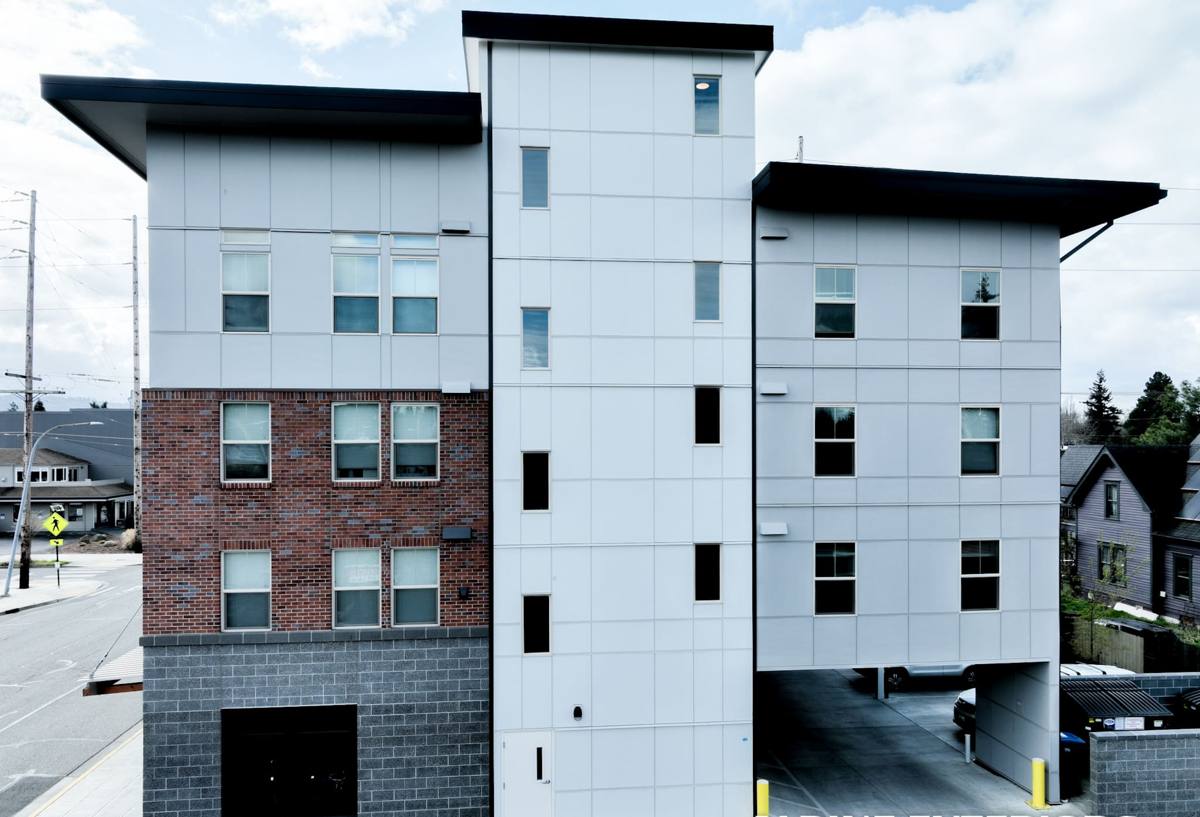
Why Sehome's Location Matters for Siding Longevity
Being close to the bay means Sehome homes deal with airborne salt that accelerates corrosion on fasteners, flashing, and any exposed metal trim tied into the siding system. Salt air doesn't just affect houses right on the waterfront — it travels, and it settles into porous or damaged siding surfaces over time. Combined with Bellingham's rainfall pattern, which leans toward long, low-intensity soakings rather than short heavy downpours, siding here needs to shed water consistently for months at a stretch, not just survive the occasional storm.
The Moss Factor
Whatcom County's moss season is long, and Sehome's tree cover and proximity to green space give moss and algae plenty to work with. On siding, moss isn't just cosmetic. It holds moisture against the surface far longer than open air would, which is exactly the condition that breaks down paint film, softens wood-based products, and keeps seams and laps wet when they should be drying out between rain events. North-facing walls and sections shaded by mature trees are usually where we find the worst of it.
What a Correct Siding Repair Actually Involves
A repair that only addresses the visible symptom tends to fail again within a season or two. A repair done right starts with figuring out why that section failed in the first place — because in most cases, the siding material is only part of the story.
Step One: Find the Real Cause
We look past the damaged board or panel itself. Common underlying causes we check for in Sehome homes include failed or missing kick-out flashing at roof-wall intersections, caulking that's cracked or was never appropriate for the joint, gutters or downspouts dumping water directly onto a wall section, and house wrap or weather barrier that's torn or improperly lapped behind the siding. If we replace a damaged board without fixing the water source, the new board fails on the same timeline as the old one.
Step Two: Assess What's Behind the Siding
Once we pull damaged material, we check the sheathing and framing underneath for soft spots, staining, or rot. Sometimes it's isolated to the area we're already working on. Sometimes it tells us the problem is more widespread than the visible damage suggested, and the homeowner needs that information before we move forward, not after.
Step Three: Match the Repair to the Material
How we approach the fix depends heavily on what's currently on the house:
- Fiber cement siding in good condition can often be patched section-by-section with matching material and factory-finish touch-up, since it doesn't absorb water the way wood-based products do.
- Wood, primed spruce, or engineered wood siding with moisture damage often needs a wider repair area than it first appears, because rot spreads under the paint line before it becomes visible.
- Vinyl siding that's cracked or warped from age is difficult to color-match once it's faded, which matters for how seamless a repair will look.
- Any siding tied into damaged flashing or trim gets that flashing and trim addressed as part of the same job — not as a separate future visit.
Repair vs. Replace: How We Help Sehome Homeowners Decide
Not every siding issue means a full re-side, and we don't push a bigger job than a house needs. But we also won't patch something that's going to fail again in a year. Here's generally how we think about it:
| Situation | Usually a Repair | Usually Points to Replacement |
|---|---|---|
| Damage location | Isolated to one wall section or a few boards/panels | Spread across multiple walls or recurring in the same spots |
| Underlying sheathing | Dry, solid when probed | Soft, discolored, or showing rot |
| Siding material | Fiber cement or otherwise sound material nearby | Original material has known long-term moisture issues (untreated wood, aging vinyl) |
| Age of siding system | Under 10-15 years, isolated failure | Approaching or past expected service life |
| Color match feasibility | Matching material or paint available | Faded/discontinued material won't blend |
When the underlying material itself is the problem — not just one bad section, but a product that's reaching the end of what it can reasonably be patched — that's when we talk honestly about what to replace it with, not just how to keep patching it.
Why We Only Install James Hardie Fiber Cement
When a Sehome home needs more than a spot repair, we install James Hardie fiber cement siding exclusively. We don't offer LP SmartSide, vinyl, Cemplank, Allura, primed spruce, or cedar as replacement options, and that's a deliberate standard, not a lack of options.
Fiber cement doesn't absorb water and swell the way engineered wood or untreated wood products can, which matters directly in a climate where moss holds moisture against walls for extended stretches and rain is a near-constant presence for much of the year. It's non-combustible, which is an added layer of protection increasingly relevant in the Pacific Northwest. Hardie's ColorPlus factory finish is baked on under controlled conditions rather than field-applied, which gives it more consistent, longer-lasting color performance than a job-site paint job — a real advantage given how much UV and salt-air exposure Bellingham siding deals with over its lifespan. And Hardie's HZ5 product line is engineered specifically for regions with heavy moisture exposure, which describes Whatcom County about as well as any climate zone in the country.
None of that means other products are worthless — vinyl is inexpensive, cedar has real aesthetic appeal, engineered wood has its fans. But after years of doing repair and replacement work in this exact climate, we've made a professional call: we only put our name behind the product we trust to hold up here, and that's Hardie.
Our Repair Process
- On-site inspection. We walk the exterior, identify every damaged area (not just the one you called about), and check flashing, caulking, and drainage paths that feed water toward the siding.
- Honest assessment. We tell you plainly whether this is a repair, a partial re-side, or something bigger — and why.
- Root-cause fix first. Flashing, sealant, or drainage issues get corrected before or alongside the siding work, not left for later.
- Material-matched repair or Hardie replacement. We either repair with matching or compatible material, or install James Hardie fiber cement where replacement makes more sense.
- Final check. We confirm laps, fastening, and sealant details meet manufacturer installation specs — details that directly affect warranty coverage and long-term performance.
Signs a Sehome Home Should Get a Siding Inspection Soon
- Paint that's bubbling, peeling, or flaking in a specific area rather than evenly across the house
- Soft or spongy siding when pressed near ground level, window sills, or under roof lines
- Persistent moss or dark staining that keeps returning after cleaning
- Visible gaps or separation at seams, corners, or trim boards
- A musty smell or interior wall discoloration on the room behind an exterior wall
- Siding near a downspout or gutter joint that looks different from the rest of the wall
Why It Matters to Hire a Crew That Knows Sehome
Siding repair isn't one-size-fits-all across Bellingham. A crew that regularly works Sehome already knows which wall orientations take the worst moss buildup, how salt air behaves on siding this close to the bay, and which older-home construction details in this neighborhood tend to hide flashing shortcuts from decades past. That local pattern recognition shortens the diagnostic part of the job and reduces the odds of missing a related problem while fixing the one you called about.
It also means realistic expectations. We're not going to tell a Sehome homeowner that a quick caulk-and-paint job will hold up the way it might in a drier inland climate — because in this specific environment, it usually doesn't, and we'd rather be straight about that upfront than have you call us back in a year.
Get a Straight Answer About Your Siding
If you're seeing signs of siding trouble on a Sehome home — or just want an honest read on whether a section needs attention before it gets worse — we're glad to take a look. Reach out for a free, no-pressure estimate, and we'll tell you exactly what we find and what your real options are.