 Bellingham Roofing
 Silver Beach Siding Takes a Different Kind of Beating
Homes in Silver Beach sit close enough to the water that the weather here works differently than it does a few miles inland. Moist air moves through year-round, driving rain comes in sideways during winter storms, and shade from mature trees keeps north-facing walls damp long after the rest of Bellingham has dried out. That combination is exactly what breaks siding down over time — not one dramatic event, but years of steady moisture exposure that most homeowners never see happening until paint starts peeling or a board goes soft.
Whatcom County's climate is mild compared to a lot of the country, which is part of the problem. There's rarely a hard freeze that forces homeowners to think about their exterior, but there's also rarely a stretch of dry weather long enough for siding to fully shed the moisture it's absorbed. Add in the moss and algae that thrive in our shaded, damp conditions, and Silver Beach siding is under near-constant low-grade stress even when it looks fine from the street.
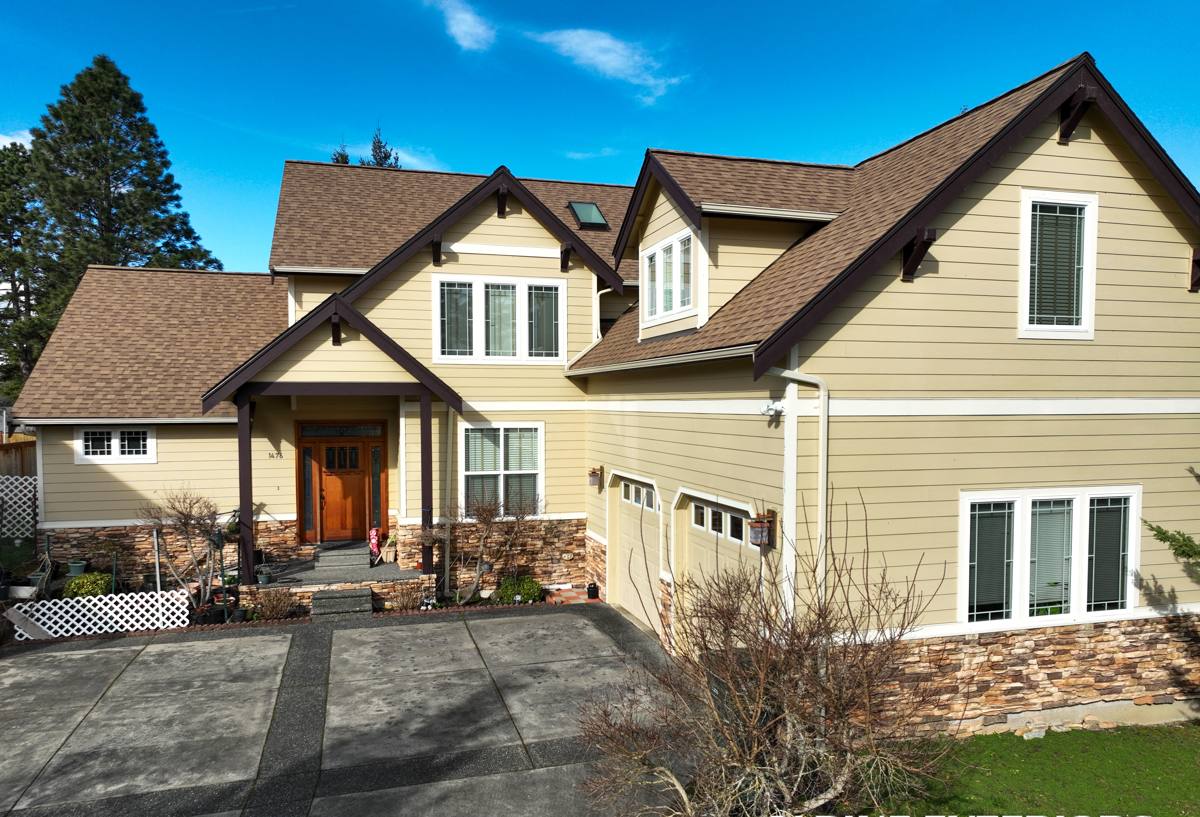
Signs Your Siding Needs Repair, Not Just a Wash
A lot of siding problems in this neighborhood get mistaken for cosmetic issues and pressure-washed instead of properly diagnosed. That usually buys a season, not a fix. Here's what actually signals a repair need:
- Soft or spongy spots when you press on a wall, especially near the bottom courses or around window trim
- Paint that's bubbling, peeling, or flaking in a localized patch rather than evenly across the whole wall
- Visible gaps, cracks, or separation at seams, corners, and trim joints
- Persistent moss or dark streaking that comes back within weeks of cleaning
- A musty smell near an exterior wall, or a soft spot on the interior drywall in the same location
- Nail heads popping through the surface, or fastener stains bleeding through the paint
Any one of these on its own might be minor. Several together, especially on the same wall, usually means moisture has been getting behind the siding for a while — and that changes what the repair needs to accomplish.
Why Localized Damage Rarely Stays Localized
Siding failure almost never stops at the board where you first notice it. Water that's found its way behind one panel tends to travel — down along the house wrap, sideways along a seam, or into the sheathing underneath. A repair that only replaces the visibly damaged piece without checking what's behind it is a repair that's likely to need doing again in a year or two.
What a Correct Siding Repair Actually Involves
A proper repair is diagnostic work first and carpentry second. Before anything gets replaced, the goal is understanding why that section failed — because in a climate like ours, most siding damage traces back to a water intrusion path, not just old age.
| Step | What It Covers |
|---|---|
| Inspection | Checking the damaged area and surrounding siding, trim, flashing, and caulking for the actual source of moisture entry |
| Removal | Pulling damaged boards and trim without disturbing sound material, and checking the house wrap or sheathing underneath |
| Substrate check | Confirming the wall assembly behind the siding is dry and sound before anything new goes back on |
| Flashing and sealing | Correcting or adding flashing at windows, trim, and horizontal joints so water sheds outward instead of pooling |
| Replacement | Installing new material to the same fastening and clearance specs as a full install, not a shortcut patch |
| Finish match | Matching paint, caulk lines, and reveal so the repair blends into the surrounding wall |
Skip the substrate check or the flashing correction, and you've just delayed the same failure. That's the difference between a repair that holds and one that's a temporary cover-up.
Repairing James Hardie Siding vs. Repairing Other Siding Types
We install James Hardie fiber cement exclusively, which means Silver Beach homes we work on already have a repair advantage: Hardie's HZ5 product line is engineered specifically for the kind of freeze-thaw and moisture cycling common in the Pacific Northwest, and ColorPlus factory finish holds color and resists moisture absorption far better than field-applied paint on wood or engineered wood siding. But we still get called to assess damage on homes with other siding types, and the repair calculus is genuinely different depending on what's on the wall.
| Siding Type | Common Repair Challenge in This Climate |
|---|---|
| James Hardie fiber cement | Non-combustible and dimensionally stable; repairs are usually isolated to impact damage or installation errors rather than moisture rot |
| Vinyl | Doesn't rot, but panels crack in cold snaps and can't always be color-matched to sun-faded originals |
| Wood or cedar | Prone to rot and moss growth in shaded, damp spots; repairs often reveal more decay than expected once boards come off |
| Engineered wood (e.g. LP-type products) | Vulnerable to edge swelling and moisture wicking at cut ends and seams, which can spread damage beyond the visible area |
This is part of why we standardized on Hardie for new installs and full re-sides: it holds up to Whatcom County's damp, moss-prone conditions with fewer of the moisture-related repair calls we see on other products. When we're repairing an existing home with a different siding type, we're upfront about what we're seeing and what it means for the long-term maintenance picture — including when patching the current material makes sense versus when a homeowner is better served planning ahead for a Hardie re-side.
Our Silver Beach Siding Repair Process
- On-site assessment. We walk the affected area with you, probe suspect boards, and check trim, flashing, and caulking — not just the spot you called about.
- Honest scope. You get a clear explanation of what's damaged, what's likely causing it, and what a durable fix requires — including if we find the problem is bigger than what's visible from the outside.
- Written estimate. A straightforward breakdown of the work, materials, and cost before anything is scheduled.
- Repair work. Damaged material comes out, the substrate gets checked and dried out if needed, flashing and sealing get corrected, and new material goes in to spec.
- Finish and walkthrough. We match paint and caulk lines as closely as possible and walk the repair with you before we consider the job done.
Repair or Replace? Cost Factors to Weigh
Not every damaged wall needs a full re-side, and not every repair is worth doing in isolation. These are the factors that actually drive the decision:
| Factor | Leans Toward Repair | Leans Toward Replacement |
|---|---|---|
| Extent of damage | Isolated to one or two boards or a small section | Spread across multiple walls or found in several unrelated spots |
| Age of existing siding | Siding is relatively young and otherwise sound | Siding is near or past its expected service life |
| Cause of damage | One-time event (impact, isolated flashing failure) | Systemic moisture issue affecting the whole wall assembly |
| Material match | Replacement material and finish can reasonably match existing siding | Product is discontinued, faded, or no longer manufactured |
| Long-term plans | Homeowner plans to stay and wants to preserve current siding | Homeowner is factoring in resale value or planning years of ownership ahead |
We'll tell you honestly which side of this table your home falls on. There's no benefit to us patching something that's going to fail again in eighteen months, and there's no benefit to you paying for a full re-side when a targeted repair will hold for years.
Why Hiring a Crew That Already Works Silver Beach Matters
Siding repair done by someone unfamiliar with this specific stretch of Bellingham often misses the local variables that matter: which wall orientations take the worst weather, how shade patterns from mature trees affect drying time, and how the marine-influenced moisture here behaves differently than it does on a home ten miles inland. A crew that's worked this neighborhood before isn't guessing at those factors — they've already seen how houses like yours age in these conditions.
There's also a practical scheduling reality: driving rain and a long moss season mean there are real windows for exterior repair work here, and a crew that knows the local weather patterns plans around them instead of getting caught mid-repair by a wet stretch.
Maintenance Checklist After Your Repair
A good repair is only half the equation — how the siding is maintained afterward determines how long it lasts. For Silver Beach homes specifically, we recommend:
- Rinse siding gently once or twice a year to keep moss and algae from taking hold, especially on shaded walls
- Trim back vegetation and tree branches that keep siding damp or block airflow along a wall
- Check caulk lines at trim and window joints annually — caulk breaks down faster in constant damp conditions
- Look at gutters and downspouts each fall to make sure water is being carried away from the wall, not dumped against it
- Walk the exterior after major winter storms and note any new soft spots, cracking, or paint changes early
- Address small issues promptly — in this climate, small issues don't stay small for long
If you're noticing soft spots, persistent moss, or peeling paint on your Silver Beach home, we're happy to take a look and give you a straight answer about what's going on and what it'll take to fix it right. Reach out for a free, no-pressure estimate using the form below.