 Bellingham Roofing
 Siding Replacement for Lynden Homes
Lynden sits inland from Bellingham Bay, but that doesn't mean the house exteriors here get a break from Whatcom County's weather. The same marine air mass that soaks the coastline pushes inland across the valley, and homes in Lynden deal with long stretches of driving rain, heavy humidity, and a moss season that can run from fall through spring. Add in the temperature swings between damp winters and warm, dry summers, and siding here has to handle a lot more than it would in a drier climate. When siding starts failing in Lynden, it's rarely one dramatic event — it's years of moisture finding small gaps, wood or composite panels absorbing water they can't shed fast enough, and paint or coatings breaking down under constant damp-dry cycling.
We're a Bellingham-based crew that works throughout Whatcom County, and Lynden is regular territory for us. That matters more than it sounds — a contractor who only shows up occasionally doesn't have a feel for how a specific area's rain patterns, tree cover, and lot layouts affect siding performance. We do.
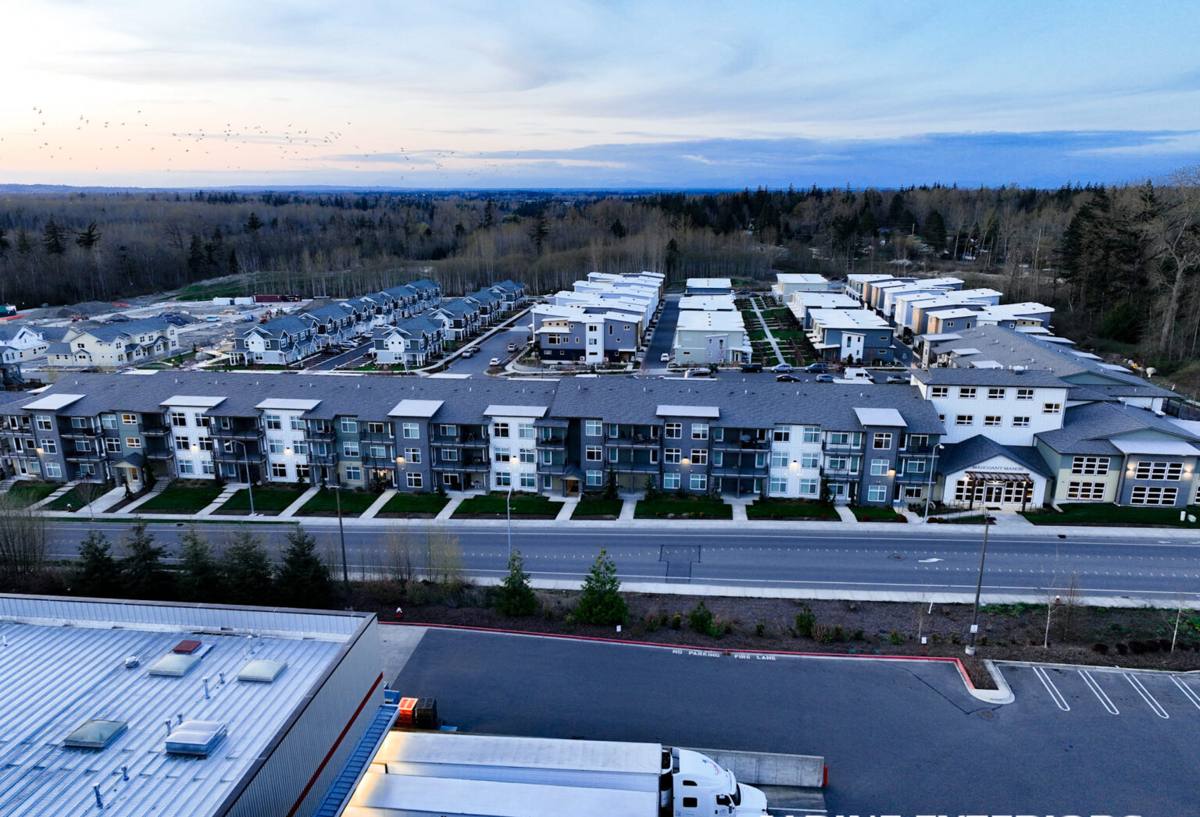
What Lynden's Climate Does to Siding Over Time
Moisture Is the Real Enemy
Whatcom County doesn't get extreme weather — it gets persistent weather. Months of low-intensity rain and damp air do more long-term damage to a house than a handful of storms ever would. Siding materials that aren't engineered for sustained moisture exposure — untreated wood, some engineered wood products, and even some fiber cement products without the right moisture protection — can swell, delaminate, or start absorbing water at seams and cut edges. Once moisture gets behind the siding or into the substrate, you're looking at rot, mold, and eventually structural repair, not just a cosmetic fix.
Moss and Organic Growth
Shaded lots, mature trees, and the valley's humidity give moss, algae, and mildew everything they need to take hold on north-facing walls and anywhere siding stays damp longer than it should. Beyond the appearance issue, sustained organic growth holds moisture against the siding surface, which accelerates whatever underlying wear is already happening.
UV and Temperature Cycling
Summers in Lynden are milder than a lot of the country, but siding still goes through real freeze-thaw and wet-dry cycles across the year. Paint film on wood or composite siding will chalk, fade, and eventually crack under that cycling, which opens the door for water intrusion at exactly the spots — laps, seams, fastener heads — where it matters most.
Why We Only Install James Hardie Fiber Cement
We made a decision as a company to install one siding system: James Hardie fiber cement. We don't install vinyl, LP SmartSide, primed spruce, cedar, or other fiber cement brands like Cemplank or Allura. That's not a marketing angle — it's a standard we hold because of what we see on real houses in this climate over years, not just at install.
What Hardie Gets Right for This Climate
- Non-combustible core — fiber cement doesn't burn, which matters as wildfire smoke and dry-season risk become more of a regional concern even here in the wetter part of the state.
- Engineered for moisture — Hardie's HZ5 product line is specifically formulated for climates with sustained damp weather, which describes Whatcom County well.
- Factory-applied ColorPlus finish — the color and protective coating are baked on at the factory under controlled conditions, not brushed on in the field. That finish resists fading and holds up against the wet-dry cycling that breaks down site-applied paint faster.
- Dimensionally stable — fiber cement doesn't swell and shrink with moisture the way wood-based products can, which means fewer open seams and less cracked caulk over time.
- Strong transferable warranty — Hardie backs its product with a warranty structure that holds up in the real world, and it's transferable if the home sells.
We're not going to tell you other products don't work for anyone — vinyl and engineered wood sidings have real advantages in the right application, and plenty of homes wear them fine. What we will say is that after years of doing this work in this specific climate, we don't think the trade-offs — moisture sensitivity, shorter realistic lifespan, more maintenance, or appearance that reads as less substantial — make sense for what we want to put our name on. Hardie is what we install because it's what we're comfortable standing behind on a Lynden house.
What a Correct Siding Replacement Involves
Siding is only as good as what's behind it. A proper replacement isn't just pulling off old panels and nailing up new ones — in a climate like this, the water-management system matters as much as the siding itself.
The Steps That Actually Protect the House
- Tear-off and inspection — removing the old siding down to the sheathing so we can actually see what's underneath, including any hidden rot, soft spots, or prior water damage.
- Sheathing repair — replacing any compromised sheathing before anything new goes back on. Covering up a rotten spot with new siding just hides the problem.
- Weather-resistive barrier — installing a proper house wrap or building paper system that manages bulk water and lets incidental moisture drain and dry out.
- Flashing at every penetration — windows, doors, vents, and any other wall penetration get flashed correctly so water is directed out and away, not trapped behind the siding.
- Rainscreen or drainage gap where appropriate — a small air gap behind the siding lets any moisture that does get in dry out instead of sitting against the wall.
- Hardie installation to manufacturer spec — correct fastener spacing, proper joint treatment, and clearances from grade, roofing, and decks. This is where a lot of installs go wrong even with good material — Hardie's own warranty can be affected by installation that doesn't follow spec.
- Caulking and finish details — sealing the joints and transitions that actually see water, using materials rated for exterior, wet-climate use.
Skipping or rushing any one of these steps is how a house ends up needing siding work again in ten years instead of thirty.
Signs a Lynden Home Needs Siding Replacement
- Visible warping, buckling, or separation at the seams
- Soft spots when you press on the siding, especially near the bottom courses or under windows
- Paint that's peeling or bubbling rather than just fading
- Persistent moss or dark streaking that keeps coming back after cleaning
- Cracked or missing caulk at joints, corners, and trim
- Rising energy bills that suggest air and moisture are getting through the wall assembly
- Visible rot or a musty smell near exterior walls on the inside of the house
Not every one of these means full replacement is necessary — sometimes it's a repair, sometimes it's a maintenance issue. Part of a fair estimate is telling you honestly which situation you're in.
Cost Factors for Siding Replacement
Every house is different, and we're not going to throw out a number that doesn't mean anything without seeing the home. But there are consistent factors that move the price up or down on a Lynden siding project.
| Factor | Why It Matters |
|---|---|
| Home size and wall complexity | More square footage and more corners, gables, and cutouts mean more material and labor |
| Extent of hidden damage | Rotted sheathing found during tear-off adds repair scope beyond the siding itself |
| Siding profile and trim details | Lap width, board-and-batten, and trim complexity all affect material and install time |
| Story height and access | Two-story walls and difficult access require more scaffolding and time |
| Existing water-management system | Whether house wrap, flashing, and drainage details need full replacement or partial rework |
| Color and finish selection | Standard ColorPlus colors versus custom or premium options can shift material cost |
Why a Local Crew Matters for This Job
Siding replacement isn't a one-day job, and it isn't something you want done by a crew that's guessing at how the local climate behaves. We work across Whatcom County regularly, including Lynden, and that means we're not learning on your house how the valley's rain patterns, moss growth, and seasonal humidity affect a wall assembly. We know what correct flashing and drainage detailing needs to look like here specifically, because we've seen what happens when it's done wrong on homes in this same climate.
Being local also means accountability. If a question comes up two years after the job — about a warranty claim, a detail that needs a look, or just general maintenance advice — we're not a crew that disappeared after the final payment cleared.
Get a Straight Answer About Your Siding
If your Lynden home's siding is showing wear, or you're just trying to plan ahead, we'll come take a look and give you an honest read on where things stand — no pressure, no inflated urgency. Request a free estimate using the form below and we'll walk the exterior with you and talk through what James Hardie fiber cement siding would look like for your home.