 Bellingham Roofing
 Board & Batten in a Bayfront Bellingham Neighborhood
Silver Beach sits close enough to Bellingham Bay that the water shapes everything about how a house should be built and maintained, siding included. It's a neighborhood with a real mix of older homes that have weathered decades of Pacific Northwest winters and newer builds going up with a more deliberate farmhouse or modern-craftsman look. Board and batten siding shows up in both worlds: on older homes as a period-appropriate replacement for tired lap siding, and on new construction as the vertical-line style that's become the go-to for that clean, contemporary Northwest exterior.
But board and batten isn't just an aesthetic choice on a lot this close to the water. The vertical panel-and-strip design behaves differently than horizontal lap siding once wind, rain, and salt air get involved, and that matters more in Silver Beach than it does a few miles inland in Bellingham.
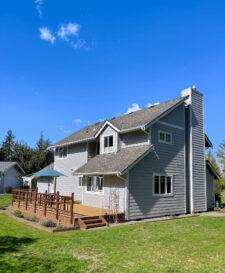
What Whatcom County's Climate Does to Vertical Siding
Homes near Bellingham Bay deal with a specific combination of stresses that a lot of siding products and installation shortcuts simply weren't built for:
- Salt-laden air. Proximity to saltwater accelerates corrosion on exposed metal — fasteners, flashing, trim screws — faster than it happens even a mile or two inland.
- Wind-driven rain. Storms coming off the bay don't just fall straight down; they push rain sideways into vertical seams and batten joints, which is exactly where board and batten siding is most vulnerable if it isn't detailed correctly.
- A long moss and algae season. Whatcom County's wet, mild winters give moss and algae months to establish themselves on any siding surface that stays damp and shaded, and vertical battens create shadow lines and ledges that can hold moisture longer than a flat lap profile.
- Freeze-thaw swings. Cold snaps aren't extreme here, but repeated freezing and thawing of trapped moisture behind siding will still work joints and caulk lines loose over years.
None of that means board and batten is a bad choice for Silver Beach — it means the material and the installation both have to be built for this specific exposure, not just for "siding in general."
Why Board & Batten Is Less Forgiving Than Lap Siding
Horizontal lap siding is designed so each course overlaps the one below it, shedding water downward by gravity almost automatically. Board and batten flips that logic: the primary water management happens at vertical seams, where a batten strip covers the joint between two panels. That's a good system when it's built correctly, but it has less margin for error than lap siding does.
Where Problems Actually Start
In our experience, board and batten failures on homes near the bay almost never start with the panel material itself. They start at the details: a batten that wasn't fastened into framing, a seam that wasn't flashed behind the joint, caulk used to compensate for a gap that should have been sized correctly in the first place, or a drainage plane that was skipped to save a step. Wind-driven rain finds every one of those shortcuts eventually.
What a Correct Installation Involves
A board and batten job that's going to hold up in Silver Beach's exposure needs several things done in order, and none of them are optional extras — they're what separates siding that lasts from siding that needs attention again in five years.
- A weather-resistive barrier installed and lapped correctly over the sheathing before any siding goes up.
- A drainage gap (rainscreen) behind the panels so any moisture that does get past the surface has somewhere to go instead of sitting against the sheathing.
- Correct panel and batten spacing per manufacturer specification — gaps that are too tight don't allow for expansion, gaps that are too wide invite water intrusion.
- Fastening into structural framing, not just sheathing, at the pattern the manufacturer specifies for the wind exposure of the site.
- Proper flashing at every window, door, and roofline intersection — the places where wind-driven rain is most likely to find a way in.
- Factory-finished panels rather than field-painted ones, so the finish itself isn't a weak point that starts failing at seams and cut edges.
The Drainage Gap Question
This is the detail we get asked about most, and it's the one that matters most for a bayfront-adjacent lot. Vertical siding sheds water down the face of the wall in a fairly direct line, which sounds simple, but it also means any moisture that works its way behind a seam has a straight vertical path down the back of the panel. A rainscreen gap breaks that path, lets air circulate, and lets water drain out at the bottom instead of wicking into the sheathing. Skipping it is one of the most common reasons board and batten siding develops rot or staining years before it should.
The James Hardie Products We Use for Board & Batten
We install James Hardie fiber cement exclusively — we don't install vinyl, LP SmartSide, Cemplank, Allura, or raw wood siding, on board and batten projects or anywhere else. For vertical applications, that means HardiePanel vertical siding paired with HardieTrim boards used as the battens, finished with Hardie's ColorPlus Technology factory finish.
A few reasons this combination is what we standardize on for a wet, salt-exposed neighborhood like Silver Beach:
- Non-combustible fiber cement that doesn't rot, delaminate, or attract wood-boring insects the way wood-based products can.
- Climate-engineered HZ5 formulation for the Pacific Northwest's freeze-thaw and moisture cycle, rather than a one-size-fits-all product.
- ColorPlus factory finish that's baked on under controlled conditions, holds color and resists the fading and peeling that field-applied paint struggles with in this climate, and eliminates the exposed cut edges being the only unfinished surface on the wall.
- A strong, transferable manufacturer warranty that holds up as long as the installation meets Hardie's specifications — which is exactly why we don't cut corners on the details above.
We won't install board and batten in vinyl or engineered wood because both come with trade-offs we're not willing to put our name behind here: vinyl board and batten profiles can warp and fade with direct sun and temperature swings, and engineered wood products require diligent caulk and paint maintenance to keep moisture out of a cut edge or seam — maintenance that's especially unforgiving in a climate that stays damp for months at a time.
Comparing Vertical Siding Options for a Bay-Adjacent Home
| Material | Moisture/Salt Air Behavior | Maintenance | Typical Lifespan |
|---|---|---|---|
| James Hardie fiber cement | Engineered for Pacific NW moisture; non-combustible; stable in freeze-thaw | Low — factory finish, occasional wash | Decades when installed to spec |
| Vinyl board and batten | Won't rot, but can warp/distort with heat and impact | Low, but color is baked into the material and will fade over time | Variable; shorter in high-exposure sites |
| Engineered wood (LP-type) | Vulnerable at cut edges and seams if moisture gets in | Higher — requires diligent caulking and repainting | Shorter without consistent upkeep |
| Real wood/cedar | Attractive but absorbs moisture and is prone to rot in wet climates | High — regular sealing, staining, or painting | Shortest without heavy maintenance |
Our Process for Silver Beach Board & Batten Projects
Every job starts with an honest look at what's actually on the wall now, not just a measurement for new siding.
- On-site assessment. We check the condition of the existing siding, sheathing, and any signs of moisture intrusion — this matters more on homes near the bay, where we've seen hidden water damage behind siding that looked fine from the curb.
- Tear-off and inspection. Old siding comes off and we inspect the sheathing underneath for rot or soft spots before anything new goes up. Any repairs happen before, never after.
- Weather barrier and drainage plane. A correctly lapped weather-resistive barrier and rainscreen gap go in — this is the step that protects everything installed after it.
- Panel and batten installation. HardiePanel and HardieTrim battens go up per Hardie's fastening and spacing specifications, sized for the wind exposure of the site.
- Flashing and trim detail. Windows, doors, and roof intersections get flashed and detailed to shed water rather than rely on caulk to do the work.
- Final walkthrough. We check seams, fastener patterns, and trim lines before calling the job finished, and walk the property with the homeowner.
Why Hiring a Crew That Already Works Silver Beach Matters
A lot of siding problems in this neighborhood come down to installers applying a generic approach to a site that isn't generic. Crews who regularly work homes this close to Bellingham Bay know which elevations take the worst of the wind-driven rain, know that fastener corrosion shows up faster here than it does further inland, and know that a moss problem on a north-facing wall isn't a siding defect — it's the climate, and it needs to be planned for at installation rather than treated after the fact. That local pattern recognition is the difference between a crew that installs siding and a crew that installs siding that's still doing its job in twenty years.
Maintenance Checklist for Board & Batten Homes Near the Bay
- Rinse salt residue off lower courses and trim periodically, especially after storms with onshore wind.
- Check caulked joints at windows, doors, and trim once a year for cracking or separation.
- Keep gutters and downspouts clear so runoff isn't sheeting down the siding face.
- Watch shaded, north-facing battens for early moss or algae growth and address it before it spreads.
- Trim back vegetation that keeps siding shaded and damp longer than it needs to be.
- Have fastener heads and flashing points inspected periodically for early corrosion, particularly on older homes.
If your Silver Beach home is due for new siding, or you're planning a board and batten exterior and want it done in a way that actually holds up to this location, we're happy to take a look and put together a free, no-pressure estimate. Use the form below to get started.