 Bellingham Roofing
 Why Silver Beach Homes Are Hard on Siding
Silver Beach sits in one of the more demanding micro-climates in Whatcom County for exterior materials. Homes here deal with a combination that few siding products handle well over the long term: salt-laden air moving in off the water, wind-driven rain that hits walls at an angle instead of just falling straight down, and a moss and algae season that can stretch for most of the year in shaded, north-facing spots. Any one of these on its own is manageable. Together, they shorten the useful life of siding that wasn't built for this kind of exposure, and they punish sloppy installation work faster than a drier, calmer climate would.
We've worked on enough homes in this neighborhood to see the pattern repeat: siding fails first at the details, not the field. Corners, butt joints, penetrations around hose bibs and light fixtures, and the bottom courses closest to grade or a deck are where moisture gets in. The material matters, but so does every inch of flashing, caulk, and fastener placement around it.
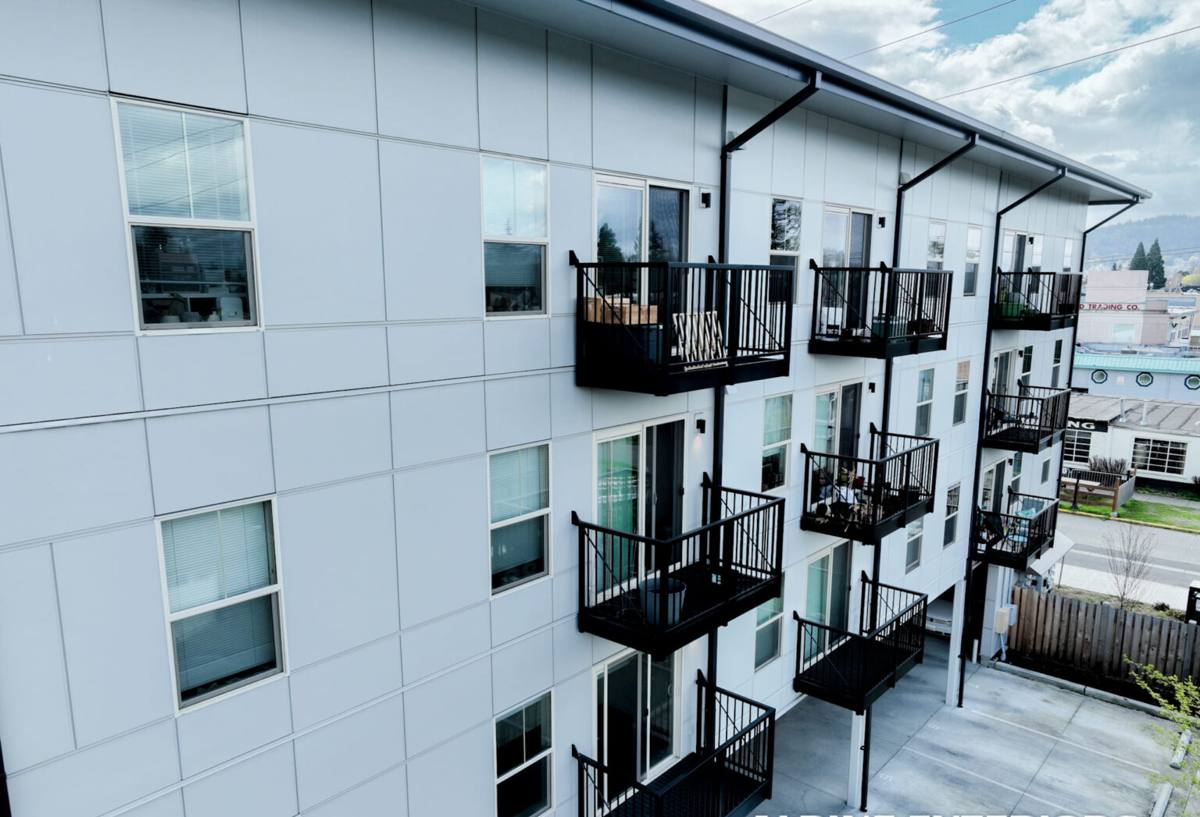
What Salt Air, Rain, and Moss Actually Do to Siding
Salt Air
Airborne salt is corrosive to exposed metal fasteners, trim flashing, and any coating that isn't formulated to resist it. Over years, it can also accelerate the breakdown of lower-grade paints and finishes, leading to chalking, fading, and coating failure well ahead of schedule.
Driving Rain
Wind off the water doesn't just add moisture — it drives rain sideways and upward under laps, behind trim, and into any gap that a calmer climate would never test. This is why lap spacing, caulking practices, and drainage plane details matter more here than in inland areas.
Moss and Algae
Shaded elevations, especially north- and west-facing walls under tree cover, stay damp for extended stretches. That constant moisture feeds moss and algae growth on siding surfaces, which traps even more water against the substrate and, on organic materials like wood or engineered wood, can start breaking the material down from the surface in.
Why We Don't Use Vinyl, Wood, or Engineered Wood Siding Here
We install James Hardie fiber cement exclusively, and Silver Beach is a good example of why. Vinyl siding expands and contracts with temperature swings and can warp or become brittle over time, and its seams and J-channels give wind-driven rain more places to work its way behind the panel. Cedar and other wood sidings look good on day one, but they're organic material — in a climate with this much sustained moisture and moss pressure, they need frequent refinishing and are vulnerable to rot at end grain, fastener holes, and anywhere moisture sits against the wood. Engineered wood products like LP SmartSide use a wood-strand core that, while treated, is still wood-based — meaning any breach in the factory coating or field-cut edge exposes a material that can absorb water and swell.
None of these are "bad" products in every context. They're just not what we'd choose to put on a home that has to deal with salt air, sideways rain, and months of shade-driven dampness every year. Fiber cement — specifically James Hardie's formulation — doesn't have an organic core to rot, doesn't expand and contract the way vinyl does, and holds a factory finish that's built to take UV and moisture exposure for decades.
The James Hardie System We Install
James Hardie's fiber cement is a mix of cement, sand, and cellulose fiber, cured into a dense, stable board that's non-combustible and dimensionally stable across temperature and humidity swings. For Silver Beach and the rest of the Bellingham area, that stability matters as much as the moisture resistance — a board that isn't constantly swelling and shrinking holds paint lines, caulk joints, and fastener seals better over time.
Product Lines We Use
- HardiePlank lap siding — the primary product for most Silver Beach homes, available in several exposure widths and profiles
- HardiePanel vertical siding — used for board-and-batten sections, gables, and accent areas
- HardieTrim — fascia, corner boards, and trim that matches the siding's durability instead of pairing fiber cement with a weaker trim material
- HardieShingle — for homes wanting a shingle-style look without the maintenance burden of real cedar shingles
Climate-Engineered HZ Formulation
James Hardie manufactures its siding in climate-specific formulations, and for the Pacific Northwest — including Bellingham and the rest of Whatcom County — that means the HZ5 product line, engineered for cooler, wetter, mixed climates rather than the HZ10 formulation built for hot, humid southern regions. It's a detail a lot of homeowners never hear about, but it's part of why we specify Hardie rather than a generic fiber cement product: the material itself is matched to this exact climate profile.
ColorPlus Factory Finish
Most of our Silver Beach installs use Hardie's ColorPlus Technology — a factory-applied, baked-on finish that's more UV- and moisture-resistant than field-applied paint, and that comes with its own finish warranty separate from the product warranty. In a salt-air environment, a factory-cured finish holds up more consistently than paint applied on-site after installation.
What a Correct Installation Involves
Fiber cement siding is only as good as the installation behind it. Hardie publishes specific installation requirements, and in a climate like this one, following them isn't optional — it's the difference between siding that lasts decades and siding that fails at the seams within a few years.
| Detail | Why It Matters in Silver Beach |
|---|---|
| Correct fastener type and placement | Prevents splitting and keeps panels secured against wind-driven rain events |
| Proper clearance from grade, decks, and roofing | Keeps the bottom edge of siding out of standing water and splashback zones |
| Weather-resistive barrier and flashing at every penetration | Stops water intrusion at hose bibs, vents, and fixture penetrations before it starts |
| Proper lap and joint treatment | Reduces the wind-driven rain intrusion points that a marine climate exploits |
| Factory-cut edge sealing where required | Protects cut ends from moisture uptake at corners and openings |
We also pay close attention to ventilation behind the siding on shaded, moss-prone elevations. Without a drainage plane and adequate air movement, moisture that lands on the wall has nowhere to go — and that's exactly the setup that lets moss and algae take hold and stay established.
Our Process for a Silver Beach Siding Project
- On-site assessment — we walk the home, check existing siding and sheathing condition, and note trouble spots specific to the property's sun exposure and drainage
- Scope and product selection — profile, exposure width, and finish color chosen based on the home's style and the elevations most exposed to weather
- Tear-off and sheathing check — removing old siding lets us inspect for hidden moisture damage before it's covered up again
- Weather barrier and flashing installation — the unglamorous layer that does most of the actual water management work
- Hardie installation to manufacturer spec — correct fastening, clearances, and joint treatment throughout
- Final walkthrough — checking caulk lines, trim, and finish before calling the job complete
Living With Fiber Cement Siding: Maintenance in This Climate
One of the practical advantages of fiber cement over wood or engineered wood is how little upkeep it needs — but "little" isn't "none," especially with Silver Beach's moss exposure. A simple annual routine keeps a Hardie installation looking and performing the way it should:
- Rinse siding gently once or twice a year, especially on shaded north- and west-facing walls where moss tends to establish
- Avoid pressure washing directly at joints and edges — a garden hose or soft-wash approach is safer for caulk lines
- Trim back vegetation and tree limbs that keep a wall in constant shade and dampness
- Inspect caulking at trim, corners, and penetrations every couple of years and re-caulk as needed
- Check gutters and downspouts so runoff isn't sheeting down a wall section repeatedly
What Affects the Cost of a Fiber Cement Siding Project
Every home is different, but the same handful of factors drive most of the cost variation we see on Silver Beach projects:
| Factor | Impact on Project |
|---|---|
| Home size and number of stories | More square footage and taller walls mean more material and labor time |
| Condition of existing sheathing | Hidden moisture damage found during tear-off adds repair scope |
| Trim and architectural detail | Homes with more corners, gables, and accent areas take longer to finish correctly |
| Siding profile and finish choice | Exposure width, texture, and ColorPlus color selection affect material cost |
| Access and site conditions | Sloped lots, tight setbacks, or landscaping near the home can affect labor time |
We give exact numbers only after seeing the home in person — anyone quoting a firm price sight unseen is guessing.
Why Local Experience in Silver Beach Matters
A crew that's worked this neighborhood already knows what to look for: which elevations tend to hold moisture longest, how a given lot's tree cover and exposure to the water shape the moss problem, and where past installations in this climate typically fail. That's not something a contractor coming from a drier region necessarily accounts for on the first job. Standardizing on one product — James Hardie fiber cement — also means our crews are installing the same system on every job, following the same manufacturer specifications every time, rather than switching between products and installation methods from one project to the next.
If you're weighing a siding replacement or repair in Silver Beach, we're glad to take a look and walk you through what we see, with no pressure to commit. There's a free estimate request form below — reach out and we'll schedule a time to come by.