 Bellingham Roofing
 Siding in Silver Beach Has to Work Harder Than Siding Anywhere Else in Bellingham
Silver Beach sits close enough to the water that homes here take on a different kind of weather load than siding just a few miles inland. Salt-laden air off Bellingham Bay accelerates corrosion on fasteners and metal trim. Driving rain off the water finds every gap in a wall assembly that a calmer inland exposure would never expose. And the long, wet Whatcom County shoulder seasons keep north- and west-facing walls damp for weeks at a stretch, which is exactly the environment moss and algae need to take hold. None of this is exotic — it's just what waterfront-adjacent siding has to handle, year after year, without maintenance turning into a second job for the homeowner.
We install James Hardie fiber cement siding exclusively, and we work Silver Beach regularly enough to know which parts of the standard installation spec actually matter here versus a drier neighborhood across town. This page is about that one product, in this one area — not a general overview.
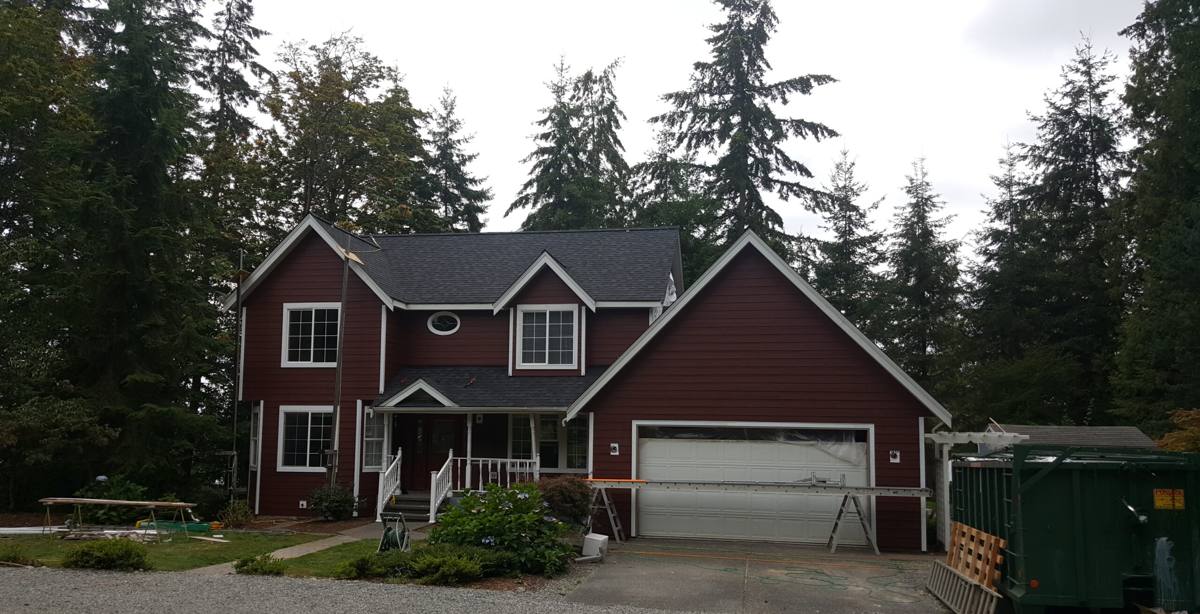
What Salt Air and Moisture Actually Do to Siding
Salt Air
Airborne salt is corrosive to exposed metal — nail heads, flashing, trim fasteners — and it accelerates the breakdown of finishes that aren't built to resist it. Siding paint jobs that look fine for a season or two in Silver Beach often start chalking, fading, or lifting earlier than the same product would inland, because salt speeds up UV and moisture degradation together.
Driving Rain
Wind off the bay pushes rain sideways into wall assemblies, not just straight down. That means laps, joints, and penetrations (hose bibs, light fixtures, vents) take on water pressure that a still-air installation never sees. A siding job that's watertight in calm conditions can still leak in Silver Beach if the water-resistive barrier, flashing, and lap details weren't built for wind-driven rain specifically.
Moss and Algae
Bellingham's long wet season — often stretching from fall through spring — keeps shaded and north-facing siding damp far longer than siding in full sun. Moss and algae need sustained moisture to establish, and Silver Beach's tree cover combined with bay humidity gives them exactly that. Once established, moss holds even more water against the wall, which compounds the moisture problem instead of just being cosmetic.
Why We Install Only James Hardie Fiber Cement Here
We don't install vinyl, LP SmartSide, cedar, primed spruce, or other fiber cement brands. That's not a marketing position — it's a standard we hold because of what siding actually has to survive in this part of Whatcom County.
- Non-combustible core: James Hardie siding is fiber cement, not wood or wood-based composite, so it doesn't carry the moisture-driven rot risk that engineered wood products face in a wet marine climate.
- ColorPlus factory finish: baked-on, UV-cured color resists the fading and chalking that field-applied paint struggles with under salt air exposure — and it comes with its own finish warranty separate from the substrate.
- HZ5 engineering: Hardie's HZ product lines are engineered for specific climate zones, including moisture and freeze-thaw exposure common to the Pacific Northwest — this isn't a generic siding board.
- Dimensional stability: fiber cement doesn't swell and contract with humidity the way wood-based siding does, which matters when a wall is damp more often than it's dry.
Vinyl siding can work loose or warp under sustained wind-driven rain and temperature swings, and its seams rely entirely on lap fit rather than a rigid, paintable substrate. Wood and wood-composite sidings need consistent maintenance to keep moisture out — a schedule that's harder to keep up with in a climate that stays wet for months. We'd rather stand behind one product we trust to hold up here than install several and hope the maintenance gets done.
What a Correct James Hardie Install Looks Like on a Silver Beach Home
The product is only half the equation. A Hardie board installed to spec and one installed loosely can perform completely differently in this exposure. On Silver Beach jobs specifically, we pay close attention to:
Water-Resistive Barrier and Flashing
Wind-driven rain means the drainage plane behind the siding has to actually drain, not just repel water on the surface. Correct lapping of the weather-resistive barrier, proper head flashing above windows and doors, and integrated flashing at every penetration are what keep wind-driven rain from finding its way behind the cladding.
Fastener Selection
Given the corrosive salt air, fastener choice matters more here than it does a few miles inland. We use fasteners rated for the exposure and follow Hardie's fastening spec for nail placement and depth — under- or over-driven nails are one of the most common causes of premature siding failure, and salt air makes any corrosion-prone fastener a bigger liability.
Clearances and Gaps
Hardie's installation instructions specify clearances from grade, roofing, decks, and other trim — these aren't arbitrary numbers. In a wet climate, siding installed tight to a deck or too close to grade holds moisture against the bottom edge, which is where problems start first.
Joint and Butt Seam Treatment
Every horizontal and vertical joint is a potential water entry point. Correctly caulked, primed, or flashed joints (per Hardie's specification for the specific product being used) keep wind-driven rain from working its way in over time.
Comparing Siding Options for a Silver Beach Exposure
| Factor | Vinyl | Wood / Engineered Wood | James Hardie Fiber Cement |
|---|---|---|---|
| Salt air resistance | Can become brittle over time | Fasteners and finish vulnerable to corrosion/wear | Non-combustible core, corrosion-resistant fastening when installed to spec |
| Wind-driven rain tolerance | Relies on lap-fit seams | Needs consistent sealing and upkeep | Rigid substrate, engineered drainage details when flashed correctly |
| Moss/algae resistance | Surface growth still occurs | Traps moisture if coating fails | Doesn't wick moisture into the core; surface can be treated as needed |
| Finish longevity | Color molded in, can fade/chalk | Paint needs recoating on a cycle | ColorPlus factory finish, UV-cured |
| Maintenance burden | Low, but limited repair options | Ongoing painting/sealing | Periodic cleaning, minimal recoating |
Our Process for Silver Beach Siding Projects
- On-site assessment: we walk the exterior, checking existing siding condition, moisture entry points, and any moss or algae buildup, with particular attention to north- and west-facing walls.
- Wall inspection during tear-off: once old siding is removed, we check sheathing and framing for hidden moisture damage before anything new goes on — this step is where wet-climate homes most often reveal problems the homeowner never saw.
- Water-resistive barrier and flashing installation: built for wind-driven rain, not just standard exposure.
- James Hardie installation to manufacturer spec: correct fastening, clearances, and joint treatment for the specific HZ product and profile chosen.
- Final walkthrough: we review the finished work with the homeowner and explain any care specific to the home's exposure.
Why Hiring a Crew That Already Works Silver Beach Matters
Siding installation quality depends heavily on whether the crew understands the specific exposure they're building for. A crew that mostly works drier, inland neighborhoods may follow the general Hardie spec correctly and still under-plan for wind-driven rain or salt-air fastener corrosion, simply because it's not something they deal with every day. Working Silver Beach and similar Bellingham Bay-adjacent areas regularly means we're not guessing at how much attention flashing, fastening, and clearances need here — we already know, because we've seen what happens when those details are skipped.
Maintenance Expectations After Installation
James Hardie siding installed correctly is genuinely low-maintenance, but "low" isn't "zero," especially this close to the water. A homeowner checklist for a Silver Beach home looks like this:
- Rinse siding periodically to remove salt residue and organic buildup, especially on shaded or north-facing walls
- Inspect caulking at joints, windows, and trim annually and re-caulk as needed
- Watch for moss or algae growth in shaded areas and clean promptly before it spreads or holds moisture
- Keep gutters and downspouts clear so water isn't overflowing onto siding below
- Trim back vegetation that keeps siding shaded and damp longer than necessary
- Have flashing and trim inspected every few years, particularly around windows, doors, and deck ledgers
What Affects Cost on a Job Like This
Every Silver Beach home is different, so we don't quote pricing without seeing the house, but the main cost drivers on a project like this are consistent:
| Cost Factor | Why It Matters |
|---|---|
| Home size and wall complexity | More corners, gables, and penetrations mean more flashing and cutting labor |
| Existing siding removal | Tear-off and disposal of old material adds labor beyond a straightforward install |
| Sheathing/framing repair | Hidden moisture damage found during tear-off may need addressing before new siding goes on |
| Hardie product line chosen | Lap, shingle, and panel profiles vary in material and labor cost |
| Trim and accessory work | Corner boards, window trim, and soffit details add scope beyond the flat wall area |
If you own a home in Silver Beach and your siding is showing moss buildup, worn caulking, fading, or you're just planning ahead for a replacement, we're glad to walk the exterior with you and give you a straight read on condition and options. There's no pressure and no cost for the estimate — just a local crew who knows this exposure telling you what your home actually needs.