 Bellingham Roofing
 Why Silver Beach Siding Takes a Different Kind of Beating
Homes along Silver Beach sit close enough to the water that salt air is a daily fact of life, not an occasional nuisance. Add Bellingham's long wet season, wind-driven rain that hits walls sideways instead of straight down, and a marine climate that keeps everything damp for months at a stretch, and you have a siding environment that punishes weak materials and sloppy installation fast. Moss doesn't wait for an invitation here either — it takes hold on any siding surface that stays shaded and damp, working into seams, fastener heads, and butt joints where water can follow it inward.
None of this makes Silver Beach unusual for Whatcom County. It just means the margin for error is smaller. A siding job that would hold up fine in a drier inland neighborhood can fail years early here if the material or the installation wasn't built for salt exposure and constant moisture cycling.
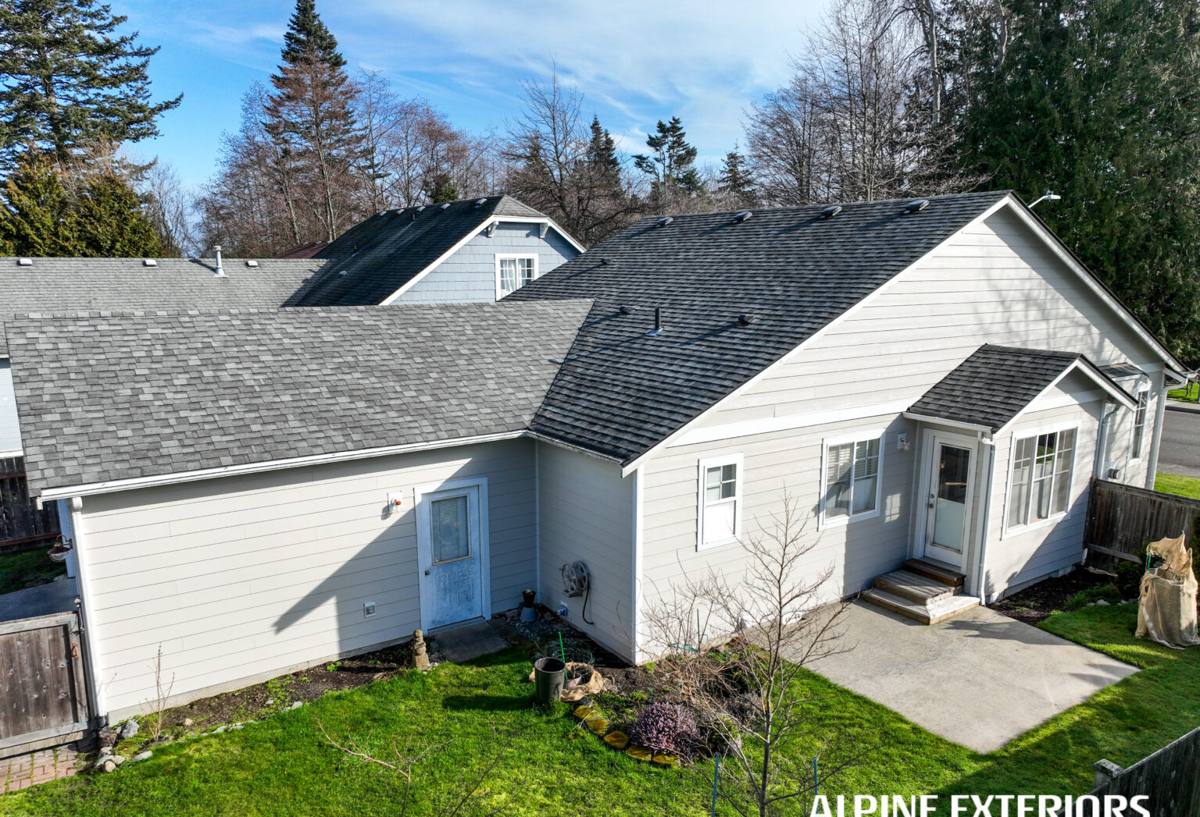
What Silver Beach Homes Actually Need From Their Siding
Resistance to Salt-Driven Corrosion and Degradation
Salt air accelerates corrosion on fasteners, trim, and any metal flashing components, and it can degrade certain siding materials from the surface inward over time. Whatever goes on the wall needs to tolerate airborne salt without swelling, delaminating, or losing its finish prematurely.
A Real Answer for Wind-Driven Rain
Driving rain off the water doesn't just wet the siding surface — it pushes moisture into laps, joints, and any gap in the water-resistive barrier behind the cladding. Siding and installation details both have to account for horizontal wind pressure, not just gravity.
A Surface That Doesn't Feed Moss and Mildew
Wood-based products and some composite sidings give moss and mildew organic material to root into. A dense, inorganic surface is far less hospitable, and it makes the periodic cleaning that's part of life here much easier and less damaging to the material.
Why We Install James Hardie Fiber Cement — and Nothing Else
We standardized on James Hardie fiber cement siding for every home we side, including Silver Beach, and we don't install vinyl, LP SmartSide, Cemplank, Allura, or bare cedar or spruce siding. That's not a marketing position — it's a practical one, built around what actually holds up in this climate over decades, not just years.
Non-Combustible, Dense, and Engineered for Moisture
James Hardie fiber cement is a cement-and-cellulose composite, not wood and not plastic. It doesn't rot, it doesn't feed insects, and it's non-combustible — a meaningful advantage during wildfire smoke seasons and simply a sound long-term choice for a coastal home. Hardie's HZ product lines are engineered specifically for climate zones like ours, with moisture and freeze-thaw performance built into the formulation rather than added on.
ColorPlus Factory Finish
Most Silver Beach installs use Hardie's ColorPlus finish — a factory-applied, baked-on coating that resists fading and chipping far better than field-applied paint, and that holds color consistency through repeated wet-dry cycling. That matters in a spot where siding stays damp for extended stretches most of the year.
A Warranty Built for the Long Haul
Hardie backs its siding with a strong, transferable limited warranty — a real consideration on a coastal property where you want assurance the material was built to last, and where a future buyer will care about that history too.
How Hardie Compares to What We Won't Install
| Material | Behavior in Salt Air & Constant Moisture | Moss & Mildew Resistance | Long-Term Maintenance |
|---|---|---|---|
| James Hardie fiber cement | Engineered for moisture cycling; dimensionally stable | Dense, inorganic surface; cleans easily | Low — factory finish holds up for years |
| Vinyl | Can warp or become brittle under repeated temperature and moisture swings | Seams and laps can trap moisture and grime | Low cost but shorter realistic lifespan near the coast |
| LP SmartSide (wood-based) | Engineered wood core is more moisture-sensitive than fiber cement | Organic material is more hospitable to moss/mildew | Edge sealing and caulking need close attention over time |
| Bare cedar / spruce | Absorbs moisture readily; needs a sound finish to perform | Highly susceptible without regular treatment | Ongoing refinishing and moss/mildew treatment required |
None of these are bad products in every setting — LP SmartSide and cedar both have real appeal, and vinyl has its place on a budget. But we've made a professional call: on a home taking on salt air and driving rain from the water, we want the material with the least moisture sensitivity, the most durable finish, and the strongest track record over a 30-plus-year window. That's fiber cement.
What Correct Installation Involves
Material choice only gets you halfway. Fiber cement siding installed without attention to detail can still let water in — and a poor install undermines even the best product. On a Silver Beach home, we treat the following as non-negotiable:
- A drainable water-resistive barrier behind the siding, so any moisture that does get past the cladding has somewhere to go
- A rain screen gap where conditions call for it, to let the wall assembly dry out between wet spells rather than staying saturated
- Correct fastener type, spacing, and depth per Hardie's installation specifications — under- or over-driven fasteners are a common source of early failure
- Proper flashing at every window, door, and roof-to-wall transition, since these are the points wind-driven rain exploits first
- Correct clearance between siding and grade, decks, and roof lines, so the material isn't sitting in standing moisture
- Factory-cut or properly sealed field cuts, since an unsealed cut edge is one of the few ways moisture can get into fiber cement
- Caulking and joint treatment done to Hardie's specification, not just "close enough"
Why Installation Sensitivity Matters More Here
Fiber cement is a forgiving material chemically, but it's installation-sensitive mechanically. A missed flashing detail or wrong fastener choice won't show up as a problem in month one — it shows up as a soft spot, a stain, or a failed seam two or three winters later, after enough wind-driven rain events have found the gap. That's exactly the failure mode Silver Beach's exposure makes more likely if the install isn't done right the first time.
Our Process for Silver Beach Projects
1. Site and Wall Assessment
We look at the home's actual exposure — which walls take the worst of the wind-driven rain, where moss has already established itself, where past moisture damage shows up in trim or sheathing — and plan the install around that reality rather than a generic spec.
2. Prep and Water Management
Before any siding goes up, we address the water-resistive barrier, flashing, and any sheathing issues we find. This is the stage that determines how the wall performs for the next several decades, and it's the stage that's easiest to shortcut and hardest to fix later.
3. Installation to Manufacturer Spec
Hardie siding, trim, and fasteners are installed to James Hardie's published specifications — fastener pattern, clearances, joint treatment, and flashing integration — with the coastal exposure factored into details like rain screen use and caulking.
4. Final Walkthrough
We walk the finished job with you, covering what was installed, how the water management details work, and what to expect from ColorPlus finish maintenance over time.
Living With Fiber Cement Siding in a Moss-Prone Coastal Spot
Even the right material benefits from basic upkeep near the water. Periodic gentle washing keeps salt residue and organic growth from building up on the surface, and it's easier and less risky on a dense fiber cement surface than on a wood-based or vinyl product where aggressive cleaning can do damage. Keeping vegetation trimmed back from walls, checking that gutters and downspouts are directing water away from siding, and having caulked joints inspected every few years are the main things that keep a correctly installed Hardie exterior performing the way it's designed to over the long run.
Why Local Installation Experience Matters
A crew that regularly works this specific stretch of Whatcom County coastline already knows how the salt exposure and wind direction behave on a given orientation, which older Silver Beach homes tend to have moisture issues hiding behind their siding, and how the local building department expects flashing and clearance details to be handled. That familiarity shows up in fewer surprises during the job and a wall assembly built for the actual conditions it will face, not a textbook average.
What Affects the Cost of a Silver Beach Siding Job
| Factor | Why It Matters |
|---|---|
| Existing wall condition | Hidden moisture or sheathing damage found during tear-off adds repair scope |
| Home size and wall complexity | More corners, dormers, and trim details increase labor and cut-piece count |
| Siding profile and finish | Lap width, texture, and ColorPlus color selection affect material cost |
| Water management upgrades | Adding or upgrading a rain screen and drainable barrier is a worthwhile investment this close to the water |
| Trim and accessory scope | Corner boards, fascia, and window trim replaced alongside siding change total project cost |
Every Silver Beach home is a little different, and the only way to give you real numbers is to look at your walls in person. If you're weighing a siding project, we're glad to walk the exterior with you, point out anything we see, and put together a straightforward, no-pressure estimate — no obligation either way.