 Bellingham Roofing
 Storm Damage Roof Repair for Silver Beach Homes
Silver Beach sits close to Lake Whatcom, tucked into trees that shade roofs for much of the year and funnel wind and rain differently than the open lots you find elsewhere in Bellingham. That combination — tree cover, lake-effect moisture, and Whatcom County's long wet season — means storm damage here doesn't always look like the textbook version. It's rarely a whole section of shingles ripped off in one dramatic event. More often it's a branch strike that cracked a few shingles months ago, a wind-driven rain event that pushed water sideways under flashing, or moss that took hold after a storm knocked debris into a valley and it never got cleared. We repair storm damage on Silver Beach roofs regularly, and the work is as much about diagnosing what actually happened as it is about the fix itself.
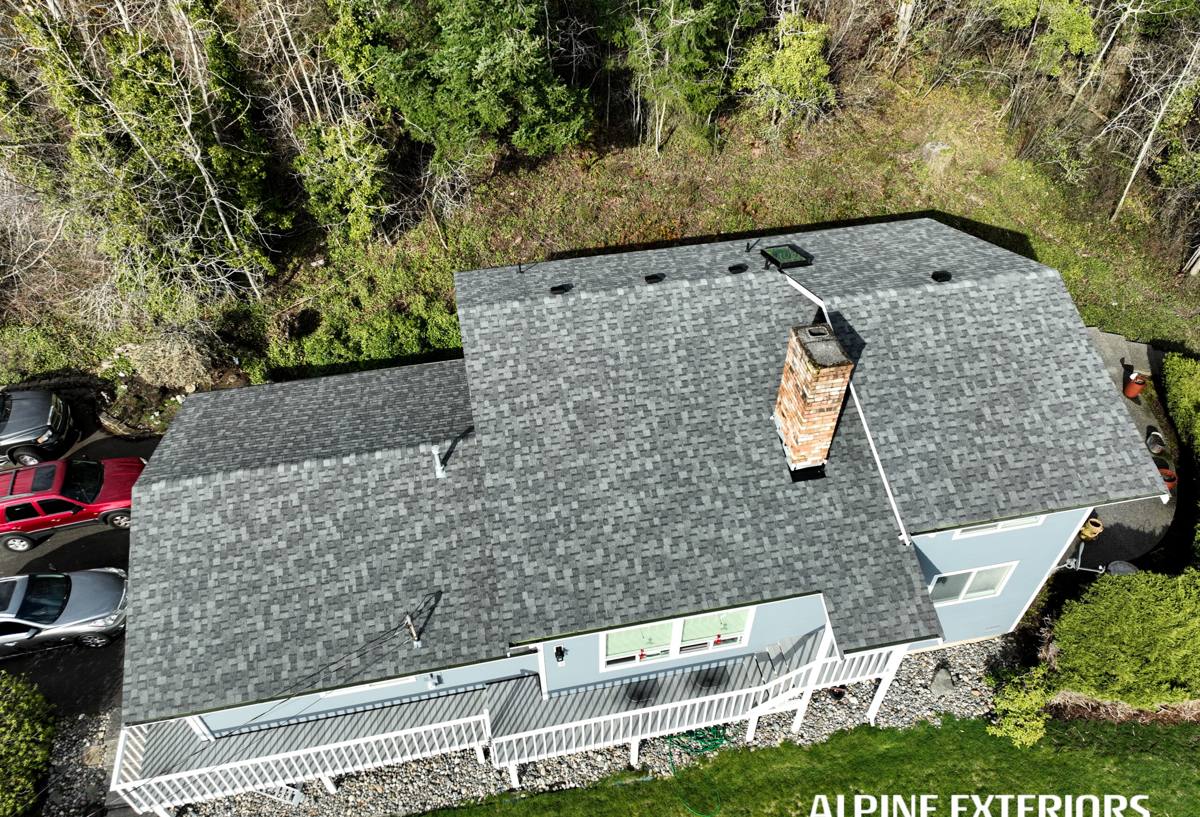
What Whatcom County Storms Do to a Roof
Wind and Driving Rain
Bellingham doesn't get the straight-line wind events some parts of the country do, but it gets frequent fall and winter windstorms that come in wet — rain driven sideways instead of falling straight down. That matters because a roof designed to shed water downhill can still take on water if wind pushes it up and under shingle edges, ridge caps, or flashing. Homes near the lake, including many in Silver Beach, tend to get this from more directions because there's less consistent windbreak than in a fully built-out neighborhood.
Salt Air and Moisture Load
Bellingham's proximity to Puget Sound means salt-laden air reaches most of the city, and it accelerates corrosion on exposed metal — nail heads, flashing, gutter fasteners, and vent boots. After a storm, that corrosion is often the weak point that lets water in, even when the shingles themselves look intact. It's a slow process, but every storm season adds to it.
The Long Moss Season
Whatcom County's wet stretch runs long, and shaded, tree-covered lots like many in Silver Beach hold moisture longer than open ones. Moss doesn't cause storm damage directly, but it makes storm damage worse: it holds water against the roof surface, works its way under shingle tabs, and adds weight that stresses fasteners already loosened by wind. A storm-damaged roof with active moss growth needs both problems addressed, not just one.
Signs of Storm Damage to Watch For
Most homeowners don't get on their roof after a storm, and they shouldn't — this is exactly the kind of inspection that's safer and more accurate from a trained eye. From the ground and inside the attic, though, there are signs worth checking:
- Shingles that look curled, cracked, or displaced from the roofline, especially near the edges or ridge
- Granules collecting in gutters or at downspout outlets after a storm
- New or worsening water stains on ceilings or in the attic, particularly near chimneys, skylights, or wall intersections
- Gutters pulling away from the fascia or sagging after heavy rain
- Visible gaps around vent boots, flashing, or ridge caps
- Daylight visible through the roof deck when viewed from inside the attic
- A sudden increase in moss or debris buildup in one area, which can indicate a damaged spot holding water
Any one of these on its own might be minor. Several together, especially after a known storm event, is worth a professional look before the next round of weather.
What a Correct Storm Damage Repair Involves
A storm repair done right isn't just replacing the shingles that are obviously missing. It starts with figuring out how water actually got in, because the visible damage and the entry point aren't always the same spot — wind-driven rain can travel several feet under a roof covering before it finds a gap in the underlayment or decking to drip through.
Full Assessment Before Any Repair
We check the roof deck for soft spots or rot, not just the surface layer, since water that's been getting in for a while can compromise the wood underneath. We also look at flashing around chimneys, skylights, and wall intersections, since these are common failure points after wind events, along with vent boots, which crack over time from UV exposure and are easy to overlook.
Matching the Repair to the Damage
Isolated shingle damage from a branch strike or wind uplift usually calls for a targeted shingle and flashing repair. Damage that's spread across a slope, or damage layered on top of a roof that was already near the end of its service life, sometimes points toward a larger repair or partial replacement being the more honest recommendation. We'll tell you which situation you're in and why, rather than defaulting to whichever job is bigger.
Sealing, Not Just Patching
Fasteners, flashing seams, and vent boots exposed to salt air and repeated wet-dry cycles need to be properly sealed and secured, not just covered. A patch that isn't tied back into the surrounding roof system correctly can fail again in the next storm, which just means paying for the same repair twice.
Our Storm Damage Repair Process
- Inspection. We get on the roof (weather permitting) and in the attic to trace the damage back to its actual source, not just the visible symptom.
- Documentation. We photograph and note the damage clearly, which is useful both for your own records and for an insurance claim if you're filing one.
- Written scope and estimate. You get a clear explanation of what's damaged, what needs to happen, and what it costs — no vague line items.
- Temporary protection if needed. If there's active water intrusion, we can get the roof weathertight before the full repair is scheduled, so the damage doesn't spread while you wait.
- The repair. Shingles, flashing, decking, and sealing work performed to match your existing roof system as closely as possible.
- Final check. We confirm the repair is watertight and walk you through what was done.
Repair vs. Replace: What Drives the Decision
Not every storm-damaged roof needs to be replaced, and not every roof can be adequately repaired. The honest answer depends on a few factors:
| Factor | Favors Repair | Favors Replacement |
|---|---|---|
| Age of roof | Under 10-15 years, or well-maintained older roof | Near or past manufacturer's expected service life |
| Extent of damage | Isolated to one area or slope | Spread across multiple slopes or widespread granule loss |
| Deck condition | Solid, no rot found | Soft spots or rot found in multiple areas |
| Underlying material | Shingles still matchable, in reasonable condition elsewhere | Shingles discontinued, badly weathered, or mismatched from prior repairs |
| Moss/moisture history | Recently cleaned, isolated growth | Long-term moss damage affecting multiple layers |
We'll walk you through where your roof falls on this before recommending either path.
Storm Damage and Insurance Claims
Many storm repairs in Whatcom County go through homeowners insurance, especially when the damage is tied to a specific, identifiable weather event. If you're planning to file a claim, it helps to have the damage documented before repairs start, since adjusters want to see the condition as it was. We can provide clear photos and a written scope that supports your claim, but the claim itself, and any coverage decisions, are between you and your insurer — we're not adjusters and won't promise a specific outcome. What we can promise is an honest, accurate description of what's actually damaged and what it will take to fix it correctly.
Materials and Methods We Use for Storm Repairs
For shingle repairs, we work to match the existing product as closely as possible in style and color, since a repair that stands out as an obvious patch isn't a good long-term look or value. Where flashing or vent boots need replacement, we use materials rated for the coastal, salt-exposed conditions common throughout Bellingham and Whatcom County, rather than the cheapest available option, because that's the piece most likely to fail again if it's undersized for local conditions. On roofs with a moss history, we'll also talk through moss treatment and gutter clearing as part of the repair, since fixing the storm damage without addressing what let the moss take hold in the first place just sets up a repeat problem.
Why a Crew That Already Works Silver Beach Matters
Storm damage assessment is partly about the roof and partly about knowing the conditions that caused it. A crew that regularly works the Silver Beach area already understands how tree cover near the lake affects moisture retention, which directions wind tends to come from during a given storm pattern, and how salt air from the Sound shows up in corroded flashing and fasteners on homes throughout this part of Bellingham. That local pattern recognition means a faster, more accurate diagnosis — and it means we're not guessing at what "normal" looks like for a roof in this specific setting versus a drier, more exposed neighborhood.
After a Storm: A Practical Checklist
- Check the attic for new stains, drips, or daylight through the deck as soon as it's safe to do so
- Look at gutters and downspouts for granule buildup or debris after the storm passes
- Photograph any visible exterior damage from the ground for your own records
- Avoid getting on the roof yourself, especially after wind or rain — footing and visibility are both worse than they look
- Call for an inspection promptly if you suspect damage; delayed water intrusion causes more damage the longer it sits
- Keep any receipts or documentation if you arrange temporary protection like tarping
If a recent storm has you wondering about the condition of your roof, we're happy to take a look. Reach out using the form below for a free, no-pressure estimate — we'll tell you plainly what we find and what it would take to fix it.