 Bellingham Roofing
 Asphalt Shingle Roofing for South Hill Homes
South Hill sits above downtown Bellingham on a wooded slope, which means the homes here deal with a slightly different set of roofing conditions than houses closer to sea level or out on the flats. Mature tree cover, hillside exposure, and proximity to the water all shape how a roof ages in this neighborhood. An asphalt shingle roof that's installed and maintained with those specifics in mind will hold up far longer than one installed to a generic spec sheet.
We work on South Hill regularly, which matters more than it sounds like it should. A crew that knows how tree cover on a given block affects moss growth, or how a steep driveway and mature landscaping change staging and tear-off logistics, moves faster and makes fewer assumptions than a crew seeing the street for the first time.
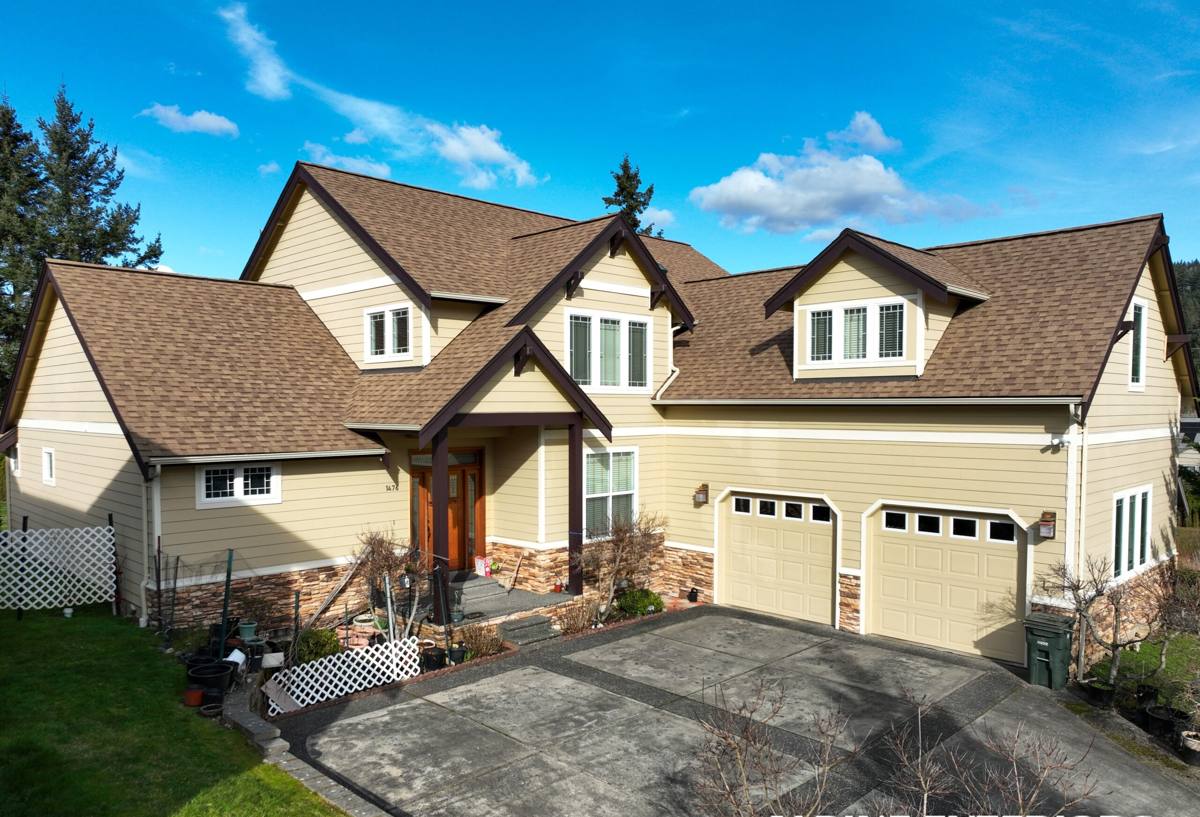
What South Hill Roofs Are Up Against
Whatcom County's marine climate is the baseline every roof here has to deal with, but South Hill's elevation and tree cover add their own wrinkles.
Salt Air and Moisture
Bellingham's proximity to the water means a steady drip of salt-laden moisture in the air, even well up the hill. Over years, that moisture accelerates corrosion on exposed metal — nail heads, flashing, vent boots, gutter hardware — faster than it would in a dry inland climate. Roofing materials and fasteners rated for coastal exposure hold up better here than standard-grade hardware.
Driving Rain
Storms coming off the Strait of Georgia often bring wind-driven rain rather than straight-down rainfall. Wind-driven rain finds its way under shingles that are improperly lapped, under-nailed, or missing proper underlayment at valleys, eaves, and penetrations far more easily than vertical rain does. A roof built for this area needs underlayment and flashing details that assume water will be pushed sideways and uphill at points, not just downhill.
A Long Moss Season
South Hill's tree canopy — a big part of what makes the neighborhood pleasant to live in — also means shade, debris, and slower drying times on north-facing and tree-covered roof sections. Moss and algae get a long growing season here, roughly fall through spring, and once established they lift shingle edges, trap moisture against the roof deck, and shorten the shingle's usable life. Roofs on shaded lots need a maintenance rhythm that open, sunny roofs simply don't.
What a Correct Asphalt Shingle Job Involves
Asphalt shingles are a proven, cost-effective roofing material, but the shingle itself is only one part of a system. Most of the roofing problems we get called out to fix in Bellingham trace back to a shortcut somewhere in the layers underneath the shingle, not a defect in the shingle brand.
- Deck inspection and repair — any soft, delaminated, or water-damaged sheathing gets replaced before anything goes back on, not covered over.
- Ice-and-water shield at vulnerable points — eaves, valleys, and areas prone to wind-driven rain get a self-adhering waterproof membrane, not just felt.
- Synthetic underlayment across the full deck for a consistent secondary water barrier.
- Proper flashing at every chimney, skylight, wall intersection, and roof-to-roof transition — step flashing and counter-flashing, not just caulk.
- Balanced attic ventilation — intake at the eaves and exhaust at the ridge, sized to the attic's square footage, so moisture doesn't get trapped against the deck from underneath.
- Correct nailing pattern — the right number of nails, in the right location on each shingle, driven flush (not overdriven or underdriven).
- Starter strip and ridge cap installed as actual roofing components, not improvised from cut field shingles.
Skip any one of these and the shingles on top can look fine for a year or two while the roof underneath is already failing. That gap between "looks fine" and "is fine" is where most premature roof failures come from.
Our Process
1. Inspection and Honest Assessment
We start by getting on the roof — not just looking from the ground — to check the shingle condition, flashing, ventilation, and deck. If a repair will genuinely get you several more years of service, we'll say so. If the roof is past the point where repair makes financial sense, we'll explain why, in plain terms, with photos and specifics rather than vague urgency.
2. A Clear, Written Estimate
You get a written scope of work and price before anything starts — materials, tear-off, disposal, and any deck or flashing repair called out separately so you know what you're paying for and why.
3. Tear-Off and Deck Check
We remove the old roofing down to the deck, not layer over it. That's when hidden problems — soft sheathing, past leaks, undersized ventilation — actually show up, and it's the only point in the job where they can be fixed properly.
4. Installation to Manufacturer Spec
Underlayment, flashing, and shingles go on in the sequence and pattern the manufacturer requires, which is also what keeps the material warranty valid. This is where the site-specific judgment matters most — a roof under heavy tree cover gets extra attention on valleys and low-slope sections where standing moisture is most likely.
5. Cleanup and Final Walkthrough
Job site and yard get cleared of debris and nails, and we walk the finished roof with you so you know what was done and what to watch for going forward.
Choosing the Right Shingle
Asphalt shingles come in a few performance tiers. The right choice depends on your roof's exposure, your budget, and how long you plan to stay in the home.
| Shingle Type | Typical Lifespan | Best Suited For | Trade-Offs |
|---|---|---|---|
| 3-Tab | 15–20 years | Budget-focused projects, rentals, simple roof lines | Lower wind rating, less algae resistance, flatter appearance |
| Architectural / Dimensional | 25–30 years | Most South Hill homes — good balance of cost and durability | Higher upfront cost than 3-tab, but far better wind and moisture performance |
| Premium / Designer | 30+ years | Steep, highly visible roofs or homeowners planning to stay long-term | Highest material cost; benefit is mostly on very visible or complex rooflines |
For most South Hill homes, we recommend an architectural shingle with algae-resistant granules given the amount of shade and moss pressure on the hill. It costs more than 3-tab up front but typically outperforms it by enough years to be the better value over the life of the roof.
Maintenance and Moss Prevention
A well-installed roof still needs upkeep, especially under South Hill's tree cover. A simple annual routine catches most problems while they're still cheap to fix.
- Clear gutters and downspouts of needles and leaf debris at least twice a year, more often under heavy tree cover.
- Have moss and algae growth treated before it spreads across the roof, not after it's visibly thick.
- Trim back branches that overhang the roof to cut down on shade, debris, and abrasion.
- Check attic ventilation isn't blocked by insulation, storage, or debris.
- Have flashing around chimneys, skylights, and vents checked every couple of years for sealant wear or corrosion.
- Walk the roof visually (or have it done) after major windstorms to check for lifted or missing shingles.
Pressure washing a shingle roof to remove moss is not something we recommend — it strips granules and shortens shingle life. Soft-wash treatments or manual removal protect the shingle surface while still clearing growth.
Repair or Replace?
Not every roof problem means a full replacement. The right call depends on the roof's age, how widespread the damage is, and what's happening underneath the shingles.
Repair usually makes sense when: the roof is under 15 years old, damage is localized (a flashing leak, a section of wind-lifted shingles, isolated moss damage), and the deck underneath is sound.
Replacement usually makes sense when: shingles are curling, cracking, or losing significant granule coverage across the roof; there's evidence of moisture reaching the deck in multiple areas; or the roof is past 20–25 years and repairs would just be chasing new leaks every season.
Why a South Hill-Experienced Crew Matters
Roofing rules don't change block to block, but conditions do. A crew that already works South Hill knows which lots run heavy shade and need extra moss-resistant material, which streets deal with more wind-driven rain off the water, and how to stage a job efficiently on a hillside lot with mature landscaping. That local familiarity shows up in fewer surprises during the job and a roof that's built for the conditions it will actually face, not a textbook average.
It also means we're a known, reachable local business if a question comes up five years down the road — not a crew that worked one job in the neighborhood and moved on.
If your South Hill roof needs a look — whether it's a repair, a full replacement, or just an honest opinion on how much life is left in it — we're happy to come out for a free, no-pressure estimate using the form below.