 Bellingham Roofing
 Building Decks That Hold Up in South Hill's Climate
South Hill sits on the sloped, tree-covered ground above downtown Bellingham, and homes up here get some of the best bay views in Whatcom County. That same setting comes with a trade-off: salt air drifting up from Bellingham Bay, driving rain through the fall and winter months, and a moss season that can run most of the year under mature tree cover. A deck that looks great the day it's finished can start showing problems within a couple of seasons if the framing, flashing, and fasteners weren't chosen with this specific climate in mind.
We build and replace custom decks for South Hill homeowners with that reality factored into every decision, from the footings up to the railing caps. Below is what a deck in this neighborhood actually needs, what a correct build involves, and how our process works from first look to final walkthrough.
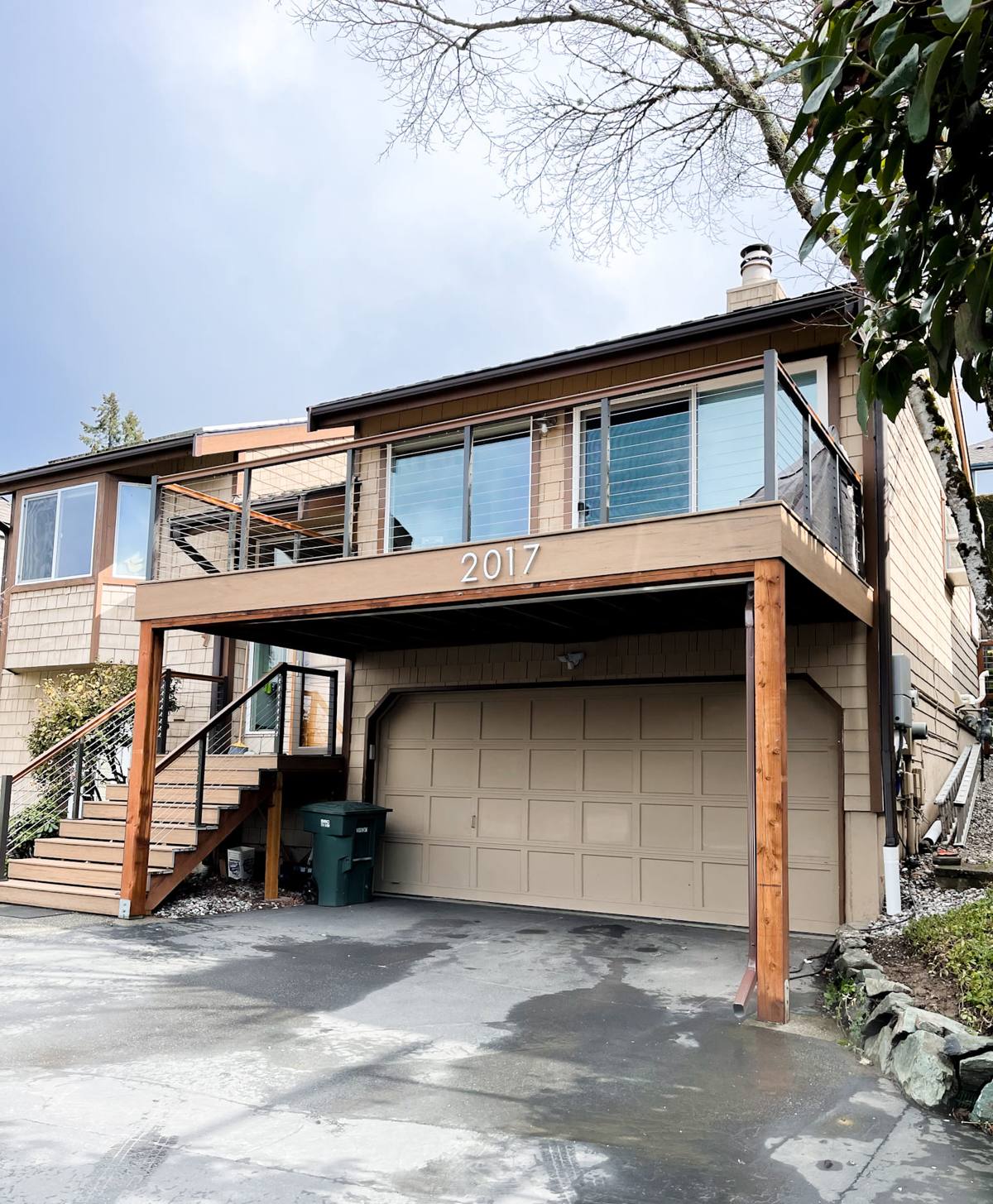
What South Hill's Terrain and Climate Demand From a Deck
Salt Air and Corrosion
Being close to Bellingham Bay means airborne salt reaches homes well up the hill, especially on windier days. Salt air speeds up corrosion in standard fasteners, joist hangers, and hidden hardware faster than most homeowners expect. A deck built with builder-grade galvanized hardware in this environment can show rust streaks and weakened connections well before the decking itself wears out.
Driving Rain and Water Management
Whatcom County rain doesn't just fall straight down — wind pushes it sideways into ledger boards, railing posts, and any gap where water can collect. Where a deck attaches to the house is the single most important spot to get flashing right. Get it wrong and you're not dealing with a cosmetic issue, you're dealing with rot working its way into the rim joist and framing behind the siding.
Moss, Shade, and Slope
Many South Hill lots carry mature tree cover, part of the neighborhood's appeal but also a reason less direct sun reaches a deck surface for long stretches of the year. Shaded, damp wood is exactly where moss and algae take hold, and once established it makes decking slick and holds moisture against the boards. Sloped yards also change how a deck needs to be framed and supported compared to a flat-lot build — footing depth and post height aren't one-size-fits-all once you're working with a grade change.
Choosing the Right Decking Material for This Neighborhood
There's no single best decking material for every home. It depends on your budget, how much upkeep you want to take on, and how much shade and moisture your particular lot deals with. Here's how the common options compare for a South Hill setting:
| Material | Upfront Cost | Moss & Moisture Resistance | Maintenance | Typical Lifespan |
|---|---|---|---|---|
| Pressure-treated wood | Lowest | Fair — needs sealing to perform well in shade | Annual cleaning and sealing | 10-15 years |
| Cedar | Moderate | Good natural resistance, still needs finish upkeep | Periodic cleaning and re-staining | 15-20 years |
| Traditional composite | Moderate-High | Good, though uncapped edges can absorb moisture where cut | Occasional washing | 20-25 years |
| Capped composite / PVC | Highest | Excellent — sealed shell resists moss and moisture intrusion | Low, mostly rinsing | 25-30+ years |
In shaded, damp settings like a lot of South Hill's tree-covered properties, we often lean toward recommending capped composite or PVC decking when budget allows, simply because the sealed surface doesn't give moss the same foothold that raw wood grain does. That said, plenty of homeowners get a full useful life out of wood decking when it's detailed and finished correctly and kept on a maintenance schedule — it's a legitimate choice, just a different upkeep commitment.
Custom Design Options Worth Considering
"Custom" on a sloped, view-oriented lot like a lot of South Hill properties usually means solving a layout problem, not just picking a railing style. Options we regularly talk through with homeowners here include:
- Multi-level decks that step down a slope instead of requiring a single tall, exposed structure
- View-oriented railings such as cable or glass-panel systems that preserve sightlines toward the bay
- Built-in seating or planters that make better use of a smaller or oddly shaped deck footprint
- Shade structures or pergolas for the stretches of the year when direct sun is actually welcome
- Under-deck drainage systems that create usable dry space below a raised deck on a sloped lot
- Integrated lighting for stairs and rail caps, both for safety on uneven ground and for evening use
None of these are one-size-fits-all add-ons. Each one interacts with drainage, structural loading, and how the deck ties into the house, so they get designed in from the start rather than bolted on afterward.
What a Correctly Built Deck Actually Involves
A deck is only as good as what's underneath and behind the visible surface. The parts nobody sees are the parts that determine whether it's still solid in ten years.
- Ledger flashing: proper step or Z-flashing where the deck ties into the house, installed to shed water away from the wall assembly rather than trap it
- Footings sized for the site: depth and diameter matched to your actual soil and slope conditions, not a generic minimum
- Corrosion-resistant fasteners: stainless steel or heavy-coated hardware rated for the salt-air exposure common at this elevation and proximity to the bay
- Joist spacing matched to the decking: composite and PVC boards often call for tighter joist spacing than wood, and following the manufacturer's span tables protects the warranty and prevents bounce or sagging
- Airflow underneath: enough clearance and ventilation beneath the deck so moisture doesn't sit trapped against framing year-round
- Drainage away from the structure: grading and gaps that move water off the deck and away from the house foundation instead of pooling
Skipping any one of these usually doesn't show up right away. It shows up two or three winters later as soft spots, rust stains bleeding through the decking, or a railing post that's gone spongy at the base.
Our Process for South Hill Deck Projects
1. On-Site Evaluation
We walk the property in person, not off a satellite photo. On sloped South Hill lots that means checking grade change, existing drainage patterns, tree cover, and how the deck will tie into the house before we talk materials or price.
2. Design and Material Selection
We go over decking material, railing style, and layout based on your budget and how you plan to use the space — entertaining, grilling, a quiet spot to sit, or all three. We give an honest read on which materials make sense for your specific amount of shade and sun exposure.
3. Permitting
Most new decks, and many replacements, in Bellingham and Whatcom County require a building permit, particularly once you're above a certain height or attaching structurally to the house. We handle pulling the permit and coordinating inspections so you're not chasing paperwork.
4. Construction
Footings, framing, flashing, decking, and railing, built in that order, with each stage set up to protect the one after it. We don't cut corners on the parts that end up hidden once the boards go down.
5. Final Walkthrough
Before we call the job done, we walk it with you and check railing height and spacing, stair details, board fastening, and finish work, so you know exactly what you're getting and how to keep it in good shape.
Keeping Your Deck Ahead of Moss and Weather
Even a well-built deck needs some ongoing attention in this climate. A few habits go a long way:
- Sweep leaves and debris off the surface regularly in fall, especially in shaded corners where they hold moisture
- Rinse or wash the deck surface at least once a year to knock back early moss and algae growth before it gets established
- Check railing posts and stair stringers annually for soft spots, especially where wood meets a concrete footing or the ground
- Keep gutters and downspouts near the deck clear so runoff isn't dumping extra water onto or under the structure
- Re-seal wood decking on the manufacturer's recommended schedule rather than waiting until it's visibly gray and dry
Signs Your Existing Deck Needs Attention
If you're not sure whether your current deck needs a repair, a partial rebuild, or a full replacement, these warning signs are worth taking seriously: boards that feel spongy or springy underfoot, rust streaks bleeding through the decking near fasteners, green or black staining that keeps coming back within weeks of cleaning, a ledger area that looks discolored or separated from the siding, railings that wiggle when leaned on, and gaps opening up between boards or at the stairs. Any of these are worth a professional look before they turn into a larger structural repair.
Why Hire a Crew That Already Works in South Hill
South Hill's mix of steep lots, mature trees, and proximity to the bay means the right build details here aren't always what works on a flat lot across town. A crew that already builds decks in this neighborhood has already worked through the access challenges of sloped driveways, seen how the tree cover on a given block affects moss and moisture, and knows what the local permitting process expects. That means fewer surprises for you, a more accurate estimate up front, and a deck actually built for the conditions it has to survive rather than a generic deck dropped onto a South Hill lot.
If you're planning a new deck or need to replace one that's past its prime, we're glad to come take a look and walk you through your options. Reach out for a free, no-pressure estimate using the form below, and we'll give you a straight answer on what your project needs and what it will cost.