 Bellingham Roofing
 Why South Hill Decks Wear Out Faster Than Homeowners Expect
South Hill sits above Bellingham Bay, and that elevation and exposure come with a trade-off. The views are great, but the same weather patterns that make this part of Whatcom County beautiful also make it hard on exterior wood structures. Salt-laden air drifting up from the bay accelerates corrosion on fasteners and hardware. Driving rain off the water finds its way into every gap, seam, and screw hole a deck has. And the long, overcast stretch from fall through spring keeps wood surfaces damp for weeks at a time, which is exactly the environment moss and algae need to take hold.
None of that means a deck can't last in this neighborhood. It means a deck built or replaced without accounting for those conditions will fail years before it should — usually starting underneath, where you can't see it, long before the surface boards look bad.
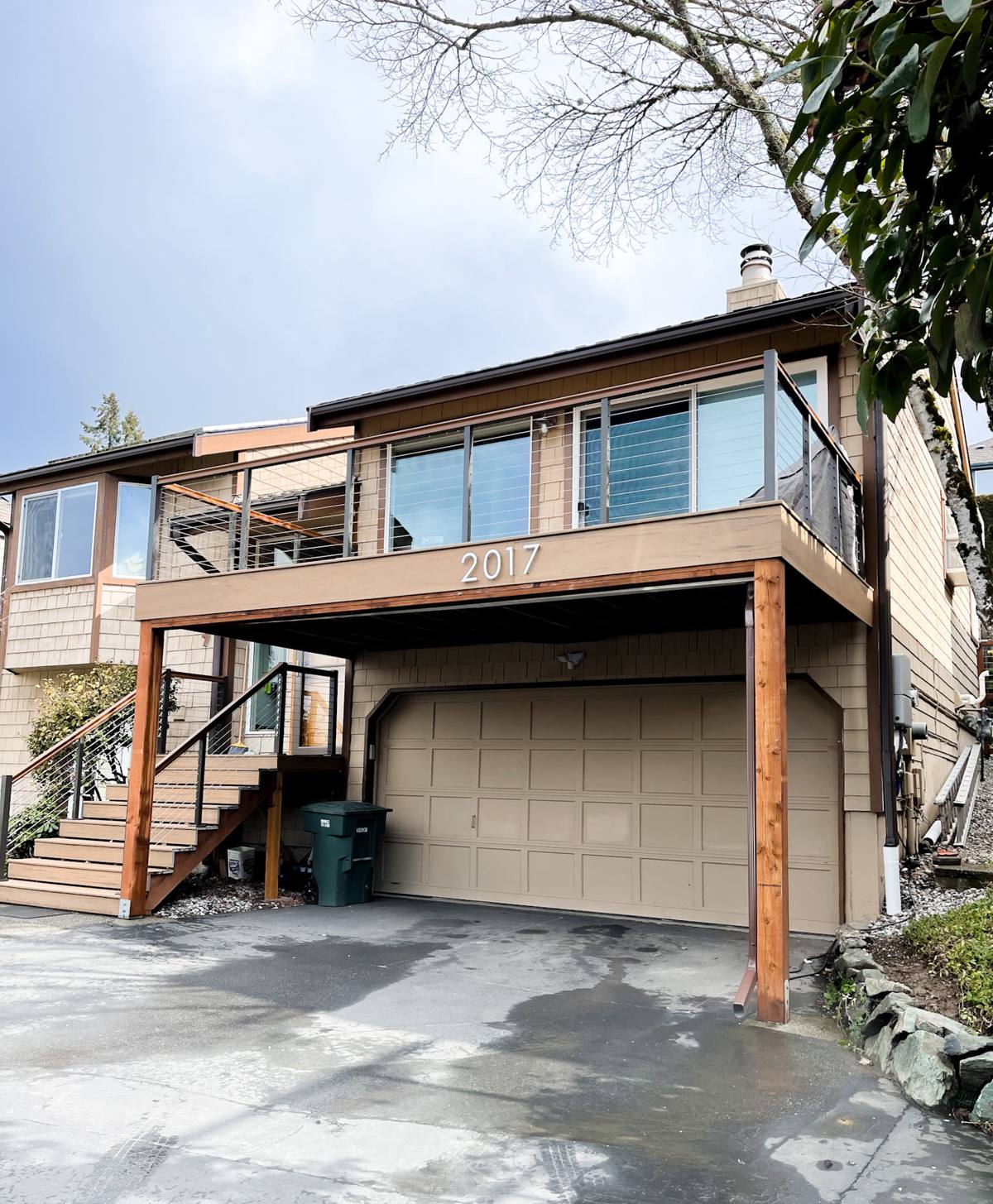
Signs a South Hill Deck Needs Replacement, Not Just Repair
Not every tired-looking deck needs to be torn out. But there's a point where patching boards is just delaying an inevitable full rebuild, and spending money past that point is money wasted. Here's what tells us a deck is past the repair stage:
- Soft, spongy, or spring-loaded decking when you walk across it, especially near the house or in shaded corners
- Ledger board (where the deck attaches to the house) shows staining, gaps, or soft wood — this is the single most common structural failure point on older decks
- Support posts with visible checking, rot at the base, or contact directly with soil instead of a proper footing
- Persistent moss or black-green algae film that returns within weeks of cleaning, even after pressure washing
- Rusted, streaking, or loosening fasteners — a sign the hardware wasn't rated for coastal exposure
- Railings that flex or feel less than solid under hand pressure
- A deck older than 20–25 years that has never had the substructure inspected
If you're seeing two or more of these, it's worth having someone actually get underneath the deck and look, not just walk the surface.
What a Correct Deck Replacement Actually Involves
The Substructure Comes First
The part of a deck that fails first in this climate is almost never the decking boards — it's what's underneath. Framing lumber, ledger attachment, footings, and post bases take the brunt of moisture cycling because they dry out slowest. A replacement done right starts by evaluating and, where needed, rebuilding this structure to current standards, not just bolting new boards onto old framing that's already been absorbing rain for two decades.
Flashing and Water Management
Where a deck ledger meets the house is the single most common source of hidden rot in this region, because it's a joint where two different building surfaces meet and water wants to collect. Proper ledger flashing — installed correctly, in the right order relative to the house's siding or weather barrier — is non-negotiable. This is also the step that gets skipped most often on cheap deck jobs, because it's invisible once the decking goes down and doesn't show up as a problem for years.
Fasteners and Hardware
Given the salt air this neighborhood sits in, hardware matters more here than it would further inland. Structural connectors, joist hangers, and fasteners need a corrosion rating suited to coastal exposure — using standard-grade hardware on a South Hill deck is one of the more common shortcuts we see, and it's one of the most expensive to fix later since it means pulling decking back off.
Permits and Guardrail Code
Deck replacements that involve structural rebuilding typically require a permit through the City of Bellingham, and elevated decks have specific guardrail height and baluster spacing requirements. We handle this as part of the process rather than treating it as an afterthought — it protects you if you ever sell the house and a buyer's inspector checks for permit history.
Decking Material Options for a South Hill Climate
There's no single "best" decking material — there's a best material for your budget, your maintenance appetite, and how much direct rain and shade your specific deck gets. Here's how the common options actually compare in this environment:
| Material | Moisture Behavior | Maintenance | Typical Lifespan Here |
|---|---|---|---|
| Pressure-treated lumber | Resists rot when properly sealed; absorbs water if finish is neglected | Needs re-staining or sealing every 1–2 years in this climate | 15–20 years with upkeep |
| Cedar | Naturally moisture- and insect-resistant, but still needs a protective finish | Annual cleaning, periodic re-staining to hold color and protection | 15–20 years with upkeep |
| Composite decking | Doesn't absorb water or rot; can still develop surface algae film if never cleaned | Periodic washing; no staining or sealing required | 25+ years, varies by product warranty |
Our default recommendation for South Hill homes leans toward composite for the walking surface, paired with pressure-treated framing underneath — composite eliminates the yearly maintenance cycle that wood demands in a climate this wet, while the framing (which isn't exposed to foot traffic or UV) does fine as treated lumber when it's properly flashed and fastened. That said, plenty of homeowners prefer the look and feel of real wood and are willing to keep up the maintenance — we'll build either correctly.
How Our Deck Replacement Process Works
1. On-Site Inspection and Assessment
We start by actually getting under the existing deck — not just eyeballing the surface — to check ledger condition, footings, post bases, and framing. This tells us honestly whether you need a full replacement or whether targeted repair is a legitimate option.
2. Design and Material Selection
We walk through decking material, railing style, and layout with you, being upfront about cost differences and maintenance trade-offs rather than steering you toward whatever's easiest for us to install.
3. Permitting
For jobs that require it, we handle the City of Bellingham permit application and inspection scheduling so it doesn't become your problem to manage.
4. Demolition and Rebuild
Old decking, and framing where it's compromised, comes out. We rebuild the substructure to current code, with hardware and flashing suited to this climate — not just the minimum a big-box lumber package includes.
5. Decking, Railings, and Finish
New decking goes down with fastening methods appropriate to the material (hidden fastener systems for composite, proper spacing and finish for wood), followed by railing installation and any final trim work.
6. Final Walkthrough
We walk the finished deck with you, confirm everything is solid, and make sure you understand any care the material requires going forward.
Hillside and Site Considerations Specific to This Area
South Hill's terrain isn't flat, and that changes how a deck gets built. Sloped lots often mean taller support posts, which means more attention to post bracing and footing depth to keep the structure rigid rather than bouncy. Homes higher on the hill also tend to get more direct wind-driven rain off the bay, which argues for extra care at every seam and joint rather than standard-issue detailing. And tree cover in some pockets of the neighborhood keeps sections of decking shaded most of the day, which is exactly where moss takes hold fastest — those areas sometimes benefit from a material choice or drainage detail different from the sunnier side of the same deck.
None of this is exotic engineering. It's just building with the actual site conditions in mind instead of using a one-size-fits-all approach on a lot that isn't one-size-fits-all.
What Drives the Cost of a Deck Replacement
Exact pricing depends on size, material, and how much of the substructure needs rebuilding versus reusing, but the honest range for a full deck replacement on a typical South Hill home runs from the lower five figures for a modest wood deck up toward the higher end of that range or beyond for larger composite decks with railings and multiple levels. The main variables:
- Deck size and number of levels
- Decking material (treated wood vs. cedar vs. composite)
- Condition of existing framing — full rebuild costs more than reusing sound structure
- Railing style and any built-in features like stairs or benches
- Site access and slope, which affect labor time
- Permit requirements based on deck height and attachment to the home
We give you a real number after seeing the site, not a phone-quote guess.
Why Work With a Crew That Already Knows South Hill
A contractor who's only ever built decks in a dry climate, or who treats every job the same regardless of exposure, will hand you a deck that looks fine at handoff and starts failing at the ledger or fasteners within a few winters. Working regularly in Bellingham and around Whatcom County means we've already seen how this specific combination of salt air, rain, and moss plays out on real decks over real years — and we build to account for it up front rather than learning the lesson on your project.
If your deck is showing its age or you're planning a replacement, we're happy to come take a real look and give you a straightforward, no-pressure estimate. Use the form below to get started.