 Bellingham Roofing
 New-Construction Windows Built for South Hill's Exposure
South Hill sits up on the slope above downtown Bellingham, which means homes here catch weather that flatter, more sheltered lots don't. Wind off Bellingham Bay carries salt air up the hillside, driving rain hits window walls at an angle instead of straight down, and the shaded, tree-lined lots that make South Hill attractive also keep moisture sitting on siding and trim for longer stretches of the year. If you're building new or adding on in this neighborhood, the windows you install and how they're installed matter more than they would somewhere drier and more sheltered.
We install new-construction windows on homes and additions throughout South Hill and the rest of Bellingham. This page covers what that job actually involves, what Whatcom County's climate demands from the materials and the install, and why the flashing and water management details matter as much as the window itself.
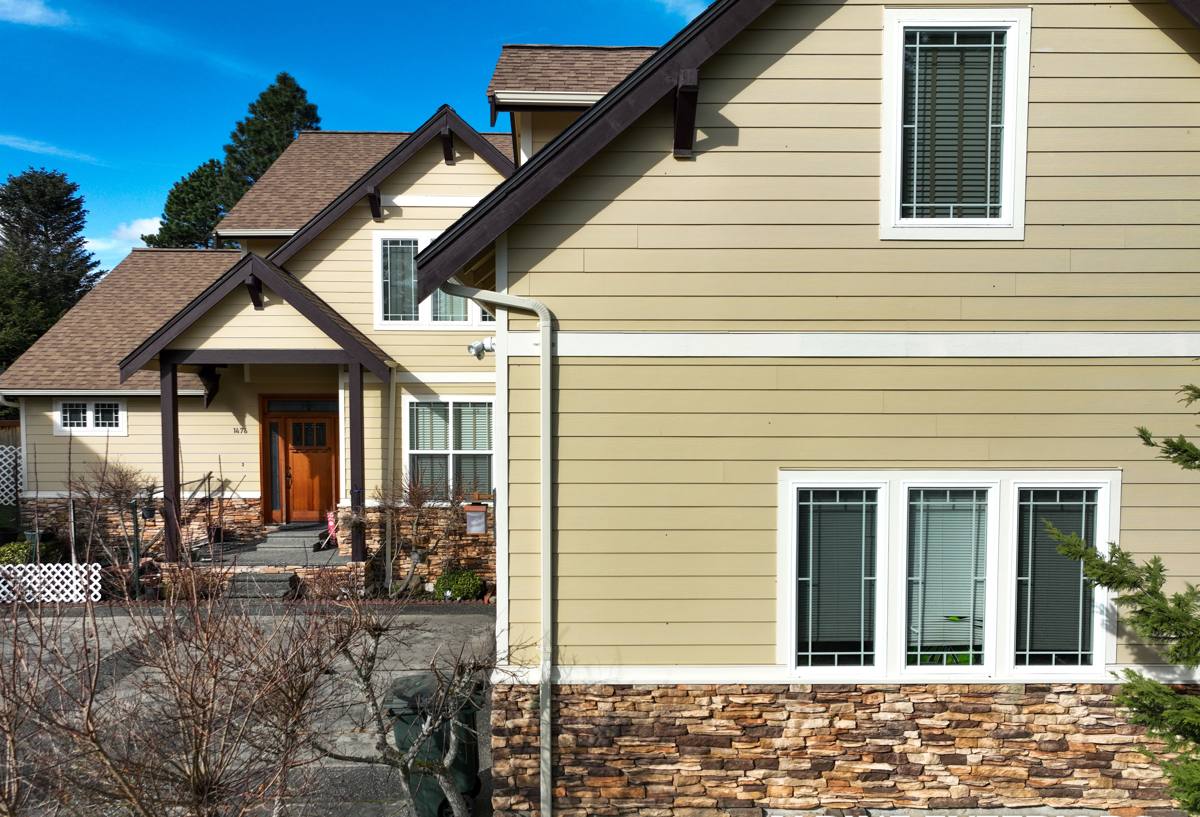
What "New-Construction" Actually Means
In the trade, "new-construction" isn't a marketing term — it describes a specific type of window and a specific installation method, different from a replacement or retrofit window going into an existing opening.
Nailing Fin vs. Pocket Windows
A new-construction window has a nailing fin (sometimes called a flange) around the perimeter of the frame. That fin gets fastened directly to the wall sheathing before siding goes on, and it's designed to be integrated into the wall's water-resistive barrier and flashing system as one continuous, layered assembly. A replacement window, by contrast, gets inserted into an existing frame with no fin and relies on the old opening's flashing — which is a fine approach for a remodel, but it's a different job with different rules.
Why This Matters During a Build or Addition
Because the fin ties into the wall assembly before the exterior finish goes on, this is a one-shot install. Once siding, trim, and paint are on, correcting a flashing mistake means tearing back exterior finish to fix it. On a new build or addition, the window install has to be sequenced correctly with the framing, the weather barrier, and the siding crew — there's no forgiving "we'll catch it later" step.
What Bellingham's Climate Demands From the Install
Whatcom County doesn't get the harshest weather on the coast, but it gets a steady, grinding combination of salt-laden air, wind-driven rain, and long stretches of damp, low-light conditions that support moss and mildew growth for much of the year. None of that is dramatic on its own — it's cumulative. A window opening that's 95% correct will usually hold up fine through one wet season. It's the repeated cycles, year after year, that find the weak point.
Flashing and Water Management
The single biggest factor in a window's long-term performance isn't the window brand — it's whether the flashing was lapped correctly so water moving down the wall sheds over each layer instead of getting trapped behind it. On a South Hill home exposed to driving rain, we pay particular attention to the sill pan (a dedicated drainage plane under the window opening) and to head flashing that extends far enough to shed water past the window before it reaches the wall below.
Material and Glass Considerations for Marine Exposure
Salt air is mildly corrosive to unprotected metal hardware and can dull certain finishes faster than inland conditions would. We favor frame materials and hardware finishes that hold up to that exposure without a lot of upkeep, and we talk through glass packages that cut down on condensation — a common complaint in shaded, damp lots where interior humidity has nowhere to go on cold mornings.
Our Installation Process
The process is the same discipline whether it's a single addition window or a full new build, just scaled to the job.
- Rough opening check — we verify the opening is square, plumb, and sized correctly before anything gets set. A window that's forced into an out-of-square opening will bind, leak, or both.
- Sill pan installation — a sloped, sealed drainage plane goes in first so any water that does get past the window has somewhere to go besides your framing.
- Window setting and fastening — the unit goes in level and plumb, shimmed correctly so the frame isn't racked, and fastened per the manufacturer's schedule to keep the warranty intact.
- Flashing integration — side and head flashing get lapped over the nailing fin and tied into the wall's weather-resistive barrier in the correct shingle-style sequence, so every layer drains onto the one below it.
- Sealing and insulation — the gap between frame and rough opening gets insulated and air-sealed on the interior side, without over-filling in a way that bows the frame.
- Final inspection — we check operation, sightlines, and seal integrity before signing off, and before the siding crew closes it all in.
Choosing Materials and Glass for South Hill Homes
There's no single "best" window for every project — the right choice depends on the home's exposure, budget, and how much upkeep you want to take on. Here's how the common frame materials compare for a marine, high-moisture climate like ours.
| Frame Material | How It Handles Our Climate | Trade-Offs |
|---|---|---|
| Vinyl | Won't rot or corrode from salt air; low maintenance | Frame can expand/contract more with temperature swings; limited color options |
| Fiberglass | Very stable dimensionally, holds paint well, strong resistance to moisture over time | Higher upfront cost than vinyl |
| Wood-clad | Warm interior appearance; exterior cladding protects the wood from weather | Any breach in the cladding exposes wood to rot risk over time; more maintenance-sensitive |
| Aluminum | Strong and slim sightlines | Poor insulator unless thermally broken; more prone to condensation in our humidity |
Whatever frame material you land on, we recommend a glass package with good low-E performance to reduce condensation risk on cold, damp South Hill mornings, and we always confirm hardware finishes are rated for coastal or marine exposure rather than standard interior-grade hardware.
Cost Factors Worth Understanding Before You Buy
We don't quote a job until we've seen the plans and openings, but these are the main variables that move the price on a new-construction window package:
| Factor | Lower Cost Driver | Higher Cost Driver |
|---|---|---|
| Frame material | Vinyl | Fiberglass or wood-clad |
| Opening size and shape | Standard rectangular sizes | Custom shapes, oversized units, or specialty grids |
| Glass package | Standard double-pane low-E | Upgraded coatings, triple-pane, or specialty tints |
| Quantity and access | Ground-level, easy staging | Upper-story or steep-lot access common on South Hill |
| Flashing complexity | Simple single-story wall plane | Multiple rooflines, decks, or wall transitions nearby |
Mistakes We See on New-Construction Installs
Most window problems we get called out to fix years later trace back to the install, not the product. On South Hill's exposure, these show up faster than they would on a more sheltered lot:
- Head flashing that's too short to actually shed water past the window into the siding drainage plane
- Skipping or under-sizing the sill pan, so incidental water sits against the sheathing instead of draining out
- Fastening the nailing fin without lapping it correctly under the weather-resistive barrier above
- Over-shimming or racking the frame during install, which stresses the seals and shortens hardware life
- Sealing the interior gap without also managing the exterior drainage plane, trapping moisture inside the wall
A Pre-Install Checklist for South Hill Homeowners and Builders
If you're coordinating a build or addition and want to make sure the window install goes smoothly, this is what we'd want confirmed before we set the first unit:
- Rough openings are framed to the exact sizes on the window schedule, with confirmed square and plumb
- Weather-resistive barrier is installed and ready to integrate with window flashing before siding starts
- Window brand, frame material, and glass package are finalized and on-site or confirmed for delivery
- Hardware and finish selections account for salt-air exposure if the lot faces the bay or open wind
- A clear sequence is agreed with the siding crew so flashing laps happen in the correct order
- Someone on-site can sign off on the final inspection before the wall gets closed in
Why Hire a Crew That Already Works South Hill
A window installer who mostly works inland or in newer, more sheltered subdivisions doesn't necessarily think about sill pan drainage or salt-rated hardware as a default — because their jobs don't usually punish the shortcut. On South Hill's hillside lots, with wind off the bay, driving rain, and a long moss season that keeps everything damp longer than it should be, those details aren't optional extras. They're the difference between a window wall that's still tight in ten years and one that starts showing rot or leaks well before then.
We've installed and repaired windows across Bellingham and Whatcom County long enough to know which details this climate actually tests. That's not a claim about any particular brand or product being inadequate — it's about installation discipline, and it's the standard we hold every job to, whether it's one window in an addition or a full new build.
If you're planning new-construction windows for a South Hill home or addition, we're happy to walk the plans or the framed openings with you and give you a straightforward, no-pressure estimate. Use the form below to get started.