 Bellingham Roofing
 Ferndale's Storms Don't Damage Roofs the Way People Expect
When homeowners in Ferndale think "storm damage," they usually picture a dramatic wind event that rips shingles off in sheets. That happens, but it's not the most common way roofs get hurt out here. More often, the damage is cumulative and quiet: wind-driven rain forced sideways under a lifted shingle tab, a fastener that backed out just enough to let water track along the decking, or granule loss from repeated gusts that leaves a shingle thinner and more vulnerable the next time a front rolls through. By the time a stain shows up on a ceiling, the roof has usually been compromised for a while.
Ferndale sits close enough to Bellingham Bay and the Strait of Georgia that salt-laden air is a real factor here, not a coastal-town exaggeration. Combine that with Whatcom County's long wet season and the moss growth that comes with it, and you get a roof environment that punishes shortcuts. A repair that would hold up fine in a dry inland climate can fail here in a season or two if it isn't done with local conditions in mind.
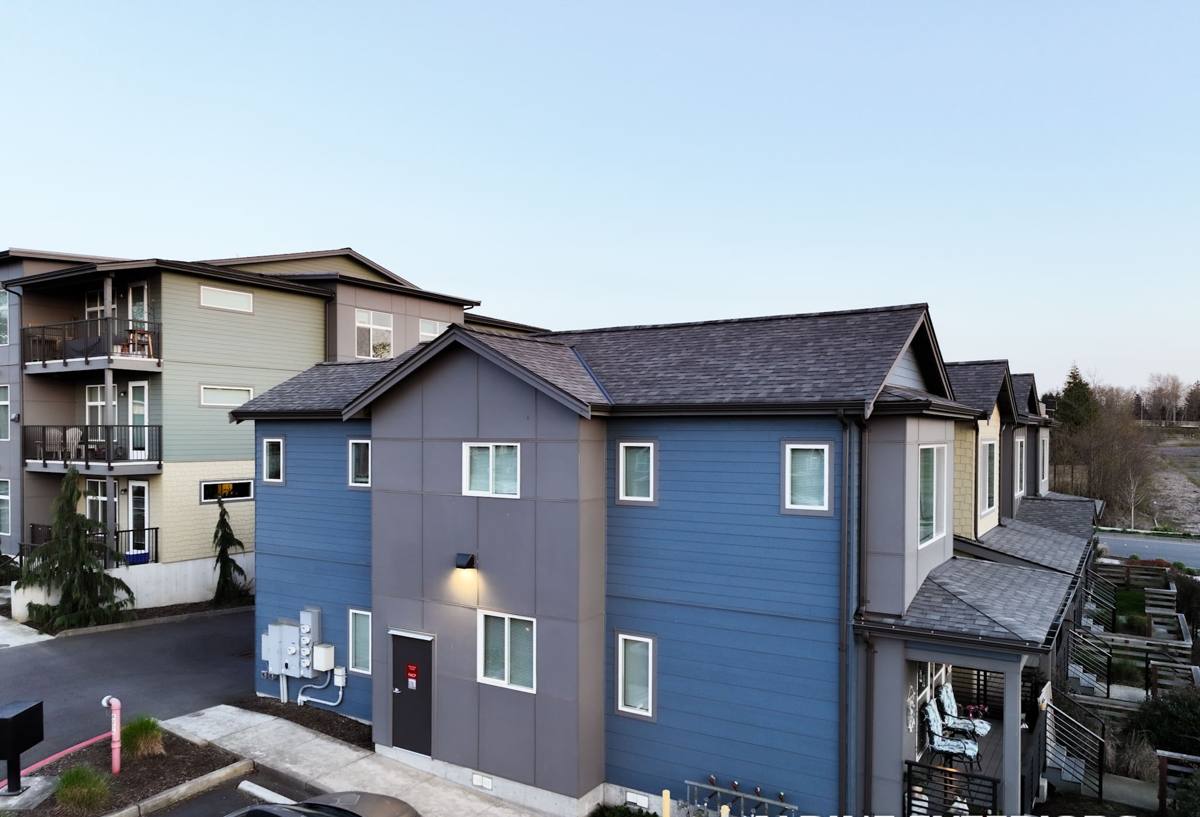
What Actually Counts as Storm Damage
Not every roof problem after a windstorm is storm damage in the insurance sense, and not every storm damage claim is obvious to look at. Here's what we're actually checking for on a Ferndale roof after a weather event:
- Shingles lifted, creased, or torn loose at the tab, even if they're still technically in place
- Granule loss severe enough to expose the asphalt mat underneath (you'll often see this as dark patches or bald spots)
- Flashing pulled away or bent at chimneys, skylights, and roof-to-wall transitions
- Punctures or dents from wind-thrown debris — branches, cones, gravel from a nearby roof
- Compromised valleys, where water concentrates and any small gap becomes a major leak path fast
- Ridge cap damage, which is easy to miss from the ground but is one of the first things wind attacks
- Soft or spongy decking underneath, a sign water has already been getting in for longer than the storm that just passed
A lot of this is invisible from the driveway. That's the main reason a post-storm inspection matters even when the roof "looks fine" — the damage that causes the most expensive problems later is rarely the damage you can see from the ground.
Why Waiting Costs More Than the Repair Itself
A lifted shingle or a gapped flashing seam doesn't leak every time it rains — it leaks when wind direction and rain intensity line up just right, which in this part of Washington can mean weeks or months between visible symptoms. In the meantime, moisture is getting into the decking, the insulation, and sometimes the framing. That's a materially different repair than fixing the original wind damage: instead of replacing a section of shingles and resealing flashing, you're now replacing rotted decking, dealing with insulation that's lost its R-value, and possibly addressing mold in the attic.
We'd rather see a homeowner call us for a free look after a windstorm and hear "you're fine" than have them wait and end up needing a much bigger job. That's not a sales pitch — a quick inspection costs us an hour, and a rotted deck replacement costs the homeowner a lot more than the original repair would have.
What a Correct Storm Damage Repair Actually Involves
Full Inspection, Not a Patch Job
We don't just fix the spot that's obviously damaged. Wind and rain rarely hit a roof in one isolated location — if one section took damage, the surrounding area usually took some stress too, even if it hasn't failed yet. A proper storm repair means walking the full roof plane, checking flashing at every penetration, and confirming the decking underneath is sound before any new material goes down.
Matching Materials, Not Just Available Materials
Shingle color and profile change over the years, and using a mismatched batch on a repair looks bad and can also behave differently in weather — different granule composition, different flexibility in cold weather. We match as closely as the manufacturer's current line allows, and we're upfront when an exact match isn't possible so it's your decision, not a surprise later.
Flashing and Sealant Done Right
A huge share of "recurring leak" calls we get trace back to flashing that was resealed with caulk instead of properly re-flashed. Caulk is a short-term fix in a climate this wet — it degrades with UV and moisture cycling and needs to be reapplied constantly. Where flashing is compromised, we replace or re-set it mechanically and use sealant as a supplement, not the whole solution.
Decking Repair Where Needed
If water got under the roofing before the repair happened, the decking gets checked for soft spots by walking it and probing suspect areas. Any compromised sheathing gets cut out and replaced before new roofing goes back down — covering rotted decking with new shingles just hides the problem for the next contractor to find.
Repair or Replace: How We Help You Decide
Storm damage repair makes sense for a lot of situations, but it's not always the right call. Roof age, extent of damage, and how much of the roof is affected all factor in.
| Factor | Leans Toward Repair | Leans Toward Replacement |
|---|---|---|
| Roof age | Under 12-15 years | Nearing or past expected lifespan |
| Extent of damage | Isolated to one section or slope | Spread across multiple slopes |
| Granule loss | Localized, minor | Widespread, roof already showing wear |
| Decking condition | Sound, dry underneath | Multiple areas of rot found |
| Material availability | Close match available | Discontinued line, poor match only option |
| Insurance scope | Adjuster approves targeted repair | Adjuster approves full slope or full roof |
We'll give you a straight answer on which side of that table your roof falls on. If a repair is the honest recommendation, that's what we'll propose — we don't upsell a full replacement to a roof that doesn't need one.
Working With Your Insurance Claim
Most storm damage repairs in Whatcom County go through homeowners insurance, and the process goes smoother when the documentation is solid from the start. Our part of that process typically includes:
- Photographing and documenting damage before any repair work starts, including angles and detail shots adjusters look for
- Providing a written scope of the damage and the repair needed, in language that matches how adjusters evaluate claims
- Being available to meet your adjuster on-site if that's helpful for your claim
- Explaining, in plain terms, what's covered damage versus what's normal wear so there are no surprises when the claim comes back
We're not a public adjuster and we don't negotiate your claim for you, but we make sure the roof side of the paperwork is accurate and complete, which is often where claims get delayed or underpaid.
Our Process for a Ferndale Storm Repair Call
When you call after a storm, here's what happens:
- Initial call: We ask what you're seeing — visible damage, a leak, or just wanting a check after high winds — so we come prepared
- On-site inspection: We walk the roof (weather permitting) and check attic access if there's any sign of moisture intrusion
- Written findings: You get a clear explanation of what we found, photos, and a repair recommendation — no pressure, no scare tactics
- Scheduling: Storm repairs get prioritized based on active leak risk, not just first-come order, because an active leak on your roof shouldn't wait behind a cosmetic repair on someone else's
- The repair: Matched materials, correct flashing work, decking replaced where needed, site cleaned up including a magnetic nail sweep
- Follow-up: We'll tell you honestly if there's anything worth watching, like an aging roof that handled this storm but may not handle the next few
Why It Matters That We Already Work in Ferndale
A crew that's already familiar with this area isn't just a convenience — it changes the quality of the work. We know how salt-influenced air off the bay affects fastener corrosion and flashing life differently than it does further inland. We know how shaded, moss-prone roof sections in this part of Whatcom County trap moisture longer after a storm, and why those sections often need a closer look even when they weren't the obvious damage point. And because we're not driving in from out of the area, we can usually get to an active leak faster after a storm — which matters when the whole county is dealing with damage at once and every roofing crew's schedule fills up fast.
Local experience also means we're realistic about timelines. Right after a major windstorm, materials and scheduling get tight across the whole region. We'll give you an honest timeframe rather than a number that sounds good on the phone and falls apart once we're on-site.
Reducing Your Risk Before the Next Storm
Storm damage repair fixes what already happened, but a few habits reduce how much damage the next storm causes:
- Keep gutters clear so wind-driven rain has somewhere to go instead of backing up under the roof edge
- Trim back branches that overhang the roof — they're the most common source of storm-thrown debris damage
- Address moss buildup before it lifts shingle edges, since moss holds moisture against the roof surface far longer than bare shingles would
- Get an inspection after any storm with sustained winds, even if nothing looks wrong from the ground
- Don't ignore small interior signs — a faint ceiling stain or musty attic smell after a storm is worth a look before it becomes a bigger repair
If your Ferndale home has been through recent wind or rain and you're not sure whether it needs attention, we're happy to take a look. The estimate is free, there's no pressure to move forward, and you'll walk away knowing exactly where your roof stands — use the form below to get started.