 Bellingham Roofing
 Storm Damage Roof Repair Built for South Hill Homes
South Hill sits up above much of Bellingham, which means homes here catch wind and driving rain a little differently than houses closer to sea level. The elevation and tree cover in this part of town bring their own mix of exposure and shade, and that combination shapes exactly what kind of storm damage shows up on a roof and how it needs to be fixed. A generic repair crew that doesn't work this neighborhood regularly can miss the details that matter here — this page walks through what we look for, what a correct repair actually involves, and why local experience makes a real difference.
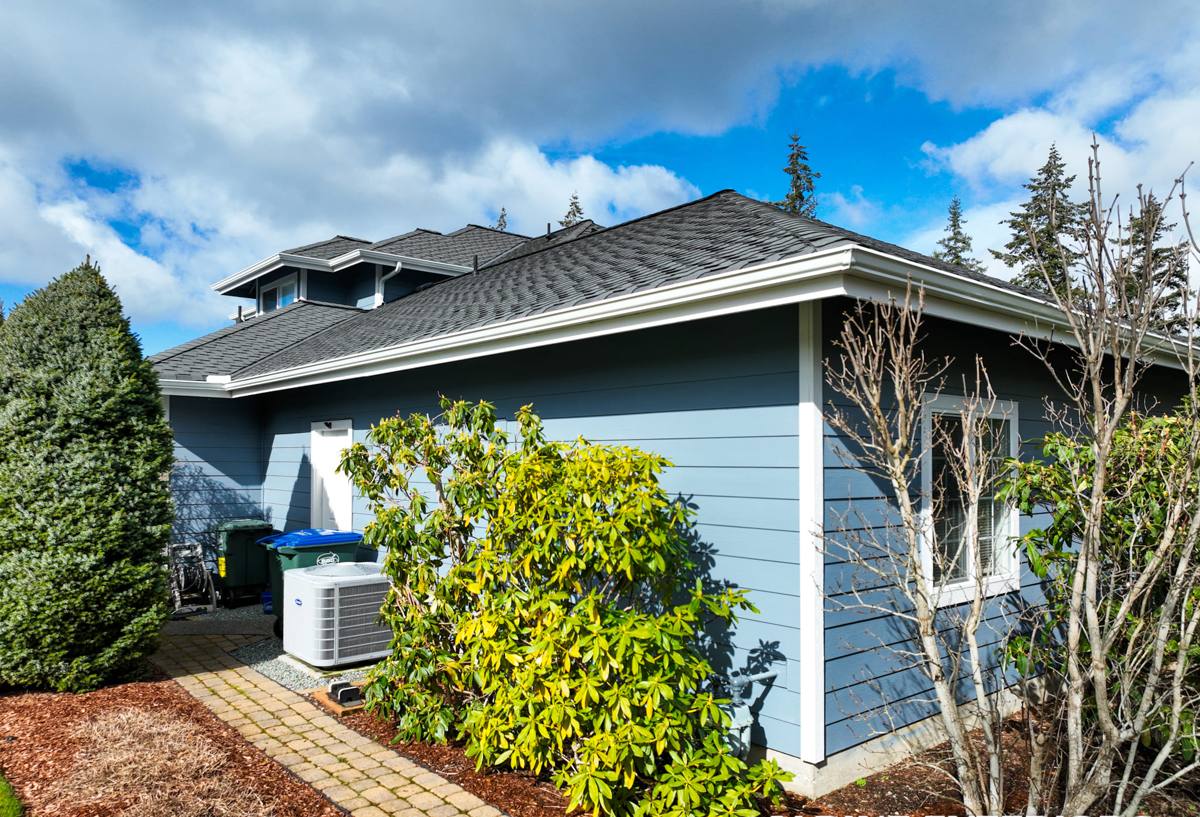
What Whatcom County Storms Do to a South Hill Roof
Bellingham's weather pattern is built around long stretches of steady, driving rain, punctuated by wind events that come off the Strait and pick up speed as they move across open terrain. South Hill's elevation puts roofs here in the path of that wind more directly than roofs tucked into lower, more sheltered parts of town. On top of that, salt-laden air drifting in from Bellingham Bay slowly works on exposed metal fasteners, flashing, and vent components, softening up hardware that would otherwise last for decades.
The result is a specific pattern of damage we see over and over on South Hill roofs after a storm:
- Lifted or torn shingle tabs along ridgelines and roof edges where wind gets underneath
- Flashing pulled loose around chimneys, skylights, and roof-to-wall transitions
- Granule loss from wind-driven rain that accelerates aging on older asphalt roofs
- Fastener corrosion on metal roofing and trim exposed to salt air over time
- Moss intrusion at damaged seams, which holds moisture against the deck long after the storm has passed
That last point is the one homeowners underestimate the most. Whatcom County's moss season runs long — often eight or nine months out of the year when conditions stay damp and mild — and any storm damage that opens even a small gap in the roofing system becomes an entry point moss can exploit almost immediately.
Why Moss Season Makes Storm Damage Worse
A shingle that's simply lifted by wind is a straightforward repair if it's caught quickly. Left alone through a wet Bellingham fall or winter, moss and organic debris settle into that gap, hold water against the roof deck, and turn a five-minute fix into a plywood replacement. This is the single biggest reason storm damage on a South Hill roof shouldn't wait for a "someday" repair call — the climate here actively works against small problems staying small.
What a Correct Storm Damage Repair Actually Involves
Storm damage repair isn't just replacing whatever shingle is obviously missing. A repair that holds up through another Whatcom County winter needs to address the whole assembly, not just the visible symptom.
Full Roof Assessment, Not Just the Damaged Spot
Wind damage rarely stays confined to one area. We check the entire roof plane — not just where the homeowner spotted a problem — because wind uplift often loosens adjacent shingles or fasteners that haven't failed yet but are compromised. We also check attic ventilation and any visible signs of moisture intrusion from inside, since a leak that started at a storm-damaged seam can travel along the deck before it shows up as a stain on a ceiling.
Matching Materials and Proper Flashing Work
Repairs should use materials that match the existing roof in profile and, where possible, color, so the patch doesn't stand out and doesn't create a mismatched wear pattern down the road. Flashing that's been pulled loose or corroded gets replaced, not just re-caulked — caulk is a temporary patch, not a fix, especially in a climate where UV exposure and constant moisture break down sealants faster than in drier regions.
Deck Inspection Where Water Has Been Sitting
Any spot where moss or standing water has been sitting against the roof gets checked down to the decking. Soft, delaminated, or rotted plywood gets cut out and replaced before new roofing goes back down. Skipping this step is the most common shortcut that leads to a repair failing again within a year or two.
Moss and Debris Clearing as Part of the Repair
Because moss growth is such a constant factor here, we clear moss and organic debris from the repair area and surrounding roof sections as part of the job, not as a separate upsell. A repair done on top of existing moss buildup doesn't last.
Our Process for South Hill Storm Repairs
- Initial call and photo review. If you can send photos of visible damage, we can often give you a preliminary read on urgency before we're even on site.
- On-site inspection. We walk the roof (weather permitting) or inspect from a ladder and attic access, documenting damage extent, deck condition, and flashing integrity.
- Written scope and estimate. You get a clear explanation of what's damaged, what needs to be replaced versus repaired, and an honest cost range before any work starts.
- Temporary protection if needed. If a storm has left the roof genuinely exposed, we prioritize tarping or emergency sealing to stop water intrusion while permanent repair materials are sourced.
- Repair execution. Matching materials, correct flashing details, and deck repair where necessary — done as one coordinated job, not a patchwork of shortcuts.
- Final walkthrough. We show you what was done and what to watch for, including any areas of the roof that are aging and worth monitoring going forward.
Repair vs. Replacement: How We Help You Decide
Not every storm-damaged roof needs a full replacement, but not every roof should be patched indefinitely either. The right call depends on the roof's age, how much of it is affected, and how much deck damage is underneath the visible problem.
| Factor | Leans Toward Repair | Leans Toward Replacement |
|---|---|---|
| Roof age | Under 12-15 years | Nearing or past typical service life |
| Extent of damage | Isolated to one section or slope | Spread across multiple areas |
| Deck condition | Solid, no rot found | Soft or delaminated decking in multiple spots |
| Prior repair history | First storm event on this roof | Repeated repairs in the same areas |
| Moss/moisture history | Caught early, minimal intrusion | Long-standing moss buildup with deck staining |
We'll walk you through where your roof falls on this spectrum honestly. A roof that only needs a repair doesn't need a sales pitch for a full replacement — but a roof with widespread deck damage or repeated failures in the same spots is genuinely better served by addressing the whole system at once rather than chasing the same problem every storm season.
What to Do Right After a Storm
If you've just been through a wind or rain event and suspect damage, a few simple steps help protect your home and make the repair process smoother:
- Check for visible signs from the ground — missing shingles, debris in gutters, dented vents or flashing
- Look inside the attic and along ceilings for new water stains or damp spots
- Avoid climbing onto the roof yourself, especially on a wet or moss-covered surface
- Take photos from the ground or an upstairs window if it's safe to do so
- Call for an inspection promptly — in this climate, delay is what turns small damage into a bigger repair
Why Local Experience in South Hill Matters
A crew that already works in South Hill and across Bellingham understands the elevation-driven wind exposure, the salt air's effect on fasteners and metal components, and just how aggressive moss growth gets in a Whatcom County winter. That familiarity means fewer surprises during the inspection, a more accurate first estimate, and repair choices that are built for what this specific area actually experiences — not generic assumptions about what "roof repair" should look like somewhere drier or flatter.
It also means faster response. Knowing the neighborhood, the typical roof types found on South Hill homes, and common access points means less time spent figuring out logistics and more time spent actually assessing and fixing the damage.
Get an Honest Look at Your Roof
If a recent storm has left your South Hill roof with missing shingles, loose flashing, or a leak you can't quite place, it's worth getting a straightforward, no-pressure inspection before moss season has a chance to make things worse. Fill out the form below for a free estimate — we'll tell you plainly what we find and what it would take to fix it right.