 Bellingham Roofing
 Sudden Valley sits back in heavy tree cover along Lake Whatcom, and that setting is exactly why the neighborhood asks more of an asphalt shingle roof than a typical open, sun-exposed lot closer to town. Shade, lake humidity, and the long stretches of driving rain and marine air that move through Whatcom County all year create a roofing environment that rewards a correct installation and exposes a rushed one within a couple of seasons. We've worked on enough roofs in this community to know what actually holds up here versus what looks fine for a year or two before moss, trapped moisture, or wind-driven rain finds the weak spot.
Why Sudden Valley Is Harder on a Shingle Roof
Most of the wear we see on Sudden Valley roofs traces back to three things working together: shade, moisture, and time. None of them is dramatic on its own, but stacked over years they age a roof faster than the calendar suggests.
Shade and a Long Moss Season
Dense tree canopy around the lake means many roofs here never get a full afternoon of direct sun, even in summer. Without that drying window, moisture sits in shingle granules and roof valleys longer after every rain. That's the setup moss needs, and once it takes hold it holds water against the shingle mat, lifts tabs, and works its way under the surface over time. In this neighborhood, moss isn't an occasional nuisance — it's a season that runs longer than it does on more open lots.
Driving Rain and Standing Moisture
Whatcom County gets its share of wind-driven rain, and on a shaded, forested lot that rain doesn't evaporate quickly. Water tends to travel sideways under tabs and around penetrations rather than just running off, which is why underlayment quality and flashing detail matter more here than on a roof that dries out fast between storms.
Marine Air and Fastener Wear
Being close to Bellingham Bay and the broader Puget Sound corridor, the region's air carries a light salt content that speeds corrosion on exposed metal — nail heads, flashing edges, vent caps — faster than it would inland. It's a slow effect, but over the life of a roof it's real, and it's one more reason we spec corrosion-resistant fasteners and flashing as standard rather than an upgrade.
What a Correctly Installed Shingle Roof Needs Here
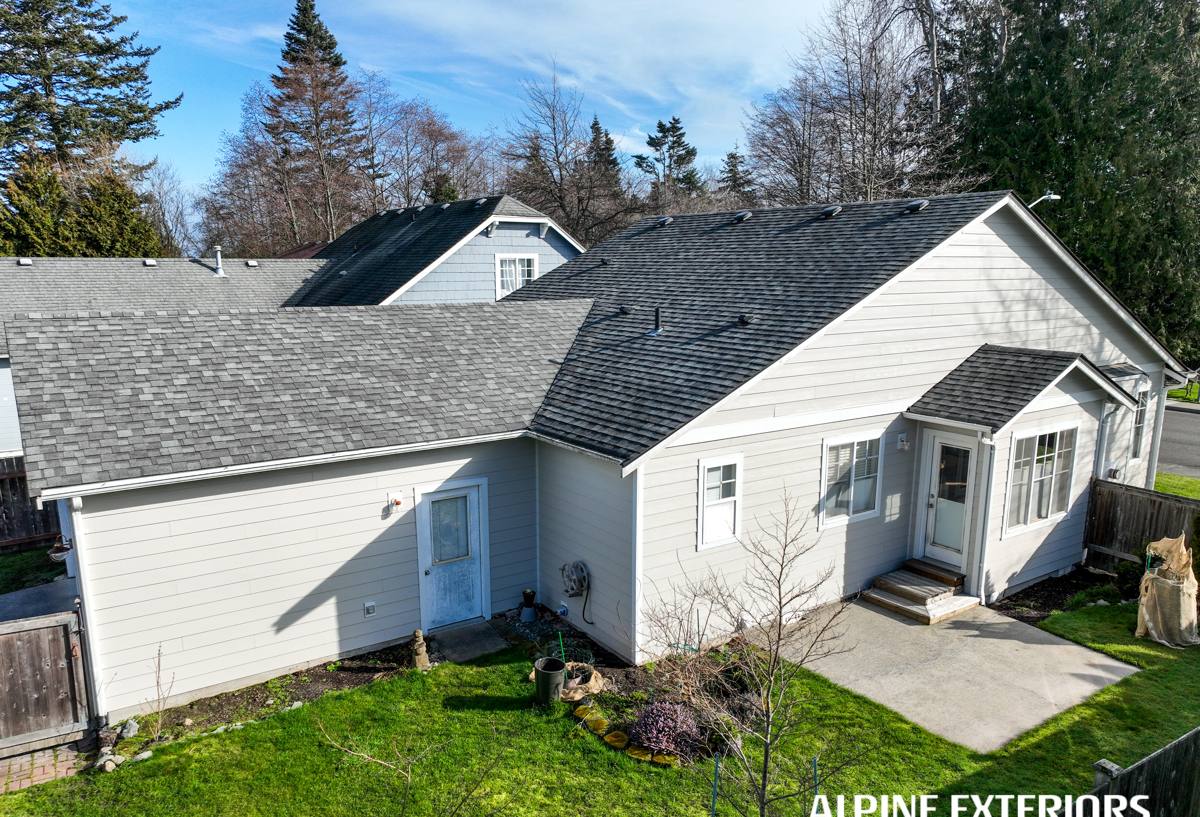
A shingle roof built for Sudden Valley isn't a different product than one built anywhere else — it's the same materials installed with more attention to the details that matter in a shaded, wet environment.
Underlayment That Actually Sheds Water
We treat synthetic underlayment and ice-and-water barrier at eaves, valleys, and low-slope transitions as standard on this terrain, not an add-on. On a roof that stays damp longer between dry spells, the underlayment is doing real work, not just serving as a backup.
Ventilation That Matches the Shade
Balanced intake and exhaust ventilation keeps the underside of the deck dry, which matters even more on a shaded roof where the top side isn't getting help from the sun. Poor ventilation traps warm, moist air against the roof deck year-round and shortens shingle life from underneath, where you can't see it happening.
Flashing, Valleys, and Penetrations
Chimneys, skylights, and valleys are where driving rain finds its way in. We detail these with step flashing, counterflashing, and properly lapped underlayment rather than relying on sealant alone — sealant fails; correctly lapped metal and membrane don't.
Signs Your Sudden Valley Roof Needs a Closer Look
- Moss or dark green-black streaking building up faster than it did a few years ago
- Granules collecting in gutters or at downspout outlets
- Shingle tabs that look curled, lifted, or cupped, especially on the shaded slopes
- Soft or spongy spots when walked on, which usually mean deck moisture underneath
- Daylight or staining visible in the attic near valleys, chimneys, or vent boots
- Interior ceiling stains that appear or spread after a heavy rain event
- Visible gaps or rust at flashing edges around penetrations
Matching the Shingle to the Lot
Not every shingle handles a shaded, moisture-heavy lot the same way. The table below compares the common tiers we work with in terms of how they perform under Sudden Valley conditions specifically, rather than in general terms.
| Shingle Type | Moss/Algae Resistance | Wind Rating | Relative Cost | Best Fit For |
|---|---|---|---|---|
| Standard 3-tab | Basic, no algae-resistant granules | Lower | Lowest | Sunnier, less shaded lots only |
| Architectural (laminate) | Moderate, often with algae-resistant option | Higher | Moderate | Most Sudden Valley homes |
| Algae-resistant architectural | Strong, copper/zinc granule treatment | Higher | Moderate-higher | Heavily shaded, north-facing slopes |
| Impact-rated architectural | Strong (when paired with algae-resistant option) | Highest | Higher | Homes wanting maximum durability and longer intervals between service |
For most Sudden Valley properties, we steer people toward an architectural shingle with algae-resistant granules as the practical baseline, not the upsell — on a lot with this much shade, the moss resistance pays for itself in fewer maintenance visits and a longer-looking roof between them.
Repair, Recover, or Full Tear-Off?
Not every problem calls for a full replacement, but on a shaded roof it's worth being honest about which repairs are buying real time versus which are just delaying a bigger job.
A localized repair makes sense when the damage is isolated — a section of storm-damaged shingles, a failed flashing detail, or a small leak with a clear, contained cause. A recover (installing new shingles over sound existing ones) is rarely something we recommend here, since it traps moisture against a deck that's already fighting a slow-drying environment. A full tear-off and replacement is the right call once moss has been established for multiple seasons, granule loss is widespread, or the deck itself shows signs of moisture damage — at that point, patching individual spots just moves the next leak somewhere else on the same roof.
How We Approach a Sudden Valley Project
- On-site inspection of the roof, attic ventilation, and any interior signs of moisture, with straightforward findings — no upselling a full replacement when a repair will genuinely hold
- A written scope that specifies underlayment type, ventilation approach, flashing details, and shingle product, so there's no ambiguity about what's being installed
- Tear-off and deck inspection, replacing any damaged sheathing before new material goes down
- Installation of ice-and-water barrier at eaves and valleys, synthetic underlayment across the field, and shingles installed to manufacturer nailing and exposure specifications
- Flashing and ventilation work completed to match the shaded, wet conditions of the specific lot, not a one-size-fits-all install
- Final walkthrough covering gutter clearance, attic ventilation, and what to expect from the roof given the tree cover on the property
If your property falls under a homeowners association, we're glad to work from any roofing material or color guidelines your HOA or architectural committee has on file — it's worth checking before ordering material so there's no rework later.
Keeping a Shingle Roof Healthy Under the Trees
A well-installed roof still needs some upkeep in a moss-prone setting. This is the short list we give Sudden Valley homeowners:
- Clear gutters and valleys of needles and debris at least twice a year, more often under heavy conifer cover
- Have moss treated and gently removed before it spreads, rather than waiting until it's visibly thick
- Trim overhanging branches back where practical to let more light and air reach the roof surface
- Check attic ventilation isn't blocked by insulation, especially after any attic work
- Schedule a roof check after major windstorms, since driving rain finds small flashing gaps quickly
Why Local Experience in This Neighborhood Matters
A roofer who mostly works sunnier, open lots will often spec a roof the same way regardless of setting — because on those lots, it usually works out fine. Sudden Valley doesn't give you that margin. The tree cover, the lake humidity, and the driving rain off the water mean the same shingle, installed without the right underlayment, ventilation, and flashing detail, ages differently here than it would across town. Working this neighborhood regularly means we're not guessing at what the shade and moisture will do to a roof over ten or fifteen years — we've already seen it, and we build for it from the first day of the job.
If you're weighing repair against replacement, or just want an honest read on how much life is left in your current shingle roof, we're happy to take a look. Use the form below to request a free, no-pressure estimate for your Sudden Valley home.