 Bellingham Roofing
 Building Decks for Sudden Valley's Lake and Forest Setting
Sudden Valley sits in a heavily wooded pocket along Lake Whatcom, and that setting is exactly what makes deck building here different from a typical Bellingham lot. Tree canopy holds shade and moisture on a deck surface long after the rest of Whatcom County has dried out. Add the marine-influenced climate that blankets this whole corner of Washington — damp air, long stretches of driving rain, and a moss season that can run most of the year — and you get conditions that punish decks built to a generic spec. A deck that looks fine on installation day can be soft, slick, or rotting at the ledger within a few seasons if it wasn't planned for this environment.
We build and repair decks throughout Sudden Valley and the surrounding Lake Whatcom area, and the work we do here looks different from a deck we'd build on an open, sun-exposed lot elsewhere in Bellingham. Below is what actually goes into a deck that holds up under these specific conditions, and how we approach the job from first estimate to final walkthrough.
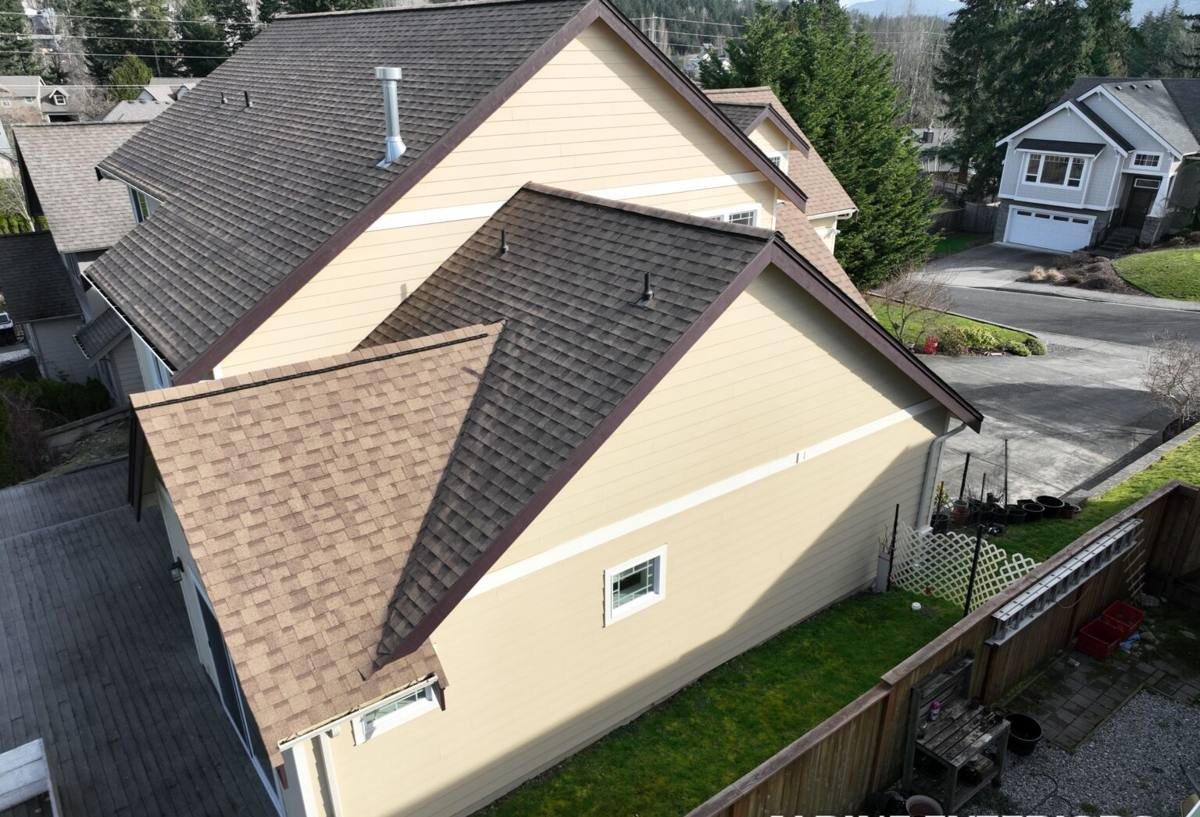
What a Sudden Valley Deck Actually Has to Withstand
Before talking materials or design, it helps to be honest about what's working against a deck in this neighborhood:
- Persistent shade. Mature trees around many Sudden Valley properties mean parts of a deck may never get direct sun, so wood or fasteners that rely on sun exposure to dry out stay damp far longer than average.
- Moss and algae growth. Shade plus moisture plus organic debris (needles, leaf litter, pollen) is a moss breeding ground. Left unmanaged, moss holds water against the deck surface and becomes a slip hazard.
- Extended rain exposure. Whatcom County's wet season runs long, and a deck near the lake often sees rain funnel off rooflines directly onto the same boards, day after day.
- Regional marine air. Like the rest of the greater Bellingham area, this part of Whatcom County sits under a marine-influenced climate, which means fasteners, flashing, and hardware need real corrosion resistance, not just a coated finish.
- Sloped, wooded lots. Many Sudden Valley properties are built into hillsides above the lake, which affects footing depth, drainage planning, and how a deck ties into the house.
None of this means a deck can't hold up beautifully here — it means the material choices, framing details, and fastener spec all have to be picked for this environment specifically, not pulled from a one-size-fits-all package.
Choosing the Right Decking Material
There's no single "best" decking material for every Sudden Valley home — it depends on how much shade the deck sits in, your maintenance appetite, and budget. Here's how the common options actually compare in this climate:
| Material | How it handles shade & moisture | Maintenance | Typical lifespan |
|---|---|---|---|
| Pressure-treated wood | Needs consistent airflow and drying time; performs worse in deep shade | Annual cleaning, periodic staining/sealing | 10–15 years with upkeep |
| Cedar | Naturally rot-resistant but still needs sealing in shaded, wet spots | Regular sealing to prevent graying and moss uptake | 15–20 years with upkeep |
| Composite decking | Handles moisture well; can still grow surface moss/algae in deep shade if not cleaned | Occasional washing, no staining or sealing | 25–30 years |
| PVC decking | Fully moisture-resistant, best option for the shadiest, wettest deck areas | Lowest maintenance of the group | 25–30+ years |
For heavily shaded decks close to the lake or tucked under tree canopy, we usually steer homeowners toward composite or PVC boards, simply because wood in those exact conditions needs a maintenance schedule most people don't want to keep up with. For decks that get more sun exposure through the day, a well-maintained wood deck is still a perfectly good choice and often the better value. We'll walk your specific lot with you and give you a straight answer, not a sales pitch for whatever we happen to have on the truck.
A note on hidden-fastener systems
Composite and PVC boards installed with hidden fastener clips look cleaner and eliminate the screw-head pockets where moss and grit tend to collect on a traditional face-screwed deck. In a moss-prone environment like Sudden Valley, that's a real practical advantage, not just an aesthetic one.
Framing and Structure: What's Underneath Matters Most
The decking boards get all the attention, but the framing underneath is what actually determines whether a deck lasts. In a damp, shaded environment, we pay particular attention to:
Ledger attachment and flashing
Where the deck ties into the house is the single most common failure point on any deck, and it's worse in a high-moisture setting. Proper ledger flashing keeps water from wicking into the house rim joist behind the deck attachment — skipping or shortcutting this detail is how hidden rot starts.
Joist protection
We use joist tape or an equivalent moisture barrier over the tops of the framing to keep standing water from soaking into cut and fastened wood, which is where rot typically begins first.
Footings and post bases
On the sloped, wooded lots common around Sudden Valley, footing depth and post base hardware need to account for both frost and consistently damp soil. Post bases that hold the wood post up off the concrete, rather than embedding it, keep that connection point from sitting in trapped moisture.
Ventilation underneath
Low-clearance or heavily shaded decks benefit from deliberate airflow paths underneath the structure. Without it, the underside of the deck stays damp constantly, which accelerates both wood decay and moss growth on the surface above.
Railings, Fasteners, and Hardware
Hardware is an easy place for a deck to fail early, and it's often invisible until something gives way. In this climate we spec:
- Stainless steel or heavily coated structural fasteners rated for exterior, high-moisture use
- Corrosion-resistant connectors at every structural joint, not just the visible ones
- Railing systems matched to the decking material so metal and composite components don't react against each other over time
- Cap flashing on any horizontal wood surfaces exposed to direct rain runoff
Cutting corners on fasteners is one of the most common shortcuts we see on decks we're asked to repair. It doesn't show up as a problem for a year or two — then it shows up all at once.
Our Process, Start to Finish
- On-site walkthrough. We look at sun exposure, tree cover, drainage, slope, and how the deck will tie into your home before we talk materials.
- Honest material recommendation. Based on that walkthrough, we'll tell you what actually makes sense for your specific spot — including where a lower-maintenance material is worth the extra upfront cost, and where it isn't.
- Design and permitting. We handle the layout, structural planning, and any required permitting so the project is built to code from the ground up.
- Framing built for this climate. Ledger flashing, joist protection, corrosion-resistant fasteners, and proper footings, every time, not as an upsell.
- Decking, railing, and finish work. Installed to the manufacturer's spec so warranties stay intact.
- Final walkthrough. We go over care and maintenance specific to your deck's sun and shade pattern before we call the job done.
Keeping a Sudden Valley Deck Moss-Free Year After Year
Good construction gets you most of the way there, but a little seasonal upkeep goes a long way in this environment, regardless of which material you choose:
- Sweep off needles, leaves, and organic debris regularly, especially in fall and after windstorms
- Rinse the deck surface periodically through the wet months to keep moss spores from taking hold
- Keep gutters and downspouts clear so roof runoff isn't dumping directly onto the deck surface
- Trim back overhanging branches where possible to let more light and air reach the deck
- For wood decks, stick to a sealing schedule rather than waiting until boards look weathered
- Check railing posts and stair stringers annually for soft spots or hardware corrosion
Why Hire a Crew That Already Works in Sudden Valley
A deck built to a generic statewide spec can still fail early in a spot like this, because the climate here is more demanding than the Puget Sound average in some very specific ways: more shade, more standing moisture, longer moss season. A contractor who builds mostly in open, sun-exposed neighborhoods may not think twice about ledger flashing depth or joist ventilation, because their decks dry out fast enough that shortcuts don't show for years. Around Lake Whatcom, they show much sooner.
We know this neighborhood's terrain, tree cover, and access considerations, and we build decks here with those specifics in mind from the first site visit, not as an afterthought once a problem shows up.
Ready to Talk About Your Deck?
If you're planning a new deck, replacing an aging one, or dealing with a deck that's already showing moss, soft spots, or rot around the ledger, we're happy to come take a look. Fill out the form below for a free, no-pressure estimate, and we'll give you a straightforward assessment of what your specific lot and home actually need.