 Bellingham Roofing
 Why Sunnyland Decks Wear Out Faster Than You'd Expect
Sunnyland is one of the older, established neighborhoods in Bellingham, and a lot of the decks here were built well before anyone was thinking about how Pacific Northwest weather actually treats exposed wood and hardware over twenty or thirty years. Bellingham's marine climate is easy on people and hard on decks. Salt-tinged air drifting in off the bay accelerates corrosion on nails, screws, and joist hangers. Driving rain that comes in sideways during fall and winter storms gets up under railings and behind ledger boards, not just on top of the decking. And Whatcom County's long, damp moss season means organic growth has months at a time to take hold on shaded or north-facing deck surfaces.
None of that means a Sunnyland deck is doomed — it means a deck here needs to be built and repaired with those specific stresses in mind, not treated the same way you'd treat a deck in a dry inland climate. That's the difference between a repair that lasts five years and one that lasts fifteen.
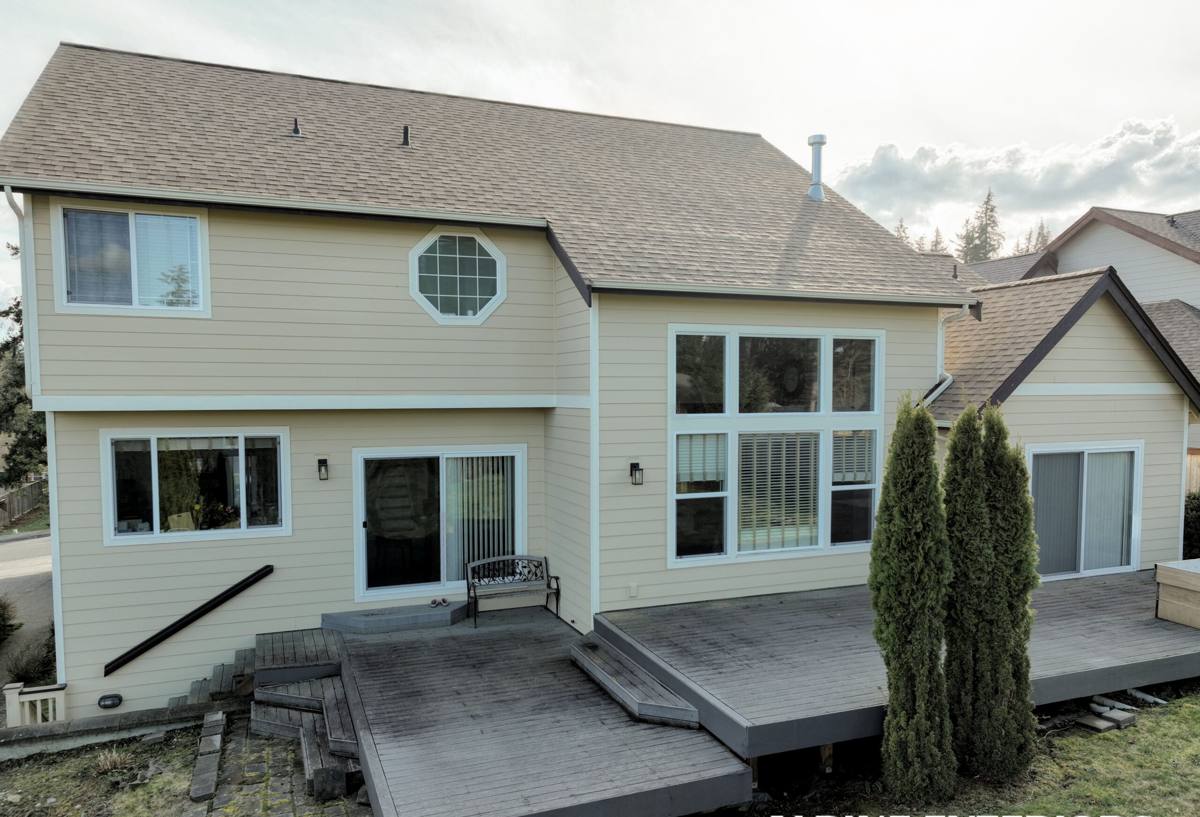
Signs Your Deck Needs Repair, Not Replacement
Most decks don't fail all at once. They give you warning signs for months or years before a board gives way or a railing wobbles loose. Catching these early is what keeps a repair a repair, instead of turning it into a full rebuild.
- Boards that feel spongy, springy, or soft when you walk on them, especially near the house or along the edges
- Dark staining or a sour, damp smell coming from under the deck or around post bases
- Railings or stair rails that flex or wiggle when you put weight on them
- Visible rust streaking below screw heads or metal connectors
- Green or black film building up on shaded boards that doesn't fully dry out between rains
- Gaps opening up where the deck meets the house, or where flashing is supposed to be sealed
- Fasteners backing out or popping above the surface of the board
If you're seeing one or two of these, you're probably still in repair territory. If you're seeing several at once, or the framing underneath is affected, that's worth a closer inspection before you decide which direction to go.
What a Correct Deck Repair Actually Involves
A repair that only addresses what's visible on the surface tends to come back. A repair done right looks at the whole system — framing, surface, railings, and hardware — because those parts all depend on each other to keep water moving off the deck instead of into it.
Structural Framing
Joists, beams, and the ledger board where the deck attaches to the house are the parts you don't see, and they're the parts that matter most. Rot at the ledger connection is one of the more serious issues we find on older Bellingham decks, because it's usually hidden until a board is pulled or a probe test is done. Any repair that touches structural members needs to match or exceed the original framing's load capacity, not just patch around the soft spot.
Decking Surface
Individual board replacement only works if the new boards are properly spaced, fastened, and — if it's wood — sealed on the cut ends before installation. Skipping the end sealing is a common shortcut that lets water wick straight into a brand-new board within a season.
Railings and Guards
Railing repairs get overlooked because they're rarely the reason someone calls, but a loose or rotted railing post is a safety issue, not a cosmetic one. Post connections need solid blocking behind them, not just fasteners driven into a rim joist that's already been softened by years of moisture.
Fasteners and Hardware
This is where a lot of repairs quietly fail in a marine climate. Using standard fasteners on a deck exposed to salt air is asking for the same corrosion problem to show up again in a few years.
Common Problems We Fix on Sunnyland Decks
The repair calls we handle in this neighborhood tend to fall into a handful of recurring categories, almost all tied back to the same climate factors.
Ledger Board and Rim Joist Rot
Where the deck meets the house is the single most water-exposed connection on the whole structure. Without proper flashing, water runs down the siding and straight into the framing, and by the time it shows on the surface, the damage underneath is usually further along than expected.
Moss and Algae Buildup
Shaded sections of a deck, or ones that don't get much afternoon sun, hold moisture longer through Whatcom County's wet months. Beyond being slippery and unsightly, sustained moss growth traps water against the wood and speeds up decay.
Fastener and Hardware Corrosion
Salt air moving in from the water accelerates rust on standard steel screws, nails, and joist hangers. Once a fastener starts to corrode, it loses holding strength well before it looks obviously bad.
Drainage and Standing Water
Decks with inadequate board spacing or a slope that traps water instead of shedding it end up with sections that simply never fully dry out, which shortens the life of everything below them.
Repair or Replace? What to Actually Weigh
This is the question almost every homeowner asks once we're on site, and the honest answer depends on where the damage is and how much of the structure it's affecting. Here's how we think through it.
| Factor | Repair usually makes sense | Replacement usually makes sense |
|---|---|---|
| Framing condition | Joists and ledger are sound; damage is isolated | Rot has spread through multiple structural members |
| Age of deck | Under 15-20 years, built to a reasonable standard | Original construction was undersized or poorly flashed |
| Extent of damage | A few boards, a section of railing, or isolated hardware | Damage is spread across most of the deck surface |
| Code compliance | Current railing height, spacing, and attachment meet code | Structure predates current guardrail and connection standards |
| Budget goals | Extending usable life for a defined number of years | Long-term investment with a design or material upgrade |
There's no universal right answer here — it comes down to what's actually happening under the surface, which is why a proper inspection matters more than a guess from the driveway.
Our Deck Repair Process
We keep this straightforward because homeowners deserve to know what's happening to their home and why.
1. On-Site Inspection
We walk the full deck, probe suspect boards and posts for soft spots, and check the ledger connection and any areas with visible staining or moss. We're honest if something looks like it's beyond repair — that call gets made based on what we find, not what's easiest to sell.
2. Clear Scope and Estimate
You get a written explanation of what needs to happen and why, broken into what's structural versus what's cosmetic, so you can make an informed decision about scope.
3. The Repair Itself
We remove and replace only what's compromised, match materials appropriately, and use fasteners and flashing suited to this climate rather than whatever's cheapest at the counter.
4. Final Walkthrough
Before we consider the job done, we walk it with you, check that railings are solid, boards are secure, and drainage is working the way it should.
Materials and Hardware We Use, and Why
Material choice on a repair isn't just about matching what's there — it's about not reintroducing the same failure a few years down the road.
Fasteners
Coated or stainless-grade fasteners rated for exterior and coastal exposure hold up far better against salt air than standard-grade hardware. It costs more up front and saves a callback later.
Wood vs. Composite for Replacement Boards
Pressure-treated lumber is a reasonable, lower-cost option for board replacement and blends with existing wood decking, but it does require ongoing sealing and cleaning to perform well in this climate. Composite decking costs more initially and doesn't match older wood decks visually, but it resists moss growth and moisture absorption better, which matters in a neighborhood with a long wet season. We'll walk you through the honest trade-offs for your specific deck rather than pushing one option across the board.
Flashing
Proper metal flashing at the ledger connection is one of the cheapest parts of a repair and one of the most important. It's also one of the most commonly skipped items on older or budget builds, which is why we see so much ledger rot on decks that are otherwise in decent shape.
Maintenance Checklist for Sunnyland Homeowners
A little seasonal attention goes a long way toward avoiding a bigger repair bill down the line.
- Sweep debris and standing leaves off the deck surface before the fall rains set in
- Clean moss and algae off shaded boards at least once a year, before it builds up thick
- Check railing posts by hand for any give or wobble each spring
- Look under the deck once a year for staining, soft framing, or signs of pooled water
- Reseal or restain wood decking on the manufacturer's recommended schedule, not just when it looks faded
- Watch for fastener heads that have started to rust or back out of the board
- Keep gutters and downspouts near the deck clear so runoff isn't dumping directly onto or under it
Why It Matters to Hire a Crew That Already Works in Sunnyland
Deck repair looks straightforward from the outside, but doing it right in Bellingham means understanding how this specific climate — the salt air, the driving rain, the moss season that runs longer than most parts of the country ever deal with — actually behaves against wood and fasteners over time. A crew that works this neighborhood regularly knows which connections tend to fail first on Sunnyland's older housing stock, what flashing details get skipped in typical builds around here, and which materials are worth the extra cost given how long our wet season actually runs. That local pattern recognition is the difference between a repair that addresses the real problem and one that just covers it up for a season.
If you've got a deck in Sunnyland that's showing some of the wear we've described here, we're happy to take a look and give you a straight, no-pressure assessment of what it actually needs. Use the form below to request a free estimate.