 Bellingham Roofing
 Roof Repair Built for Sunnyland's Conditions
Sunnyland sits close enough to Bellingham Bay that salt-laden air is part of daily life for the roofs here, and that's on top of everything else a Pacific Northwest roof already has to deal with. Between the salt exposure, wind-driven rain off the bay, and a moss season that can run eight or nine months out of the year in Whatcom County, roofs in this neighborhood age differently than roofs even a few miles inland. A repair that would hold up fine in a drier climate can fail here in a season or two if it doesn't account for that.
This page is about roof repair specifically — not full replacement — for homes in and around Sunnyland. We'll walk through what actually causes damage in this area, what a correct repair looks like, and how to tell when a repair is still the right call versus when you're better off planning for something bigger.
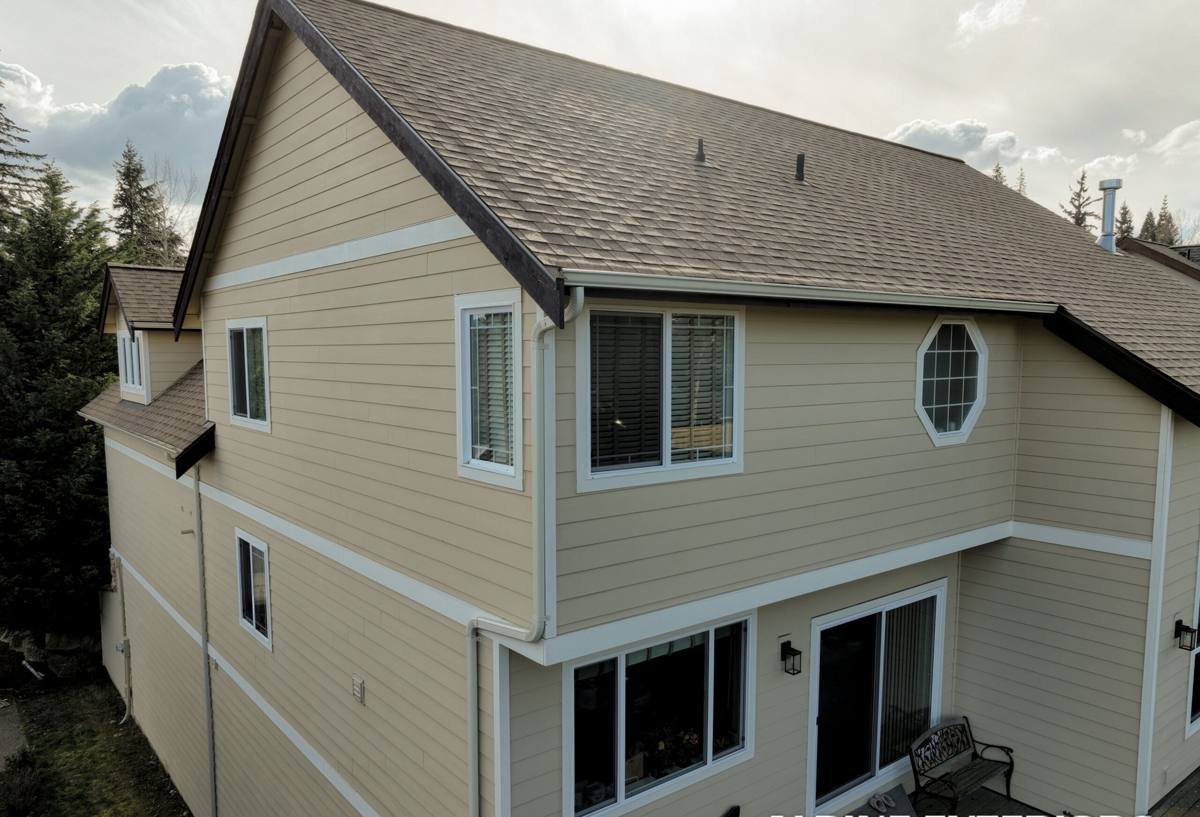
What Sunnyland's Climate Actually Does to a Roof
Salt Air and Metal Fatigue
Salt air accelerates corrosion on any exposed metal — flashing, fasteners, vent caps, gutter hardware. It's slow and easy to ignore because it doesn't look dramatic at first, just a little surface rust. But once fasteners or flashing start to corrode, they lose their grip and their seal, and that's exactly where leaks start. Homes closer to the water tend to see this show up earlier than homes further inland, even within the same neighborhood.
Driving Rain and Wind-Driven Leaks
Bellingham doesn't just get a lot of rain — it gets a lot of rain pushed sideways by wind coming off the water. That matters for repair work because a patch or seal that would be fine under straight-down rain can still leak under wind-driven rain if it wasn't installed with that in mind. This is one of the most common reasons we get called to fix a "repair" that someone else did — it wasn't wrong, exactly, it just wasn't built for how rain actually hits a roof here.
Moss and Trapped Moisture
Whatcom County's long wet season gives moss plenty of time to establish itself, especially on north-facing slopes and shaded sections under tree cover, which is common in older Sunnyland yards. Moss isn't just cosmetic — it holds moisture against the roofing material, works its way under shingle edges as it grows, and can lift tabs enough to let water in underneath. By the time moss is visible from the ground, it's often already affecting the surface underneath it.
What a Correct Roof Repair Actually Involves
A roof repair that's done right isn't just sealing the spot where water is showing up inside the house. Water travels — it can enter the roof system several feet from where it actually drips into the ceiling. A proper repair starts with tracing the leak back to its real source, not just treating the symptom.
Depending on what we find, a legitimate repair typically includes some combination of:
- Removing and replacing damaged or missing shingles, not just caulking over them
- Re-flashing around chimneys, vents, and valleys where the original flashing has corroded or pulled loose
- Clearing moss and treating the underlying surface, not just pressure-washing the top layer
- Checking and repairing underlayment where shingles have been lifted long enough for water to reach it
- Resealing penetrations — pipe boots, vent collars — which are common failure points as they age
- Confirming the surrounding shingles and flashing are sound enough that the repair won't be undone by the next section failing
That last point matters. Sometimes what looks like a small repair turns into "we should also address this adjacent section" — not to upsell, but because patching one spot next to a section that's clearly failing just means a callback in a year.
Our Repair Process
1. Assessment
We start with a full look at the roof, not just the spot you called about. Given how often leaks originate away from where they show up indoors, this step is what separates a real fix from a temporary patch.
2. Honest Explanation
We tell you what we found, what's causing it, and what it will take to fix — including if a repair genuinely isn't the right move anymore. We'd rather tell you that up front than sell you a repair we know won't hold.
3. The Repair Itself
We match materials to what's already on the roof where possible, use flashing and fasteners suited to this climate, and install with wind-driven rain in mind — not just straight-down exposure.
4. Cleanup and Walkthrough
We clear debris, including any moss or organic material removed during the job, and walk you through what was done and what to keep an eye on going forward.
Repair or Replace? How to Think It Through
Not every roof problem needs a full replacement, and not every leak can be permanently solved with a patch. Here's a general guide to how we help homeowners think about it:
| Factor | Repair Usually Makes Sense | Replacement Worth Considering |
|---|---|---|
| Roof age | Roof is under roughly two-thirds of its expected lifespan | Roof is near or past its expected lifespan for the material |
| Extent of damage | Isolated to one section, flashing point, or penetration | Multiple sections showing wear, or damage recurring in new spots |
| Moss/moisture history | First occurrence, addressed early | Long-standing moss growth with visible underlayment or deck damage |
| Underlying deck condition | Solid, no soft spots or rot found | Soft decking, rot, or repeated water staining in the attic |
| Cost relative to replacement | Repair cost is a small fraction of a full replacement | Repair costs are starting to approach a meaningful share of replacement |
We'll give you our honest read on where your roof falls on this table rather than defaulting to whichever job is bigger.
Materials Common on Sunnyland Roofs
Most homes in this part of Bellingham are roofed in asphalt shingle, with some older homes carrying cedar shake or newer builds using metal. Each has different repair considerations:
Asphalt Shingle
The most common and generally the most straightforward to repair, provided we can source a reasonably close match — shingle color and profile availability changes over time, so an exact match isn't always possible on an older roof.
Cedar Shake
Repairs need individual shakes replaced rather than patched, and in a climate this wet, we pay close attention to ventilation and moisture behavior underneath, since trapped moisture is the main way shake roofs run into trouble.
Metal
Generally durable against moss and driving rain, but repairs center on fastener condition and seam integrity — the salt air factor we mentioned earlier applies directly to exposed metal fasteners and trim.
Signs You Likely Need a Roof Repair
Most roof leaks don't announce themselves clearly. A few things worth checking, especially after a stretch of wind and heavy rain:
- Water stains or discoloration on ceilings or upper interior walls
- Visible moss buildup, especially on shaded or north-facing slopes
- Shingles that look cupped, curled, or are missing granules
- Flashing around chimneys or vents that looks rusted, lifted, or gapped
- Sagging or soft-feeling spots when walking near the roofline (viewed from the ground or attic)
- Daylight visible through the roof deck from inside the attic
- Granules collecting in gutters or at the base of downspouts
Catching any of these early is almost always the difference between a modest repair and a much larger job.
Why It Matters That We Already Work in Sunnyland
A crew that regularly works this neighborhood already knows which slopes tend to hold moss longest, how the local wind pattern off the bay drives rain into certain roof angles, and which older homes in the area are more likely to have flashing that's due for attention because of salt exposure. That local pattern recognition means less time spent diagnosing and more time spent actually fixing the problem correctly the first time.
It also means we're not guessing at what "normal" looks like for a Bellingham roof versus a roof somewhere drier — the repair standards we use are built around what actually holds up under Whatcom County conditions, year after year.
Simple Maintenance That Extends a Repair's Lifespan
A good repair lasts longer when it's supported by basic upkeep. Clearing debris and moss from valleys and gutters at least once or twice a year, trimming back overhanging branches that keep sections of roof shaded and damp, and having the roof looked at after any major windstorm all go a long way in this climate. None of it is complicated, but it's easy to let slide until a leak forces the issue.
If you're dealing with a leak, spotting moss creeping across your roofline, or just want an honest opinion on whether a section needs attention, we're happy to take a look. Reach out for a free, no-pressure estimate using the form below.