 Bellingham Roofing
 Why Sunnyland Homes Take a Beating From the Climate
Sunnyland is one of Bellingham's older, established residential neighborhoods, and its housing stock reflects it — a mix of mid-century and newer homes that have all spent years absorbing the same weather. That weather is not gentle. Whatcom County sits close enough to salt water that airborne salt reaches inland neighborhoods, rainfall here is frequent and often wind-driven rather than straight-down, and the shaded, damp conditions common on Sunnyland's tree-lined streets keep moss and algae active for most of the year. None of that is unusual for the Pacific Northwest, but it adds up faster than most homeowners expect, and it is exactly the combination that separates siding that lasts thirty years from siding that starts failing at ten.
Salt Air and Marine Exposure
Even neighborhoods that aren't waterfront pick up salt-laden air moving in off the Salish Sea, and that salt does two things to a house: it accelerates corrosion on fasteners, flashing, and trim, and it works its way into any siding material with an open or porous surface. Over time, salt exposure shows up as pitting on metal components, chalking or fading on painted surfaces, and faster breakdown of caulked joints. A siding system's outer finish and its fastening hardware both need to be chosen with this in mind, not treated as an afterthought.
Driving Rain and Wind-Driven Moisture
Bellingham doesn't just get rain — it gets rain pushed sideways by wind off the water, which means siding has to shed moisture that's hitting it at an angle, not just falling straight down. That puts real weight on details most homeowners never think about: how laps overlap, how corners and window flashing are integrated, and whether the weather-resistive barrier behind the siding is actually doing its job. Wind-driven rain finds every shortcut in an installation, and it usually finds it years later, after the damage is already inside the wall.
A Long Moss Season
Many Sunnyland streets carry mature tree canopy, and shade plus year-round moisture is exactly what moss and algae need to take hold. On siding, that growth isn't just cosmetic — it holds moisture against the surface, which is a problem for any material that isn't dimensionally stable or that can absorb water at the panel edges. A siding replacement in this neighborhood has to account for a moss season that, realistically, runs most of the year.
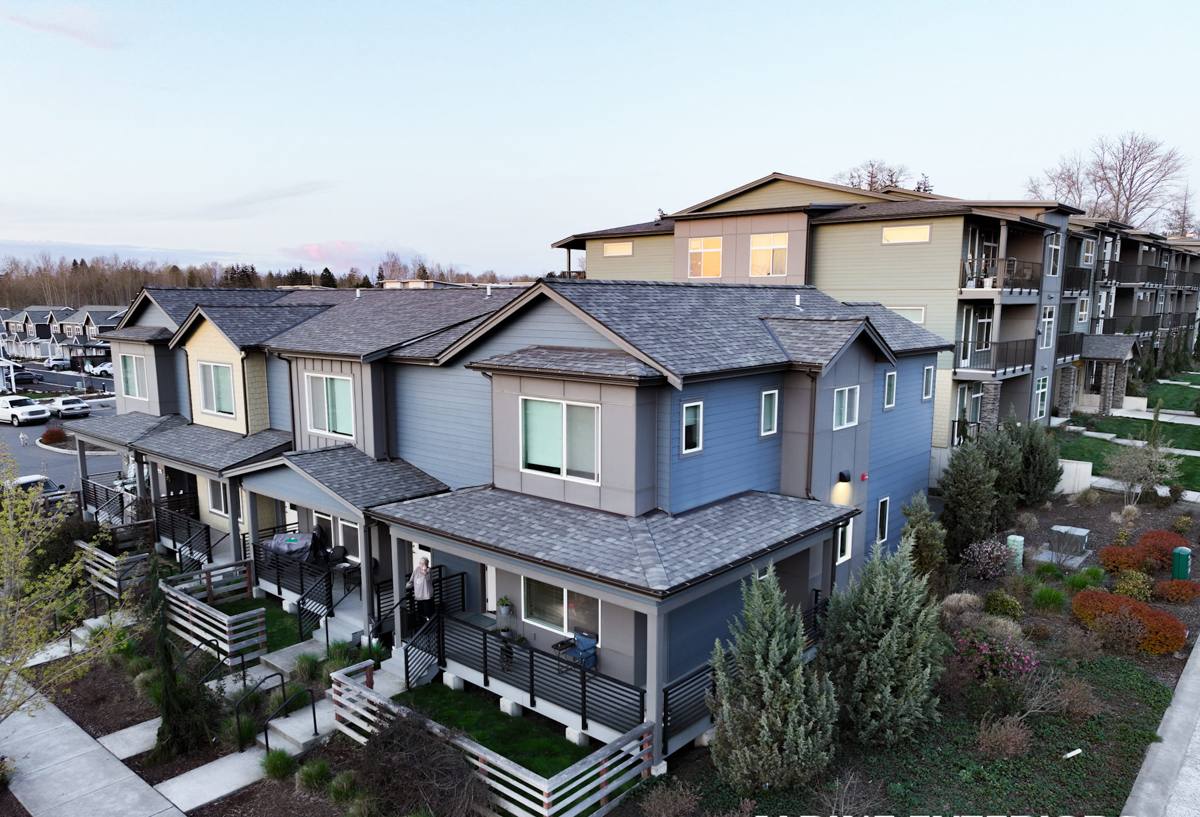
Signs Your Sunnyland Home Needs Replacement, Not Just Repair
Not every siding problem calls for a full tear-off. But there's a point where patching individual boards stops making financial sense and starts masking a bigger issue underneath. Here's what tells us a home has crossed that line:
- Soft or spongy spots when you press on the siding, especially near the bottom courses or below windows
- Persistent moss or algae staining that comes back within a season of cleaning
- Paint that won't hold — bubbling, peeling, or needing repainting every few years
- Visible cupping, warping, or delamination on individual boards or panels
- Gaps opening up at seams, corners, or trim that weren't there originally
- Interior signs — musty smells, staining on interior walls, or unexplained humidity near exterior walls
- Siding that's original to a home 25-plus years old and has never been fully replaced
Any one of these on its own might be a repair. Several together, especially with soft sheathing, usually means the assembly behind the siding has been absorbing moisture for a while and a full replacement is the honest recommendation.
What a Correct Siding Replacement Job Involves
Siding replacement is not just swapping old boards for new ones. The siding itself is the last line of defense — the work that actually keeps a house dry happens in the layers behind it, and that's where jobs succeed or fail.
Tear-Off and What's Underneath
Once the old siding comes off, the sheathing underneath tells the real story. This is the point where rot, soft spots, or prior water damage get found and dealt with — patched, replaced, or in some cases requiring more extensive framing repair before any new siding goes up. Skipping a real inspection here, or covering over problems instead of fixing them, is the single biggest reason siding jobs fail early.
Weather-Resistive Barrier and Flashing
Behind every good siding job is a continuous weather-resistive barrier, properly lapped shingle-style so water always drains outward and down, never inward. Window and door flashing has to integrate with that barrier correctly, not just get caulked over. Given how much wind-driven rain this area sees, this layer matters as much as the siding itself — arguably more, since it's the layer that actually stops water from reaching the framing.
Fastening, Clearances, and Caulking
Fastener type, spacing, and depth all affect how siding performs over decades, not just years. Correct clearance from grade, roof lines, and decks keeps splash-back and standing moisture away from the bottom of the siding — a common failure point we see on older homes. And caulking should be used sparingly and correctly, at true joints, not as a substitute for proper flashing.
Why We Install Only James Hardie Fiber Cement
We install one siding system: James Hardie fiber cement. That's a deliberate standard, not a lack of options. Vinyl siding is affordable and low-maintenance, but it's a thin material that can warp in heat, crack in cold, and it isn't fire-resistant — trade-offs we're not willing to put our name behind in this climate. LP SmartSide and primed wood products like cedar or spruce can look good and perform well when maintained aggressively, but they're wood-based, which means ongoing paint and caulk maintenance is not optional — it's the difference between the product lasting and rotting, and in a neighborhood with this much moisture and shade, that maintenance burden is real and expensive over time.
James Hardie fiber cement is dimensionally stable, non-combustible, and doesn't feed moss or rot the way wood-based products can. Its ColorPlus factory finish is baked on under controlled conditions rather than field-painted, which means better color retention and fewer repaint cycles. Hardie's HZ5 product line is engineered specifically for climates like ours — freeze-thaw cycles, sustained moisture, and coastal exposure — and it comes with a strong, transferable manufacturer warranty when installed to Hardie's specifications. That combination is why we standardized on it: it's the product that holds up to what Whatcom County weather actually does to a house, not just what a spec sheet says it should handle.
How Hardie Compares for Sunnyland's Climate
Every siding material has strengths. Here's how the main options homeowners consider actually perform against the specific conditions Sunnyland deals with — salt air, wind-driven rain, and near-constant moss pressure.
| Material | Moisture & Rot Resistance | Maintenance Burden | Fire Resistance | Typical Lifespan Installed to Spec |
|---|---|---|---|---|
| James Hardie Fiber Cement | High — dimensionally stable, doesn't rot | Low — factory finish, occasional wash | Non-combustible | 30+ years |
| Vinyl | Moderate — doesn't rot but can warp/crack | Low, but limited repair options | Combustible, can melt/deform | 15-25 years |
| LP SmartSide | Moderate — engineered wood, needs sealed edges | Moderate — paint/caulk maintenance ongoing | Combustible | 20-30 years with upkeep |
| Cedar / Primed Spruce | Low to moderate — absorbs moisture, feeds moss | High — regular refinishing required | Combustible | 15-25 years with heavy upkeep |
This is why, for a neighborhood dealing with the specific combination of salt exposure and a long wet season, we don't hedge our recommendation — Hardie is the product we stand behind, and it's the only one we install.
Our Siding Replacement Process, Start to Finish
Every home is different, but the sequence we follow doesn't change:
- On-site assessment of your current siding, sheathing condition where accessible, and any moisture or moss issues specific to your property
- A written estimate that walks through material, scope, and what we expect to find once tear-off starts
- Careful removal of the old siding and a real inspection of the sheathing underneath before anything new goes up
- Repair of any damaged sheathing or framing found during tear-off, discussed with you before we proceed
- Installation of a continuous, properly lapped weather-resistive barrier and correctly integrated window and door flashing
- James Hardie fiber cement installation to manufacturer specifications — fastening, clearances, and joint treatment done correctly the first time
- Final walkthrough so you know exactly what was done and what to expect from the finished product
What to Ask Before Hiring a Siding Contractor in Sunnyland
Siding is a big investment and a bad install can cost you more in repairs than it saved upfront. Before hiring anyone, it's worth asking:
- Are you a certified James Hardie installer, and can you explain how that affects the warranty?
- Will you inspect and photograph the sheathing before covering it back up?
- What weather-resistive barrier and flashing details do you use, specifically?
- Do you carry current licensing and insurance for exterior work in Washington?
- Can you walk me through how you'll handle any rot or damage found during tear-off, before it happens?
- Do you have experience working on homes in this specific neighborhood or similar older housing stock?
A contractor who answers these clearly and specifically, without vague reassurances, is one worth trusting with the job.
Why Local Sunnyland and Bellingham Experience Matters
A siding job designed for a dry inland climate is not the same job as one designed for Whatcom County. Crews who work this area regularly know which details actually matter here — how far siding needs to clear grade given our rainfall, how flashing needs to handle wind-driven moisture rather than just vertical rain, and how much of a difference proper ventilation and clearance make in a neighborhood with heavy tree cover and extended damp shade. That local knowledge doesn't show up on a spec sheet, but it shows up in how the siding performs ten and twenty years down the road. It's also why we can talk through your specific property's exposure and moss history in a real conversation, not a generic pitch.
If your Sunnyland home's siding is showing its age, or you just want an honest read on repair versus replacement, we're glad to take a look. There's no pressure and no obligation — just a straightforward estimate from a crew that installs one product, does it correctly, and stands behind the work. Fill out the form below to get started.