 Bellingham Roofing
 Why Windows in Lynden Take a Beating
Lynden sits inland from Bellingham Bay in the Nooksack lowlands, but it doesn't escape what the rest of Whatcom County deals with. Marine air pushes in off the Puget Sound and Georgia Strait, driving rain comes in sideways more often than most people expect, and the wet, mild winters mean moss and algae get a long season to establish themselves on anything that holds moisture. Windows are one of the first places that shows up. Wood sills go soft, vinyl frames chalk and discolor, and old caulk lines crack and let water track behind the trim long before anyone notices a problem inside.
Open farmland and fewer windbreaks around parts of Lynden also mean more direct wind-driven rain hits window assemblies than in a tightly built-up neighborhood. A window that was installed correctly handles that fine for decades. A window that was installed with shortcuts — caulk instead of proper flashing, gaps behind the trim, no back-dam at the sill — starts failing quietly, often behind the wall, well before you see stains or feel a draft.
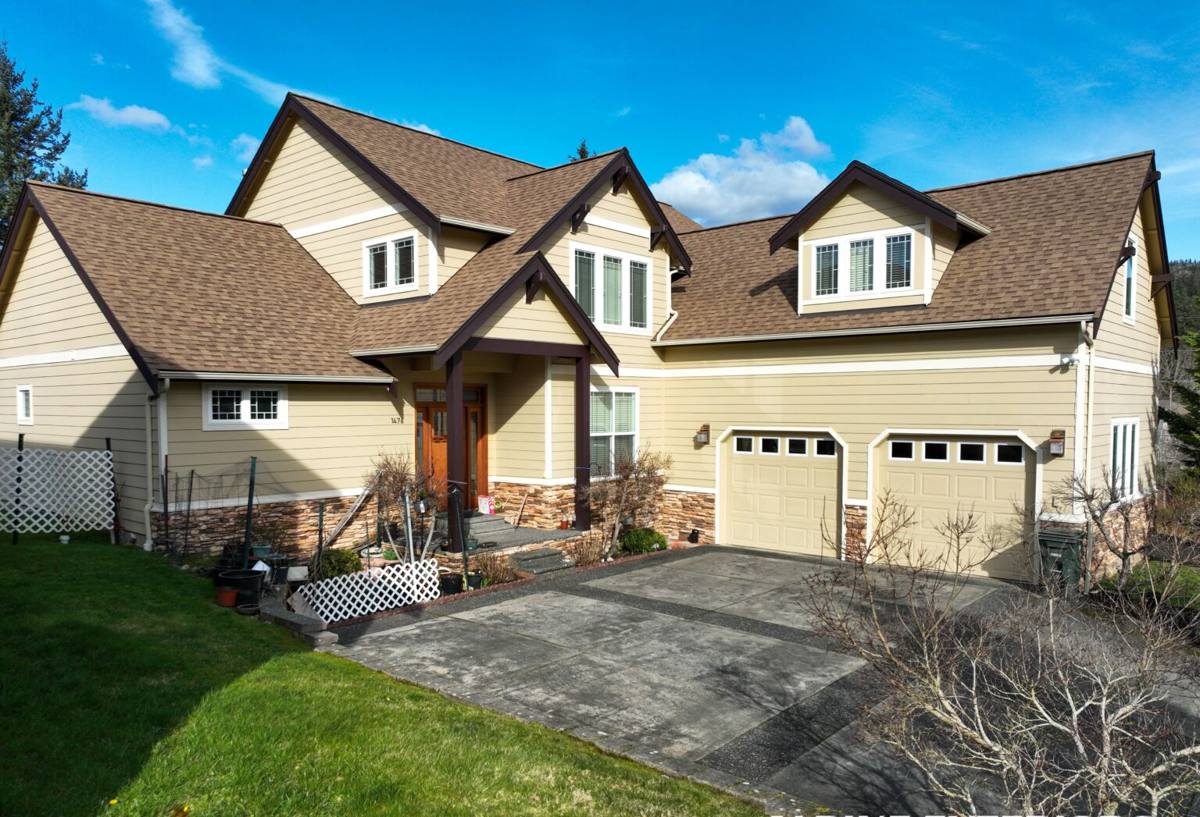
Signs Your Windows Are Losing the Fight
Most window failures in this climate are slow. By the time you notice condensation between panes or a soft spot in the sill, water has usually been getting in for a while. Here's what we look for, and what you should too:
- Fog or moisture trapped between the panes of a double-pane window — the seal has failed
- Soft, spongy, or discolored wood at the sill or the trim below the window
- Paint or caulk that's cracked, peeling, or pulling away from the frame
- A window that's hard to open, close, or lock — frames shift as wood swells and dries
- Visible moss or dark streaking on the exterior trim or siding just below the window
- Noticeable drafts, or a room that's harder to keep at temperature than the rest of the house
- Rising heating bills without an obvious cause elsewhere in the home
Any one of these on its own isn't an emergency. Several together, especially on the same window, usually means it's time to stop patching and replace it properly.
What a Correct Installation Actually Involves
Flashing and Water Management
This is the part that matters most and shows the least once the trim is back on. A correct install builds a drainage path so any water that gets past the exterior cladding has somewhere to go besides into your wall. That means a sloped sill pan or back-dam at the bottom of the opening, flashing tape lapped correctly with the house wrap (upper pieces overlapping lower ones, never the reverse), and proper integration with whatever siding surrounds the window. Caulk is a backup, not the primary defense — if caulk is the only thing keeping water out of a window opening, it's only a matter of time before it fails.
Insulation and Air Sealing
The gap between a new window frame and the rough opening needs to be filled with a low-expansion foam or backer rod and sealant, not left as a bare gap or overpacked with standard foam that can bow the frame and throw off the reveal. Done right, this gap is both an air seal and a thermal break, which matters for comfort and for keeping heating costs down through a Whatcom County winter.
Fit, Reveal, and Operation
A window that's square, plumb, and shimmed correctly will operate smoothly for its whole service life. One that's slightly racked to fit a rough opening will bind, won't lock cleanly, and puts uneven stress on the seals — which shortens the life of the glass unit itself. We check level, plumb, and square on every unit before it's fastened, not just at the start.
Choosing the Right Window for a Lynden Home
There's no single "best" window — the right choice depends on your home's age, your budget, and how much upkeep you want to take on. Here's how the common options compare for this climate:
| Frame Material | How It Handles Our Climate | Upkeep |
|---|---|---|
| Vinyl | Good moisture resistance, won't rot; performance varies a lot by manufacturer and installation quality | Low — occasional cleaning, no painting |
| Fiberglass | Very stable through temperature swings and moisture, holds up well to sustained wet weather | Low — durable finish, rarely needs attention |
| Wood (clad exterior) | Warm look inside, but the exterior cladding is doing all the weather work — any failure point in that cladding exposes wood underneath | Moderate — depends on cladding condition over time |
| Aluminum | Strong and slim sightlines, but conducts heat and cold readily unless thermally broken — a real factor in a damp, cool climate | Low, but condensation risk without a thermal break |
We install to the manufacturer's specifications regardless of which material a homeowner chooses, but we'll always tell you honestly if a product isn't well suited to a specific application — a north-facing wall with heavy wind exposure, for example, or a sill detail that's prone to standing water. That's a maintenance and moisture-behavior conversation, not a sales pitch.
Older Farmhouses vs. Newer Builds
Lynden's housing stock is a mix, and each type comes with its own window challenges.
Older farmhouses and century homes often have rough openings that were never quite standard sizes, original wood trim worth preserving, and decades of prior repairs layered on top of each other. These jobs take more care up front — measuring accurately, sometimes rebuilding part of the opening, and matching trim details so the finished look doesn't stick out. Rushing this step is exactly how you end up with the gaps and shortcuts that cause problems later.
Newer construction is usually more straightforward dimensionally, but "newer" doesn't automatically mean "installed correctly." We've replaced windows in homes less than fifteen years old where the original flashing was missing or done out of sequence. Age isn't a reliable predictor of installation quality — it's worth having any window checked if you're seeing the warning signs above, regardless of how old the house is.
Our Process, Start to Finish
- On-site assessment — We measure openings, check for water damage or structural issues around each window, and talk through material options based on your home and budget.
- Straightforward estimate — Written, itemized, and explained in plain terms — no pressure to decide on the spot.
- Old window removal — Careful removal that protects interior finishes and lets us inspect the rough opening and sheathing for hidden moisture damage before anything new goes in.
- Opening prep and flashing — Sill pan, flashing tape, and any sheathing repairs, done before the new window ever touches the opening.
- Install and seal — Window set, shimmed square and plumb, fastened per manufacturer spec, insulated, and sealed with proper exterior sealant.
- Trim and cleanup — Interior and exterior trim finished to match, site cleaned, and old windows hauled away.
- Final walkthrough — We test every window's operation and lock with you before we call the job done.
What Affects the Cost
Window installation pricing varies a lot based on specifics, but these are the main factors that move the number up or down:
| Factor | Why It Matters |
|---|---|
| Frame material and glass package | Fiberglass and higher-performance glass cost more upfront than basic vinyl |
| Standard swap vs. structural change | Replacing within an existing opening is far less involved than resizing or adding a window |
| Condition of the rough opening | Hidden rot or water damage found during removal adds repair time before the new window goes in |
| Trim and finish work | Matching existing wood trim details takes more labor than standard vinyl or composite trim |
| Number of windows and access | Whole-house jobs typically bring a better per-window rate than one-off replacements |
We'll always give you real numbers for your specific home rather than a rough range that doesn't mean much until someone's actually looked at the openings.
Why a Crew That Already Works Lynden Matters
We're based in Bellingham and work throughout Whatcom County, including Lynden on a regular basis. That matters for a few practical reasons. We already know the kinds of rough-opening quirks common in this area's older homes, we're familiar with local permitting expectations so there are no surprises mid-project, and we're close enough that a callback or a warranty check isn't a half-day trip for either of us. A crew that treats Lynden as a once-in-a-while drive-out job doesn't build that same familiarity — and window installation is a trade where small local knowledge, like how a particular sill detail tends to hold water in this climate, actually shows up in how long the job lasts.
Keeping Your Windows Performing After Installation
A correct installation does most of the work, but a little upkeep extends it further:
- Keep weep holes on vinyl and fiberglass frames clear of dirt and debris so water can drain out
- Rinse pollen, moss spores, and grime off frames and glass a couple of times a year
- Check exterior caulk lines annually — hairline cracks are easy to catch early and hard to ignore once they've let water in
- Trim back vegetation or anything holding moisture against a window's exterior trim
- Operate every window a few times a year, even ones you don't normally open, so hardware doesn't seize
If you're noticing drafts, fogged glass, or trim damage on windows anywhere in Lynden, or you're just ready to stop maintaining old ones, we're happy to take a look and give you a straight answer about what's actually needed. Use the form below to request a free, no-pressure estimate.