 Bellingham Roofing
 Decks in York Face a Specific Kind of Wear
The York neighborhood sits close enough to Bellingham Bay that salt-laden air is a constant, low-level presence on every exterior surface — including the deck off the back of your house. Combine that with Whatcom County's long stretch of driving rain each fall and winter, and a moss season that can run from October well into spring, and you have a set of conditions that ages decking, fasteners, and framing faster than homeowners moving here from drier climates expect. A deck that would last decades in eastern Washington can start showing real problems here in half that time if it wasn't built or maintained with our weather in mind.
This isn't a knock on any one builder or material. It's just physics. Wood absorbs moisture and releases it repeatedly through wet winters and drier summers, and that cycle works joints and fasteners loose over time. Salt air accelerates corrosion in anything less than fully rated hardware. And moss doesn't just look bad — it holds moisture against decking boards and traps grit that wears down surface coatings. A deck built for York needs to account for all three from the start, not as an afterthought.
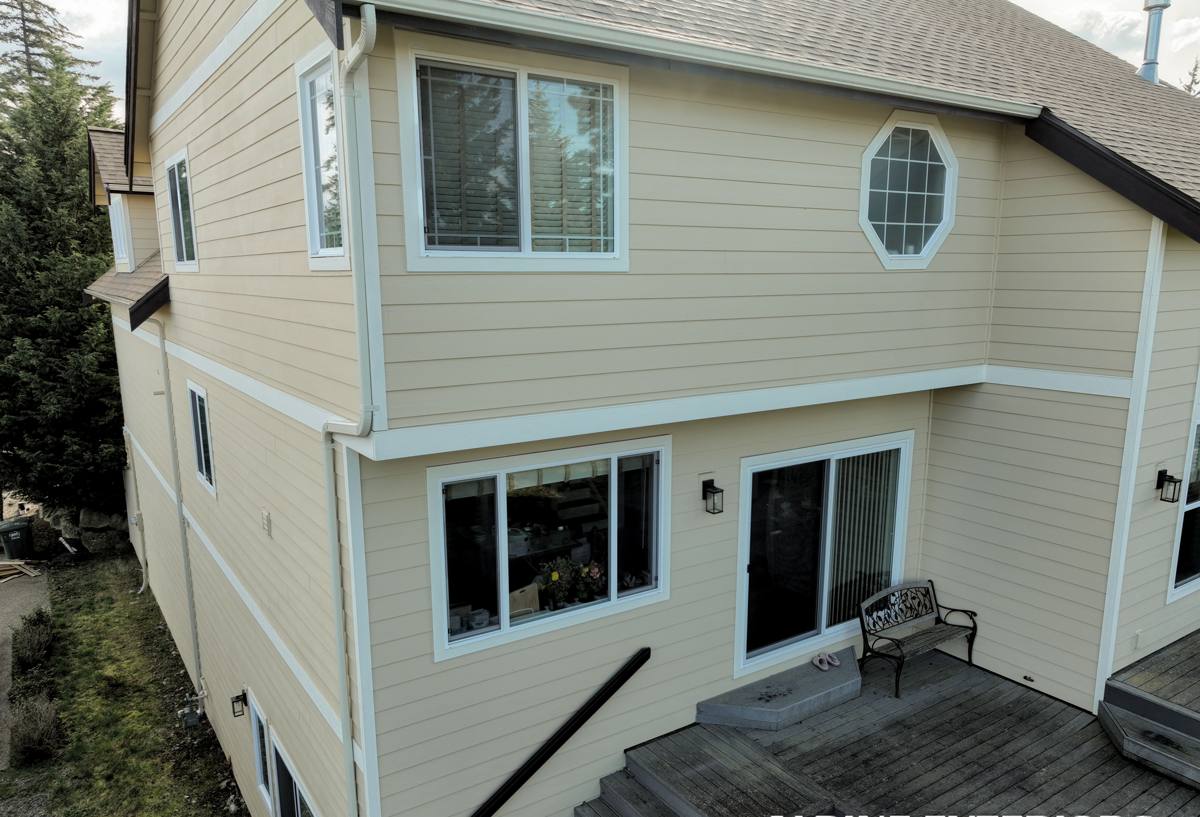
Signs Your York Deck Needs Replacement, Not Another Repair
Most decks give warning signs well before they become unsafe. The trouble is that surface problems are easy to see while structural problems often aren't, which is why a lot of aging decks get a fresh coat of stain right up until the year something actually fails. Here's what tells us a deck is past the point of patching:
- Soft, spongy, or springy spots in the decking boards, especially near the house or in shaded corners where moss and moisture linger longest
- Visible rot or dark staining at the ledger board — the beam that connects the deck to your house — which is the single most safety-critical connection on the whole structure
- Rust streaks or crumbling around fastener heads, which usually means the fasteners underneath are corroding faster than they appear
- Posts or footings that have shifted, settled unevenly, or show gaps where they meet the ground or concrete
- Railings that flex or wiggle under normal hand pressure — this is a fall hazard, not a cosmetic issue
- A deck more than 20-25 years old that has never had structural connectors (joist hangers, ledger flashing, post bases) upgraded to current standards
When Repair Still Makes Sense
Not every worn deck needs a full teardown. If the framing, ledger, and footings are sound and the problems are limited to surface boards or railings, targeted repair or a resurfacing can extend the deck's life at a fraction of the cost. The honest answer depends on what's underneath the decking boards — which is exactly what we check first before recommending either path.
What a Correct Deck Replacement Involves Here
A deck replacement done right isn't just swapping old boards for new ones. It's a rebuild of a structure that has to carry live loads safely through decades of Pacific Northwest weather. Skipping any of the following steps is how decks end up needing replacement again in ten years instead of thirty.
Ledger Board and House Connection
The ledger board attaches the deck directly to your home's rim joist, and it's the connection most responsible for catastrophic deck failures nationally when it's done wrong. Proper flashing between the ledger and the house siding is non-negotiable — it keeps water from wicking into your home's structure at the exact point where two building systems meet. In a climate with as much sustained rain as ours, ledger flashing that's missing, undersized, or improperly lapped is one of the most common hidden failures we find on older decks.
Footings and Post Bases
Footings need to be sized and set below frost depth per Whatcom County code, and post bases should hold the post above the concrete rather than embedding it directly — wood in constant contact with concrete or soil holds moisture and rots from the inside out, often invisibly until the post is already compromised.
Framing and Joist Layout
Joist spacing and beam sizing should match the actual decking material and expected loads, not just whatever was used last time. Composite decking, for example, often calls for tighter joist spacing than solid wood to prevent long-term sagging between boards.
Drainage Underneath
Where a deck sits low to the ground or has minimal airflow underneath, standing water and trapped moisture become the main driver of premature rot. Grading, gravel, or an under-deck drainage system where appropriate keeps that area from becoming a moss and mildew trap year-round.
Decking Material Options for Whatcom County Weather
There's no single "best" decking material — there's a best fit for your budget, maintenance tolerance, and how much sun versus shade the deck gets. Here's how the common options actually perform under our conditions:
| Material | Moisture Behavior Here | Maintenance | Typical Lifespan |
|---|---|---|---|
| Pressure-treated wood | Absorbs and releases moisture with every wet/dry cycle; needs sealing to resist our rain | Annual cleaning and re-sealing/staining | 10-15 years before major work needed |
| Cedar | Naturally rot-resistant but still needs sealing in shaded, moss-prone areas | Regular sealing; more prone to graying without upkeep | 15-20 years with maintenance |
| Capped composite | Resists moisture absorption well; shaded/damp spots still need periodic cleaning to prevent moss and mildew buildup | Occasional washing, no staining or sealing | 25-30+ years, manufacturer-dependent |
| PVC decking | Fully moisture-resistant, best option for consistently shaded or low-airflow deck areas | Lowest maintenance of the group | 25-30+ years, manufacturer-dependent |
Composite and PVC cost more up front than wood, but for a shaded York yard under mature trees where moss is a constant fight, the reduced maintenance often pays for itself over the life of the deck. That said, we don't push one material as universally "right" — we walk through the trade-offs so you're choosing based on how you actually use the space and how much upkeep you want to do.
Railings, Fasteners, and Hardware That Don't Rust Near the Bay
Hardware is where a lot of otherwise good decks fail early in coastal-adjacent neighborhoods like York. Standard galvanized fasteners can start showing corrosion within a few years when salt air is part of the mix, especially in fasteners exposed at the surface. We use stainless steel or coated fasteners rated for the treated lumber and environment they're going into, and structural connectors — joist hangers, hurricane ties, post bases — rated to the same standard. It costs more than using whatever fasteners are cheapest at the hardware store, but replacing rusted-through fasteners means tearing into finished decking again, which costs far more than doing it right the first time.
Railings deserve the same attention. Whether you're going with wood, metal, or composite railing systems, the connection points at the posts are what take the abuse — both from weather and from the leaning, sitting, and general use that railings actually get. A railing system needs to meet current code height and baluster spacing requirements regardless of the style you choose.
Our Deck Replacement Process
- On-site assessment — we inspect the existing deck's framing, ledger, footings, and posts to determine what's actually salvageable versus what needs to be rebuilt
- Honest scope and estimate — you get a clear breakdown of what full replacement involves and what it costs, with material options explained in plain terms
- Permitting — we handle the permit application with the City of Bellingham or Whatcom County, whichever applies to your property
- Demolition and disposal — the old deck comes out and debris is hauled off, not left in your yard
- Structural rebuild — new footings, posts, ledger flashing, and framing built to current code, not just matched to what was there before
- Decking, railing, and finish work — installed per manufacturer specifications, which matters most for composite and PVC warranty coverage
- Final walkthrough — we go over the finished deck with you before calling the job done
Permits and Code Considerations in Bellingham
Most deck replacements in Bellingham and unincorporated Whatcom County require a building permit, particularly when footings, framing, or the ledger connection are being rebuilt rather than just resurfaced. Permitted work means the structural elements get inspected by someone other than the crew that built them, which is a real check on quality — not just paperwork. It also matters when you go to sell the house; unpermitted deck work is a common flag in home inspections and can complicate a sale. We pull the necessary permits as part of the job rather than leaving that step to the homeowner.
Why a Crew That Already Works in York Matters
Building codes, typical lot conditions, and the specific combination of salt air, rain, and shade patterns in York aren't identical to what a crew coming from another part of the state, or even another part of Whatcom County, deals with every day. A crew that regularly works this neighborhood already knows which structural details tend to fail first here, what inspectors are looking for locally, and how to sequence a build around our wet-season weather windows. That familiarity shows up in fewer surprises mid-project and a deck that's actually built for the conditions it has to survive, not a generic set of blueprints.
It also means accountability. A crew with an ongoing presence in your area has a reputation to maintain with your neighbors, not just with you — which tends to show in the quality of the work and the willingness to come back and make something right if it's needed.
Get a Straightforward Estimate
If your deck is showing soft spots, rust, or just years of wear, we're happy to take a look and give you an honest read on whether it needs full replacement or can be brought back with targeted repair. The estimate is free, there's no pressure attached to it, and you'll get a clear explanation of what we find — use the form below to get started.