 Bellingham Roofing
 Window replacement is a specific job: taking out an existing window and its surrounding assembly and putting in a new, properly flashed and sealed unit in its place — not just swapping glass or patching a drafty sash. For a home in York, one of Bellingham's older in-town neighborhoods with a mix of early- and mid-century houses alongside newer infill, that job carries more weight than it would in a drier, inland market. Whatcom County's salt air, driving rain, and long moss season don't just wear on siding and roofing. They work on window frames, sills, and the flashing behind them just as hard, and a window replaced without accounting for that climate is often back on the repair list within a handful of years.
Why York Homes Need Window Replacement Done Right
A lot of the housing stock in and around York predates modern window standards — original wood-frame single-pane units, early dual-pane replacements from decades back, or additions where the windows were never a great match for the rest of the house. Wood sashes and sills that have taken on decades of Bellingham rain go soft at the bottom rail long before the glass itself fails. Older aluminum-frame windows, common in mid-century remodels across Whatcom County, conduct cold and sweat on the inside, which feeds condensation and eventually rot in the surrounding wood trim. And because York sits close enough to the water to catch salt-laden air, hardware and fasteners on any window — old or newer — corrode faster here than they would twenty or thirty miles inland.
None of that means every window needs replacing on a fixed schedule. It means the decision to replace, and the way the replacement is done, should account for what this specific climate does to window assemblies over time — not just what the glass looks like today.
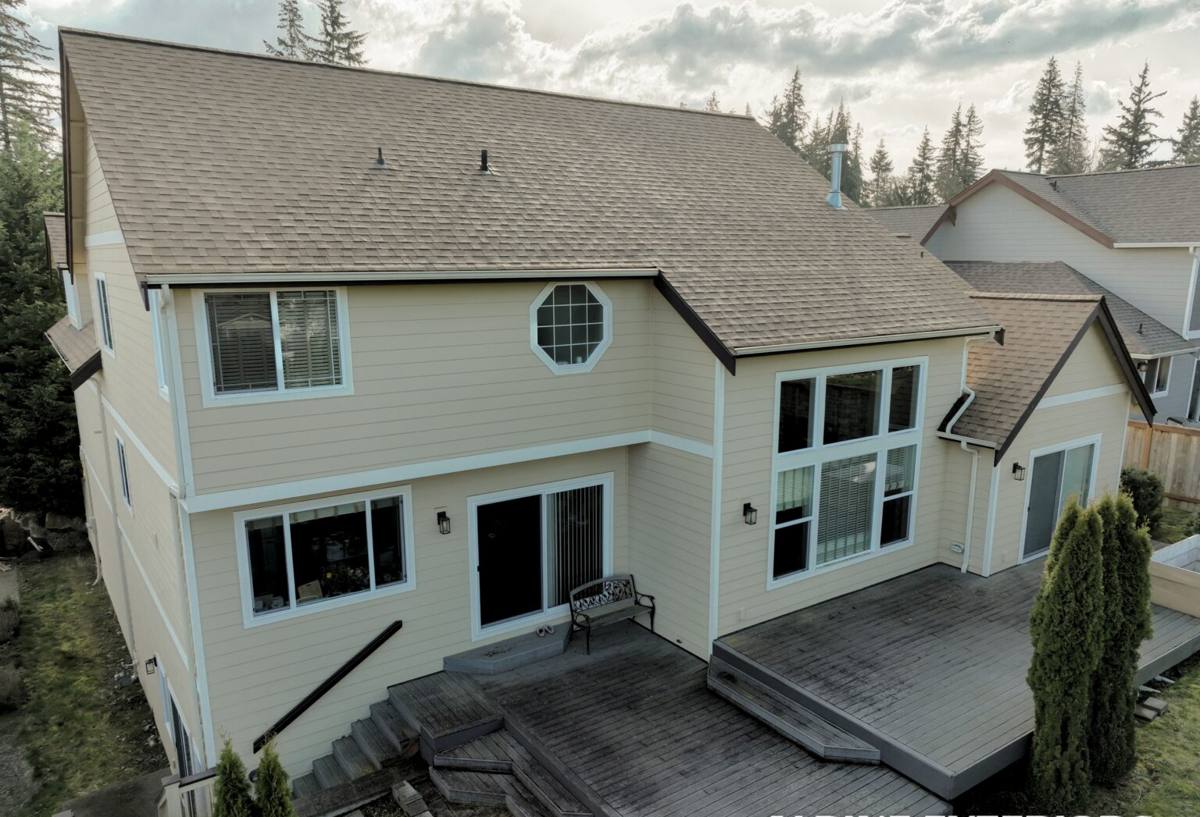
The Climate Factor: Salt Air, Driving Rain, and Moss
Three things define what a window replacement in this area actually has to hold up to. Salt-laden air off the water accelerates corrosion on hinges, locks, balances, and lower-quality fasteners, even on windows that otherwise look fine. Driving rain — the kind that comes in sideways during a fall or winter storm rather than falling straight down — tests flashing details that a calmer climate would never stress, finding any gap in the water management behind the trim. And a long, damp moss season keeps shaded sills, corners, and trim wet for extended stretches, which is exactly the condition wood rot and paint failure need to take hold.
None of this makes window replacement harder in a way that should scare anyone off. It means the installation has to be built for these conditions specifically, rather than following generic manufacturer guidance written for a drier, calmer climate.
Where the Risk Actually Lives
It's rarely the glass unit itself that fails first. It's the transition points — the sill where water is supposed to shed outward instead of pooling, the corners where flashing pieces overlap, the gap between the new window's frame and the surrounding wall where sealant alone is being asked to do a job that proper flashing should be doing instead. Those are the spots a rushed installation skips because they take more time, and they're also the spots that show up as soft trim, peeling paint, or a drafty corner a few years later.
Signs a York Home Needs Window Replacement, Not Just Repair
Repair makes sense for a lot of window problems — a failed seal, a broken balance, a bit of glazing putty that's cracked. Replacement becomes the right call when the frame or opening itself is compromised, or when the ongoing maintenance and energy loss no longer make sense to keep patching.
- Soft, spongy, or visibly rotted wood at the sill or bottom corners of the frame
- Fogging or a visible haze between panes on a dual-pane unit — the seal has failed and can't be repaired
- Windows that are difficult to open, close, or lock, especially if that's a recent change
- Visible daylight, a draft, or a whistling sound around the frame during a windstorm
- Paint that keeps failing on the trim around a specific window despite repeated repainting
- Single-pane glass in a home you're trying to make more energy efficient
- A noticeable difference in comfort or noise level near certain windows compared to others in the house
What a Correct Window Replacement Job Involves
Removal and Opening Inspection
The old window comes out carefully, and the opening gets inspected before anything new goes in. This is where hidden problems from Bellingham's wet climate tend to surface — soft framing, old flashing that was never installed correctly, or moisture that's been getting behind the trim without showing on the interior. Addressing that now, rather than covering it back up, is the difference between a replacement that lasts and one that fails again from the same root cause.
Flashing and Weatherproofing
This is the step that matters most given the driving rain this area sees. Flashing has to be sequenced correctly — building paper or house wrap, then flashing tape or metal flashing at the sill and jambs, then the window itself, then flashing above that sheds water out and over everything below it. Done in the wrong order, or skipped in the name of speed, it fails quietly for years before it shows up as a stain or soft spot inside.
Frame Material Selection for This Climate
Vinyl and fiberglass frames generally hold up to sustained coastal moisture and salt air with less ongoing maintenance than an all-wood exterior frame, which is why we lead with them on weather-exposed sides of a house in this area. That's not a knock on wood — a wood-frame or wood-interior window with a durable, low-maintenance exterior cladding can still be the right choice when the interior look matters, especially on an older York home where matching the original character counts for something. We'll walk through the honest maintenance trade-offs for your specific windows rather than defaulting to one material for every opening.
Finish and Trim Integration
The new window has to sit in the wall correctly and look right against the existing trim and siding. On older homes especially, that means matching trim profiles and paint lines so the replacement doesn't look like an obvious patch job from the street.
Full-Frame vs. Insert Replacement
There are two general approaches to window replacement, and which one makes sense depends on the condition of the existing frame and opening.
| Factor | Insert (Pocket) Replacement | Full-Frame Replacement |
|---|---|---|
| What it involves | New window fits inside the existing, intact frame | Old frame is removed down to the rough opening; everything is rebuilt |
| Best for | Sound frames with no rot or water damage | Frames with rot, water damage, or out-of-square openings |
| Access to flashing | Limited — relies on the existing flashing being sound | Full access to inspect and correct flashing at the opening |
| Disruption | Less — faster, less interior and exterior work | More — interior and exterior trim work involved |
| Cost | Generally lower | Generally higher, reflecting the added labor |
| Where we see it most in York | Newer or well-maintained openings with sound framing | Older homes with wood-frame windows showing sill or corner rot |
Given how often driving rain and moss-season moisture find their way behind older trim in this area, we don't assume an insert replacement is the right call just because it's faster. If there's any sign of water damage at the opening, that gets checked before recommending one approach over the other.
Our Process, Start to Finish
- On-site assessment — we look at the existing windows, the condition of the framing and flashing, and how the house is oriented to weather and moisture exposure
- Honest recommendation — insert or full-frame replacement, explained with the reasoning specific to what we found, not a default answer
- Material and product selection — frame material and glass package matched to the window's exposure and your priorities on maintenance, energy performance, and appearance
- Removal and opening inspection — old window comes out, and any hidden rot or flashing failure gets identified and addressed before the new unit goes in
- Installation and flashing — the new window is set, shimmed level and square, and flashed in the correct sequence for this climate
- Trim, finish, and cleanup — exterior trim is matched to the surrounding siding and the site is left clean
What Drives Cost
We won't quote a number without seeing the windows and the opening, but the factors that move price are consistent from job to job.
| Factor | Why It Matters |
|---|---|
| Replacement type | Full-frame replacement involves more labor than an insert replacement |
| Frame material | Vinyl, fiberglass, and wood-clad units differ in both material cost and long-term maintenance needs |
| Opening condition | Rot, old flashing failures, or out-of-square framing add repair work before the new window goes in |
| Window size and count | Larger units cost more individually; a whole-house project typically has better per-unit economics than one or two windows |
| Glass package | Upgraded glazing for energy performance or noise reduction adds cost over a standard dual-pane unit |
| Trim and finish work | Matching original trim profiles on an older home takes more time than a straightforward swap |
Why a Crew That Already Works York Matters
Manufacturer installation instructions are written for average conditions, and Bellingham's mix of salt air, wind-driven rain, and a moss season that runs most of the year isn't average. A crew that's already worked on window replacements throughout York and the rest of Bellingham knows which parts of that generic guidance are worth extra time here — how much flashing lap a sill actually needs given the direction storms typically come from, which older homes in this neighborhood tend to have hidden rot at specific spots, and when an insert replacement is genuinely fine versus when skipping a full-frame approach is just cutting a corner. That judgment comes from doing the work locally and dealing with the callbacks when it's done wrong, not from a spec sheet.
Ready When You Are
If you're dealing with drafty, foggy, or hard-to-operate windows in York, or you've noticed soft trim or paint failure around a specific window, it's worth having someone look before you start pricing units. We offer free, no-pressure estimates for window replacement in York and throughout Bellingham — use the form below to get a time on the schedule.