 Bellingham Roofing
 Asphalt Shingle Roofing Built for Cordata's Weather
Cordata sits on the north side of Bellingham, close enough to the water to catch salt-laden air off Bellingham Bay and the Strait of Georgia, and shaded enough by mature trees and green space around the neighborhood to hold onto moisture longer than more open parts of Whatcom County. That combination — salt exposure, heavy driving rain off the Pacific, and long stretches of shade — is exactly the kind of environment that separates a shingle roof that lasts from one that starts failing early. An asphalt shingle roof installed correctly for these conditions can give a Cordata homeowner decades of reliable protection. One installed without regard for the local climate tends to show algae streaking, granule loss, and soft spots well before its rated lifespan is up.
This page focuses specifically on asphalt shingle roofing for homes in Cordata — what the climate demands, what a correct installation actually involves, and what to look for in a crew that's going to do the work right the first time.
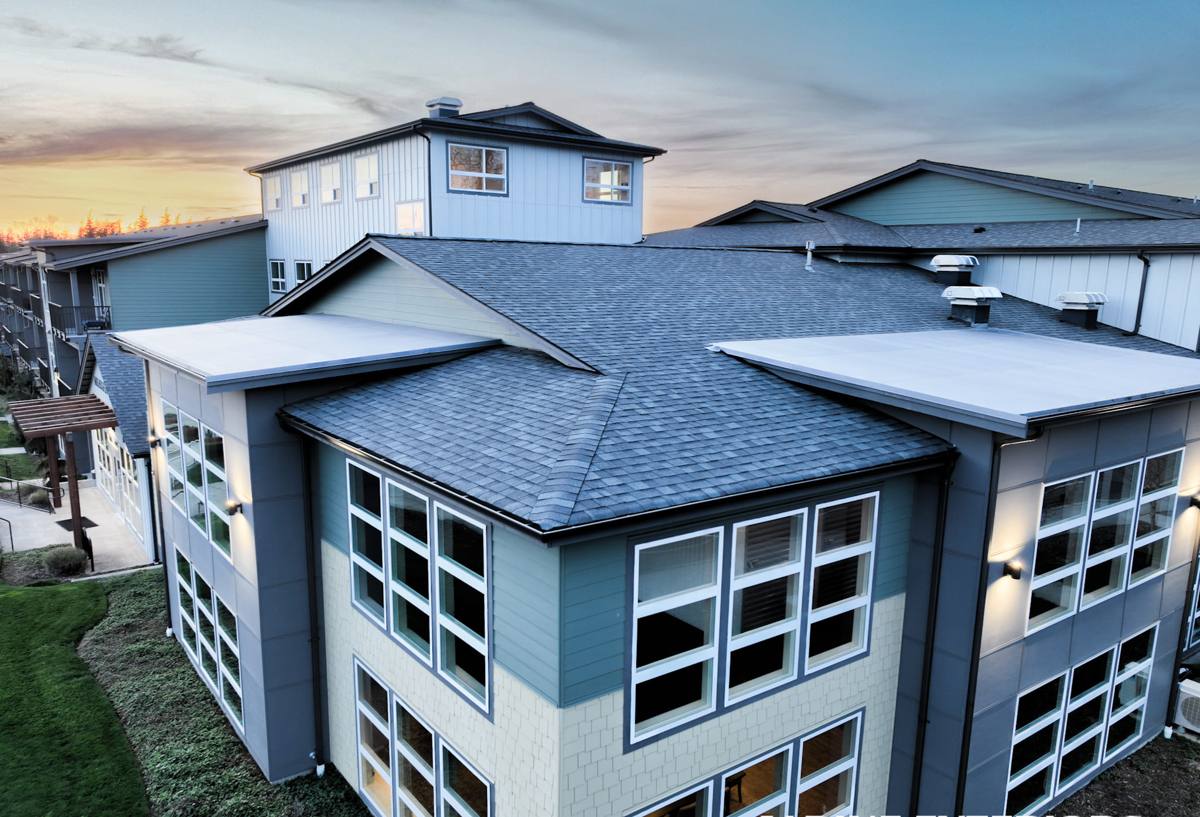
Why Cordata's Climate Is Hard on Asphalt Shingles
Whatcom County gets a lot of rain, but it's not just the total volume that matters — it's how long roofs stay wet between storms. Cordata's tree cover and proximity to open water mean roofs here dry out more slowly than roofs in sunnier, more exposed parts of Bellingham. That slower drying cycle is the single biggest factor behind moss and algae growth on asphalt shingles.
Moss and Algae
Moss doesn't just look bad — it lifts shingle edges as it grows, holds water against the shingle mat, and works its way under tabs over time. Algae staining (the dark streaks you see on older roofs) doesn't damage shingles structurally the way moss does, but it's a sign that a roof is staying damp longer than it should, which shortens the life of the granules protecting the shingle underneath.
Driving Rain and Wind-Driven Water
Storms coming off the water tend to push rain sideways rather than straight down, which puts real stress on flashing, valleys, and any place where the roof plane changes direction. A shingle roof can be installed with the right shingle count and the right nailing pattern and still leak if the underlayment, valley metal, and flashing details weren't built for wind-driven rain in the first place.
Salt Air
Salt exposure accelerates corrosion on exposed metal — nails, flashing, vents, and gutter hardware. On a roof, that usually shows up first as rust streaking near fasteners or vent boots, long before it becomes a structural problem. It's a good early warning sign worth paying attention to.
What a Correct Asphalt Shingle Installation Involves
A shingle roof is a system, not just a layer of shingles nailed to plywood. For a Cordata home, we treat every layer of that system as something that has to hold up specifically to wet, shaded, salt-exposed conditions — not just meet a generic building code minimum.
- Deck inspection and repair — any soft, delaminated, or water-stained sheathing gets replaced before a single shingle goes down. Roofing over a bad deck just hides the problem.
- Ice-and-water shield at vulnerable points — eaves, valleys, and roof-to-wall transitions get a self-adhering waterproof membrane, not just felt, because these are the spots where driving rain and ice dams cause the most damage.
- Synthetic underlayment across the field — more tear-resistant and more consistently waterproof than old-style felt, and it holds up better through a multi-day install if weather rolls in partway through.
- Proper valley and flashing work — metal valleys or woven shingle valleys sized and lapped correctly, step flashing at every wall intersection, and new flashing at chimneys and skylights rather than reusing old, corroded pieces.
- Balanced attic ventilation — intake at the eaves and exhaust at the ridge, sized to the attic's square footage. Without this, moisture gets trapped under the deck and shortens shingle life from underneath, which is invisible until it's a real problem.
- Correct nailing — six nails per shingle in high-wind, coastal-influenced areas like Cordata, placed in the manufacturer's nailing zone. This is one of the most common corners cut on a rushed job, and it's the difference between shingles that stay put in a windstorm and ones that don't.
Choosing the Right Shingle for a Cordata Home
Not every asphalt shingle is built the same, and the right choice depends on your roof's exposure, your budget, and how long you plan to stay in the home. Here's how the common tiers compare for a climate like ours:
| Shingle Type | Typical Lifespan | Algae Resistance | Best Fit |
|---|---|---|---|
| 3-tab (standard) | 15–20 years | Varies; often minimal | Budget-focused projects, rentals |
| Architectural / dimensional | 25–30 years | Usually includes algae-resistant granules | Most Cordata homes — best balance of cost and durability |
| Premium / designer | 30–50 years or lifetime-rated | Enhanced algae-resistant granules | Homes under heavy tree cover or long-term owners wanting maximum lifespan |
For most homes in this neighborhood, we lean toward architectural shingles with algae-resistant (AR) granules as the baseline recommendation — the added upfront cost over 3-tab is modest, and the resistance to streaking matters more here than in drier, sunnier parts of the county. Premium shingles make sense for homes with heavy shade or owners who want to minimize maintenance over the long run.
How Our Process Works
1. On-Site Assessment
We look at the whole roof system, not just the shingles — deck condition, ventilation, existing flashing, moss and algae patterns, and any trouble spots you've already noticed indoors, like ceiling stains or drafts.
2. Honest Scope and Estimate
You get a clear breakdown of what needs to happen and why, including whether the issue is really a full re-roof or whether targeted repairs make more sense. We don't upsell a replacement when a repair will genuinely hold.
3. Tear-Off and Deck Check
Old roofing comes off down to the deck so we can actually see what's underneath — not roof over an existing layer, which traps moisture and shortens the life of the new roof.
4. Installation
Underlayment, ice-and-water membrane, flashing, and shingles go in following the sequence and details outlined above, matched to your roof's specific exposure to wind and rain.
5. Final Walkthrough
We walk the finished roof and the site with you, confirm ventilation and cleanup, and go over what routine maintenance — if any — will keep the roof performing as expected.
Moss and Algae Maintenance After Installation
A new roof reduces moss and algae problems significantly, especially with AR-granule shingles, but it doesn't eliminate the underlying conditions that cause them in a shaded, wet neighborhood like Cordata. A little routine attention goes a long way:
- Keep overhanging branches trimmed back so more sunlight and airflow reach the roof surface.
- Clear gutters and valleys of debris each fall, before the heavy rain season sets in — clogged gutters back water up under shingle edges.
- Have moss physically brushed or treated rather than pressure-washed — pressure washing strips granules and shortens shingle life.
- Watch for rust streaking around vents and fasteners as an early sign of salt-air corrosion worth addressing before it spreads.
- Schedule a roof check after any major windstorm to catch lifted or missing shingles early, while they're a simple fix.
Repair or Replace? How to Tell
Not every roofing problem means a full replacement, and not every homeowner needs to hear that it does. A few honest guidelines:
| Situation | Usually a Repair | Usually a Replacement |
|---|---|---|
| Isolated leak, roof under 15 years old | Yes | No |
| Widespread granule loss, bald patches | No | Yes |
| Moss confined to shaded north-facing slope | Yes | No |
| Multiple past repairs, roof near end of rated life | No | Yes |
| Soft or spongy decking discovered during inspection | Depends on extent | Often yes |
If you're not sure which category your roof falls into, that's what the inspection is for — we'll tell you plainly which side of the line you're on.
Signs It's Time to Have Your Roof Looked At
- Shingles curling, cracking, or losing granules faster on one side of the roof (usually the shadier or more exposed slope)
- Dark streaking that keeps returning shortly after cleaning
- Moss growth thick enough to see from the ground
- Rust stains around vent boots, flashing, or exposed fasteners
- Water stains on interior ceilings, especially after a windy rainstorm
- Granules collecting in gutters or at downspout outlets
Why a Crew That Works This Neighborhood Matters
Roofing crews that mostly work drier, more exposed parts of Whatcom County can install a technically correct roof that still underperforms in Cordata's shadier, damper microclimate — because the ventilation, granule choice, and flashing details that matter most here aren't the same ones that matter most everywhere else. Working roofs in and around Bellingham regularly means knowing which slopes tend to hold moss, which valley details actually hold up to wind-driven rain off the bay, and which shingle upgrades are worth the money for this specific climate versus which ones are just marketing.
It also means being reachable after the job is done. A roof is a long-term system, and having a local crew who can come back for a warranty question, a post-storm check, or routine maintenance advice is worth more than a slightly lower bid from a company that isn't based here.
Warranty Basics: What's Actually Covered
Asphalt shingle roofs typically carry two separate types of coverage, and it's worth understanding the difference before you sign anything:
- Manufacturer's material warranty — covers defects in the shingle itself, usually prorated after the first several years. This is between you and the shingle manufacturer.
- Workmanship warranty — covers installation errors, and this is entirely dependent on the contractor who did the work. Ask specifically what's covered, for how long, and whether it's transferable if you sell the home.
A shingle with a long material warranty doesn't protect you from a poor installation — flashing errors, bad nailing, and ventilation mistakes are workmanship issues, not material defects, and most manufacturer warranties explicitly exclude them.
Get a Straight Answer on Your Cordata Roof
If your roof is showing moss, algae staining, granule loss, or you just want an honest read on how many years it has left, we're glad to take a look. We'll give you a clear, no-pressure estimate based on what your roof actually needs — not a scare tactic and not a hard sell. Use the form below to request your free estimate.