 Bellingham Roofing
 Why New Roof Installation in Barkley Is Different
Barkley sits close enough to Bellingham Bay and the surrounding wetlands that homes here take on a specific combination of punishment: salt-laden air moving in off the water, long stretches of driving rain pushed sideways by wind, and shaded, moisture-holding conditions that keep moss active for much of the year. A roof built for a drier inland climate, or installed with shortcuts that don't matter in milder weather, tends to show its weaknesses here faster than homeowners expect. A correctly installed new roof accounts for all three of these conditions from the start — not as an afterthought, but as part of the material choice, the flashing detail, and the ventilation plan.
This page is about one job — full new roof installation — in one place. If your roof in Barkley is past the point of patching and you're weighing a full replacement, here's what actually matters for a house in this part of Whatcom County.
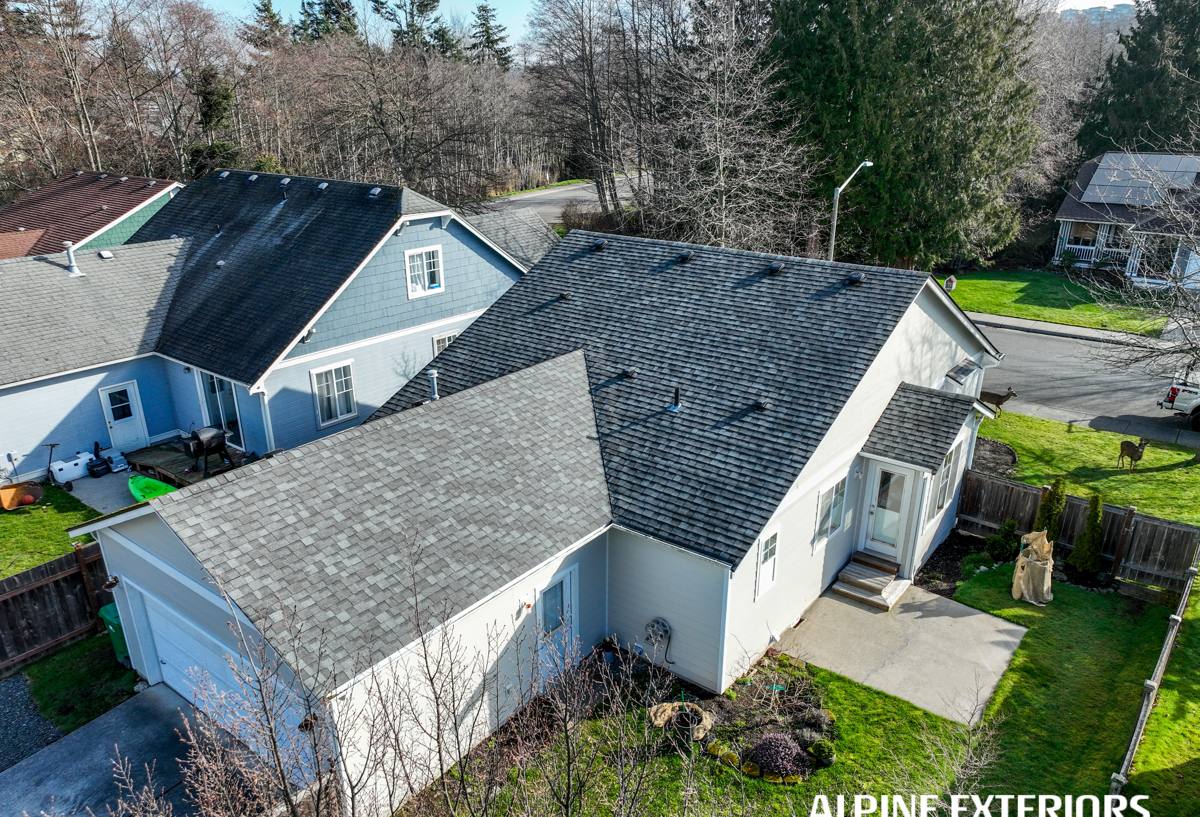
What Bellingham's Climate Does to a Roof Over Time
Salt Air
Homes within a few miles of the bay are exposed to airborne salt, which accelerates corrosion on exposed metal — fasteners, flashing, vent stacks, and any exposed metal trim. A roof installed with the wrong fastener grade or unprotected metal components will show rust and pitting well before the shingles or panels themselves wear out. This is one of the first things we check when specifying materials and hardware for a Barkley job.
Driving Rain
Whatcom County doesn't just get a lot of rain — it gets a lot of wind-driven rain, which behaves differently than a straight-down downpour. Wind-driven rain finds its way under improperly lapped shingles, through under-sealed flashing, and around vents and penetrations that weren't detailed correctly. A roof that looks fine from the ground can still be letting water in at every valley, chimney, and skylight curb if those details were rushed.
Moss Season
Shade, moisture, and cooler temperatures give moss a long growing window here — often most of the year on north-facing slopes or roofs shaded by mature trees, which are common throughout Barkley. Moss doesn't just look bad; it holds moisture against the roofing material, lifts shingle edges as it grows, and can work its way under laps over time. New roof installation is the right moment to build in moss resistance — proper ventilation, zinc or copper strips where appropriate, and a roofing material and slope that shed water and debris efficiently.
What a Correct New Roof Installation Actually Involves
A new roof is more than stripping old material and laying down new. The parts that determine whether a roof performs well for its full expected lifespan — especially in this climate — are mostly things you can't see once the job is finished.
Tear-Off and Deck Inspection
We remove the old roofing down to the deck rather than layering over it. This is the only way to actually inspect the sheathing underneath for soft spots, rot, or water staining — problems that are common on older homes where a slow leak went unnoticed for years. Any damaged decking gets replaced before anything new goes down; installing new roofing over a compromised deck just hides the problem and shortens the life of the new roof.
Underlayment and Flashing
In a climate with this much wind-driven rain, underlayment choice and flashing detail matter as much as the roofing material itself. We use underlayment rated for the exposure and pay particular attention to valleys, chimney and skylight flashing, and any wall-to-roof transitions — these are the areas that fail first when rain is coming in sideways rather than straight down.
Ventilation
Proper intake and exhaust ventilation keeps the attic space at a consistent temperature and moisture level, which reduces condensation buildup, helps prevent premature deck rot, and makes the roofing material last longer. It also plays a role in moss and mildew resistance by keeping the underside of the roof drier. Ventilation is planned as part of the installation, not bolted on afterward.
Choosing a Roofing Material for a Barkley Home
There's no single "best" material for every house — it depends on your roof's pitch, the amount of shade and tree cover, your budget, and how long you plan to stay in the home. Here's an honest comparison of the main options we install:
| Material | Salt Air Resistance | Moss Resistance | Relative Cost |
|---|---|---|---|
| Architectural asphalt shingle | Good, with correctly rated fasteners and flashing | Moderate — depends on slope, shade, and maintenance | Lower to mid-range |
| Standing seam metal | Very good with the right coating and fastener spec | Excellent — sheds debris and moisture quickly | Mid to higher |
| Cedar shake/shingle | Fair — needs regular treatment and upkeep | Poor without diligent maintenance; holds moisture | Higher, plus ongoing maintenance |
| Synthetic composite shingle | Good | Moderate to good, depending on product | Mid to higher |
We don't push one product line over another as a rule — we walk through the trade-offs with you based on your roof and your goals. For heavily shaded, moss-prone roofs, we're often more cautious about recommending wood shake, not because it can't be a good-looking roof, but because it demands a level of ongoing maintenance many homeowners underestimate in this climate. Metal and quality architectural shingle systems tend to require less upkeep to stay moss-free and watertight over the long run.
Signs Your Roof Needs Full Replacement, Not Another Repair
Not every roof problem calls for a full tear-off. But there's a point where repeated patching stops making financial sense. Common signs it's time to talk about replacement rather than another repair include:
- Granule loss heavy enough that you can see bare asphalt on multiple shingles, not just one spot
- Shingles that are curling, cupping, or cracking across large sections of the roof, not isolated to one repair-sized area
- Repeated leaks in different locations after previous repairs
- Visible sagging in the roofline, which can indicate deck or structural issues
- Moss or algae growth that keeps returning within a season or two of cleaning
- A roof approaching or past the expected lifespan of its material, especially if it's never been re-flashed or re-ventilated
If you're not sure which category your roof falls into, an honest inspection should tell you — and it should come with a straight answer, not an automatic push toward replacement.
Our Installation Process
- On-site inspection and estimate. We look at the existing roof, deck condition (where visible), ventilation, and any problem areas, then walk you through material options and give you a written estimate.
- Material selection and scheduling. Once you've chosen a material and system, we schedule the work around weather windows — timing matters more here than in drier climates.
- Tear-off and deck inspection. Old roofing comes off, the deck is inspected and repaired as needed, and the site is protected throughout.
- Underlayment, flashing, and ventilation installation. These get done to spec before any finish material goes down.
- Roofing material installation. Installed to manufacturer specifications, with attention to the details that matter most in wind-driven rain — laps, valleys, and penetrations.
- Final walkthrough and cleanup. We review the finished roof with you, answer questions, and make sure the site is cleaned up, including a magnetic sweep for stray fasteners.
Why Hire a Crew That Already Works in Barkley
A roofer who works regularly in Barkley and the surrounding Bellingham area already understands the local exposure conditions, the permitting process with the City of Bellingham, and the kind of homes common to the neighborhood — from the roof pitches to the tree cover that affects moss and shade patterns. That familiarity shows up in small but important decisions: which flashing details hold up best against this area's wind-driven rain, how much ventilation a given roof design actually needs, and where moss tends to establish itself first on a given roofline. It also means faster response if something needs a look after the job is done, rather than waiting on a crew that has to travel in from outside the county.
What to Ask Before You Hire a Roofing Contractor
- Are you licensed and insured to work in Washington State, and can you provide proof?
- Will you inspect and repair the deck if it's compromised, or just roof over it?
- What underlayment and flashing materials do you use, and why, for this specific roof?
- How do you plan for ventilation on this roof design?
- What's the manufacturer's warranty, and what's your own workmanship warranty?
- Can I get a written, itemized estimate before work begins?
- How do you handle weather delays given how much rain this area gets?
A contractor who answers these plainly, without hesitation, is generally a good sign. One who avoids specifics or pressures you to sign quickly is worth a second look.
If your roof in Barkley is showing its age or you're planning ahead for a replacement, we're happy to take a look and walk you through your options. Use the form below to request a free, no-pressure estimate — we'll give you a straight assessment of what your roof actually needs.